
Laboratory Ovens
实验室烘箱
CLAO · General Laboratory Equipment · 5 product types · 25 models
By Lab Manufacturers China Technical TeamLast reviewed
What are Laboratory Ovens?
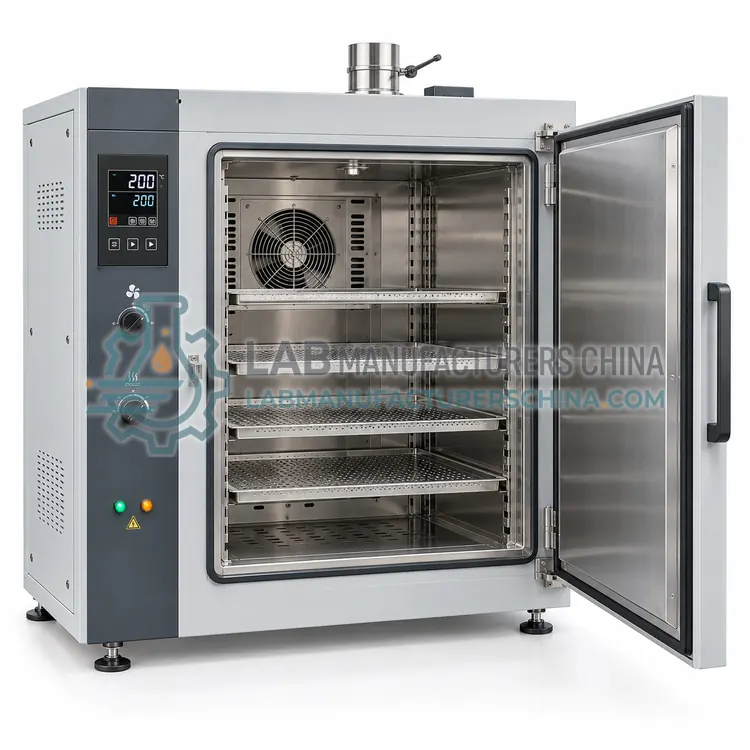
Laboratory ovens are insulated, electrically heated chambers that hold a set temperature to dry, bake, cure, condition or heat-treat samples and glassware. The category covers gravity and forced-air drying ovens, vacuum ovens, high-temperature ovens and larger industrial laboratory ovens, with working temperatures from about 50 C to 600 C.
5 product types in Laboratory Ovens
The 5 product types below are grouped by the exact instrument you need.
- DRO5 models
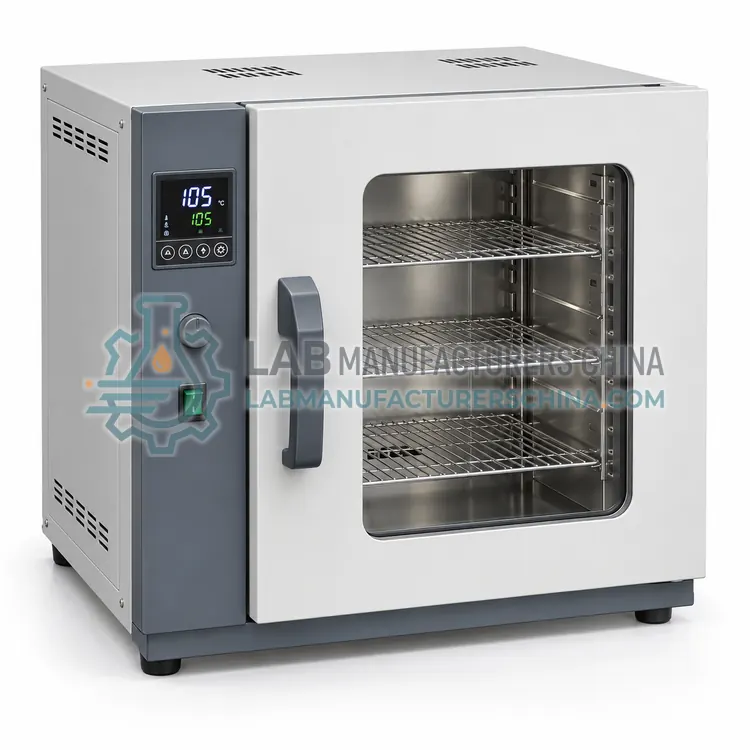
Drying Ovens
干燥箱
Drying ovens are insulated electrically heated chambers that maintain a set temperature, usually from ambient plus 10 C up to 250 or 300 C, to dry, bake or heat-treat samples and glassware. They are used in chemistry, biology, materials, food and pharmaceutical laboratories for routine drying and thermal conditioning.
- VAO5 models
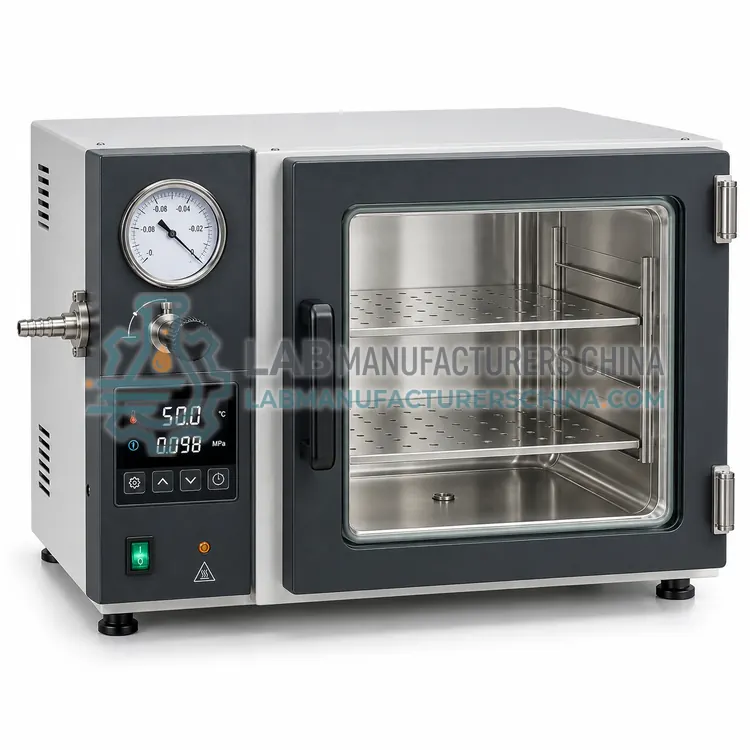
Vacuum Ovens
真空烘箱
Vacuum ovens are heated chambers that dry samples at reduced pressure, so water and solvents evaporate at lower temperature with less oxidation. They are used for heat-sensitive powders, electronics, biological samples and reactive materials in chemistry, pharmaceutical, food and materials laboratories.
- FAO5 models
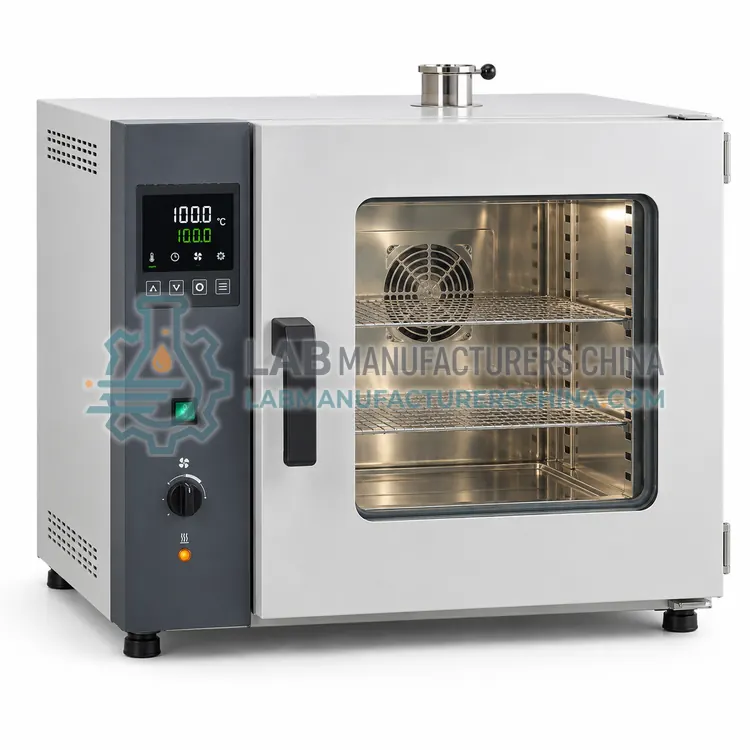
Forced Air Ovens
强制对流烘箱
Forced air ovens use a fan to circulate heated air through the chamber, giving faster heat-up and tighter temperature uniformity than natural convection. They handle routine drying, curing, sterilization and batch work from about 50 C to 300 C in chemistry, food and pharmaceutical laboratories.
- HTO5 models
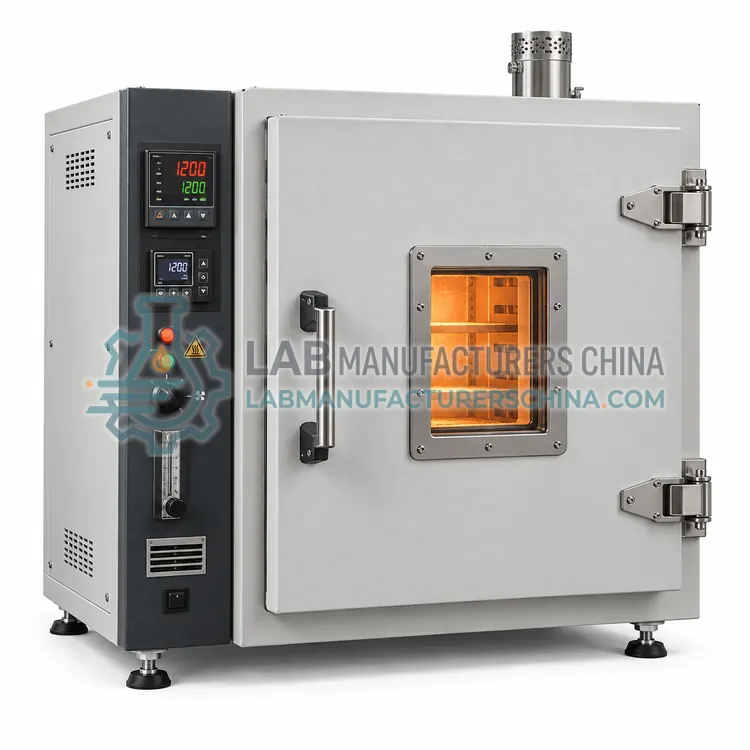
High Temperature Ovens
高温烘箱
High-temperature ovens are heated chambers that work from about 300 C to 600 C for drying, curing, burn-off cleaning and sterilization beyond the reach of standard ovens. They use reinforced insulation, high-duty elements and heat-resistant door seals for metals, ceramics and glass processing.
- ILO5 models
Industrial Laboratory Ovens
工业实验室烘箱
Industrial laboratory ovens are heavy-duty heated chambers from several hundred liters to walk-in size, used for bulk drying, curing, preheating and heat treatment in production support and analytical laboratories. They emphasize throughput, load capacity, durability and serviceable controls over bench-top convenience.
What are Laboratory Ovens?
A laboratory oven is an insulated, electrically heated chamber used to apply controlled dry heat to samples, glassware and materials. Its working range usually starts just above ambient and extends to 250 C for standard drying or 300 to 600 C for high-temperature models. Ovens differ mainly in how heat is circulated: gravity ovens rely on natural convection, forced-air ovens add a fan, and vacuum ovens remove air so drying occurs at low pressure and lower temperature. Chamber volumes run from about 20 liters on a bench to several hundred liters in floor-standing or walk-in industrial units. Controllers range from simple digital thermostats to programmable ramp-and-soak units, and safety features include independent over-temperature limiters and door interlocks. Typical duties are drying, curing, baking, conditioning and dry-heat sterilization of heat-stable items.
How do Laboratory Ovens work?
Heating elements at the bottom, sides or rear of an insulated chamber convert electrical energy into heat. A temperature sensor such as a Pt100 or thermocouple feeds a PID or thermostat controller that switches the elements to hold the setpoint. In gravity ovens warm air rises and circulates passively; forced-air ovens add a circulation fan for tighter uniformity and faster recovery after door openings; vacuum ovens pull air out with a pump so moisture evaporates at low pressure and moderate temperature. Moisture and solvent vapor leave through adjustable vents, with fresh air drawn in on forced-air types. Chamber walls are stainless steel or coated steel, insulated with mineral wool or ceramic fiber, and the door carries a heat-resistant gasket. An independent over-temperature limiter, sometimes with a door switch, cuts power for safety. Some models add programmable profiles, data logging, inert-gas or vacuum connections.
Where are Laboratory Ovens used?
Ovens appear wherever controlled dry heat is needed. Chemistry and materials laboratories dry precipitates, cure coatings, age polymers and condition specimens before testing. Pharmaceutical and food laboratories use them for loss on drying, glassware preparation and dry-heat sterilization of heat-stable items. Environmental laboratories dry filters and evaporate extracts. Vacuum ovens handle oxygen- and heat-sensitive materials such as powders, electronic components and biological samples. Metallurgical and ceramic work uses high-temperature ovens for oxidation, sintering preparation and thermal treatment. Industrial laboratory ovens support larger batches, mold preheating and drying of bulk components. In regulated settings ovens are qualified and their temperature uniformity is mapped so that results stay traceable.
Which standards apply to Laboratory Ovens?
Several standards apply to ovens. IEC 61010-1 and IEC 61010-2-010 cover electrical safety of laboratory equipment and heating equipment. DIN 12880 defines temperature range, uniformity, fluctuation and heat-up time so performance can be compared between models. ASTM E145 gives specifications for gravity-convection and forced-convection ovens. ISO 9001 supports quality management and ISO 17025 covers testing laboratory competence. Pharmacopoeial dry-heat sterilization is described in USP <1229.11> and Ph. Eur. 5.1.1, while loss-on-drying methods appear in USP <731> and Ph. Eur. 2.2.32. Relevant national standards include GB/T 30435 for drying ovens, and IEC 60079 addresses explosion protection where flammable vapours are present.
How do I select the right laboratory ovens equipment?
Choose by three questions: what temperature, how uniform, and under what atmosphere. For routine drying and glassware below 250 C a gravity or forced-air oven is sufficient; estimate the largest batch in liters and pick a chamber about twice the load volume. Select forced-air when uniformity and recovery matter, gravity when powders must not be disturbed. Select a vacuum oven for heat- or oxygen-sensitive samples that must dry at low temperature, and a high-temperature oven above 300 C. Industrial ovens are chosen when batch size, floor loading or throughput exceed benchtop limits. Then specify interior material, controller type, shelves, data output and safety features, and confirm the electrical supply, since three-phase power is common above 5 kW.
Laboratory Ovens comparison
| Subcategory | Principle | Typical use | Key spec |
|---|---|---|---|
| Drying Ovens | Gravity or fan-assisted heating in an insulated chamber | Drying, baking and conditioning of samples and glassware | 50–300 C, 20–500 L |
| Vacuum Ovens | Heated chamber under reduced pressure | Heat- and oxygen-sensitive drying, degassing | Up to 250 C, ≤133 Pa vacuum |
| Forced Air Ovens | Fan-circulated air over heating elements | Fast uniform drying and high-throughput work | 50–300 C, ±1–2 C uniformity |
| High Temperature Ovens | Reinforced chamber with high-duty elements | Curing, sintering preparation, thermal treatment | 300–600 C |
| Industrial Laboratory Ovens | Large forced-convection or walk-in chamber | Bulk drying, preheating and batch processing | Up to 600–1000 L, multi-shelf |
Frequently asked questions about Laboratory Ovens
A drying oven typically works from about 50 to 300 C and is used to dry, cure or condition materials. A furnace reaches 1000 C or more and is used for ashing, sintering, calcination and melting. Ovens use metal or wire heating elements; furnaces use ceramic fiber chambers and higher-duty elements.
Match the oven to temperature, atmosphere and sensitivity. Use gravity ovens for powdery or light samples, forced-air ovens for uniform fast heating, vacuum ovens for heat- or oxygen-sensitive materials and high-temperature ovens above 300 C. Industrial ovens suit large batches.
Yes, dry-heat sterilization of glassware, metal instruments and heat-stable powders is possible, but it requires higher temperatures and longer times than steam, typically 160 C for 2 hours or 170 C for 1 hour. Results should follow a validated cycle such as USP <1229.11>.
A temperature distribution test places calibrated probes at defined positions, including corners and the center, and records readings at the working setpoint after stabilization. Results are compared with the uniformity limit, often stated with DIN 12880 terminology, and the test is repeated periodically or after service.
Under vacuum the boiling point of water and solvents falls, so evaporation proceeds at lower temperature and less oxidation occurs. This suits heat-sensitive powders, electronic parts and reactive materials. A vacuum pump and a chamber rated for full vacuum are required, and heat transfer depends mainly on conduction and radiation.
An independent over-temperature limiter that cuts power if the controller fails is essential, along with a door gasket rated for the working temperature. Forced-air and gravity ovens should not be used with flammable solvents unless designed for it; hazardous work needs an explosion-proof or inert-gas model and extraction.
Related categories
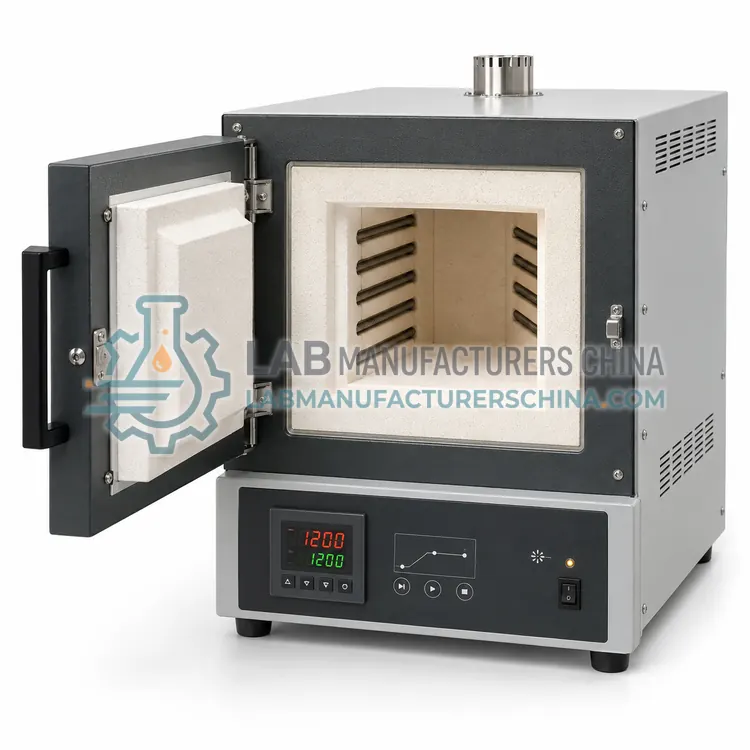 CLAF实验室高温炉Laboratory furnaces are high-temperature electrically heated chambers used for ashing, sintering, calcination, melting and heat treatment, with working temperatures from about 1000 C up to 1800 C. The category includes muffle, tube, vacuum, ashing and high-temperature furnaces, which differ in chamber geometry, atmosphere control and maximum temperature.
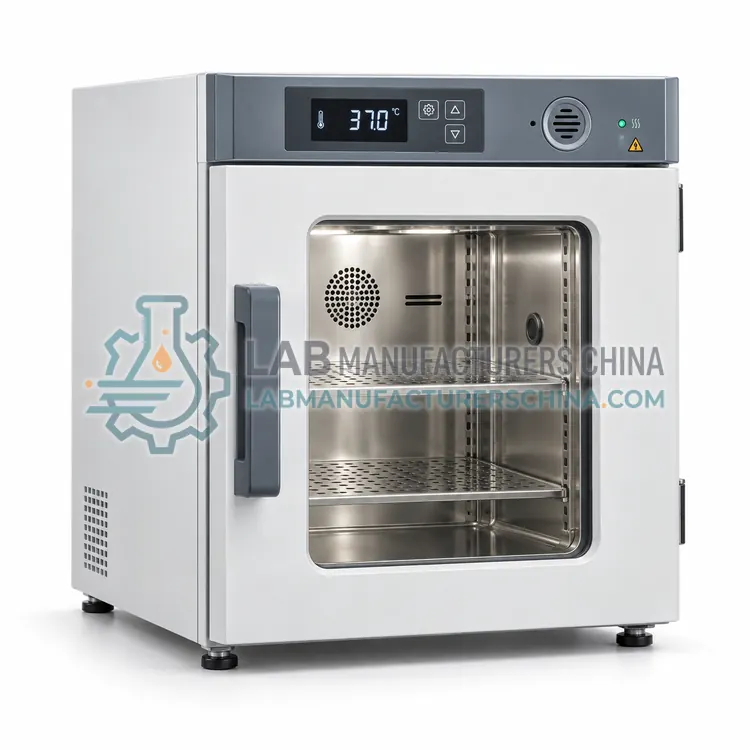 CLAI实验室培养箱Laboratory incubators are temperature-controlled chambers that maintain stable conditions for growing, culturing and storing microorganisms, cells, plants and samples, typically from 5 C to 80 C with optional CO2, humidity and shaking. The category covers standard, CO2, cooling, shaking and BOD incubators used in microbiology, cell culture and environmental testing.
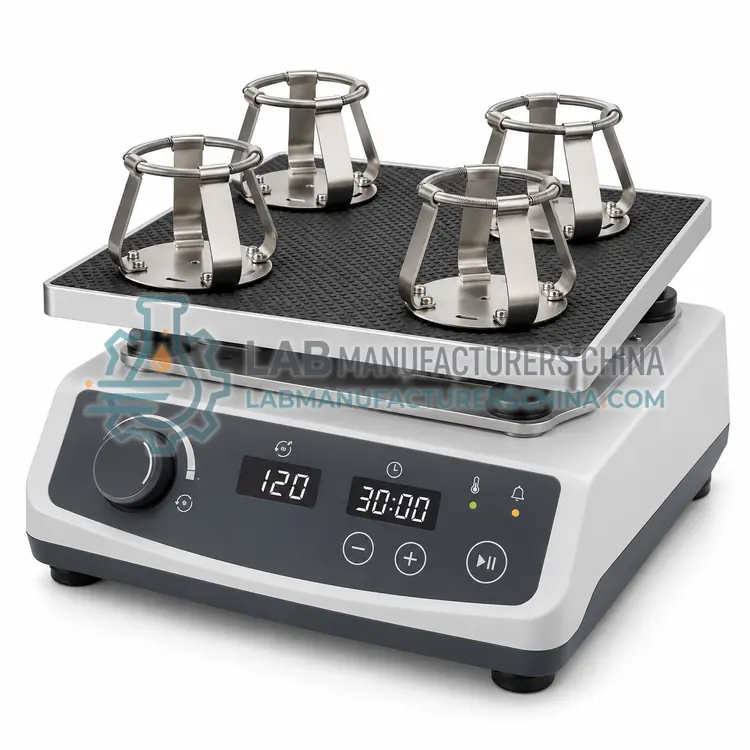 CLAS实验室摇床Laboratory shakers mix, aerate and suspend samples through controlled motion, using orbital, reciprocal, rocking, incubator and microplate formats. Speed typically ranges from 10 to 300 rpm for large platforms and up to 1500 rpm on small units, with load capacities from a single microplate to several liters of flasks.
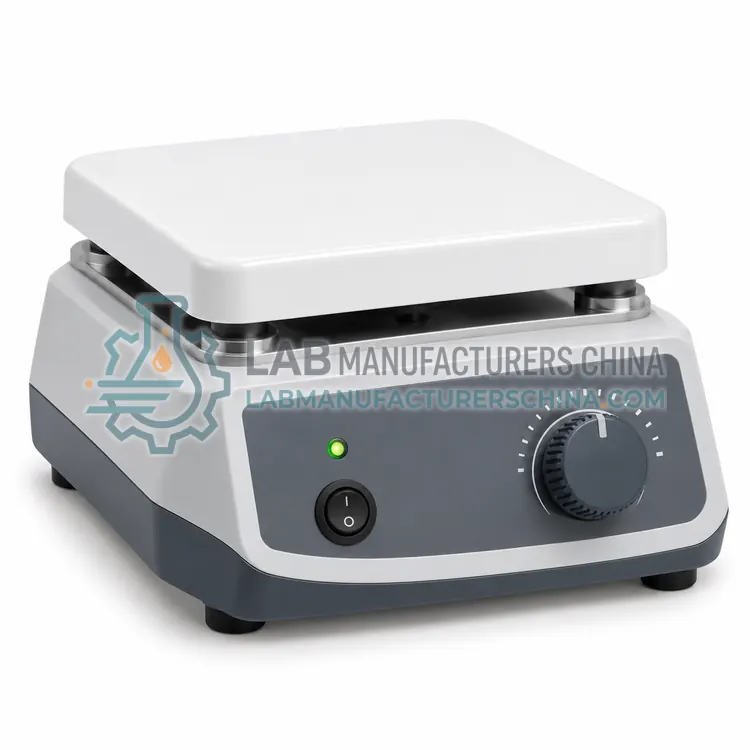 CLST实验室搅拌器Laboratory stirrers are benchtop devices that agitate liquids in beakers, flasks and reactors to blend reagents, dissolve solids, keep suspensions uniform and improve heat transfer. The category covers magnetic, overhead, hotplate and multi-position stirrers used in chemistry, pharmaceutical, biotechnology and materials laboratories.