
Laboratory Centrifuges
实验室离心机
CLAC · General Laboratory Equipment · 5 product types · 26 models
By Lab Manufacturers China Technical TeamLast reviewed
What are Laboratory Centrifuges?
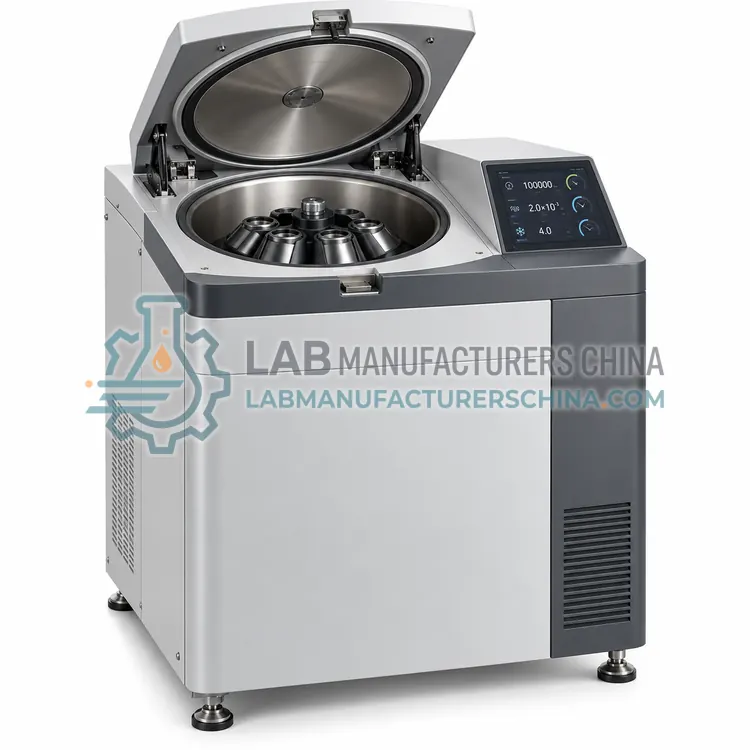
Laboratory centrifuges separate particles, cells and macromolecules from liquid samples by applying centrifugal force in a rotating rotor. The category spans benchtop, high-speed, refrigerated, micro and ultra-speed units used in clinical, pharmaceutical, biotechnology, chemical and academic laboratories for sample preparation and purification.
5 product types in Laboratory Centrifuges
The 5 product types below are grouped by the exact instrument you need.
- BEC5 models
Benchtop Centrifuges
台式离心机
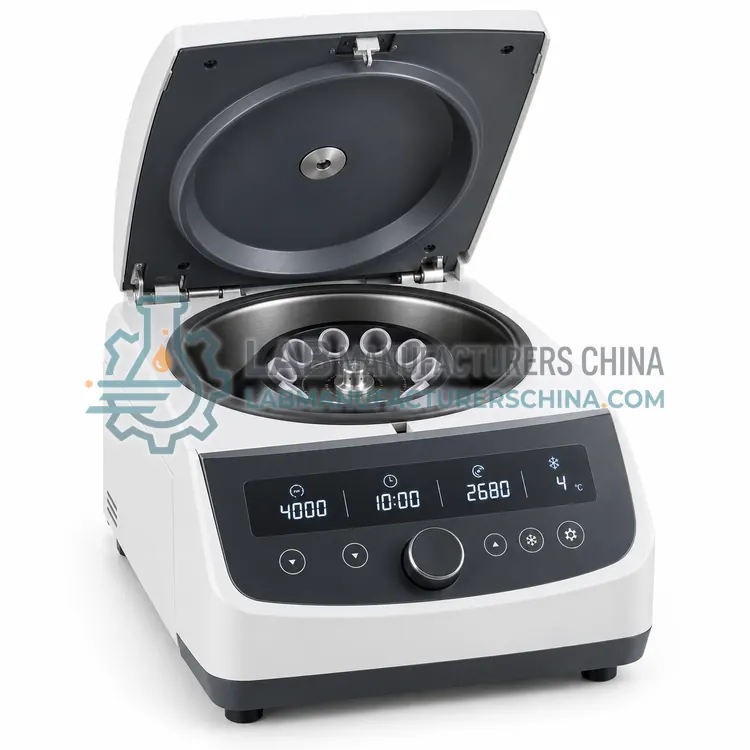
Benchtop centrifuges are compact, bench-mounted instruments that separate blood, cell suspensions and precipitates using centrifugal force, typically up to 6,000 rpm or about 5,000 x g for general models. Clinical laboratories, blood banks, teaching labs and routine QC groups use them for serum separation and sample clarification.
- HSC5 models
High-Speed Centrifuges
高速离心机
High-speed centrifuges operate at roughly 15,000 to 30,000 rpm, generating 20,000 to 60,000 x g for pelleting bacteria, organelles, precipitated proteins and large-volume cell harvests. Biotechnology, biopharmaceutical and academic laboratories use them with fixed-angle and swing-bucket rotors holding tubes or bottles from 1.5 mL to 1 L.
- REC5 models
Refrigerated Centrifuges
冷冻离心机
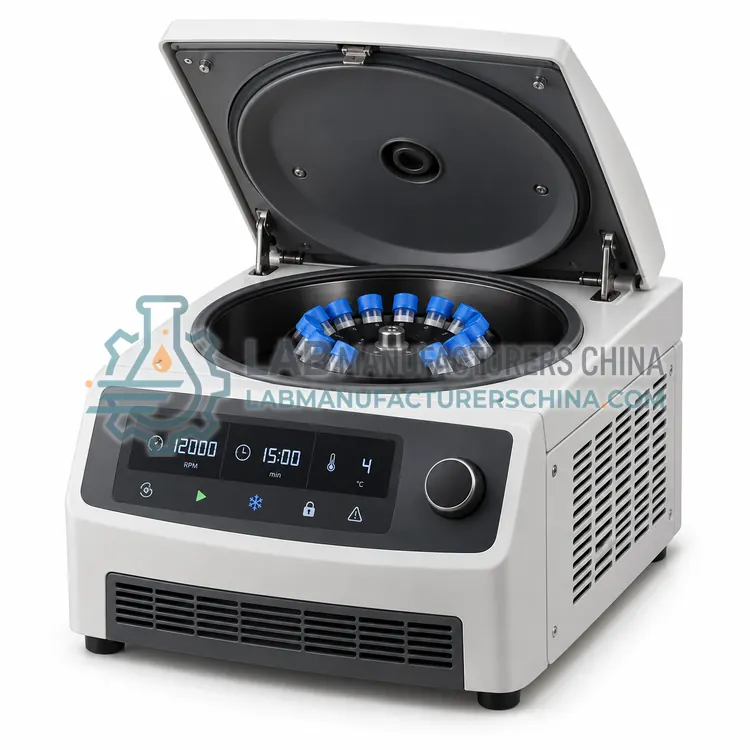
Refrigerated centrifuges combine a compressor-cooled chamber with a rotor drive so samples stay at a set temperature, typically -20 to 40 C, during separation. Laboratories in biotechnology, clinical diagnostics, blood banking and pharmaceutical research use them for heat-labile proteins, enzymes, cells, nucleic acids and blood components.
- MIC5 models
Microcentrifuges
微量离心机
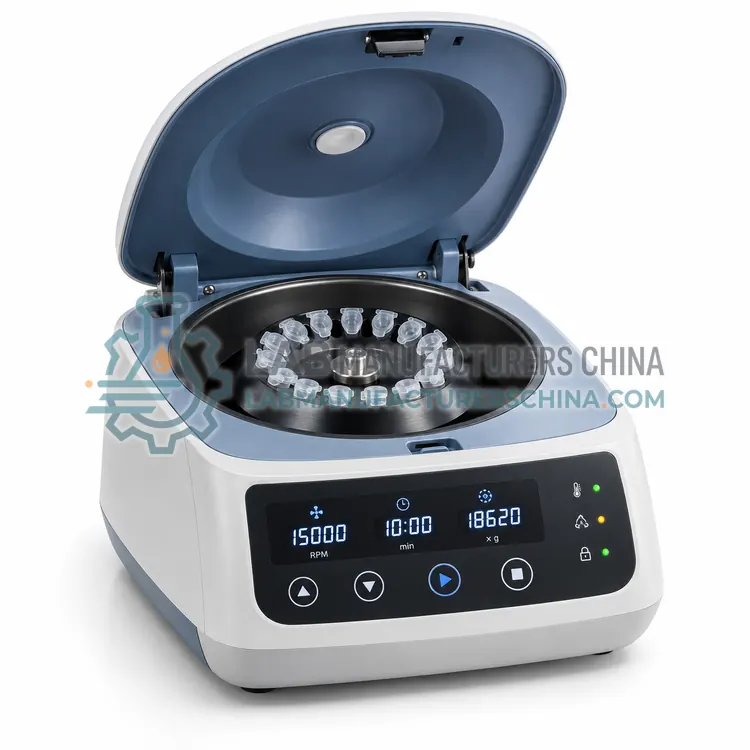
Microcentrifuges are compact centrifuges for 0.2 to 2.0 mL microtubes, reaching 12,000 to 21,000 x g within seconds. Molecular biology, genomics, diagnostic and teaching laboratories use them for nucleic acid and protein purification, spin-column steps, PCR tube pulse spins and pelleting of small sample volumes.
- ULT6 models
Ultracentrifuges
超速离心机
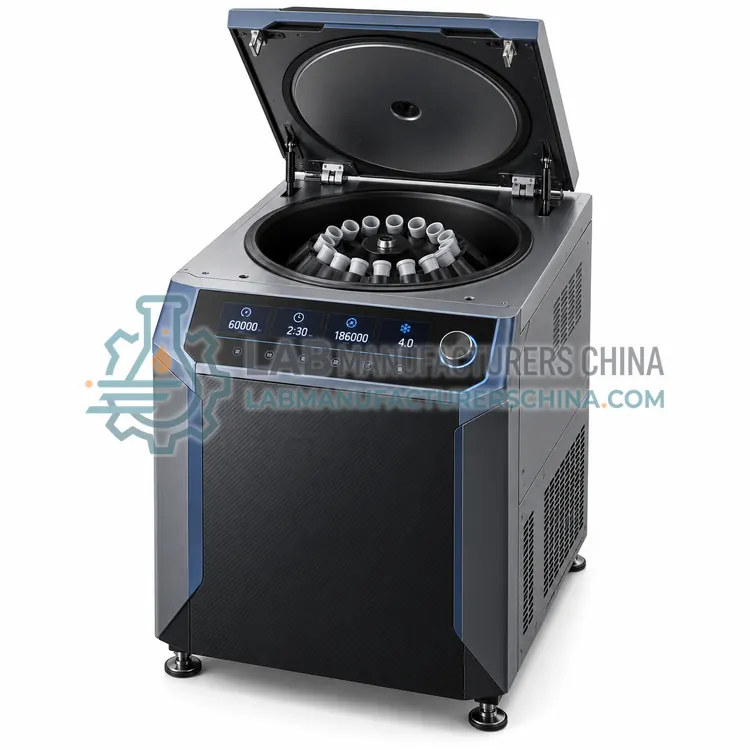
Ultracentrifuges are vacuum-chamber, refrigerated centrifuges that spin rotors at 40,000 to 100,000 rpm, generating 100,000 to over 600,000 x g. Biochemistry, virology, lipidomics and vaccine laboratories use them for density-gradient separation, virus and exosome isolation, ribosome and lipoprotein fractionation and sedimentation analysis.
What are Laboratory Centrifuges?
A laboratory centrifuge is an instrument that spins sample tubes or bottles around a fixed axis so that denser components move outward and form a pellet, while lighter components remain in the supernatant. The separating force is expressed as relative centrifugal force (RCF, in x g) and depends on rotor radius and rotational speed in rpm. Laboratory models range from palm-sized minicentrifuges spinning at a few thousand rpm to floor-standing ultracentrifuges exceeding 100,000 rpm and 800,000 x g. Main families are benchtop general-purpose units, high-speed units, refrigerated units that control temperature, microcentrifuges for 0.2 to 2.0 mL tubes, and vacuum-chambered ultracentrifuges. Each takes interchangeable swing-out, fixed-angle or vertical rotors, plus buckets and adapters for tubes, plates and bottles.
How do Laboratory Centrifuges work?
A motor, usually brushless induction or DC, drives a rotor holding balanced tubes. As the rotor spins, each particle experiences an outward force proportional to its mass, the square of angular velocity and its distance from the axis. Particles sediment at a rate set by size, density difference, medium viscosity and RCF, as described by Stokes' law. Swing-out rotors place tubes horizontal during the run for a flat pellet interface, fixed-angle rotors hold tubes at 25 to 45 degrees for shorter pelleting paths, and vertical rotors shorten paths further for density gradients. Refrigerated models use a compressor to remove frictional heat, and ultracentrifuges evacuate the chamber to under 0.1 Pa to reduce air drag. Sensors monitor speed, imbalance and lid status, and control firmware manages acceleration and braking profiles.
Where are Laboratory Centrifuges used?
Centrifuges are used wherever a mixture must be fractionated or clarified. Clinical laboratories separate serum and plasma from blood tubes and prepare urine sediment. Molecular biology laboratories pellet cells and nucleic acid precipitates and run spin-column purification. Pharmaceutical and biotechnology groups harvest cells and inclusion bodies, clarify lysates and fractionate proteins. Ultracentrifuges isolate organelles, viruses, exosomes and lipoproteins, and support density-gradient and sedimentation velocity work. Chemical and environmental laboratories separate suspended solids, precipitates and emulsions before analysis, and food and petroleum testing use centrifuges for sediment and water determination. Teaching laboratories use benchtop units for basic separation exercises. Choice of rotor and speed is set by sample volume, particle size and the gentleness that the target material requires.
Which standards apply to Laboratory Centrifuges?
Electrical safety for laboratory centrifuges is covered by IEC 61010-1 and the particular requirements of IEC 61010-2-020 for laboratory centrifuges, which address rotor containment, lid interlocks, imbalance and mechanical energy. Electromagnetic compatibility is assessed under IEC 61326-1. Clinical applications may reference CLSI guidance on specimen handling and centrifugation, such as CLSI GP44. Regulatory markings commonly sought are CE under the Machinery, Low Voltage and EMC frameworks and, for in vitro diagnostic use, the relevant IVD rules. Manufacturing quality is usually demonstrated with ISO 9001, and medical-grade production with ISO 13485. Rotors are subject to life-cycle limits and periodic inspection, and users should keep records of run hours and cycles. All certification status must be verified per model.
How do I select the right laboratory centrifuges equipment?
Start with the sample: tube size, volume per run and the RCF needed to pellet the target. General clinical and teaching work is served by benchtop units up to about 6,000 rpm. Molecular biology tubes of 0.2 to 2.0 mL call for a microcentrifuge. Cell harvest, protein and nucleic acid work at 4 C need a refrigerated model, and high RCF to 20,000 x g or more points to a high-speed unit. Subcellular fractions, viruses and lipoproteins require an ultracentrifuge. Then consider rotor options, since a swing-out rotor suits plates and blood tubes while fixed-angle suits fast pelleting. Check temperature range, noise, footprint, biosafety aerosol sealing and program memory. Budget for rotors, buckets and adapters, which often cost as much as the drive unit.
Laboratory Centrifuges comparison
| Subcategory | Principle | Typical use | Key spec |
|---|---|---|---|
| Benchtop Centrifuges | Compact motor-driven rotor, swing-out or angle | Routine separation, blood tubes, teaching | Up to about 6,000 rpm |
| High-Speed Centrifuges | Higher-speed drive with large-volume angle rotors | Cell harvest, lysate clarification | 15,000–22,000 rpm, up to about 50,000 x g |
| Refrigerated Centrifuges | Compressor cooling of the rotor chamber | Temperature-sensitive samples | −20 to +40 C chamber range |
| Microcentrifuges | Small fixed-angle rotor for microtubes | Molecular biology, spin columns | 0.2–2.0 mL tubes, to about 21,000 x g |
| Ultracentrifuges | Vacuum chamber with high-speed rotor | Organelles, viruses, gradients | Up to 100,000+ rpm, 800,000+ x g |
Frequently asked questions about Laboratory Centrifuges
Rpm is the rotor speed in revolutions per minute, while RCF is the force applied to the sample, expressed in multiples of gravity. RCF depends on both rpm and rotor radius, so the same rpm gives different RCF in different rotors. Protocols should specify RCF for reproducibility.
A benchtop centrifuge with a swing-out rotor and interchangeable angle rotor covers most routine work such as blood tubes, conical tubes and small bottles. Add refrigeration if samples are heat-sensitive, or choose a microcentrifuge if most work uses tubes of 2 mL or less.
A refrigerated centrifuge is needed when samples degrade at room temperature or when long or fast runs generate frictional heat. Typical cases are enzymes, proteins, RNA, cell cultures and live cells, usually spun at 4 C, and ultracentrifuge runs lasting several hours.
Inspect rotors before each use for cracks, corrosion and deformation, and clean them after spills. Manufacturers set life limits in years or run cycles, especially for aluminum and titanium rotors at high speed. Keep a usage log and retire rotors at the stated limit.
IEC 61010-1 and IEC 61010-2-020 set safety requirements for electrical and mechanical hazards of laboratory centrifuges, including rotor containment and lid interlocks. EMC is addressed by IEC 61326-1. Conformity marking such as CE must be verified for each specific model.
Load tubes of the same type and equal filled mass in opposite positions so that the rotor is symmetrical around the axis. Weigh tubes when tolerances are tight, use water-filled balance tubes for odd numbers, and never run the rotor with a single tube.
Related categories
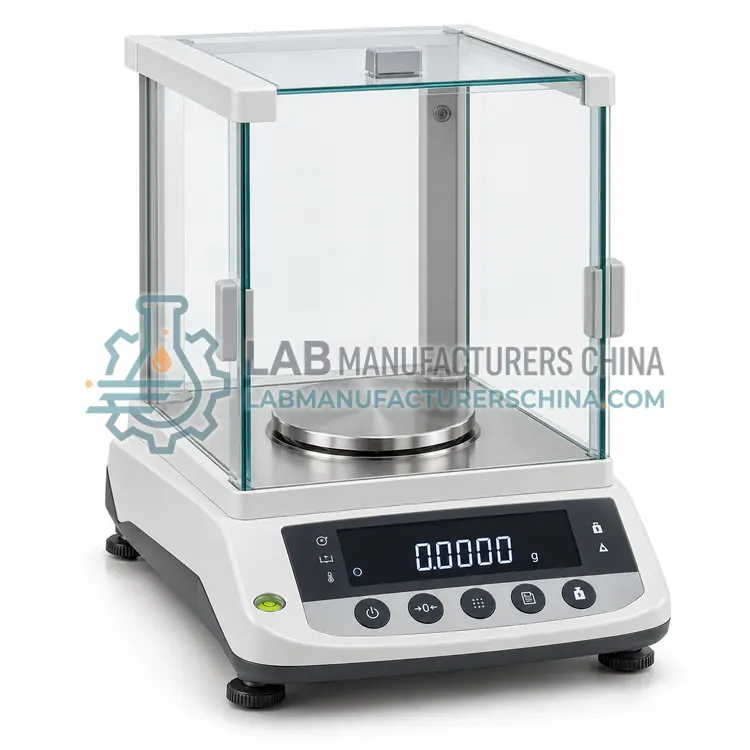 CLAB实验室天平Laboratory balances measure mass with readability from 0.1 microgram to 1 kg across analytical, precision, micro, moisture and platform types. They support sample preparation, formulation, gravimetric analysis and quality control in pharmaceutical, chemical, food, environmental, clinical and academic laboratories.
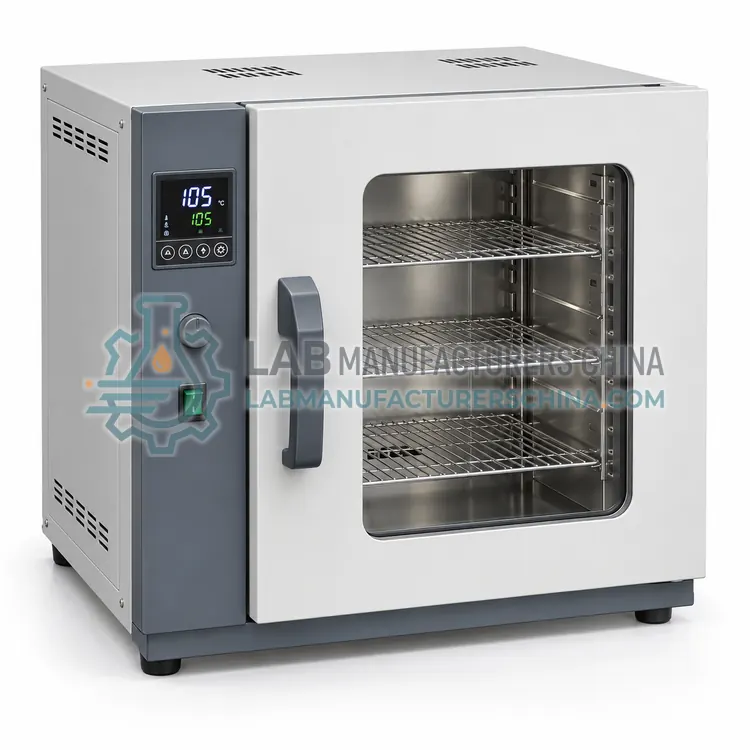 CLAO实验室烘箱Laboratory ovens are insulated, electrically heated chambers that hold a set temperature to dry, bake, cure, condition or heat-treat samples and glassware. The category covers gravity and forced-air drying ovens, vacuum ovens, high-temperature ovens and larger industrial laboratory ovens, with working temperatures from about 50 C to 600 C.
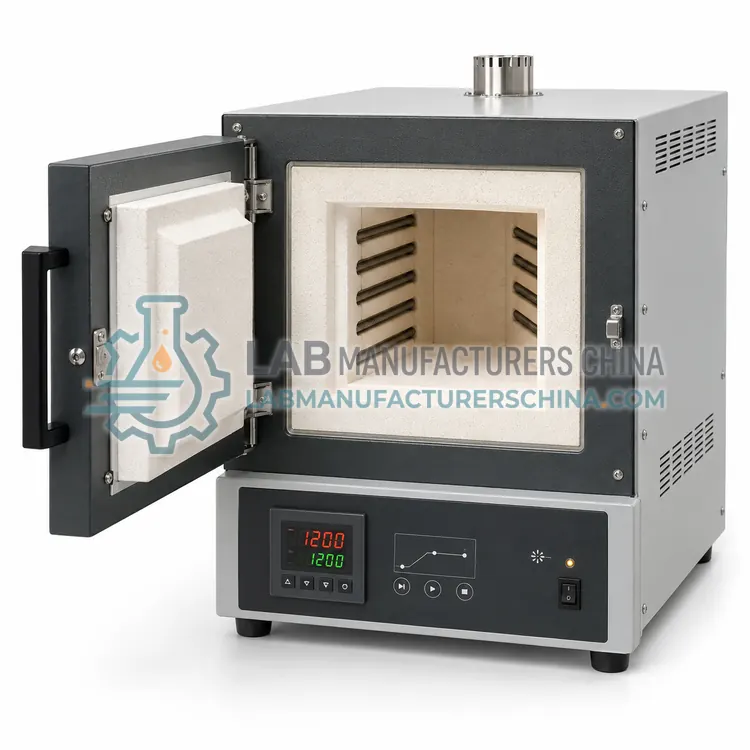 CLAF实验室高温炉Laboratory furnaces are high-temperature electrically heated chambers used for ashing, sintering, calcination, melting and heat treatment, with working temperatures from about 1000 C up to 1800 C. The category includes muffle, tube, vacuum, ashing and high-temperature furnaces, which differ in chamber geometry, atmosphere control and maximum temperature.
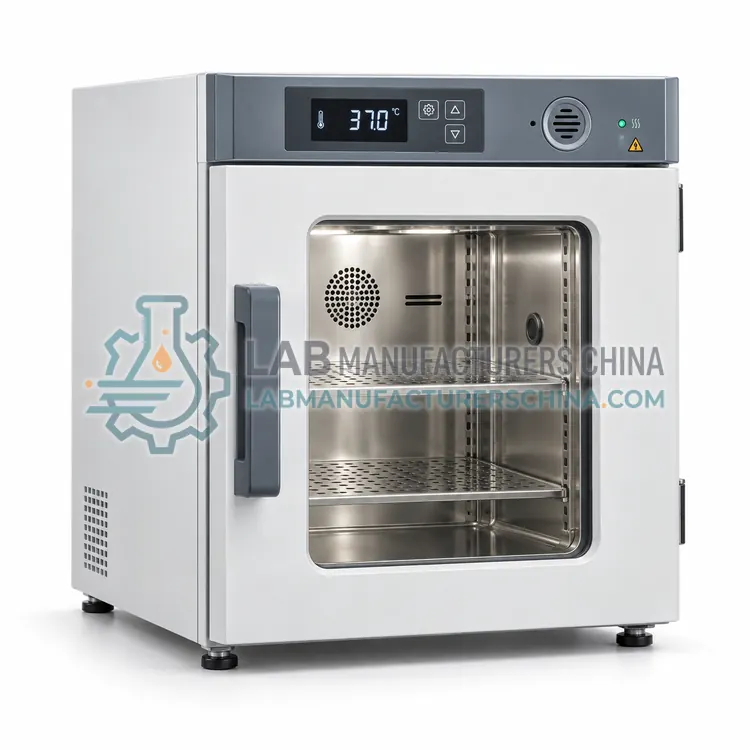 CLAI实验室培养箱Laboratory incubators are temperature-controlled chambers that maintain stable conditions for growing, culturing and storing microorganisms, cells, plants and samples, typically from 5 C to 80 C with optional CO2, humidity and shaking. The category covers standard, CO2, cooling, shaking and BOD incubators used in microbiology, cell culture and environmental testing.