How do Ultracentrifuges work?
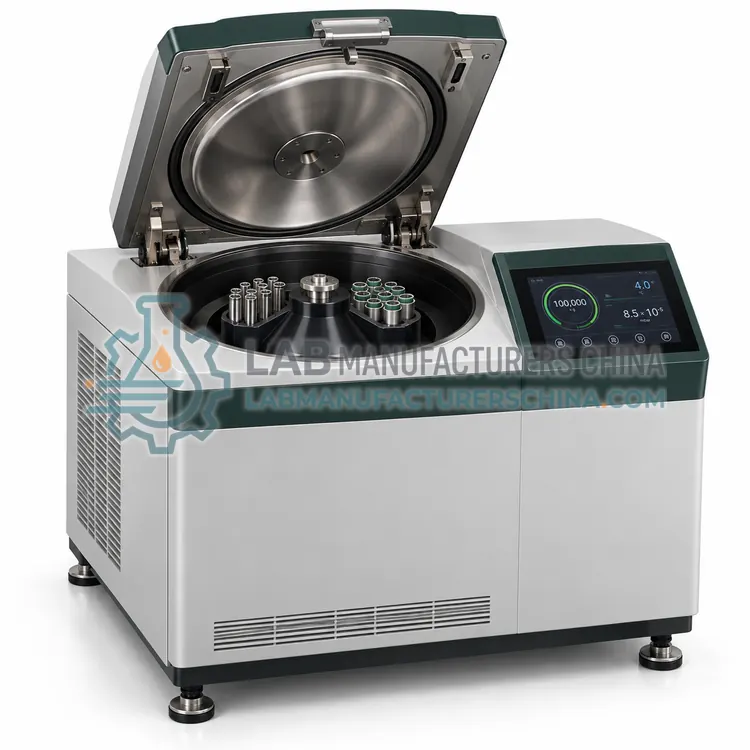
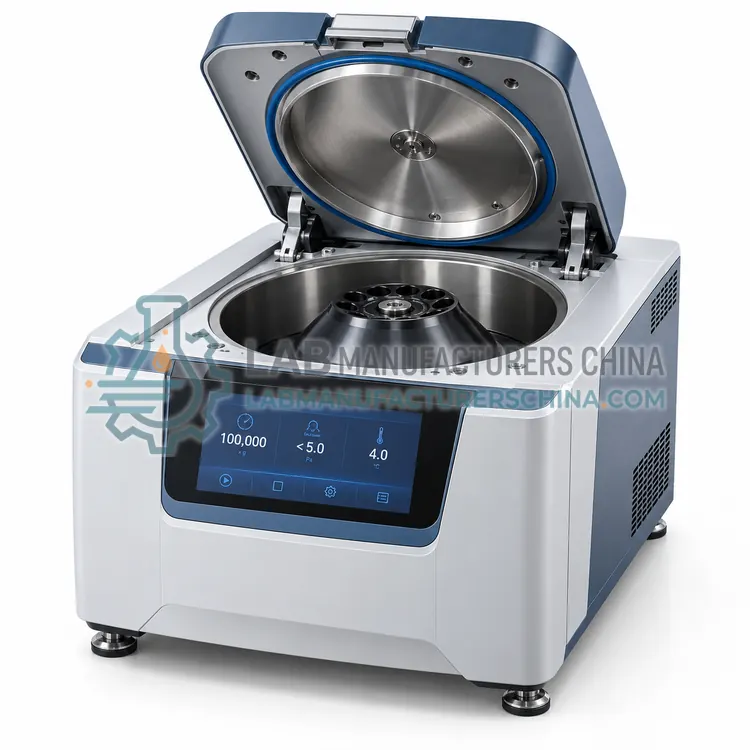
An ultracentrifuge drives a titanium or carbon fiber rotor through a high-frequency induction or brushless motor, typically with a magnetically suspended or oil-lubricated flexible shaft. The chamber is evacuated below 0.1 Pa (1 micron Hg) by a rotary vane and diffusion or turbomolecular pump, eliminating air friction that would otherwise overheat the rotor. Refrigeration controls rotor temperature via infrared sensing, usually between 0 and 40 C. Particles sediment according to Stokes' law, with sedimentation coefficients measured in Svedberg units, in preparative runs, or are separated by buoyant density in cesium chloride, sucrose or iodixanol gradients in isopycnic runs. Rotors are identified automatically, and the control system tracks run hours and cycles to derate them. A heavy armor ring contains rotor fragments in the event of failure.
Which Ultracentrifuges variants are available?
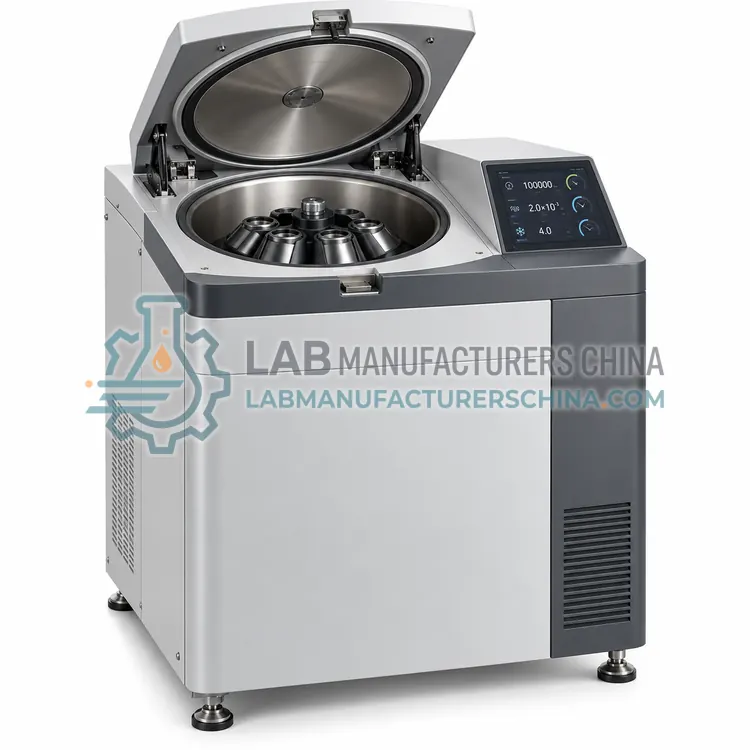
- Floor-Standing Preparative Ultracentrifuge — A floor-standing preparative ultracentrifuge reaches 70,000 to 100,000 rpm and 500,000 to 800,000 x g with a vacuum chamber and refrigeration.
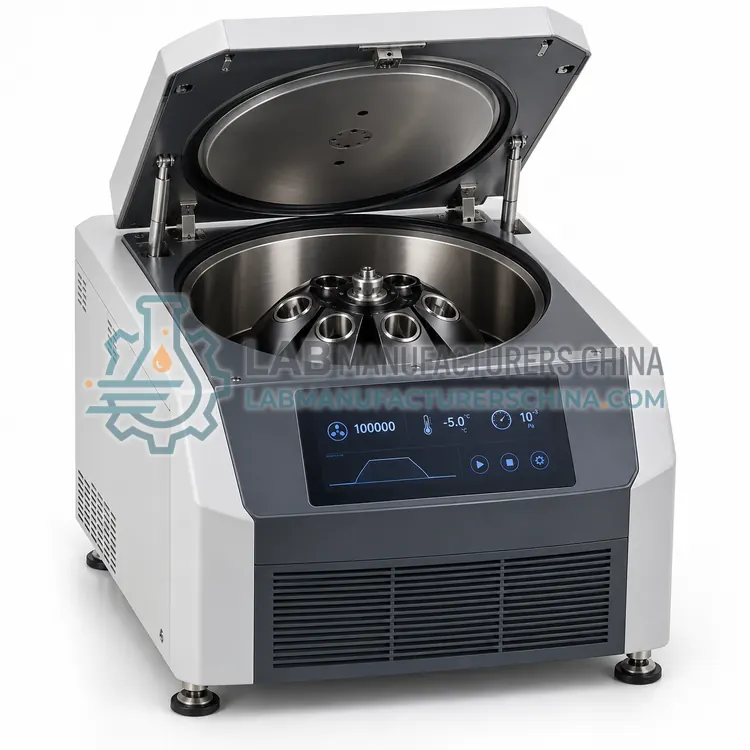
- Benchtop Ultracentrifuge — A benchtop ultracentrifuge reaches 90,000 to 150,000 rpm and up to 1,000,000 x g with small fixed-angle and vertical rotors holding 0.2 to 4 mL tubes.
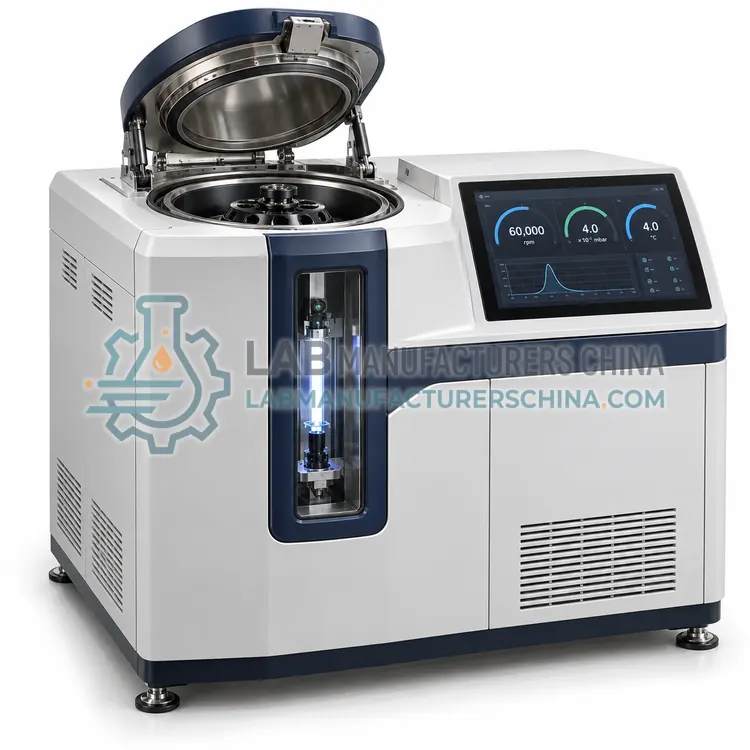
- Analytical Ultracentrifuge — An analytical ultracentrifuge couples a 60,000 rpm rotor with optical detection of absorbance, interference or fluorescence during sedimentation.
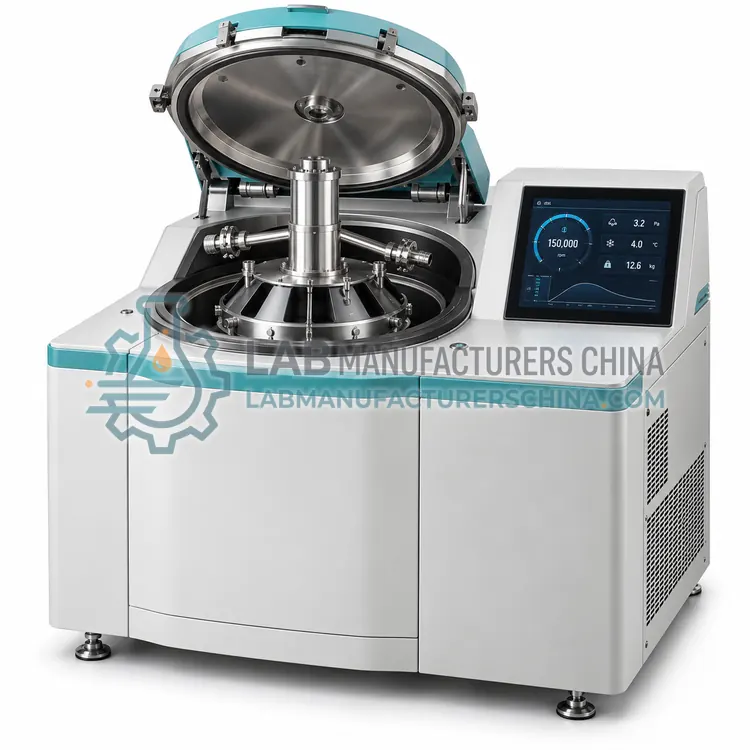
- Zonal and Continuous-Flow Ultracentrifuge — A zonal or continuous-flow ultracentrifuge uses a large-volume rotor with a rotating seal to process liters of feed at 25,000 to 50,000 rpm.
- Ultracentrifuge with Vertical and Near-Vertical Rotors — An ultracentrifuge fitted with vertical and near-vertical rotors holds tubes upright or at 7 to 10 degrees, shortening the path length so isopycnic bands form in 1 to 4 hours instead of 16 to 48.
- Refrigerated Micro-Ultracentrifuge — A refrigerated micro-ultracentrifuge is a compact benchtop unit spinning 0.2 to 2 mL tubes at up to 100,000 to 150,000 rpm and 500,000 to 1,000,000 x g with temperature control.
How do I choose the right variant?
Specify the maximum RCF needed: 100,000 to 150,000 x g suits most gradient and pelleting work, while ribosomes, small viruses and proteins need 300,000 to 600,000 x g or analytical capability. Choose rotor geometry to match the task, with swing-bucket rotors for gradients, fixed-angle rotors for pelleting, vertical or near-vertical rotors for fast gradients and zonal or continuous-flow rotors for large volumes. Consider tube materials and sealing, because ultracentrifuge tubes require heat-sealed or cap-assembled closures. Evaluate run documentation, rotor life tracking, temperature range, vacuum time, noise, and installation needs including weight, power and cooling water. For multi-user facilities, autoclavable rotors and biosafety containment options matter.
Where are Ultracentrifuges used?
Ultracentrifuges are specified in virus and viral vector purification, exosome and extracellular vesicle isolation, lipoprotein fractionation, ribosome and subcellular organelle isolation and plasmid DNA banding in cesium chloride.
Which standards and certifications apply?
Work with Ultracentrifuges is commonly governed by IEC 61010-1, IEC 61010-2-020, IEC 61326-1, ISO 9001, EN 12469 and GB 4793.1. Instrument certifications such as CE marking are confirmed per configuration and never assumed.
What are the key considerations before purchase?
Floor-standing units weigh 200 to 450 kg and often require a dedicated 220 V or 380 V circuit and a level, vibration-free floor. Rotor management is critical: log every run, derate titanium and aluminum rotors per the maker's schedule, and retire rotors at the stated lifetime. Use only tubes and adapters certified for the rotor, and fill them as specified. Vacuum pumps need periodic oil changes, and seals require inspection. Clean rotors with neutral detergent and never use chloride or strong alkali on aluminum. Annual preventive maintenance should include speed, temperature and vacuum checks. Install and operate in line with IEC 61010-2-020 and local pressure-vessel and biosafety rules.