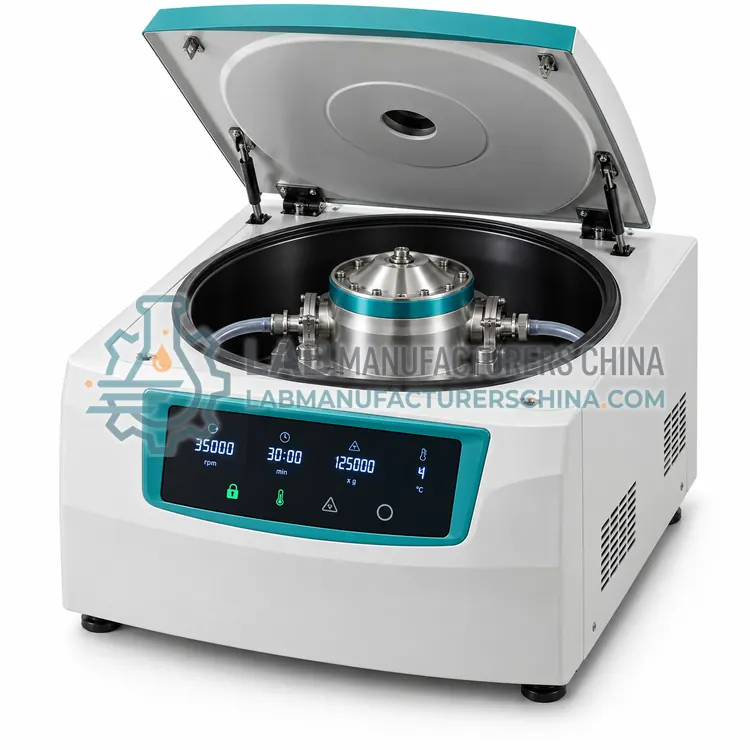
How do High-Speed Centrifuges work?
High-speed centrifuges use a high-torque induction or brushless drive, typically with a flexible shaft or direct coupling, to spin rotors made of aluminum alloy, titanium or carbon fiber. Centrifugal force scales with the square of angular velocity, so a 20,000 rpm rotor of 10 cm radius produces about 44,800 x g. Fixed-angle rotors shorten the sedimentation path and give fast pellets. Swing-bucket rotors allow gentle separation and gradients at lower speeds. Because friction with air heats the rotor significantly at these speeds, most units are refrigerated, with compressors holding 4 C and sensors monitoring rotor temperature. Armored chambers, rotor recognition, overspeed and imbalance protection, and lid interlocks contain energy in the event of a rotor failure.
Which High-Speed Centrifuges variants are available?
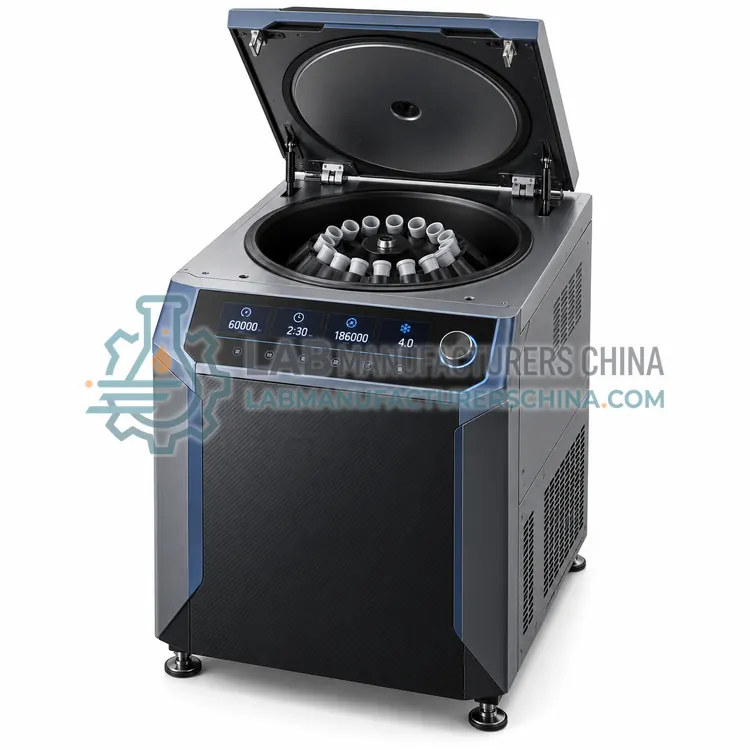
- Floor-Standing High-Speed Refrigerated Centrifuge — A floor-standing high-speed refrigerated centrifuge reaches 18,000 to 25,000 rpm with 4 x 1 L or 6 x 500 mL capacity and compressor cooling to -20 C.
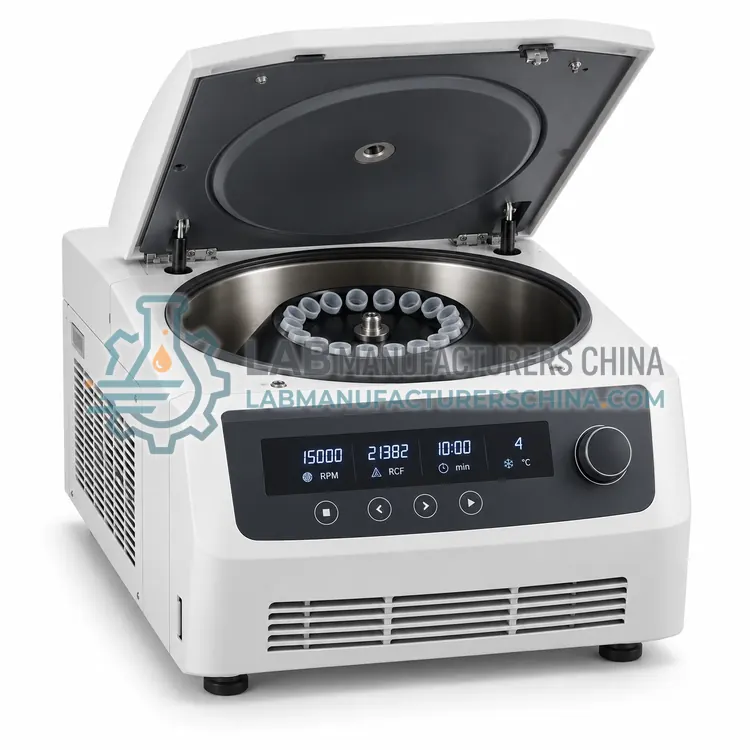
- Benchtop High-Speed Refrigerated Centrifuge — A benchtop high-speed refrigerated centrifuge offers 15,000 to 21,000 rpm and up to about 30,000 x g in a 50 to 90 kg chassis that sits on a lab bench.
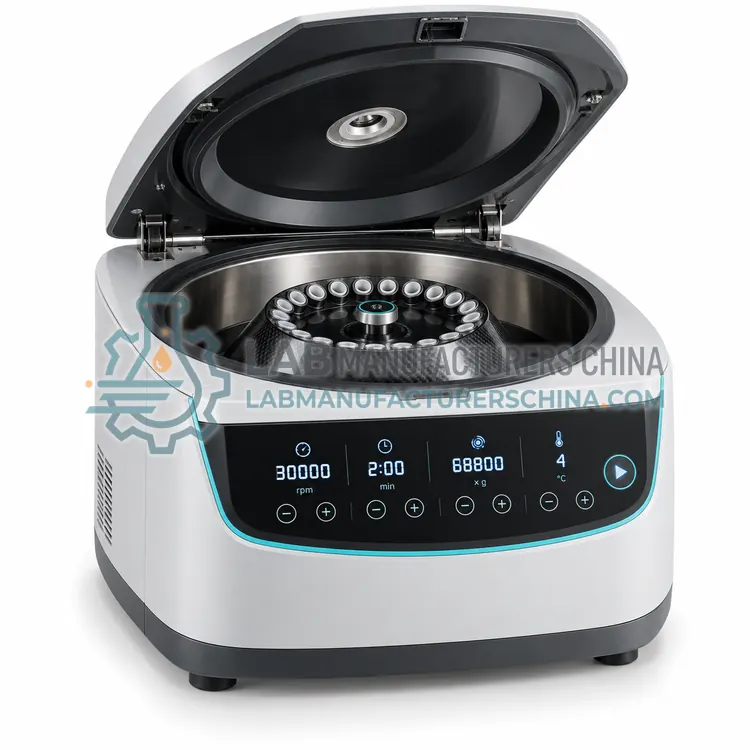
- Carbon Fiber Rotor High-Speed Centrifuge — A carbon fiber rotor high-speed centrifuge uses lightweight composite rotors that resist fatigue and corrosion, reaching 20,000 to 30,000 rpm at 4 x 1 L or 6 x 500 mL capacity.
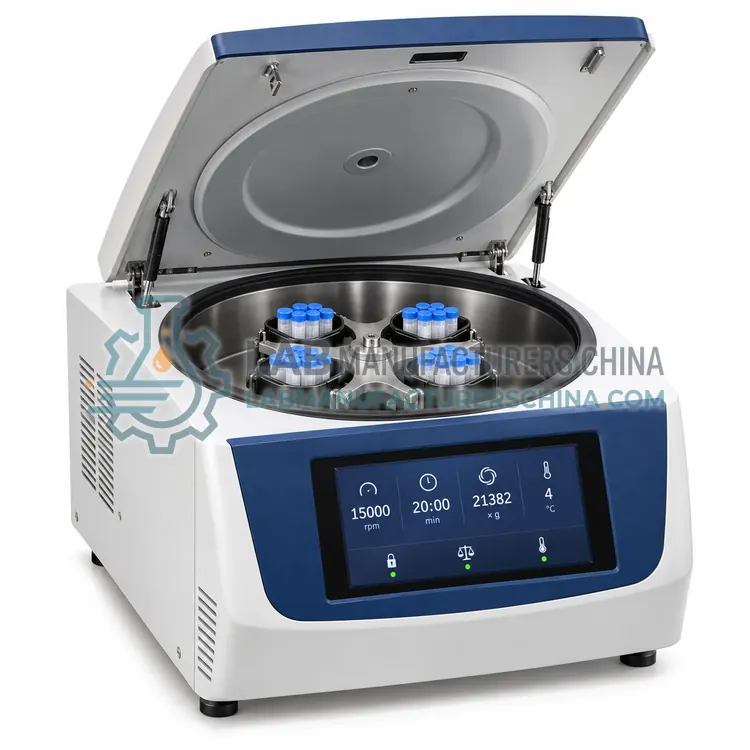
- Microprocessor-Controlled High-Speed Centrifuge with Swing-Bucket Rotor — This high-speed centrifuge pairs a microprocessor controller with swing-bucket rotors running to about 10,000 to 15,000 rpm for gradient work and gentle separation of large volumes.
- Continuous-Flow High-Speed Centrifuge — A continuous-flow high-speed centrifuge feeds liquid through a tubular or zonal rotor while spinning at 15,000 to 35,000 rpm, collecting solids inside.
How do I choose the right variant?
Begin with the pelleting requirement: bacteria and yeast typically pellet at 6,000 to 10,000 x g, while organelles, protein precipitates and membranes need 20,000 to 50,000 x g. Match capacity to batch size, from 6 x 50 mL to 6 x 500 mL or 4 x 1 L. Decide whether a floor or large benchtop unit fits the lab. Refrigeration is almost always required. Choose rotor materials by lifetime and corrosion resistance, since aluminum is economical but carbon fiber and titanium offer higher speed and better chemical tolerance. Evaluate programmable ramps, rotor life logging, aerosol-tight lids, and whether a swing-bucket option is needed for gradients or large-volume clarification.
Where are High-Speed Centrifuges used?
High-Speed Centrifuges are specified in bacterial and yeast cell harvest, protein precipitate recovery, organelle and membrane fractionation, plasmid DNA preparation and clarification of lysates.
Which standards and certifications apply?
Work with High-Speed Centrifuges is commonly governed by IEC 61010-1, IEC 61010-2-020, IEC 61326-1, ISO 9001, ISO 3734 and GB 4793.1. Instrument certifications such as CE marking are confirmed per configuration and never assumed.
What are the key considerations before purchase?
Floor-standing units weigh 150 to 400 kg and require a level, reinforced floor and dedicated power, often 220 V single phase at 16 A. Rotor care is critical: log run hours, derate aluminum rotors per the maker's schedule, and never exceed rated speed with lightly filled tubes that are not rated for the RCF. Clean with neutral pH detergents, lubricate threads and O-rings, and inspect for corrosion. Schedule annual preventive maintenance including tachometer and temperature verification. Comply with IEC 61010-2-020 and, for regulated work, document IQ/OQ and calibration records.