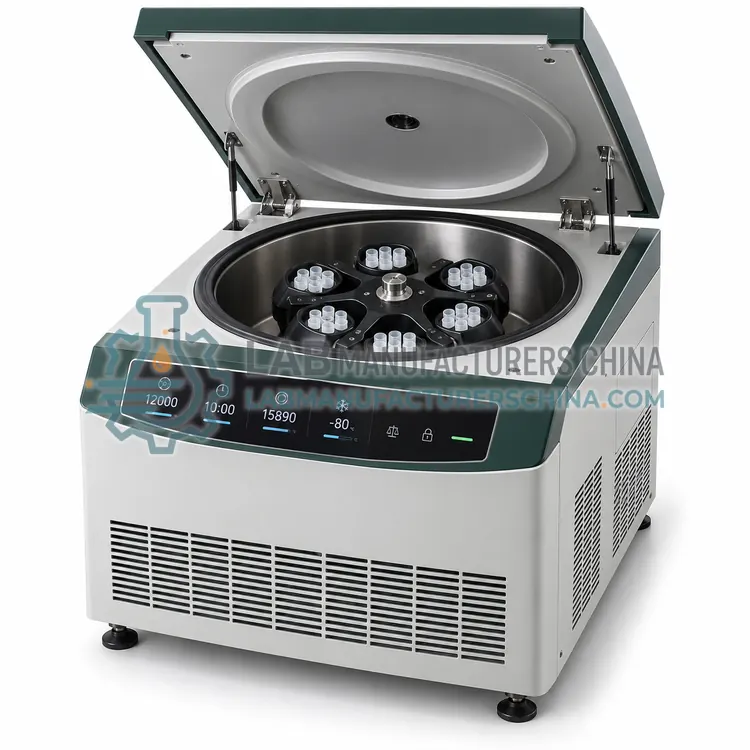
How do Refrigerated Centrifuges work?
Rotor spinning in air generates frictional heat that rises with the square or cube of speed, often adding 10 to 20 C within minutes at high RCF. A refrigerated centrifuge counters this with a hermetic compressor, condenser, evaporator coil wrapped around the chamber and a sensor that measures chamber or rotor temperature. A PID controller modulates compressor duty and sometimes a heater to hold the setpoint within plus or minus 1 to 2 C. Environmentally preferred refrigerants such as R290 or R134a are common. Insulated chambers, door gaskets and a defrost or drain function manage condensation. The drive system, rotor recognition, imbalance detection and lid lock operate as in ambient centrifuges, but controllers also limit speed or alert if the target temperature cannot be maintained.
Which Refrigerated Centrifuges variants are available?
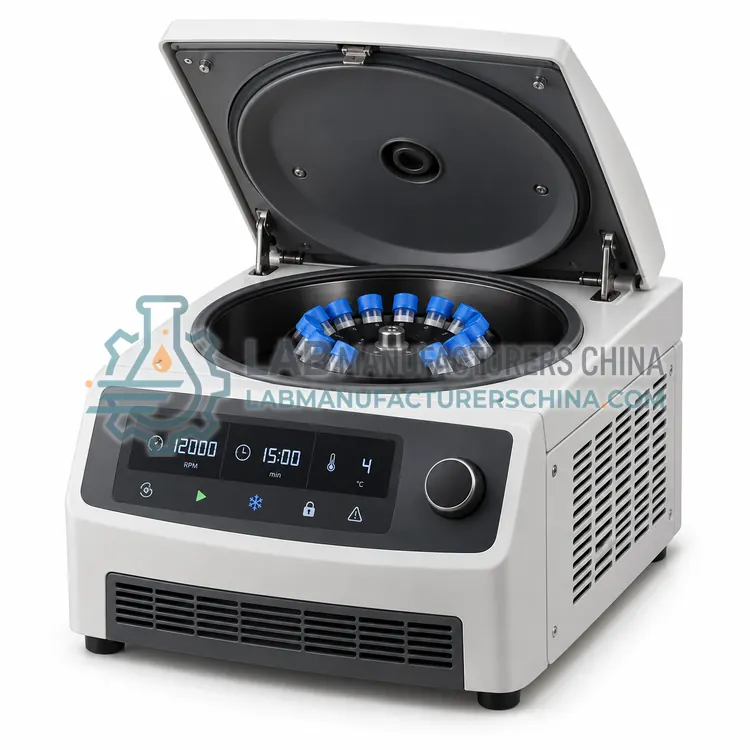
- Benchtop Refrigerated Centrifuge — A benchtop refrigerated centrifuge is a bench-mounted unit with a compressor holding -10 to 40 C at up to 6,000 to 15,000 rpm.
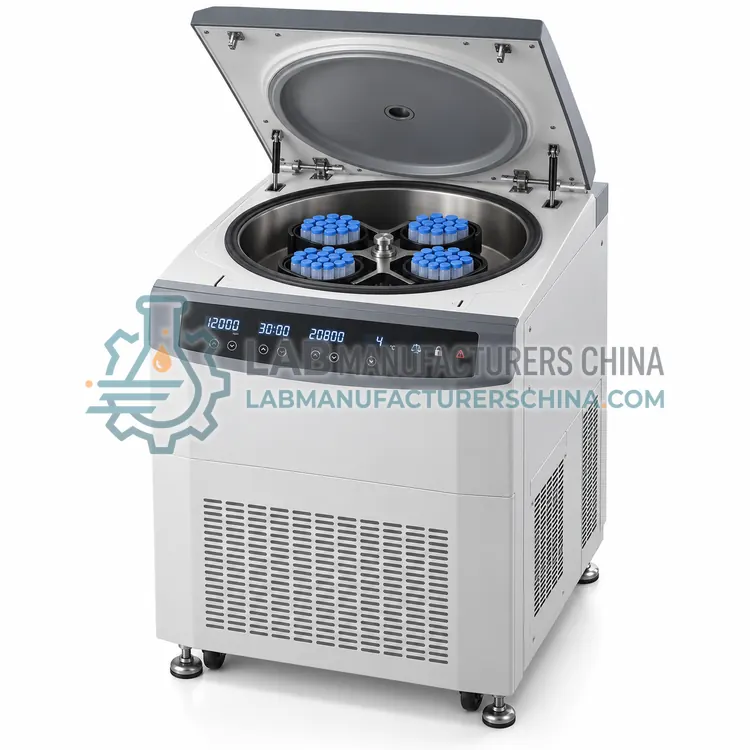
- Floor-Standing Large-Capacity Refrigerated Centrifuge — A floor-standing large-capacity refrigerated centrifuge carries 4 x 1 L to 6 x 1 L bottles at 4,000 to 8,000 rpm with compressor cooling to -10 C.
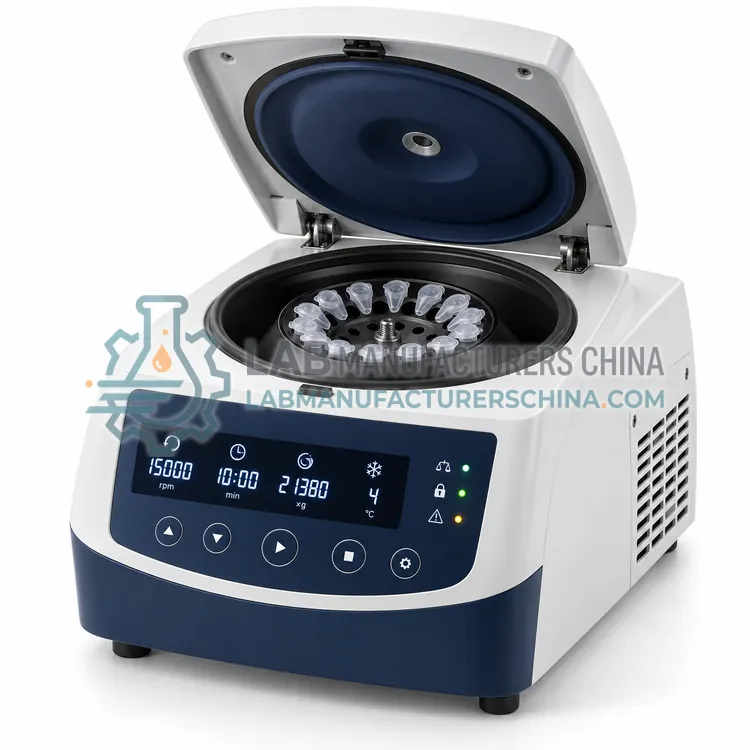
- Refrigerated Microcentrifuge — A refrigerated microcentrifuge spins 0.2 to 2.0 mL tubes at up to 21,000 x g with a chamber held between -10 and 40 C.
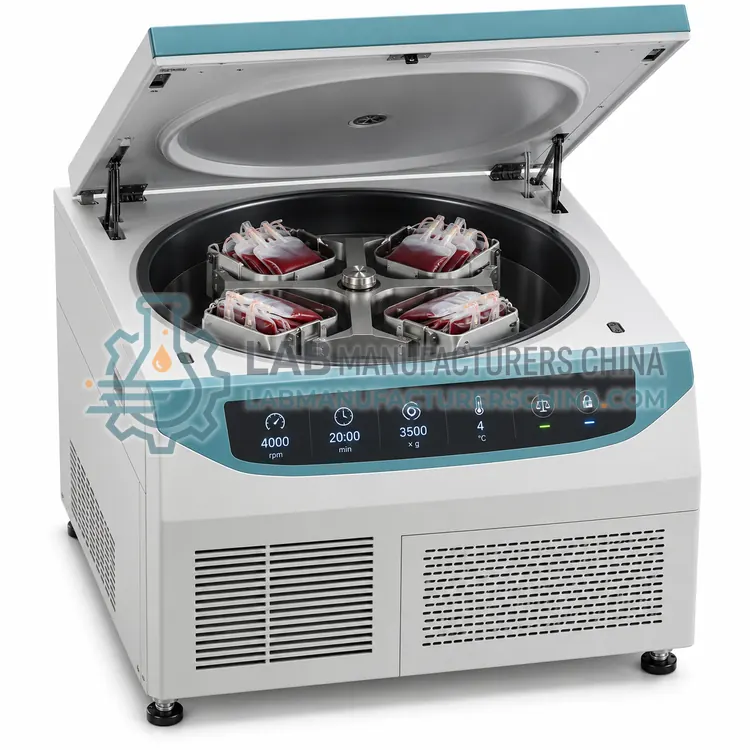
- Blood Bank Refrigerated Centrifuge — A blood bank refrigerated centrifuge processes blood bags of 250 to 500 mL at 20 to 22 C or 4 C with programmable soft-start profiles.
- Ultra-Low Temperature Refrigerated Centrifuge — An ultra-low temperature refrigerated centrifuge uses a high-capacity or cascade compressor to hold the chamber at -20 to -40 C during high-speed spins.
How do I choose the right variant?
Specify the temperature window first: standard work at 4 C needs -10 C capability, while frozen sample handling or long high-speed runs benefit from -20 C. Next determine speed and capacity, from microtube units reaching 21,000 x g to floor units with 6 x 500 mL bottles. Check temperature accuracy and pre-cool time, because delays affect throughput. Consider rotor compatibility and whether the same instrument must run plates, blood bags or bottles. For regulated environments, look for temperature logging, audit trails and alarms. Refrigerant type, ambient conditions up to 32 C, noise and energy use also matter, along with the cooling method: compressor-based systems are typical, while thermoelectric cooling is used only for small, low-power units.
Where are Refrigerated Centrifuges used?
Refrigerated Centrifuges are specified in protein and enzyme purification, cell and tissue pelleting at 4 C, blood component preparation, RNA and DNA extraction and vaccine and biologics process development.
Which standards and certifications apply?
Work with Refrigerated Centrifuges is commonly governed by IEC 61010-1, IEC 61010-2-020, IEC 61326-1, ISO 9001, ISO 13485, AABB Standards for Blood Banks and GB 4793.1. Instrument certifications such as CE marking are confirmed per configuration and never assumed.
What are the key considerations before purchase?
Install the centrifuge with at least 10 to 30 cm of clearance for condenser airflow and avoid rooms above 32 C, since cooling capacity falls with ambient temperature. Allow the unit to stand upright for several hours after transport before powering the compressor. Clean condenser fins every 3 to 6 months and leave the lid open after runs to dry the chamber. Verify chamber temperature annually with a calibrated probe, together with speed and timer. Refrigerants and compressors are subject to local environmental rules, so confirm refrigerant type at purchase. For blood banking or GMP environments, plan IQ/OQ, calibration records and temperature monitoring.