
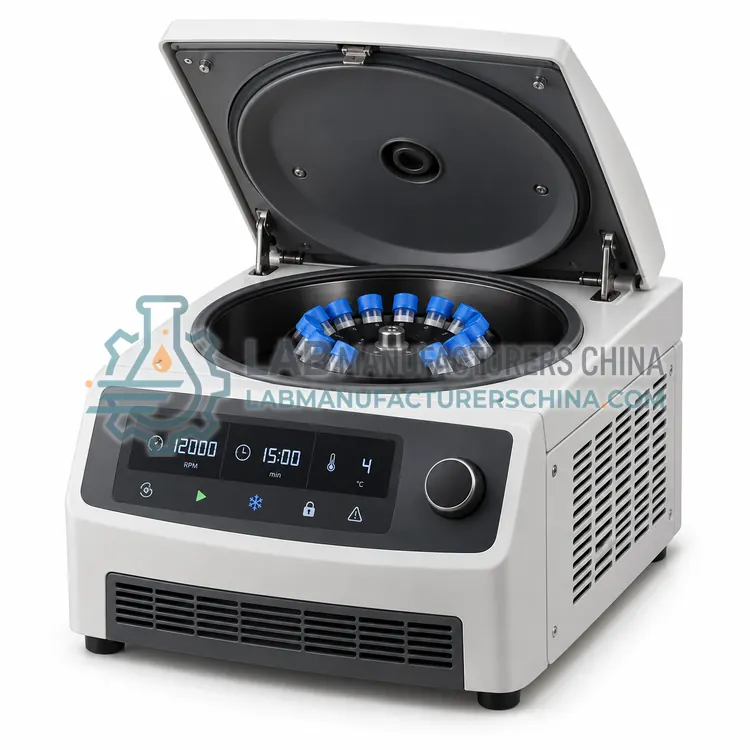
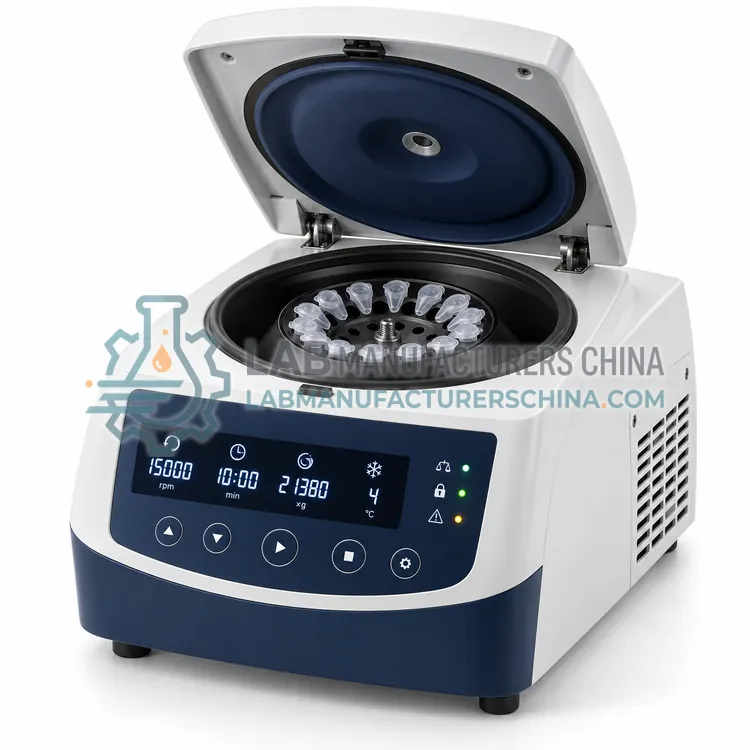
Refrigerated Microcentrifuge
冷冻微量离心机
- SKU REC-0003
- Refrigerated Centrifuges
- CE (to be confirmed)
- ISO 9001 manufacturing (to be confirmed)
- RoHS (to be confirmed)
Price on request — FOB / CIF quoted per order
Prices depend on configuration, quantity and destination port.
Key specifications
| Maximum speed | 14,000–18,000 rpm |
|---|---|
| Maximum RCF | 18,000–21,000 x g |
| Rotor capacity | 24 x 1.5/2.0 mL |
| Temperature range | -10 to 40 °C |
| Temperature accuracy | ±2 °C |
| Pre-cool time to 4 °C | 5–10 min |
Request a quote Download brochure · to be provided
By Lab Manufacturers China Technical TeamLast reviewed Standards: IEC 61010-1, IEC 61010-2-020, IEC 61326-1
What is the Refrigerated Microcentrifuge?
A refrigerated microcentrifuge spins 0.2 to 2.0 mL tubes at up to 21,000 x g with a chamber held between -10 and 40 C. It suits molecular biology groups performing RNA and protein work where samples must stay cold through lysis, precipitation and spin-column steps.
What is the Refrigerated Microcentrifuge?
A refrigerated microcentrifuge spins 0.2 to 2.0 mL tubes at up to 21,000 x g with a chamber held between -10 and 40 C. It suits molecular biology groups performing RNA and protein work where samples must stay cold through lysis, precipitation and spin-column steps.
Overview
Refrigerated microcentrifuges use a compact compressor module and a small, well-insulated chamber, reaching 4 C in 5 to 10 minutes. Standard rotors hold 24 x 1.5/2.0 mL tubes, 30 x 1.5 mL tubes or 4 x 8-strip PCR formats, and aerosol-tight lids are common. Top speeds are 14,000 to 18,000 rpm, producing 18,000 to 21,000 x g. RNA extraction using phenol-chloroform or TRIzol commonly requires 12,000 x g at 4 C for 10 to 15 minutes, which ambient units cannot hold without sample warming. The benchtop footprint is about 30 x 45 cm and the weight is 25 to 40 kg. Controllers display RCF, rpm, time and temperature, and many store 10 to 30 programs. Quiet operation of 55 dB(A) or less suits open labs.
How does it work?
Rotor spinning in air generates frictional heat that rises with the square or cube of speed, often adding 10 to 20 C within minutes at high RCF. A refrigerated centrifuge counters this with a hermetic compressor, condenser, evaporator coil wrapped around the chamber and a sensor that measures chamber or rotor temperature. A PID controller modulates compressor duty and sometimes a heater to hold the setpoint within plus or minus 1 to 2 C. Environmentally preferred refrigerants such as R290 or R134a are common. Insulated chambers, door gaskets and a defrost or drain function manage condensation. The drive system, rotor recognition, imbalance detection and lid lock operate as in ambient centrifuges, but controllers also limit speed or alert if the target temperature cannot be maintained.
What are the key features?
- Reaches 4 C within 5 to 10 minutes in a compact insulated chamber
- Rotor holds 24 x 1.5/2.0 mL tubes or 30 x 1.5 mL tubes
- Aerosol-tight rotor lid protects users during infectious sample work
- Up to 21,000 x g for RNA, protein and nucleic acid precipitations
- Displays RCF, rpm, time and temperature with stored programs
What are the technical specifications?
A typical refrigerated microcentrifuge configuration offers maximum speed of 14,000–18,000 rpm, maximum RCF of 18,000–21,000 x g, rotor capacity of 24 x 1.5/2.0 mL, temperature range of -10 to 40 °C, temperature accuracy of ±2 °C and pre-cool time to 4 °C of 5–10 min. Values are indicative of the product class; the exact figures for each configuration are confirmed on the quotation and the calibration documents supplied with the instrument.
Which applications is it used for?
The Refrigerated Microcentrifuge is used in RNA extraction and precipitation, protein precipitation in cold, co-immunoprecipitation workflows and plasmid DNA preparations. Across the wider Refrigerated Centrifuges class, laboratories also deploy it for protein and enzyme purification, cell and tissue pelleting at 4 C and blood component preparation.
Which standards and certifications apply?
Relevant standards and methods include IEC 61010-1, IEC 61010-2-020, IEC 61326-1, ISO 9001, ISO 13485, AABB Standards for Blood Banks and GB 4793.1. Certification candidates for this model are CE, ISO 9001 manufacturing and RoHS; each is to be confirmed for the specific configuration before shipment, and certificates are supplied only where they have been issued.
Install the centrifuge with at least 10 to 30 cm of clearance for condenser airflow and avoid rooms above 32 C, since cooling capacity falls with ambient temperature. Allow the unit to stand upright for several hours after transport before powering the compressor. Clean condenser fins every 3 to 6 months and leave the lid open after runs to dry the chamber. Verify chamber temperature annually with a calibrated probe, together with speed and timer. Refrigerants and compressors are subject to local environmental rules, so confirm refrigerant type at purchase. For blood banking or GMP environments, plan IQ/OQ, calibration records and temperature monitoring.
How do I select the right Refrigerated Microcentrifuge?
Choose this variant when microtube protocols demand cold spins, such as RNA, co-IP or enzyme assays. It offers less capacity than refrigerated benchtop siblings but is faster to cool and cheaper to run. In the RFQ, specify rotor types, tube formats, RCF, temperature range and lid type.
How does it compare with other Refrigerated Centrifuges variants?
Specify the temperature window first: standard work at 4 C needs -10 C capability, while frozen sample handling or long high-speed runs benefit from -20 C. Next determine speed and capacity, from microtube units reaching 21,000 x g to floor units with 6 x 500 mL bottles. Check temperature accuracy and pre-cool time, because delays affect throughput. Consider rotor compatibility and whether the same instrument must run plates, blood bags or bottles. For regulated environments, look for temperature logging, audit trails and alarms. Refrigerant type, ambient conditions up to 32 C, noise and energy use also matter, along with the cooling method: compressor-based systems are typical, while thermoelectric cooling is used only for small, low-power units.
Full specifications
| Maximum speed | 14,000–18,000 rpm |
|---|---|
| Maximum RCF | 18,000–21,000 x g |
| Rotor capacity | 24 x 1.5/2.0 mL |
| Temperature range | -10 to 40 °C |
| Temperature accuracy | ±2 °C |
| Pre-cool time to 4 °C | 5–10 min |
| Acceleration time | ≤ 15 s |
| Noise level | ≤ 55 dB(A) |
| Power supply | 220 V, 50/60 Hz, 300–500 W |
| Weight | approx. 25–40 kg |
Indicative values for this product class. Final specifications are confirmed on the quotation and in the calibration documents supplied with the instrument.
Applications
- RNA extraction and precipitation
- Protein precipitation in cold
- Co-immunoprecipitation workflows
- Plasmid DNA preparations
Key features
- Reaches 4 C within 5 to 10 minutes in a compact insulated chamber
- Rotor holds 24 x 1.5/2.0 mL tubes or 30 x 1.5 mL tubes
- Aerosol-tight rotor lid protects users during infectious sample work
- Up to 21,000 x g for RNA, protein and nucleic acid precipitations
- Displays RCF, rpm, time and temperature with stored programs
Frequently asked questions about Refrigerated Microcentrifuge
RNA and many enzymes degrade quickly when warmed. A refrigerated microcentrifuge holds tubes near 4 C during 10 to 15 minute spins at 12,000 x g or more, reducing RNase activity and preserving RNA integrity during precipitation steps.
Standard rotors take 1.5 mL and 2.0 mL tubes, with adapters for 0.5 mL, 0.2 mL and PCR strips. Some models accept 5 mL tubes or 15 mL conical tubes at lower speed. Always verify the tube's rated RCF.
Yes. Set the temperature to 20 to 25 C or turn the compressor off to operate as an ambient unit. This saves energy and avoids condensation when cooling is not needed. Some users keep the unit on standby at 4 C for immediate use.
Rotor friction with air heats the chamber, raising sample temperature by 10 to 20 C during long or high-speed runs. Refrigeration keeps proteins, enzymes, cells and nucleic acids from denaturing or losing activity. It also ensures repeatability by holding a consistent, documented temperature.
Most refrigerated centrifuges operate from -10 C to 40 C, and some models reach -20 C or 4 C minimum at maximum speed. Check the published temperature at full speed and ambient 25 C, since heat load at top speed can limit the minimum achievable setpoint.
Pre-cooling to 4 C usually takes 10 to 30 minutes depending on chamber volume and rotor mass. Floor-standing units with large rotors take longer. Pre-chilled rotors and a fast-cool function shorten the time and ensure the first sample starts at temperature.
Related models
Microprocessor-Controlled High-Speed Centrifuge with Swing-Bucket Rotor
配水平转子的微机控制高速离心机
- CE (to be confirmed)
- +2