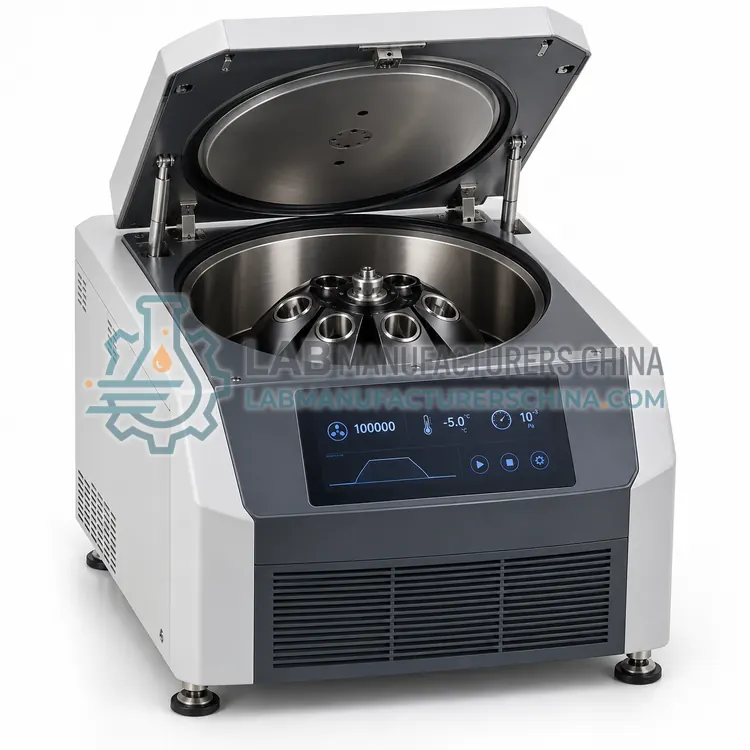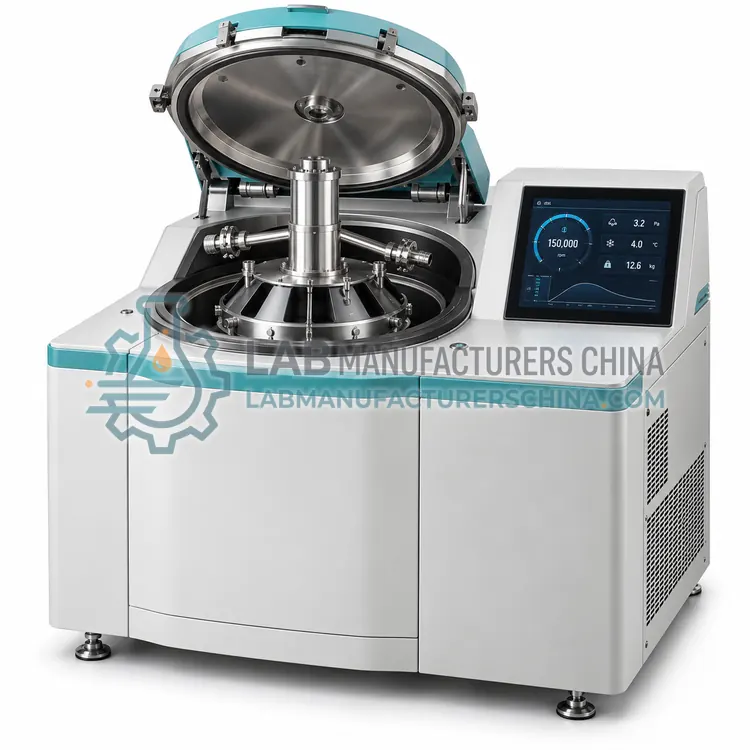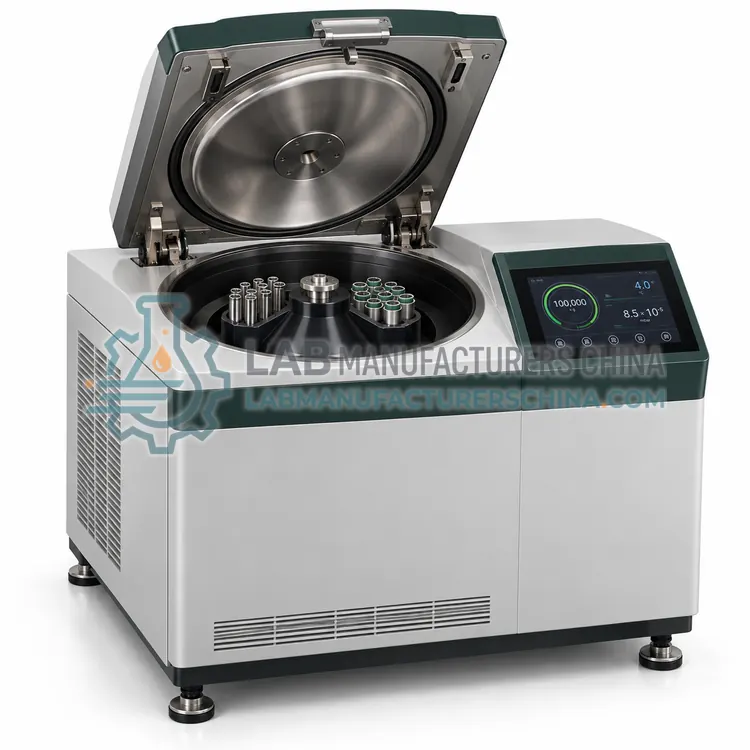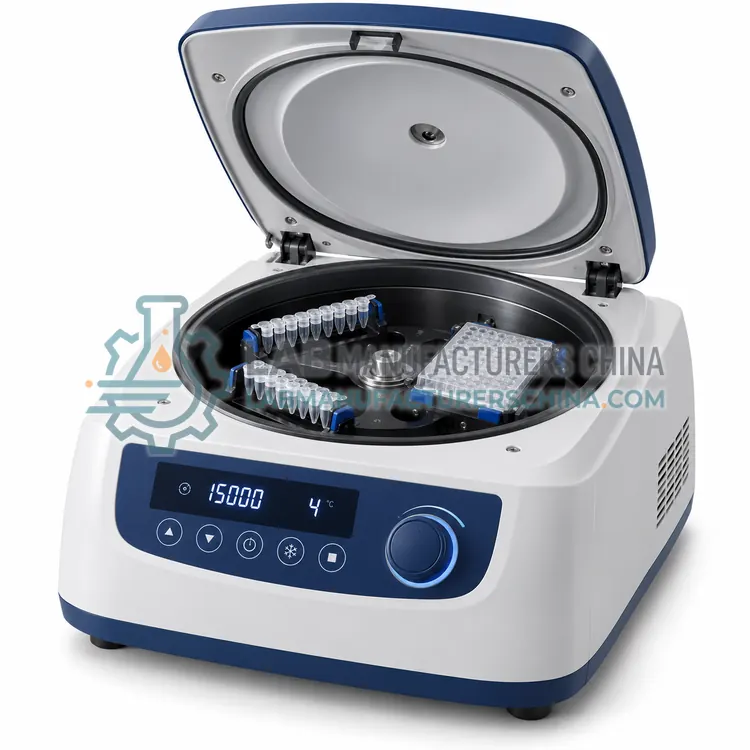
Analytical Ultracentrifuge
分析型超速离心机
- SKU ULT-0003
- Ultracentrifuges
- CE (to be confirmed)
- ISO 9001 manufacturing (to be confirmed)
- Laser safety compliance where applicable (to be confirmed)
Price on request — FOB / CIF quoted per order
Prices depend on configuration, quantity and destination port.
Key specifications
| Maximum speed | 60,000 rpm |
|---|---|
| Maximum RCF | approx. 260,000 x g |
| Optical systems | Absorbance, Rayleigh interference, optional fluorescence |
| Absorbance wavelength range | 190–800 nm |
| Rotor positions | 4 or 8 cells |
| Temperature range | 4 to 40 °C |
Request a quote Download brochure · to be provided
By Lab Manufacturers China Technical TeamLast reviewed Standards: IEC 61010-1, IEC 61010-2-020, IEC 61326-1
What is the Analytical Ultracentrifuge?
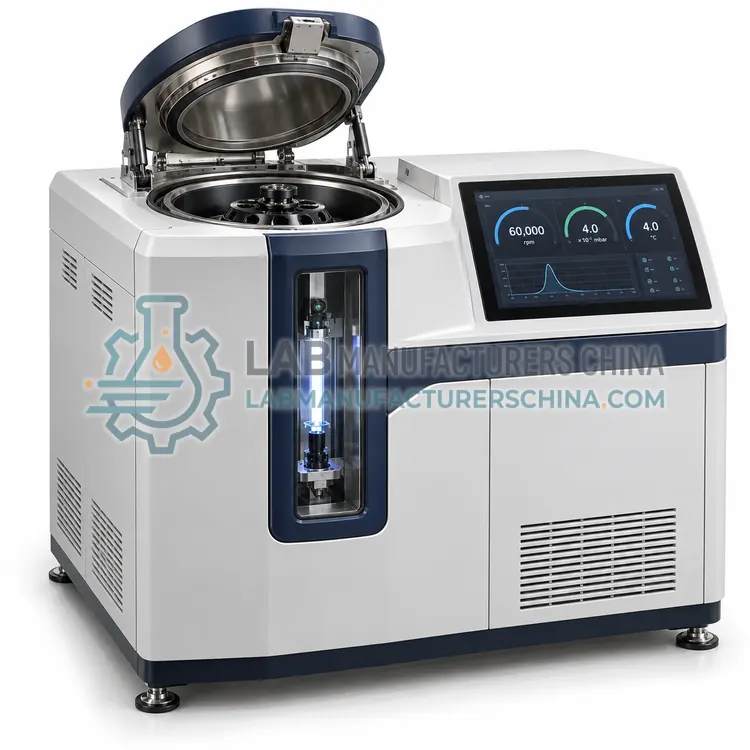
An analytical ultracentrifuge couples a 60,000 rpm rotor with optical detection of absorbance, interference or fluorescence during sedimentation. It measures molecular weight, size distribution, shape and binding interactions of proteins, nucleic acids and nanoparticles in solution without a matrix.
What is the Analytical Ultracentrifuge?
An analytical ultracentrifuge couples a 60,000 rpm rotor with optical detection of absorbance, interference or fluorescence during sedimentation. It measures molecular weight, size distribution, shape and binding interactions of proteins, nucleic acids and nanoparticles in solution without a matrix.
Overview
Analytical ultracentrifugation records how macromolecules move in a centrifugal field, using optics that scan sample cells during the run. Rotors of 4 or 8 holes run up to 60,000 rpm, reaching about 260,000 x g, in double-sector or multichannel cells with quartz or sapphire windows. Absorbance optics cover 190 to 800 nm, Rayleigh interference optics detect concentration through refractive index, and some systems add fluorescence detection. Sedimentation velocity experiments yield sedimentation coefficients and size distributions, whereas sedimentation equilibrium experiments give molecular weight and association constants without calibration standards. Data are analyzed by software such as SEDFIT or SEDPHAT. Runs take 3 to 24 hours, and temperature is controlled to plus or minus 0.1 C. The method is widely used for biopharmaceutical characterization and formulation.
How does it work?
An ultracentrifuge drives a titanium or carbon fiber rotor through a high-frequency induction or brushless motor, typically with a magnetically suspended or oil-lubricated flexible shaft. The chamber is evacuated below 0.1 Pa (1 micron Hg) by a rotary vane and diffusion or turbomolecular pump, eliminating air friction that would otherwise overheat the rotor. Refrigeration controls rotor temperature via infrared sensing, usually between 0 and 40 C. Particles sediment according to Stokes' law, with sedimentation coefficients measured in Svedberg units, in preparative runs, or are separated by buoyant density in cesium chloride, sucrose or iodixanol gradients in isopycnic runs. Rotors are identified automatically, and the control system tracks run hours and cycles to derate them. A heavy armor ring contains rotor fragments in the event of failure.
What are the key features?
- Absorbance optics scan 190 to 800 nm across the cell during the run
- Rayleigh interference optics detect concentration without chromophores
- Sedimentation velocity and equilibrium modes for size, mass and binding
- Temperature control within plus or minus 0.1 C for reproducible results
- Multichannel cells and 8-hole rotors increase sample throughput
What are the technical specifications?
A typical analytical ultracentrifuge configuration offers maximum speed of 60,000 rpm, maximum RCF of approx. 260,000 x g, optical systems of Absorbance, Rayleigh interference, optional fluorescence, absorbance wavelength range of 190–800 nm, rotor positions of 4 or 8 cells and temperature range of 4 to 40 °C. Values are indicative of the product class; the exact figures for each configuration are confirmed on the quotation and the calibration documents supplied with the instrument.
Which applications is it used for?
The Analytical Ultracentrifuge is used in protein molecular weight and oligomeric state, aggregation analysis of biologics, nanoparticle size distribution and binding and interaction studies. Across the wider Ultracentrifuges class, laboratories also deploy it for virus and viral vector purification, exosome and extracellular vesicle isolation and lipoprotein fractionation.
Which standards and certifications apply?
Relevant standards and methods include IEC 61010-1, IEC 61010-2-020, IEC 61326-1, ISO 9001, EN 12469 and GB 4793.1. Certification candidates for this model are CE, ISO 9001 manufacturing and Laser safety compliance where applicable; each is to be confirmed for the specific configuration before shipment, and certificates are supplied only where they have been issued.
Floor-standing units weigh 200 to 450 kg and often require a dedicated 220 V or 380 V circuit and a level, vibration-free floor. Rotor management is critical: log every run, derate titanium and aluminum rotors per the maker's schedule, and retire rotors at the stated lifetime. Use only tubes and adapters certified for the rotor, and fill them as specified. Vacuum pumps need periodic oil changes, and seals require inspection. Clean rotors with neutral detergent and never use chloride or strong alkali on aluminum. Annual preventive maintenance should include speed, temperature and vacuum checks. Install and operate in line with IEC 61010-2-020 and local pressure-vessel and biosafety rules.
How do I select the right Analytical Ultracentrifuge?
Choose an analytical ultracentrifuge when you need first-principles characterization of molecular size, mass and interaction in solution, for which preparative siblings cannot provide data. It needs trained users and specialized software. In the RFQ, specify optical modules, rotor and cell types, temperature stability and software package.
How does it compare with other Ultracentrifuges variants?
Specify the maximum RCF needed: 100,000 to 150,000 x g suits most gradient and pelleting work, while ribosomes, small viruses and proteins need 300,000 to 600,000 x g or analytical capability. Choose rotor geometry to match the task, with swing-bucket rotors for gradients, fixed-angle rotors for pelleting, vertical or near-vertical rotors for fast gradients and zonal or continuous-flow rotors for large volumes. Consider tube materials and sealing, because ultracentrifuge tubes require heat-sealed or cap-assembled closures. Evaluate run documentation, rotor life tracking, temperature range, vacuum time, noise, and installation needs including weight, power and cooling water. For multi-user facilities, autoclavable rotors and biosafety containment options matter.
Full specifications
| Maximum speed | 60,000 rpm |
|---|---|
| Maximum RCF | approx. 260,000 x g |
| Optical systems | Absorbance, Rayleigh interference, optional fluorescence |
| Absorbance wavelength range | 190–800 nm |
| Rotor positions | 4 or 8 cells |
| Temperature range | 4 to 40 °C |
| Temperature stability | ±0.1 °C |
| Sample volume per cell | approx. 100–450 µL |
| Typical run time | 3–24 h |
| Power supply | 220 V, 50/60 Hz, 3–5 kW |
Indicative values for this product class. Final specifications are confirmed on the quotation and in the calibration documents supplied with the instrument.
Applications
- Protein molecular weight and oligomeric state
- Aggregation analysis of biologics
- Nanoparticle size distribution
- Binding and interaction studies
Key features
- Absorbance optics scan 190 to 800 nm across the cell during the run
- Rayleigh interference optics detect concentration without chromophores
- Sedimentation velocity and equilibrium modes for size, mass and binding
- Temperature control within plus or minus 0.1 C for reproducible results
- Multichannel cells and 8-hole rotors increase sample throughput
Frequently asked questions about Analytical Ultracentrifuge
It measures sedimentation behavior of macromolecules in solution, yielding sedimentation coefficients, molecular weight, size distribution, oligomeric state, shape and binding constants. Because no matrix or column is used, molecules are measured in their native solution state.
Velocity runs at high speed and records boundary movement, giving size and shape distributions in hours. Equilibrium runs at lower speed until sedimentation and diffusion balance, giving molecular weight and association constants from the concentration gradient but requiring longer runs.
It quantifies aggregates, fragments and oligomers in monoclonal antibody and vaccine formulations, orthogonal to size-exclusion chromatography because it avoids column interactions. It is used in characterization packages to support comparability and formulation development.
A preparative ultracentrifuge separates and recovers material by spinning tubes in a rotor. An analytical ultracentrifuge has optical detection, such as absorbance or interference, to measure sedimentation in real time in special cells, yielding molecular weight, shape and interaction parameters.
At speeds above about 20,000 rpm, air friction would heat and slow the rotor and make temperature control impossible. Evacuating the chamber below 0.1 Pa eliminates drag and heat, allowing speeds up to 100,000 rpm with stable temperature and lower power consumption.
Lifespan depends on material, speed and run count. Titanium rotors may be rated for 10 years or a set number of cycles, while aluminum rotors are derated with age and cycles. The instrument tracks use, and rotors must be retired at the published limit.
Related models