
Laboratory Refrigerators
实验室冷藏箱
CLAR · General Laboratory Equipment · 4 product types · 20 models
By Lab Manufacturers China Technical TeamLast reviewed
What are Laboratory Refrigerators?
Laboratory refrigerators are temperature-controlled cabinets that hold medicines, blood products, reagents, samples and chromatography consumables at about 2–8 °C. The category covers pharmacy, blood bank, chromatography and explosion-proof types, used in hospitals, pharmacies, pharmaceutical QC, research and chemical laboratories.
4 product types in Laboratory Refrigerators
The 4 product types below are grouped by the exact instrument you need.
- PHR5 models
Pharmacy Refrigerators
药品冷藏箱
Pharmacy refrigerators are temperature-controlled cabinets that store medicines, biologicals and vaccines at 2–8 °C. They use forced-air cooling, alarms and optional data logging to keep stock within labelled limits, and are used by hospital and community pharmacies, clinics and pharmaceutical distributors.
- BBR5 models
Blood Bank Refrigerators
血库冷藏箱
Blood bank refrigerators in a laboratory setting are controlled 2–6 °C and 2–8 °C cabinets for blood samples, transfusion reagents and red cell units. They use tight temperature uniformity, recorders and independent alarms, and serve hospital transfusion laboratories, serology units and blood collection centres.
- CHR5 models
Chromatography Refrigerators
层析冷藏箱
Chromatography refrigerators are cold cabinets used to run chromatography systems at 4 °C and to store columns, standards, reagents and samples at 2–8 °C. They provide cable ports, work shelves and stable forced-air temperature, and are used in protein purification, analytical and biopharmaceutical laboratories.
- EPR5 models
Explosion-Proof Refrigerators
防爆冷藏箱
Explosion-proof refrigerators store flammable liquids and reactive reagents at 2–8 °C without creating ignition sources. They are either flammable-storage designs with interior sparking parts removed, or fully certified units for classified hazardous areas, and they serve chemical, pharmaceutical, petrochemical and research laboratories.
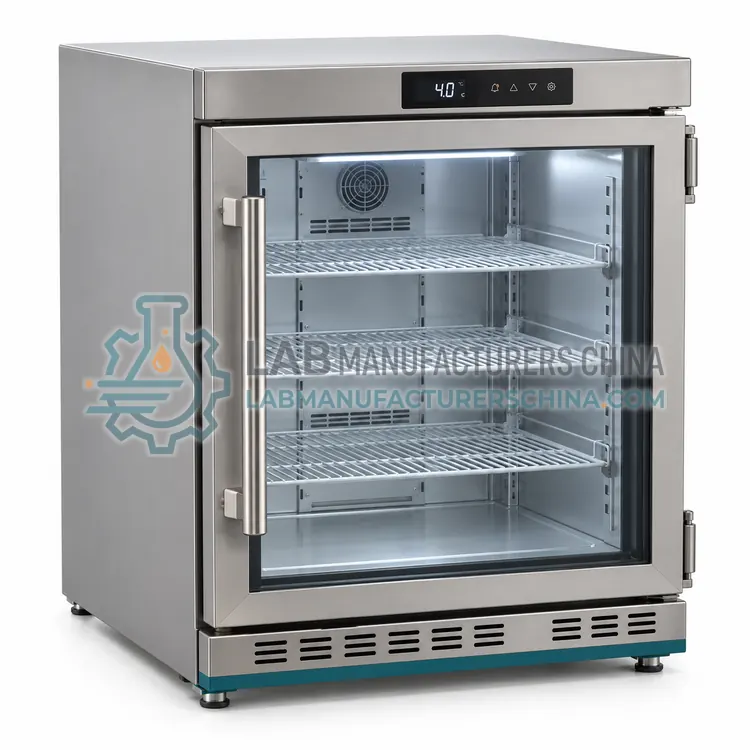
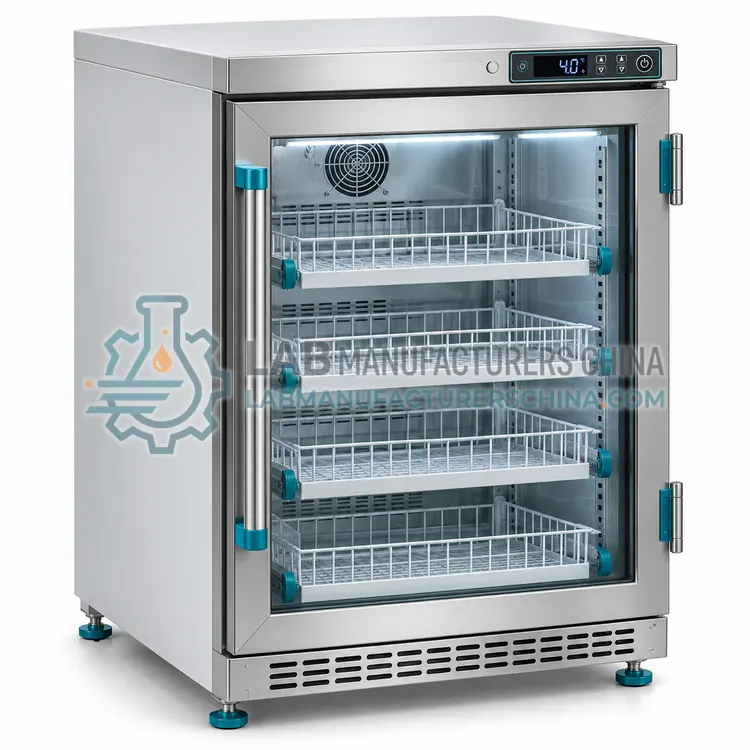
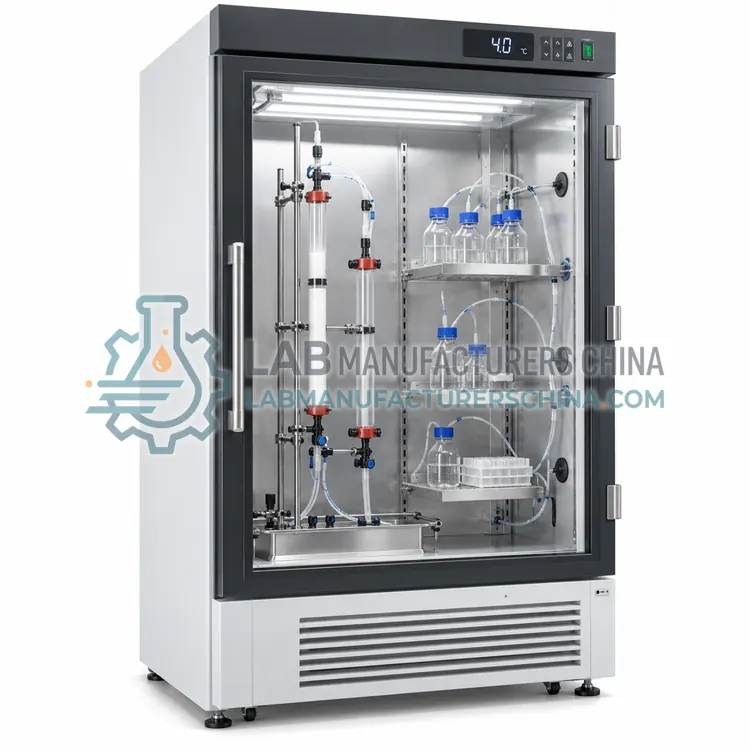
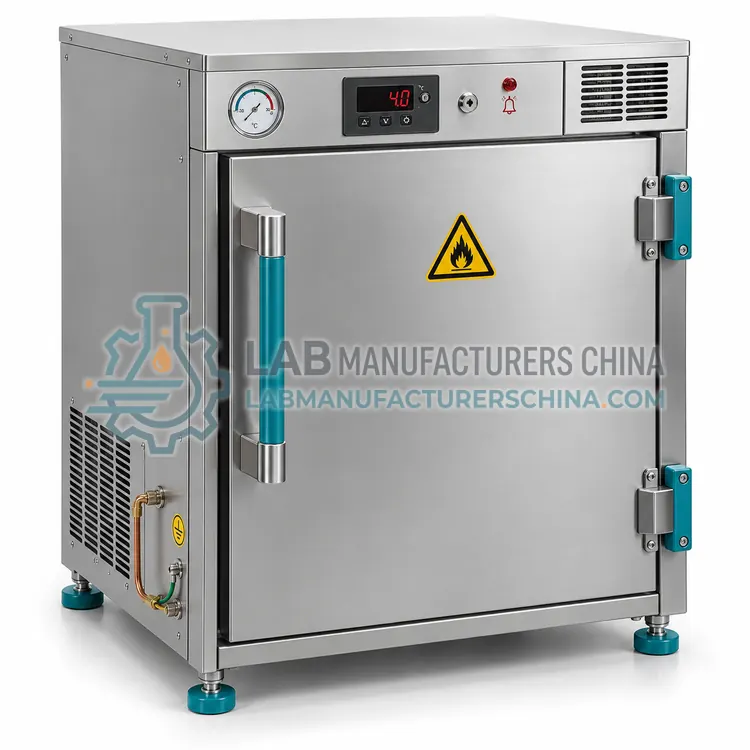
What are Laboratory Refrigerators?
A laboratory refrigerator is a purpose-built cold-storage cabinet that keeps materials in a narrow band above freezing, normally 2–8 °C, with tighter limits of 2–6 °C for blood components. Unlike domestic refrigerators, laboratory and pharmacy models use forced-air circulation for uniform temperature, calibrated electronic controllers, independent alarms and, increasingly, data logging. Different designs address different risks. Pharmacy refrigerators protect medicines and vaccines, blood bank units preserve blood samples and red cells, chromatography cabinets house instruments or columns at 4 °C, and explosion-proof or flammable-storage units remove ignition sources so that volatile solvents can be stored safely. Sizes range from 50 L bench units to 2500 L cabinets. Selection depends on what is stored, how tightly temperature must be held, who audits the records and what hazards are present.
How do Laboratory Refrigerators work?
Laboratory refrigerators remove heat with a vapour-compression cycle. A compressor raises refrigerant pressure, the condenser rejects heat to the room, an expansion device drops pressure, and the evaporator absorbs heat from the cabinet. Common refrigerants are R600a and R290 hydrocarbons, or R134a. A fan circulates air through the evaporator and across shelves, limiting temperature differences to about 2–3 K. A microprocessor controller reads a probe and cycles the compressor around the set point, while an independent probe may drive a separate alarm with battery backup. Polyurethane foam insulation and door gaskets limit heat gain, heated glass prevents condensation, and recorders or networked loggers document temperature. Flammable-storage and explosion-proof designs relocate or certify electrical parts so that vapours cannot ignite.
Where are Laboratory Refrigerators used?
Hospital and community pharmacies use laboratory refrigerators for medicines, insulin, biologics and vaccines. Transfusion laboratories rely on 2–6 °C blood bank units for red cells and 2–8 °C units for retained samples and serology reagents. Analytical and protein laboratories use chromatography cabinets to run purification at 4 °C and to store columns, standards and vials. Chemical, petrochemical and pharmaceutical synthesis laboratories use flammable-storage or explosion-proof refrigerators for volatile solvents and reactive reagents. Clinical laboratories hold reagents and kits, and research institutes keep enzymes, antibodies, media and samples. Public-health stores and cold-chain distribution points hold vaccines under recorded conditions. In each case, the refrigerator is a controlled element of the quality system.
Which standards apply to Laboratory Refrigerators?
Laboratory refrigerators are assessed against IEC 61010-1 and IEC 61010-2-011 for electrical safety of laboratory refrigerating equipment, and IEC 61326-1 for electromagnetic compatibility. Medicine storage follows WHO Good Distribution Practices, EU GDP guidelines and USP <1079>, while vaccine refrigerators may reference WHO PQS E003 performance. Blood storage follows AABB Standards and the Council of Europe Guide, and laboratories accredited to ISO 15189 must control temperature equipment. Explosion-proof units follow IEC 60079 and GB 3836 series, with ATEX or IECEx certification, and site rules such as NFPA 45 and NFPA 30 govern flammable storage. Manufacturers often hold ISO 9001 or ISO 13485 systems, but certifications are to be confirmed per model.
How do I select the right laboratory refrigerators equipment?
Begin with the stored material and its regulation. Medicines and vaccines need 2–8 °C pharmacy cabinets, with vaccine models adding buffered probes and logging. Blood units need 2–6 °C with recorder and independent alarm. Instruments and columns call for a chromatography cabinet, and volatile solvents require flammable-storage or certified explosion-proof units matched to the area classification. Then compare capacity, temperature uniformity (about 3 K or better, 2 K for blood), recovery after door opening, hold-over during power loss, alarms and monitoring interfaces. Check ambient temperature range, refrigerant, noise, electrical supply and floor loading. Decide whether validation documents, mapping data or remote monitoring are required before purchase, and request specification sheets for each candidate.
Laboratory Refrigerators comparison
| Subcategory | Principle | Typical use | Key spec |
|---|---|---|---|
| Pharmacy Refrigerators | Forced-air 2–8 °C cooling with alarms and logging | Medicines, biologics and vaccines | Uniformity about 3 K; 100–1500 L |
| Blood Bank Refrigerators | Tight 2–6 °C control with recorder and independent alarm | Blood samples, red cells and serology reagents | Uniformity about 2 K; 50–1500 L |
| Chromatography Refrigerators | 4 °C cold cabinet with work shelf and cable ports | FPLC runs, column and standard storage | Volume 100–2500 L; 0–25 °C option |
| Explosion-Proof Refrigerators | Ignition sources removed or certified to IEC 60079 | Flammable solvents and reactive reagents | Ex IIB T4 Gb; 100–1600 L |
Frequently asked questions about Laboratory Refrigerators
Laboratory refrigerators use forced-air circulation, calibrated controllers, alarms and optional data logging to hold a defined temperature band uniformly. Household units cycle widely, have cold spots and lack alarms, and their interior parts can spark. They are unsuitable for vaccines, blood and flammable materials.
Most laboratory refrigerators are set to about 4–5 °C to keep contents within the common 2–8 °C range. Blood bank units hold 2–6 °C, typically at 4 °C. Always follow the labelled storage condition for each product or reagent, since some materials have different limits.
If you store flammable liquids, use at least a flammable-storage refrigerator with interior ignition sources removed. Classified Zone 1 or Zone 2 areas, or large quantities, call for a certified explosion-proof model. Follow your fire code and safety officer, and keep containers sealed.
Calibrate probes and displays at least yearly against a traceable reference, and after repair. Map temperature distribution at installation and after relocation or major repair, with alarm tests. Regulated environments may require more frequent checks, so follow your quality system and regulator.
Estimate peak stock volume, add 20–30 percent for airflow and growth, and choose the nearest size. Undercounter models hold 100–200 L, upright single-door units 300–700 L, and large double-door cabinets 1000–2500 L. Leave space around items so air can circulate.
It is possible when both share the same temperature range, but many laboratories separate them to prevent cross-contamination and support traceability. Transfusion laboratories usually keep reagents apart from patient samples and units, and pharmacies keep medicines apart from food and samples.
Related categories
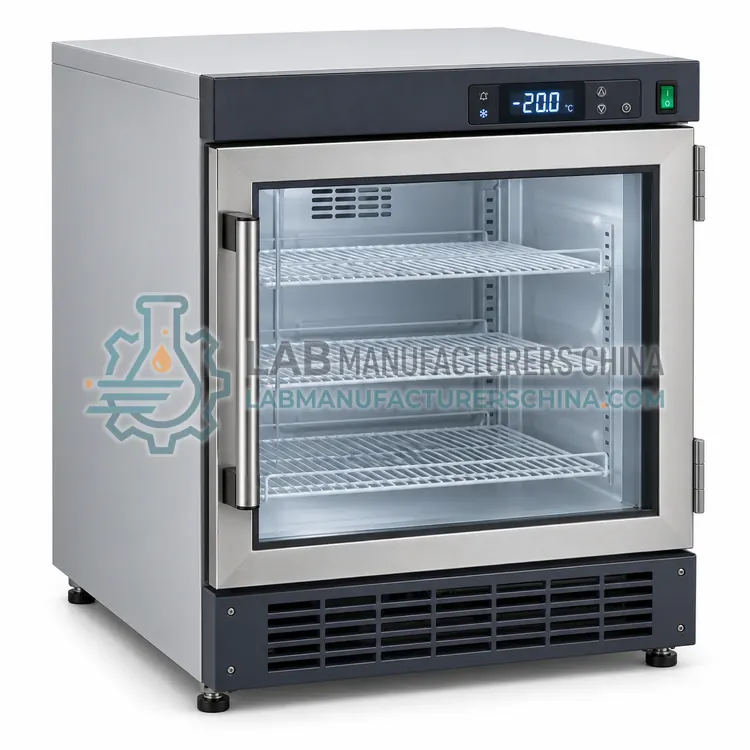 CLFR实验室冷冻箱Laboratory freezers are insulated, refrigerated cabinets that hold biological samples, reagents, plasma, vaccines and chemicals frozen at temperatures from about -20 °C down to -86 °C. The category covers -20 °C, -40 °C, -80 °C, ultra-low upright and chest types, used in hospitals, biobanks, research and pharmaceutical laboratories.
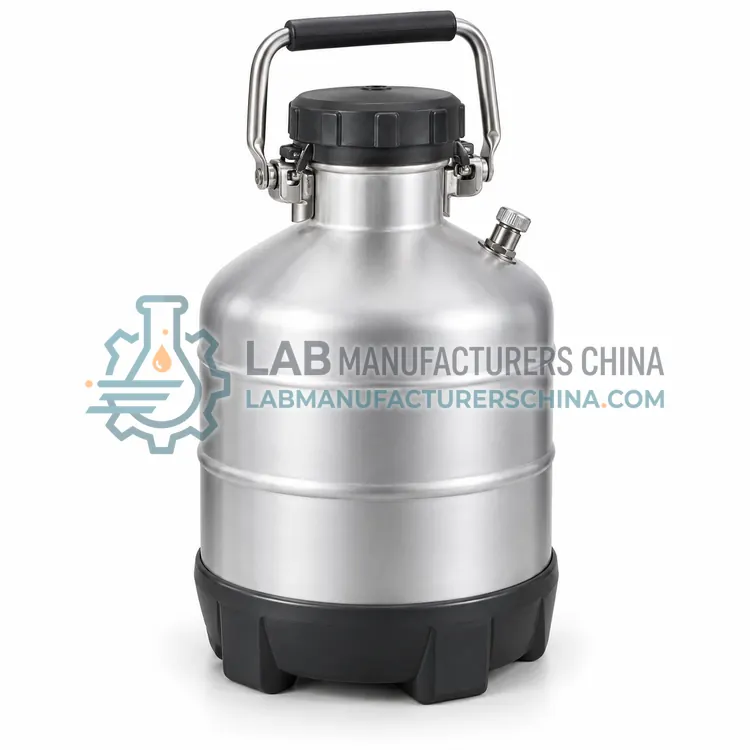 CCRE低温设备Cryogenic equipment covers the vessels, storage systems, freezers and transfer hardware used to hold and move materials at temperatures below about −150°C, typically with liquid nitrogen. Biobanks, fertility clinics, research institutes and industrial laboratories use it for long-term preservation of cells, tissues, gametes and reference samples.
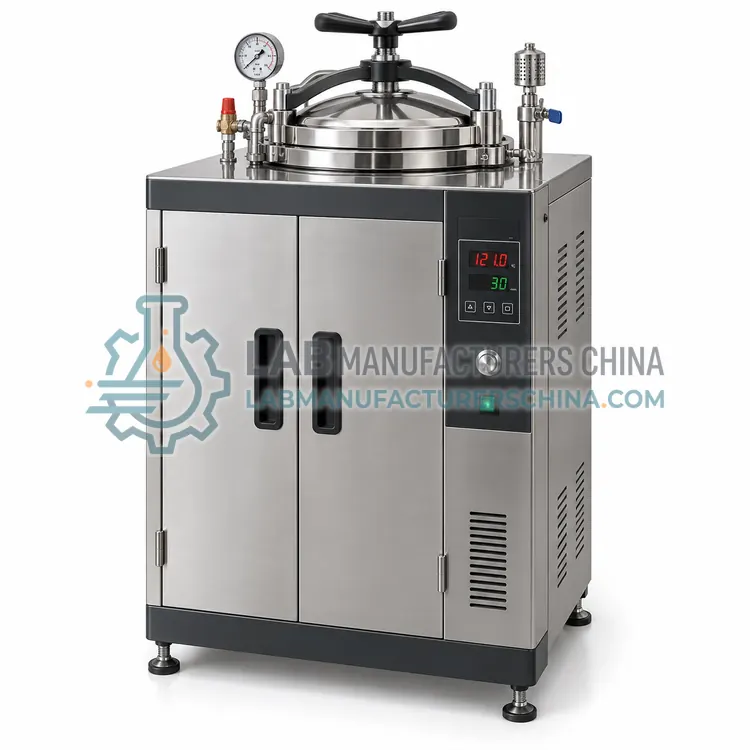 CLSE实验室灭菌设备Laboratory sterilization equipment inactivates or removes microorganisms from media, glassware, instruments, waste and work surfaces using saturated steam, dry heat, hot glass beads or ultraviolet radiation. Microbiology, clinical, pharmaceutical, food and research laboratories use it to protect sample integrity, prevent cross-contamination and treat biohazardous material.
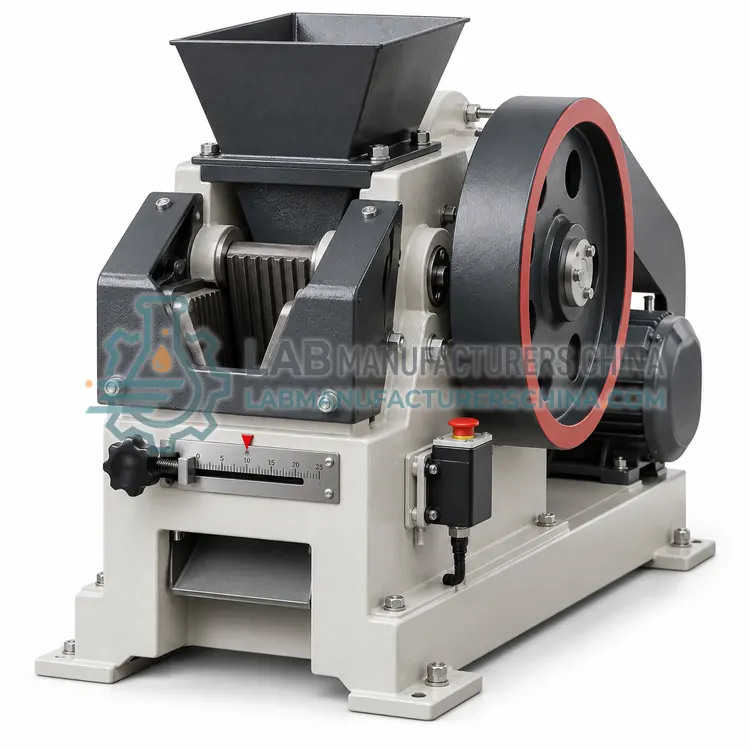 CSPE样品前处理设备Sample preparation equipment reduces, homogenizes, extracts and digests laboratory samples before analysis. The category covers crushers, grinders, mills, homogenizers, digesters, extractors and sample dividers used to produce representative, analysis-ready material in analytical and quality-control laboratories.