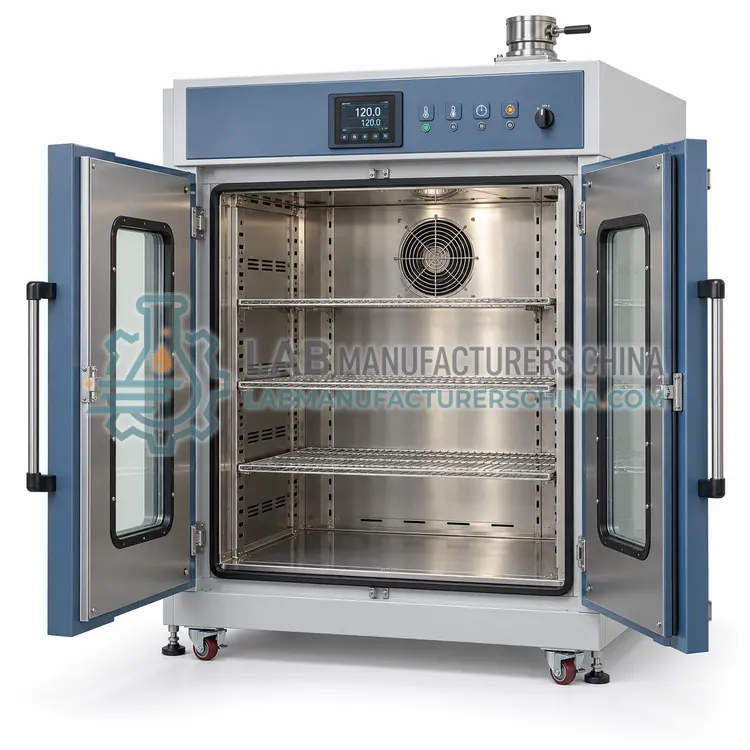
How do Forced Air Ovens work?
A forced air oven adds a circulation fan to a standard heated chamber. Air is drawn over heating elements, pushed through ducts into the chamber and returned to the fan, so temperature gradients collapse and heat transfers to the load by convection. This shortens heat-up time and speeds recovery after the door opens. A Pt100 sensor and PID controller regulate the setpoint, while an adjustable fresh-air inlet and exhaust vent control humidity. Because moving air also moves light particles, samples must be placed so they cannot be blown around. Fan motors are usually external to the hot zone or heat-resistant, and some models let the fan be switched off for gravity operation. Chambers are stainless steel or coated steel, from about 50 to 800 liters.
Which Forced Air Ovens variants are available?
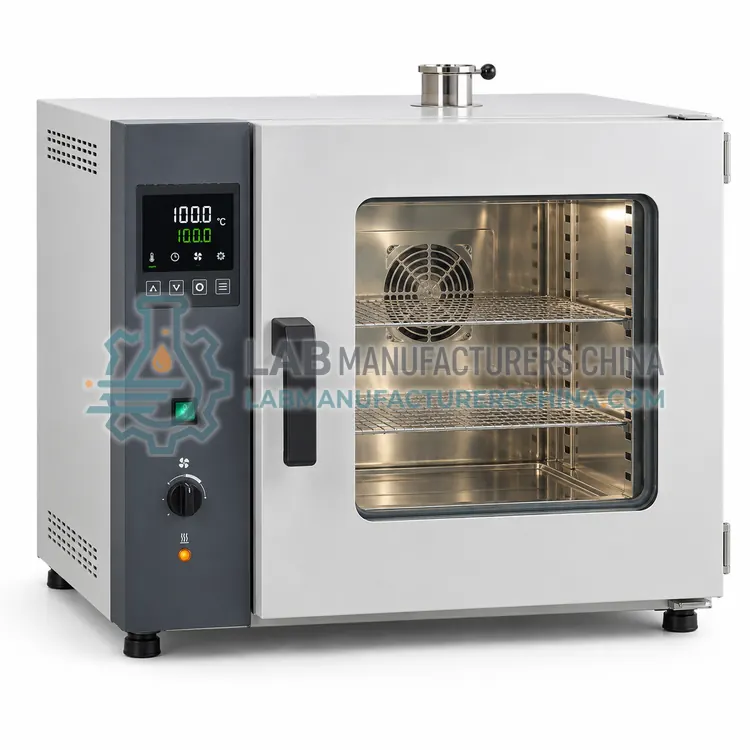
- Forced Air Convection Oven — A forced air convection oven is the standard fan-circulated drying chamber, balancing cost, uniformity and capacity.
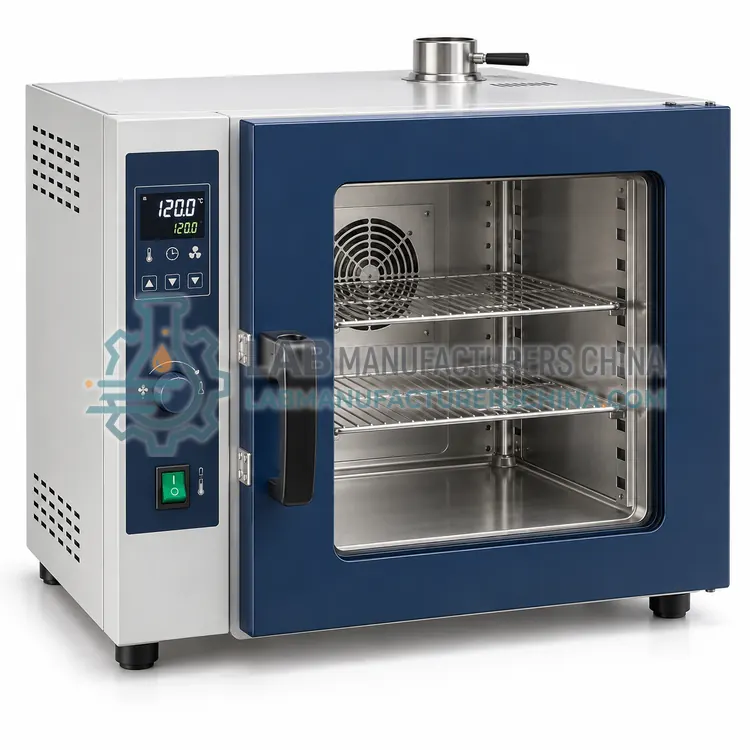
- Universal Forced Air Oven — A universal forced air oven is a general-purpose fan-assisted chamber sized and equipped for mixed laboratory tasks.
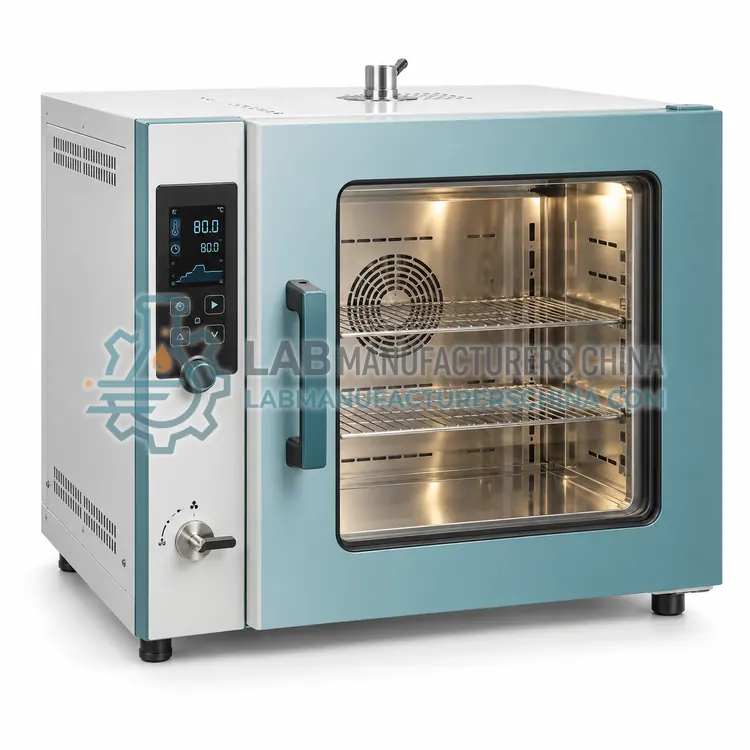
- Programmable Forced Air Drying Oven — A programmable forced air oven follows stored multi-step temperature and time profiles, so heating cycles can be repeated exactly and documented.
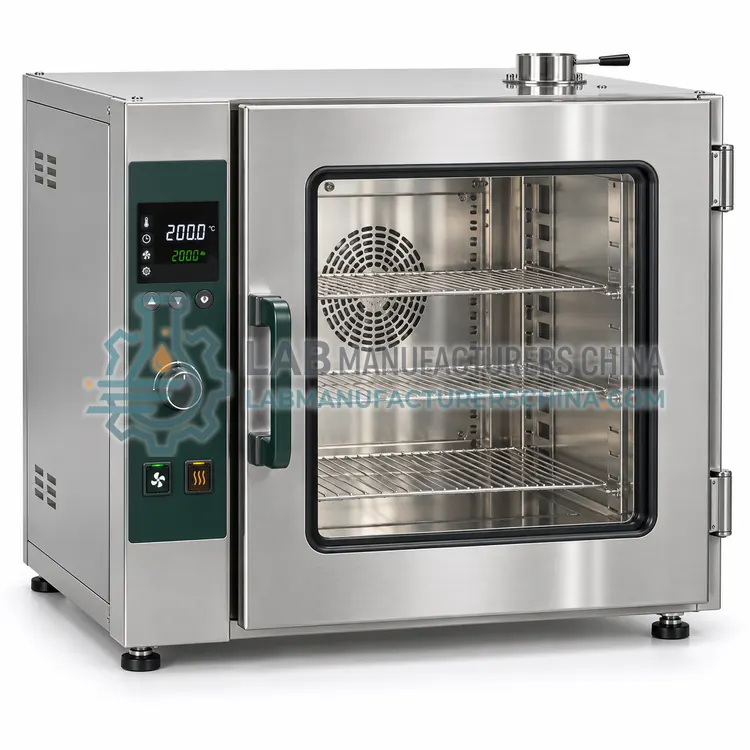
- Stainless Steel Forced Air Oven — A stainless steel forced air oven uses corrosion-resistant wetted surfaces throughout for cleanliness and long service.
- Large-Capacity Forced Air Oven — A large-capacity forced air oven provides hundreds of liters of fan-circulated heating space for bulk drying and industrial laboratory batches.
How do I choose the right variant?
Choose a forced air oven when uniformity and throughput matter, or when the load recovers slowly in a gravity oven. Set the chamber volume from batch size, usually with about 30 percent free space for airflow, and the temperature range with margin above the highest working temperature. Decide between a standard digital controller and a programmable one with ramp and soak segments. If the samples are light powders, either lower the fan speed or choose a gravity model. Confirm interior material, shelf count, air exchange rate and whether an inlet filter or HEPA option is needed for clean applications.
Where are Forced Air Ovens used?
Forced Air Ovens are specified in routine sample and glassware drying, curing and baking of coatings, dry-heat sterilization of instruments, material conditioning and aging tests, high-throughput batch drying and food and feed moisture removal.
Which standards and certifications apply?
Work with Forced Air Ovens is commonly governed by IEC 61010-1, IEC 61010-2-010, DIN 12880, ASTM E145, GB/T 30435 and ISO 9001. Instrument certifications such as CE marking are confirmed per configuration and never assumed.
What are the key considerations before purchase?
Place the oven with 15 to 30 cm clearance so the fan can draw cooling air, and keep the exhaust clear or ducted outside where fumes are produced. Do not place sealed containers or flammable solvents inside unless the oven is designed for them. Keep shelves about 70 percent loaded for even airflow, and avoid blocking the return ducts. Check and clean the fan and air ducts periodically, since dust build-up changes airflow and uniformity. Calibrate the temperature sensor and verify uniformity on a schedule, and allow recovery time after each door opening before recording results.