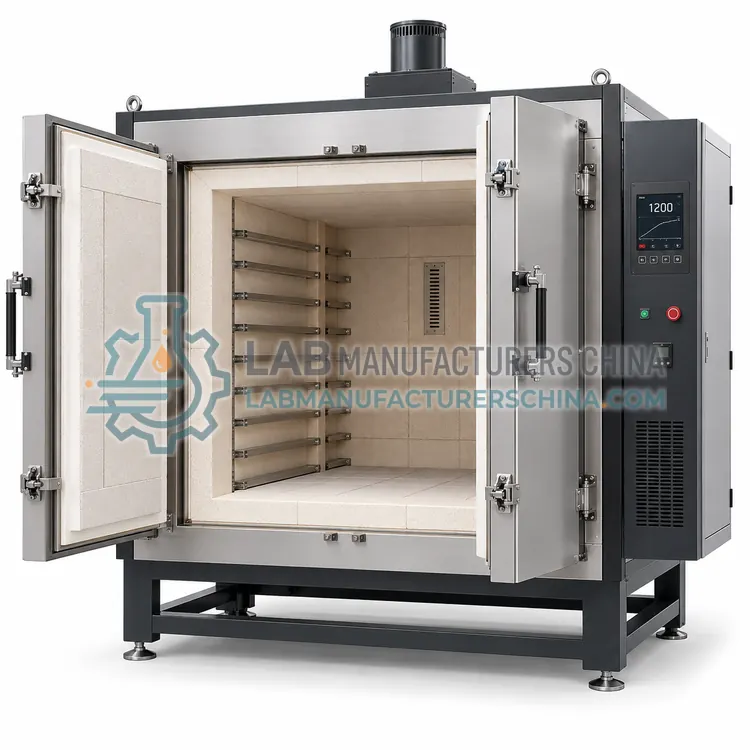
How do High Temperature Ovens work?
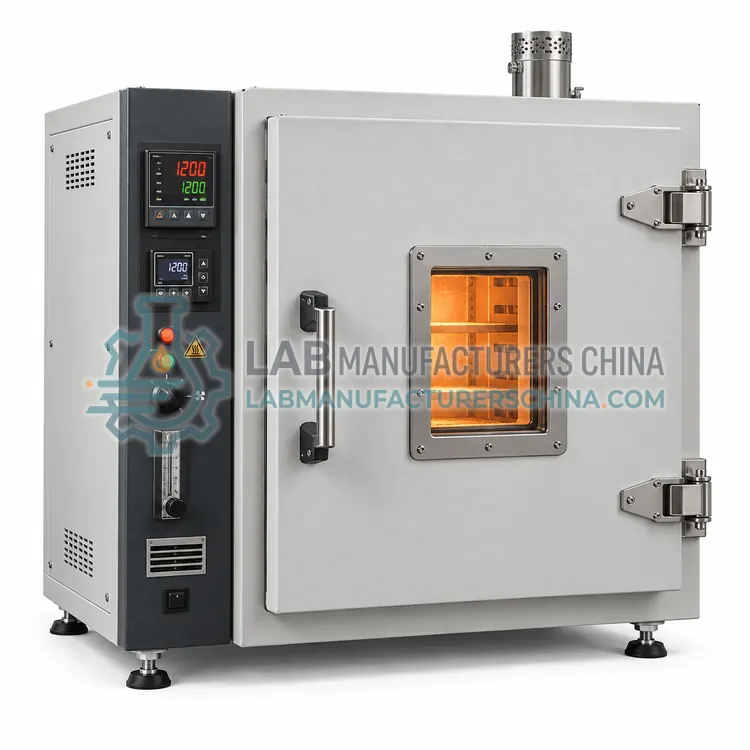
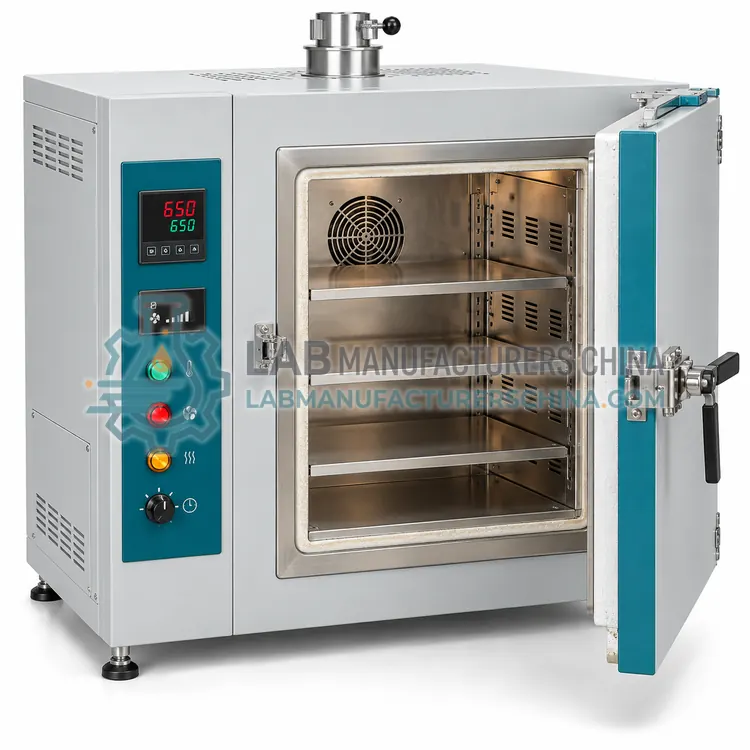
A high-temperature oven extends the forced air or gravity design to higher setpoints using high-duty heating elements, thicker insulation and materials rated for continuous heat. Elements placed in the walls or ducts operate at higher surface temperature, and insulation uses ceramic fiber or mineral wool boards instead of low-density wool. Air circulation is often retained to flatten gradients, but fans and motors must be rated for the hot zone or mounted outside it. Door seals are heat-resistant silicone or ceramic rope, and the exterior is cooled by an air gap or cooling fan to protect controls. A PID controller with type K or N thermocouple holds the setpoint, and an independent over-temperature limiter protects the load and the chamber structure.
Which High Temperature Ovens variants are available?
- High-Temperature Drying Oven — A high-temperature drying oven works from about 300 to 500 C to dry ceramics, metals, glass and coatings that a standard oven cannot process.
- High-Temperature Curing Oven — A high-temperature curing oven holds controlled heat to cure coatings, adhesives, resins and composites.
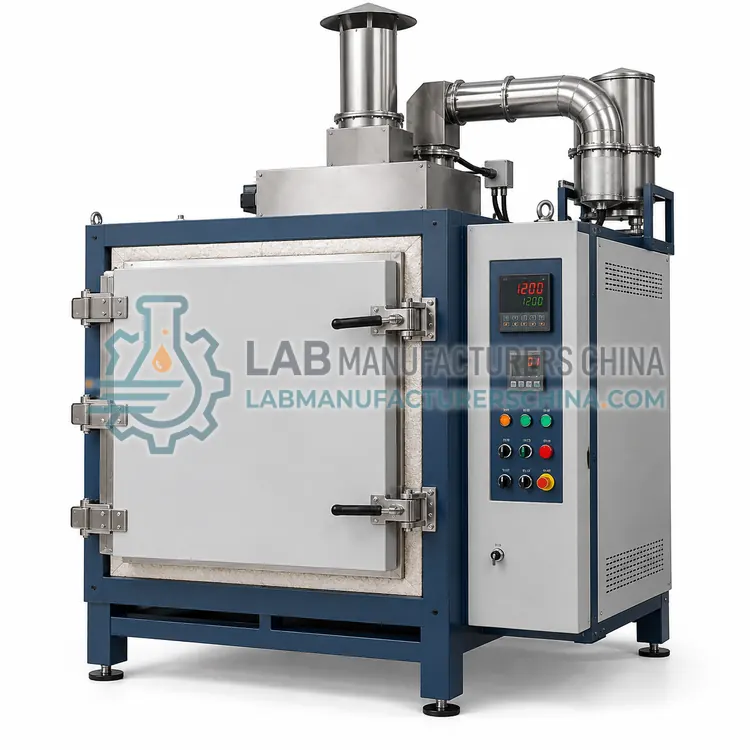
- High-Temperature Burn-Off Cleaning Oven — A high-temperature burn-off cleaning oven heats metal parts and fixtures to 400 to 500 C so organic residues burn away, leaving a clean surface.
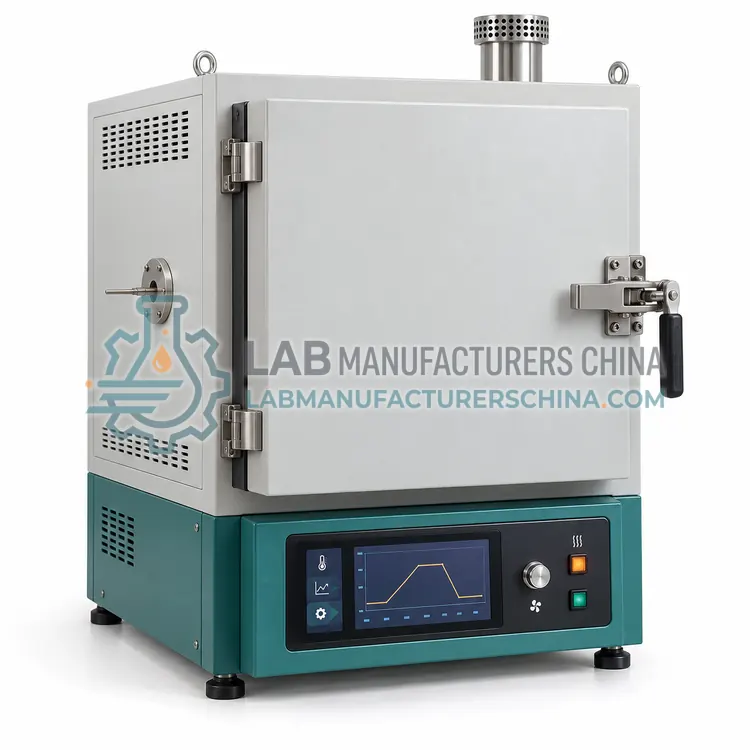
- Programmable High-Temperature Oven — A programmable high-temperature oven executes stored multi-step profiles up to 500 C, so demanding thermal cycles can be repeated exactly.
- Large-Capacity High-Temperature Oven — A large-capacity high-temperature oven provides hundreds of liters of heated space up to 500 C for bulk loads, trolleys and industrial batches.
How do I choose the right variant?
Choose a high-temperature oven only when the working temperature genuinely exceeds about 300 C, since standard ovens are cheaper and more uniform below that. Set the maximum temperature with a margin above the working setpoint and check the material of the load, because many polymers and coatings degrade and release fumes. Decide between gravity and forced circulation, and confirm that the fan and seals are rated for the top temperature. Specify insulation grade, exterior cooling, door type and controller features. For burn-off cleaning, check fume extraction and residue management. Confirm electrical supply, since three-phase power is common above 4 kW.
Where are High Temperature Ovens used?
High Temperature Ovens are specified in burn-off cleaning of metal parts, high-temperature curing of coatings, dry-heat sterilization at 250 to 300 C, glass and ceramic conditioning, decomposition and oxidation studies and preheating before hot processing.
Which standards and certifications apply?
Work with High Temperature Ovens is commonly governed by IEC 61010-1, IEC 61010-2-010, DIN 12880, ISO 9001 and GB/T 30435. Instrument certifications such as CE marking are confirmed per configuration and never assumed.
What are the key considerations before purchase?
Install on a heat-resistant surface with clearance for the hot exterior and cooling air. Provide local extraction when fume-producing materials are processed, and never heat sealed containers or flammable solvents. Allow long, controlled warm-up and a slow cooling stage to avoid thermal stress on the chamber and load. Calibrate the temperature sensor regularly and map uniformity across the range, since gradients widen near the top temperature. Inspect elements, seals and insulation periodically for cracks or discoloration, replace damaged parts before failure, and record all service and temperature checks.