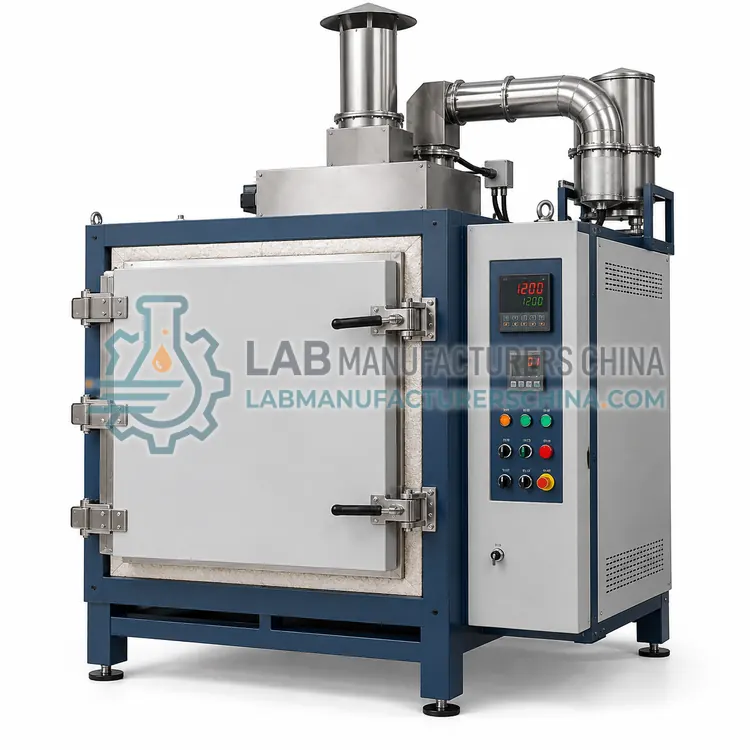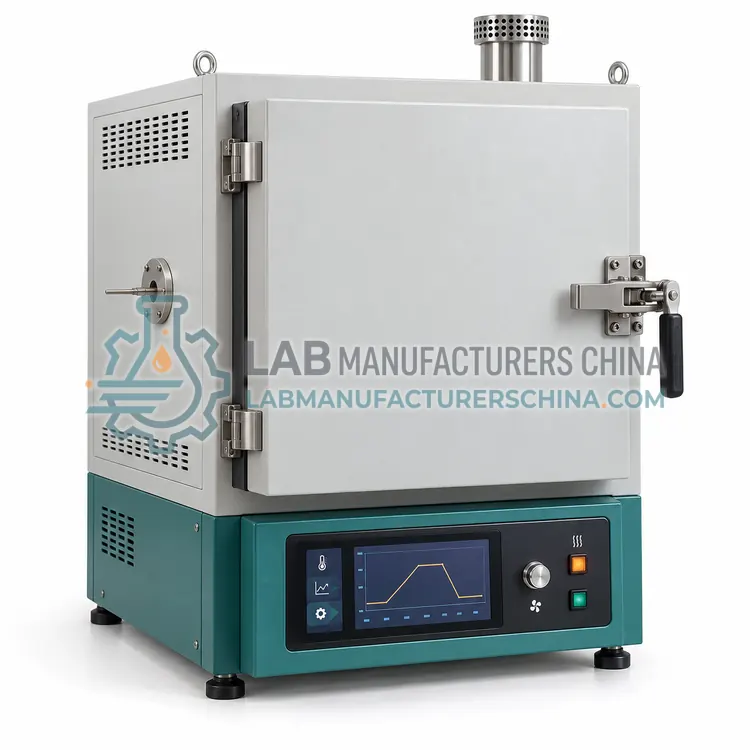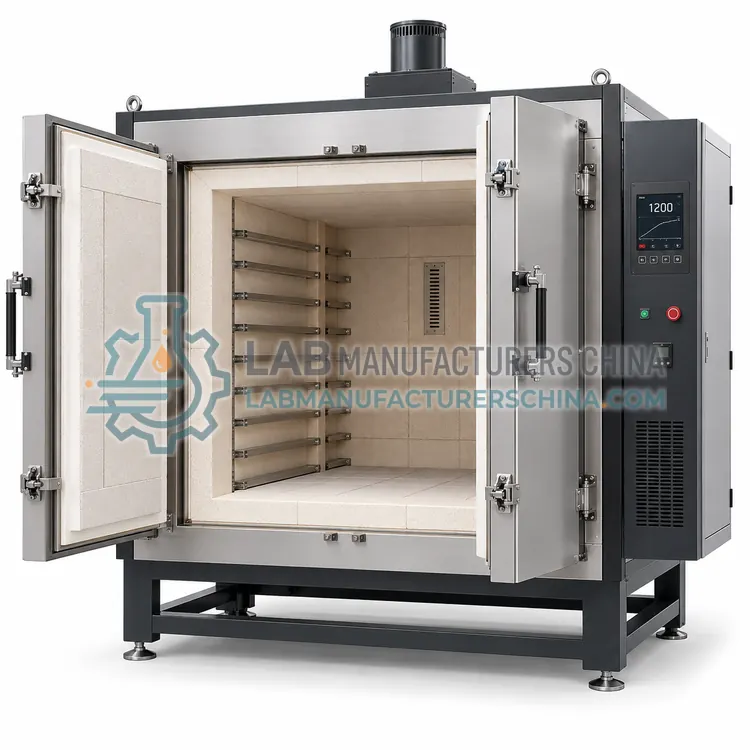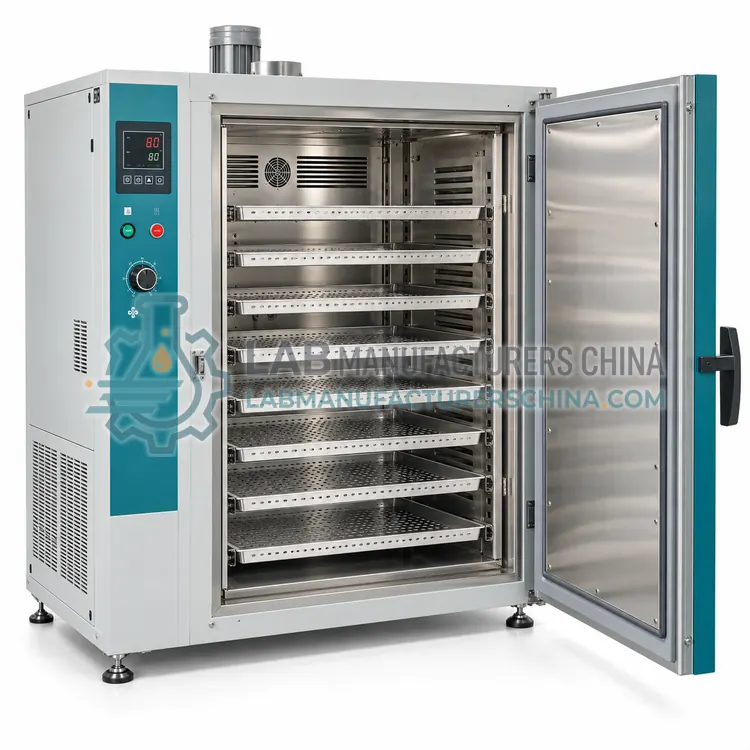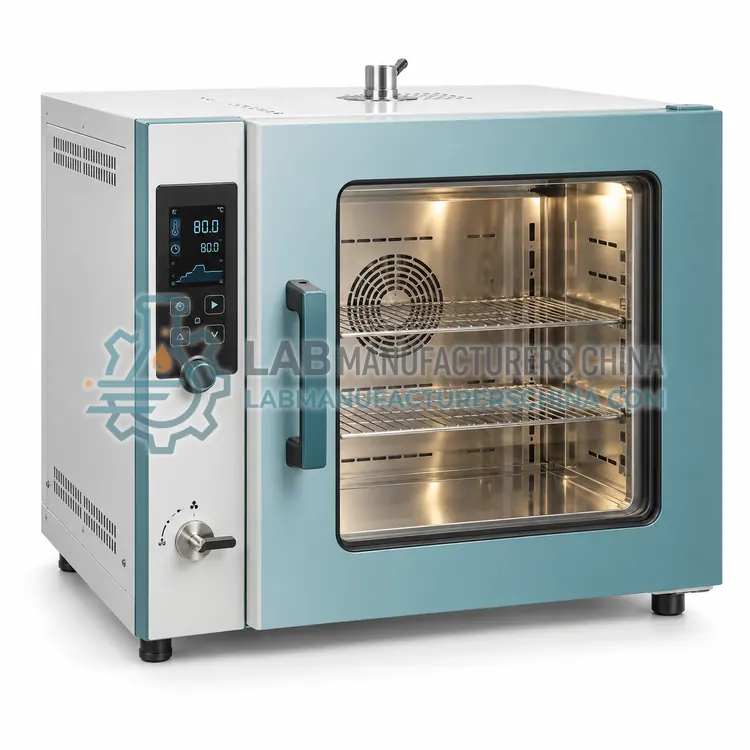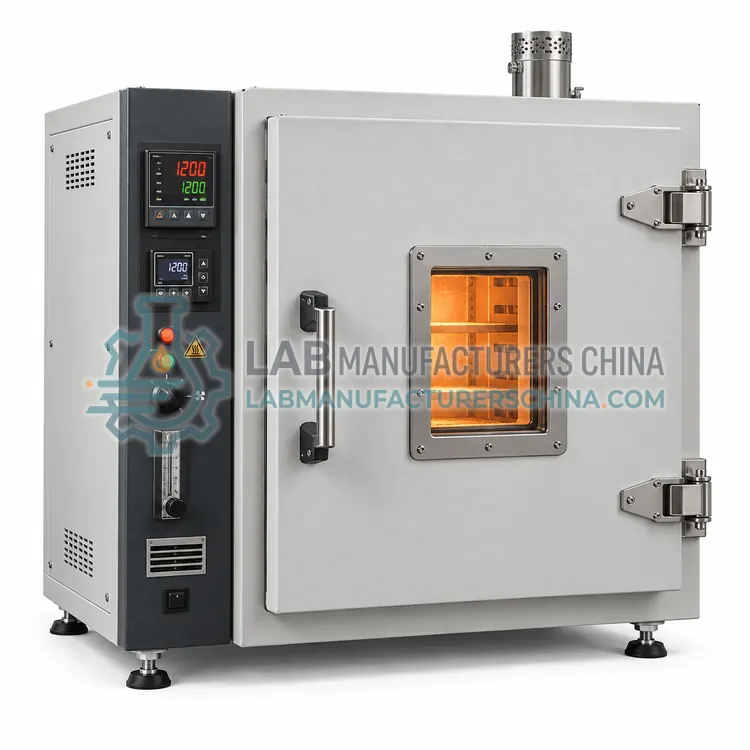
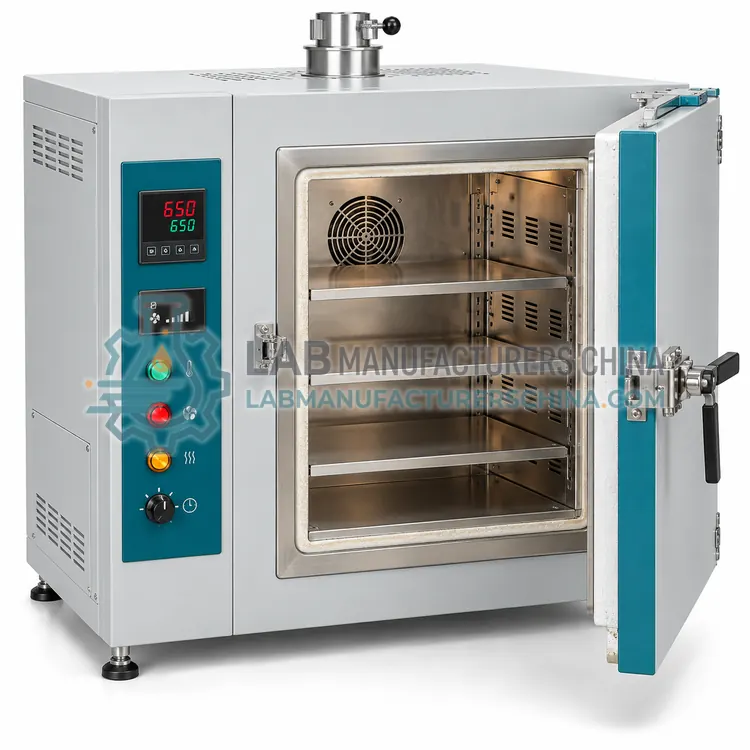
High-Temperature Curing Oven
高温固化烘箱
- SKU HTO-0002
- High Temperature Ovens
- CE (to be confirmed)
- ISO 9001 manufacturing (to be confirmed)
- RoHS (to be confirmed)
Price on request — FOB / CIF quoted per order
Prices depend on configuration, quantity and destination port.
Key specifications
| Chamber volume | 100–800 L |
|---|---|
| Temperature range | RT+10 to 500 C |
| Temperature uniformity | ±2–5 C |
| Ramp rate | 0.1–5 C/min |
| Programs | 10–30 |
| Air exchange | Adjustable, up to 20 vol/h |
Request a quote Download brochure · to be provided
By Lab Manufacturers China Technical TeamLast reviewed Standards: IEC 61010-1, IEC 61010-2-010, DIN 12880
What is the High-Temperature Curing Oven?
A high-temperature curing oven holds controlled heat to cure coatings, adhesives, resins and composites. It is chosen when the material system specifies a cure schedule above the range of standard convection ovens.
What is the High-Temperature Curing Oven?
A high-temperature curing oven holds controlled heat to cure coatings, adhesives, resins and composites. It is chosen when the material system specifies a cure schedule above the range of standard convection ovens.
Overview
The curing oven is optimized for holding a defined temperature profile rather than for fast drying. It provides programmable ramp and soak control, tight uniformity and, where needed, fresh-air exchange to remove solvent or reaction by-products. Temperature reaches 500 C, and the process may require a slow heat-up and controlled cool-down to prevent cracking or incomplete cross-linking. Elements and insulation are chosen for continuous high-temperature duty, and the door and seals tolerate repeated thermal cycling. Uniformity of plus or minus 2 to 5 C is typical, and multiple sensors can map larger chambers. It serves electronics, aerospace, automotive and composites work where cure quality determines final properties.
How does it work?
A high-temperature oven extends the forced air or gravity design to higher setpoints using high-duty heating elements, thicker insulation and materials rated for continuous heat. Elements placed in the walls or ducts operate at higher surface temperature, and insulation uses ceramic fiber or mineral wool boards instead of low-density wool. Air circulation is often retained to flatten gradients, but fans and motors must be rated for the hot zone or mounted outside it. Door seals are heat-resistant silicone or ceramic rope, and the exterior is cooled by an air gap or cooling fan to protect controls. A PID controller with type K or N thermocouple holds the setpoint, and an independent over-temperature limiter protects the load and the chamber structure.
What are the key features?
- Programmable ramp and soak cure profiles
- Temperature range to 500 C
- Fresh-air exchange for solvent removal
- Slow controlled cool-down capability
- Thermal-cycling-tolerant door and seals
- Optional multiple sensors for chamber mapping
What are the technical specifications?
A typical high-temperature curing oven configuration offers chamber volume of 100–800 L, temperature range of RT+10 to 500 C, temperature uniformity of ±2–5 C, ramp rate of 0.1–5 C/min, programs of 10–30 and air exchange of Adjustable, up to 20 vol/h. Values are indicative of the product class; the exact figures for each configuration are confirmed on the quotation and the calibration documents supplied with the instrument.
Which applications is it used for?
The High-Temperature Curing Oven is used in coating and paint curing, adhesive and sealant curing, composite and resin post-cure, electronics conformal coating cure and aerospace component processing. Across the wider High Temperature Ovens class, laboratories also deploy it for burn-off cleaning of metal parts, high-temperature curing of coatings and dry-heat sterilization at 250 to 300 C.
Which standards and certifications apply?
Relevant standards and methods include IEC 61010-1, IEC 61010-2-010, DIN 12880, ISO 9001 and GB/T 30435. Certification candidates for this model are CE, ISO 9001 manufacturing and RoHS; each is to be confirmed for the specific configuration before shipment, and certificates are supplied only where they have been issued.
Install on a heat-resistant surface with clearance for the hot exterior and cooling air. Provide local extraction when fume-producing materials are processed, and never heat sealed containers or flammable solvents. Allow long, controlled warm-up and a slow cooling stage to avoid thermal stress on the chamber and load. Calibrate the temperature sensor regularly and map uniformity across the range, since gradients widen near the top temperature. Inspect elements, seals and insulation periodically for cracks or discoloration, replace damaged parts before failure, and record all service and temperature checks.
How do I select the right High-Temperature Curing Oven?
Select a curing oven when the material datasheet specifies a cure schedule and uniformity is critical to final properties. Drying ovens rarely reproduce a defined ramp. In the RFQ, specify the cure profile, ramp and cool-down rates, uniformity, air exchange, volume and whether solvent or fume extraction is needed.
How does it compare with other High Temperature Ovens variants?
Choose a high-temperature oven only when the working temperature genuinely exceeds about 300 C, since standard ovens are cheaper and more uniform below that. Set the maximum temperature with a margin above the working setpoint and check the material of the load, because many polymers and coatings degrade and release fumes. Decide between gravity and forced circulation, and confirm that the fan and seals are rated for the top temperature. Specify insulation grade, exterior cooling, door type and controller features. For burn-off cleaning, check fume extraction and residue management. Confirm electrical supply, since three-phase power is common above 4 kW.
Full specifications
| Chamber volume | 100–800 L |
|---|---|
| Temperature range | RT+10 to 500 C |
| Temperature uniformity | ±2–5 C |
| Ramp rate | 0.1–5 C/min |
| Programs | 10–30 |
| Air exchange | Adjustable, up to 20 vol/h |
| Cooling method | Controlled forced cooling |
| Heating power | 4–12 kW |
| Interior material | 304 stainless steel |
| Power supply | 380 V, 3-phase, 50/60 Hz |
Indicative values for this product class. Final specifications are confirmed on the quotation and in the calibration documents supplied with the instrument.
Applications
- Coating and paint curing
- Adhesive and sealant curing
- Composite and resin post-cure
- Electronics conformal coating cure
- Aerospace component processing
Key features
- Programmable ramp and soak cure profiles
- Temperature range to 500 C
- Fresh-air exchange for solvent removal
- Slow controlled cool-down capability
- Thermal-cycling-tolerant door and seals
- Optional multiple sensors for chamber mapping
Frequently asked questions about High-Temperature Curing Oven
A curing oven is built to follow a defined temperature profile with tight uniformity and often controlled cooling, because cure quality depends on the full thermal history. A drying oven mainly removes moisture and may not control ramp rates or provide slow cool-down.
Rapid cooling creates thermal stress and can crack coatings, warp composites or leave residual stress that weakens the part. A controlled cool-down below the material glass transition allows stress to relax and produces more predictable mechanical properties.
Yes when the material releases solvent or reaction by-products during cure. Adjustable fresh-air exchange keeps vapour concentrations low, prevents condensation on parts and reduces fire or odour risk. The rate is set from the solvent load and the process specification.
Most models cover 300 to 500 C, with specialized units reaching 600 C. They bridge the gap between standard drying ovens, which stop near 250 to 300 C, and muffle furnaces, which start around 1000 C.
It heats metal parts, fixtures and filters to 400 to 500 C to burn away organic residues such as oils, polymers and coatings, leaving a clean surface. Fume extraction and controlled heating are essential to avoid flare-ups and to remove combustion products safely.
High-duty resistance wire and tubular elements are used to about 500 to 600 C, placed in walls or ducts so they are protected from drips. Elements are sized for higher surface temperature and longer life, and fans are rated for the hot zone or mounted outside it.
Related models