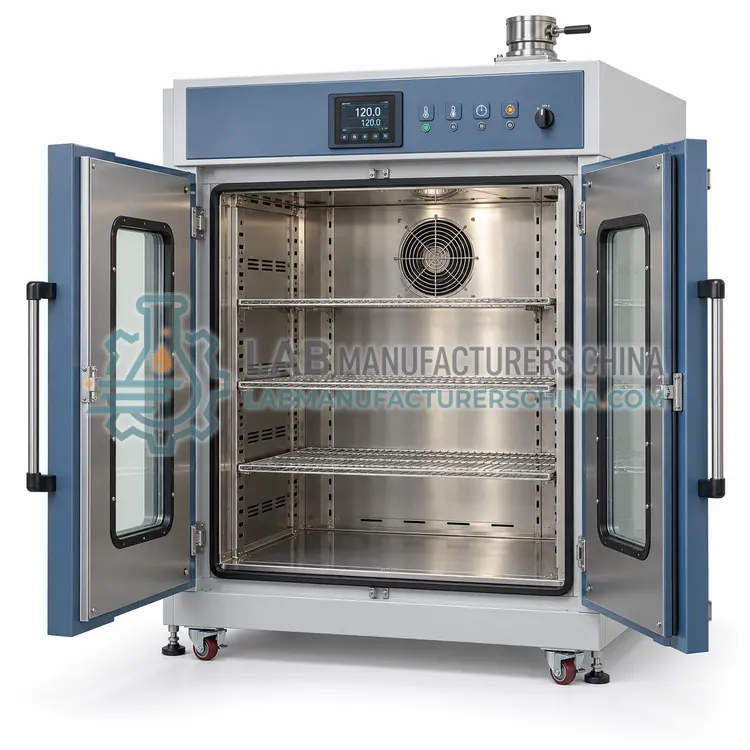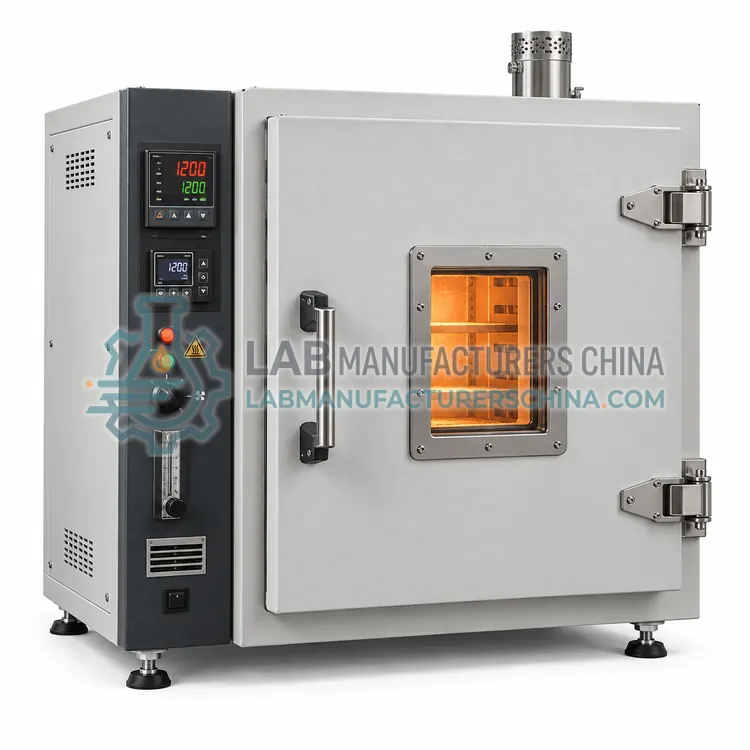
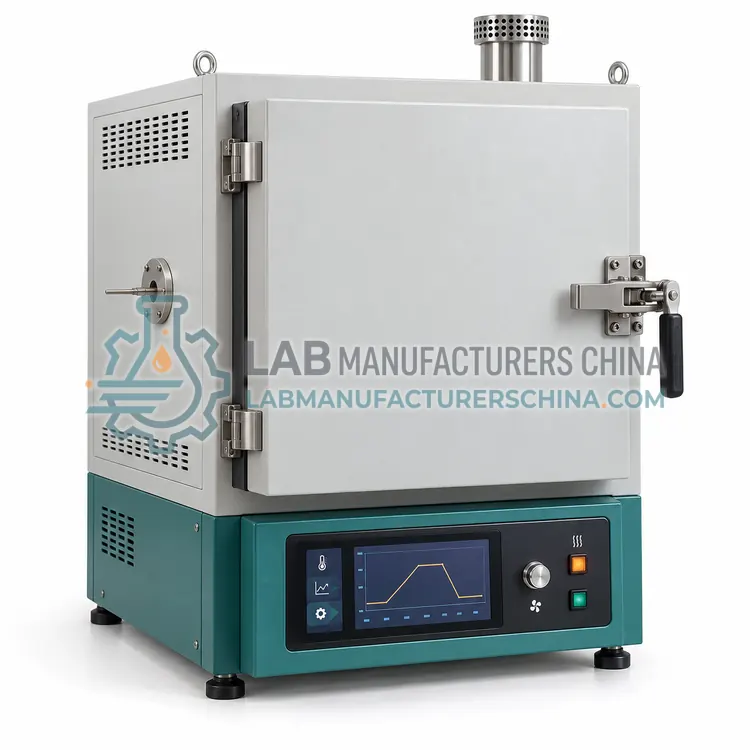
Programmable High-Temperature Oven
可编程高温烘箱
- SKU HTO-0004
- High Temperature Ovens
- CE (to be confirmed)
- ISO 9001 manufacturing (to be confirmed)
- RoHS (to be confirmed)
Price on request — FOB / CIF quoted per order
Prices depend on configuration, quantity and destination port.
Key specifications
| Chamber volume | 50–500 L |
|---|---|
| Temperature range | RT+10 to 500 C |
| Programs | 10–30 |
| Segments per program | Up to 30 |
| Ramp rate | 0.1–5 C/min |
| Temperature uniformity | ±3–6 C |
Request a quote Download brochure · to be provided
By Lab Manufacturers China Technical TeamLast reviewed Standards: IEC 61010-1, IEC 61010-2-010, DIN 12880
What is the Programmable High-Temperature Oven?
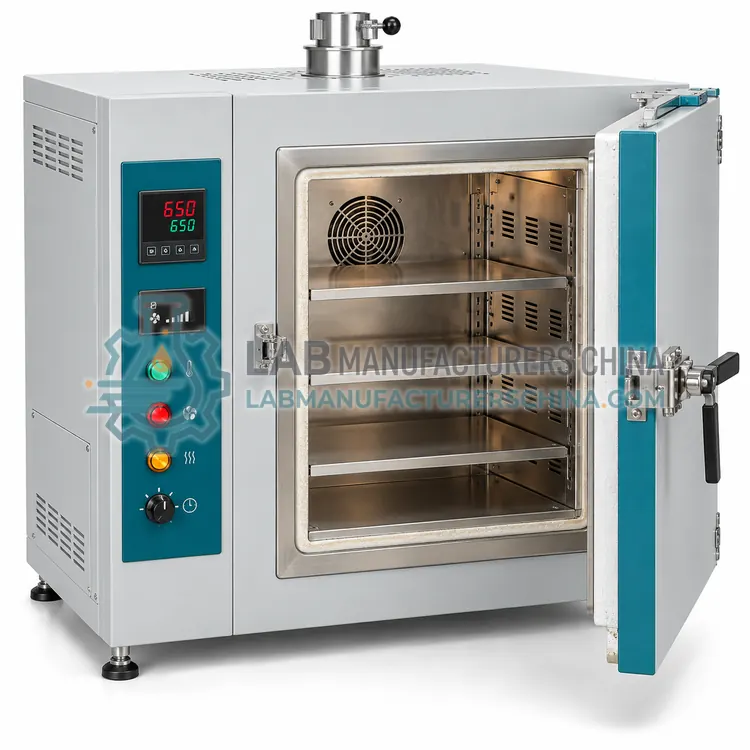
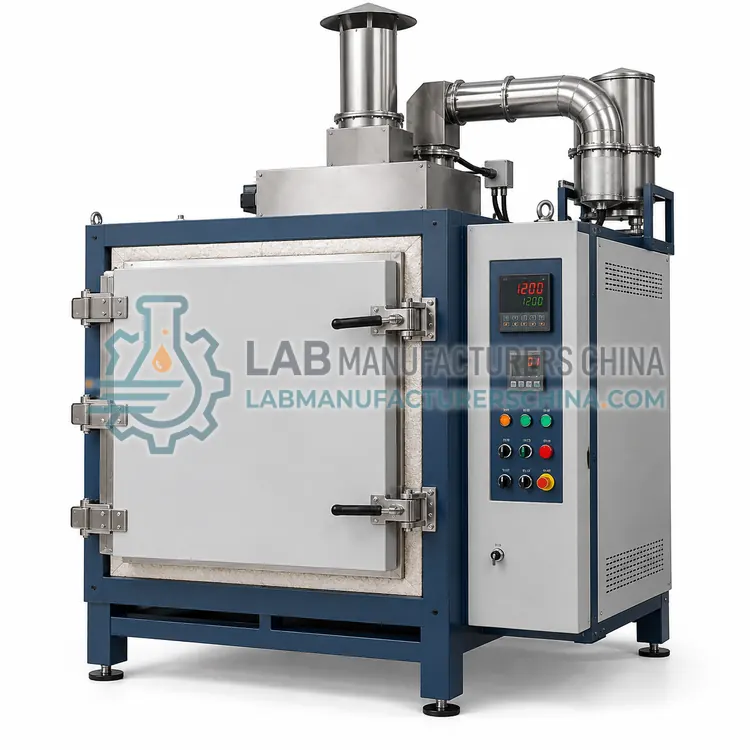
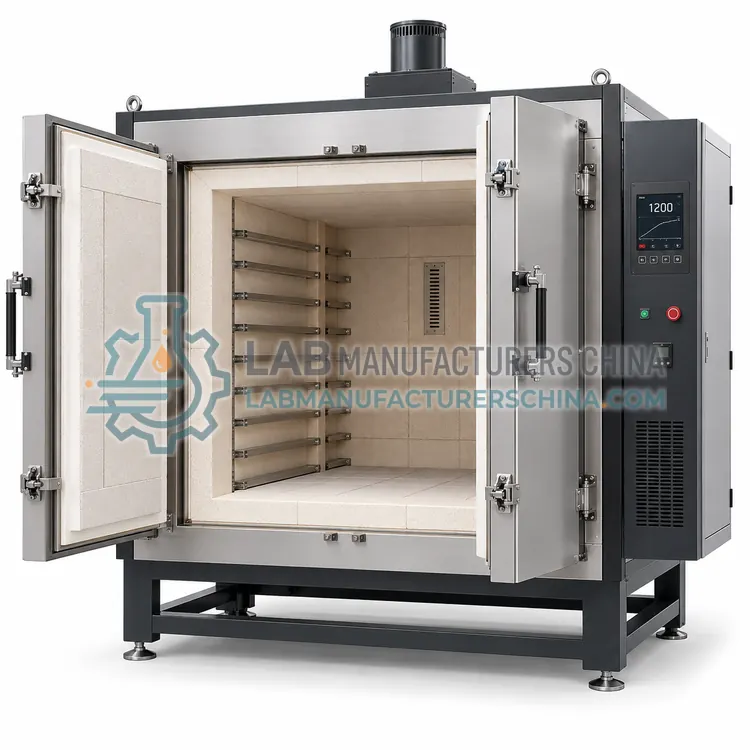
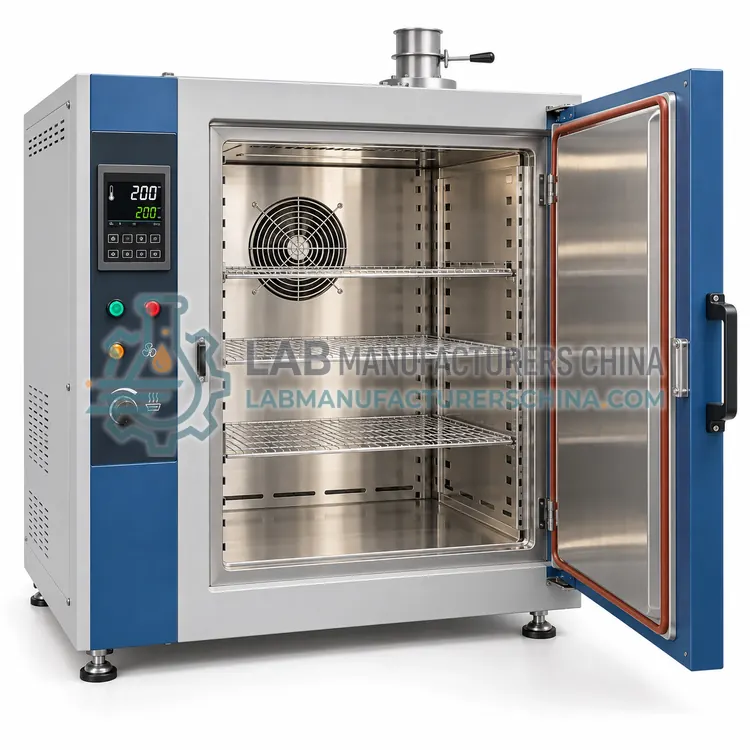
A programmable high-temperature oven executes stored multi-step profiles up to 500 C, so demanding thermal cycles can be repeated exactly. It is chosen when ramp rate, soak time and records must be controlled.
What is the Programmable High-Temperature Oven?
A programmable high-temperature oven executes stored multi-step profiles up to 500 C, so demanding thermal cycles can be repeated exactly. It is chosen when ramp rate, soak time and records must be controlled.
Overview
This oven combines high-temperature construction with a multi-segment controller that stores 10 to 30 programs of ramp, soak and cool steps. Each segment has its own target and duration, and the controller can hold a stage until a set time elapses. Data logging records setpoint and actual temperature with timestamps for validation, exported through RS-485, USB or Ethernet. Chambers are insulated with ceramic fiber and sealed with heat-resistant gaskets, reaching 500 C with uniformity of plus or minus 3 to 6 C. Real-time curve display helps operators follow the cycle. It suits burn-off cleaning schedules, curing programs and materials research where the same thermal history must be reproduced across runs and operators.
How does it work?
A high-temperature oven extends the forced air or gravity design to higher setpoints using high-duty heating elements, thicker insulation and materials rated for continuous heat. Elements placed in the walls or ducts operate at higher surface temperature, and insulation uses ceramic fiber or mineral wool boards instead of low-density wool. Air circulation is often retained to flatten gradients, but fans and motors must be rated for the hot zone or mounted outside it. Door seals are heat-resistant silicone or ceramic rope, and the exterior is cooled by an air gap or cooling fan to protect controls. A PID controller with type K or N thermocouple holds the setpoint, and an independent over-temperature limiter protects the load and the chamber structure.
What are the key features?
- Multi-segment controller with 10 to 30 programs
- Temperature range to 500 C
- Controlled ramp, soak and cool steps
- Data logging with RS-485, USB or Ethernet
- Real-time curve display
- Ceramic fiber insulation and heat-resistant seals
What are the technical specifications?
A typical programmable high-temperature oven configuration offers chamber volume of 50–500 L, temperature range of RT+10 to 500 C, programs of 10–30, segments per program of Up to 30, ramp rate of 0.1–5 C/min and temperature uniformity of ±3–6 C. Values are indicative of the product class; the exact figures for each configuration are confirmed on the quotation and the calibration documents supplied with the instrument.
Which applications is it used for?
The Programmable High-Temperature Oven is used in programmed burn-off cycles, curing and aging schedules, materials research heat profiles and validated high-temperature drying. Across the wider High Temperature Ovens class, laboratories also deploy it for burn-off cleaning of metal parts, high-temperature curing of coatings and dry-heat sterilization at 250 to 300 C.
Which standards and certifications apply?
Relevant standards and methods include IEC 61010-1, IEC 61010-2-010, DIN 12880, ISO 9001 and GB/T 30435. Certification candidates for this model are CE, ISO 9001 manufacturing and RoHS; each is to be confirmed for the specific configuration before shipment, and certificates are supplied only where they have been issued.
Install on a heat-resistant surface with clearance for the hot exterior and cooling air. Provide local extraction when fume-producing materials are processed, and never heat sealed containers or flammable solvents. Allow long, controlled warm-up and a slow cooling stage to avoid thermal stress on the chamber and load. Calibrate the temperature sensor regularly and map uniformity across the range, since gradients widen near the top temperature. Inspect elements, seals and insulation periodically for cracks or discoloration, replace damaged parts before failure, and record all service and temperature checks.
How do I select the right Programmable High-Temperature Oven?
Select the programmable version when the high-temperature process must follow a documented profile and produce records. Fixed-setpoint ovens are adequate for steady holding. In the RFQ, specify the maximum temperature, ramp range, programs and segments, data interface, record format and thermocouple type.
How does it compare with other High Temperature Ovens variants?
Choose a high-temperature oven only when the working temperature genuinely exceeds about 300 C, since standard ovens are cheaper and more uniform below that. Set the maximum temperature with a margin above the working setpoint and check the material of the load, because many polymers and coatings degrade and release fumes. Decide between gravity and forced circulation, and confirm that the fan and seals are rated for the top temperature. Specify insulation grade, exterior cooling, door type and controller features. For burn-off cleaning, check fume extraction and residue management. Confirm electrical supply, since three-phase power is common above 4 kW.
Full specifications
| Chamber volume | 50–500 L |
|---|---|
| Temperature range | RT+10 to 500 C |
| Programs | 10–30 |
| Segments per program | Up to 30 |
| Ramp rate | 0.1–5 C/min |
| Temperature uniformity | ±3–6 C |
| Data interface | RS-485, USB or Ethernet |
| Thermocouple type | Type K or N |
| Heating power | 3–9 kW |
| Power supply | 380 V, 3-phase, 50/60 Hz |
Indicative values for this product class. Final specifications are confirmed on the quotation and in the calibration documents supplied with the instrument.
Applications
- Programmed burn-off cycles
- Curing and aging schedules
- Materials research heat profiles
- Validated high-temperature drying
Key features
- Multi-segment controller with 10 to 30 programs
- Temperature range to 500 C
- Controlled ramp, soak and cool steps
- Data logging with RS-485, USB or Ethernet
- Real-time curve display
- Ceramic fiber insulation and heat-resistant seals
Frequently asked questions about Programmable High-Temperature Oven
Typical models store 10 to 30 programs with up to 30 segments each, covering ramp, soak and cool steps. This is enough for several standard cycles plus development work, and programs can be named for quick selection.
Programmable models with forced cooling can follow a controlled cool-down rate, which prevents thermal shock in ceramics, glass and composite parts. Without controlled cooling, the chamber cools passively and the rate depends on load and insulation.
Type K covers up to about 1200 C and type N offers better stability and oxidation resistance at high temperature. Both are common in 500 C ovens. The type must match the controller input and be checked for drift during periodic calibration.
Most models cover 300 to 500 C, with specialized units reaching 600 C. They bridge the gap between standard drying ovens, which stop near 250 to 300 C, and muffle furnaces, which start around 1000 C.
It heats metal parts, fixtures and filters to 400 to 500 C to burn away organic residues such as oils, polymers and coatings, leaving a clean surface. Fume extraction and controlled heating are essential to avoid flare-ups and to remove combustion products safely.
High-duty resistance wire and tubular elements are used to about 500 to 600 C, placed in walls or ducts so they are protected from drips. Elements are sized for higher surface temperature and longer life, and fans are rated for the hot zone or mounted outside it.
Related models