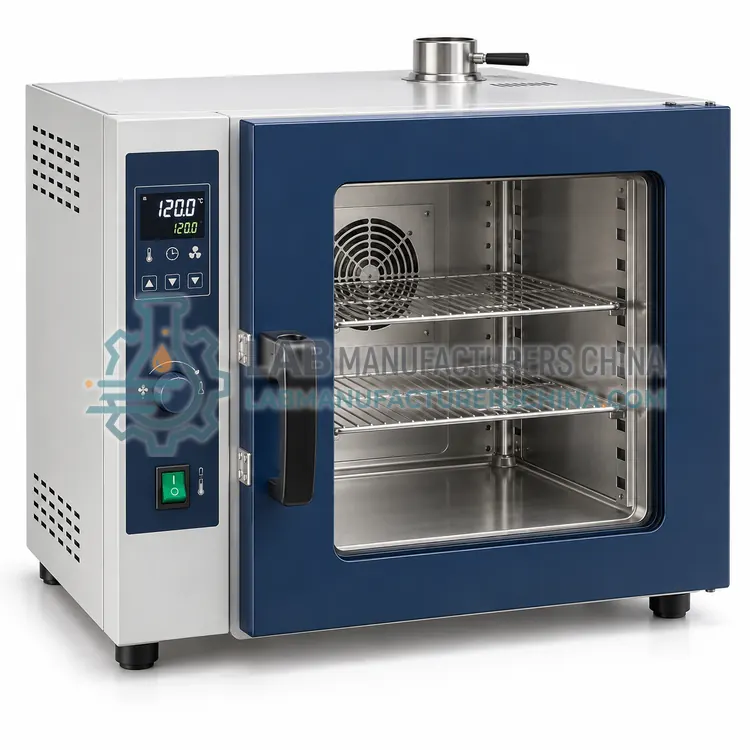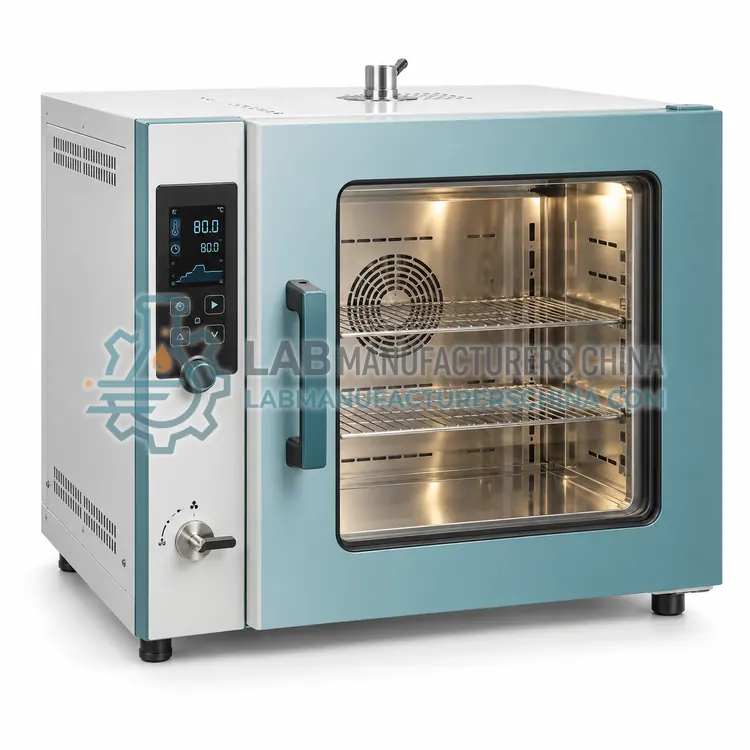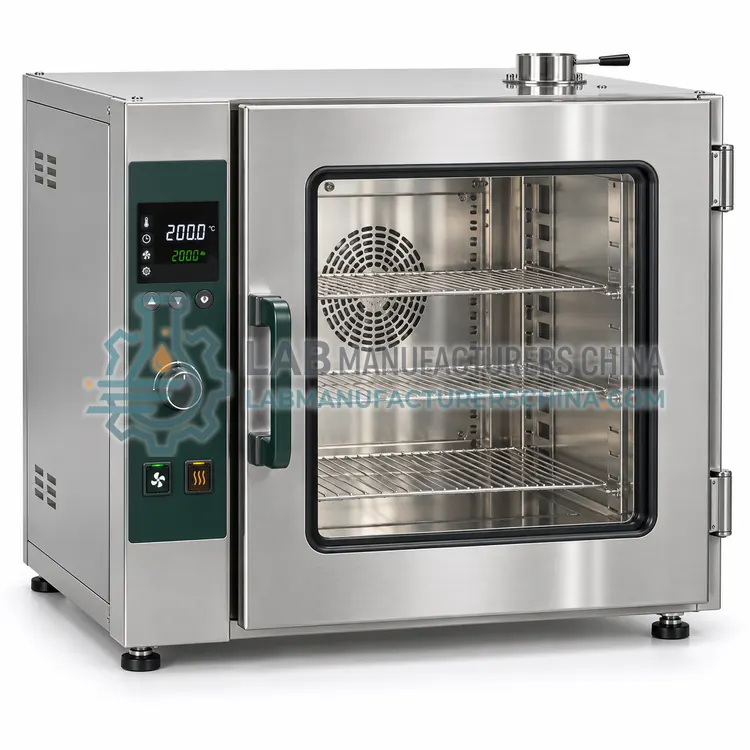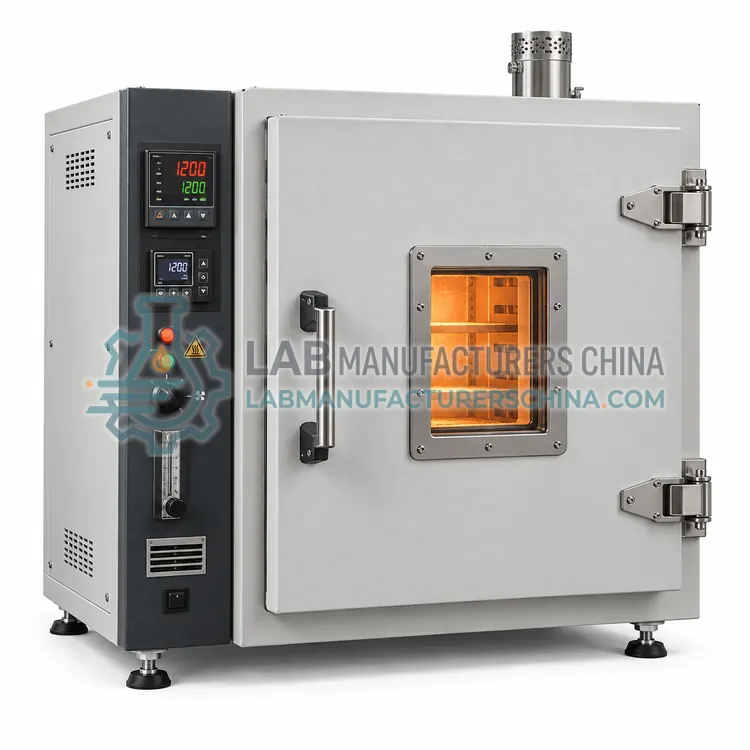
Large-Capacity Forced Air Oven
大容量强制对流烘箱
- SKU FAO-0005
- Forced Air Ovens
- CE (to be confirmed)
- ISO 9001 manufacturing (to be confirmed)
- RoHS (to be confirmed)
Price on request — FOB / CIF quoted per order
Prices depend on configuration, quantity and destination port.
Key specifications
| Chamber volume | 250–1000+ L |
|---|---|
| Temperature range | RT+10 to 300 C |
| Temperature uniformity | ±2–4 C |
| Air circulation | Centrifugal fan, ducted |
| Number of shelves | 5–12 or trolley |
| Heating power | 3–12 kW |
Request a quote Download brochure · to be provided
By Lab Manufacturers China Technical TeamLast reviewed Standards: IEC 61010-1, IEC 61010-2-010, DIN 12880
What is the Large-Capacity Forced Air Oven?
A large-capacity forced air oven provides hundreds of liters of fan-circulated heating space for bulk drying and industrial laboratory batches. It is chosen when benchtop ovens would require too many cycles or cannot hold a full trolley load.
What is the Large-Capacity Forced Air Oven?
A large-capacity forced air oven provides hundreds of liters of fan-circulated heating space for bulk drying and industrial laboratory batches. It is chosen when benchtop ovens would require too many cycles or cannot hold a full trolley load.
Overview
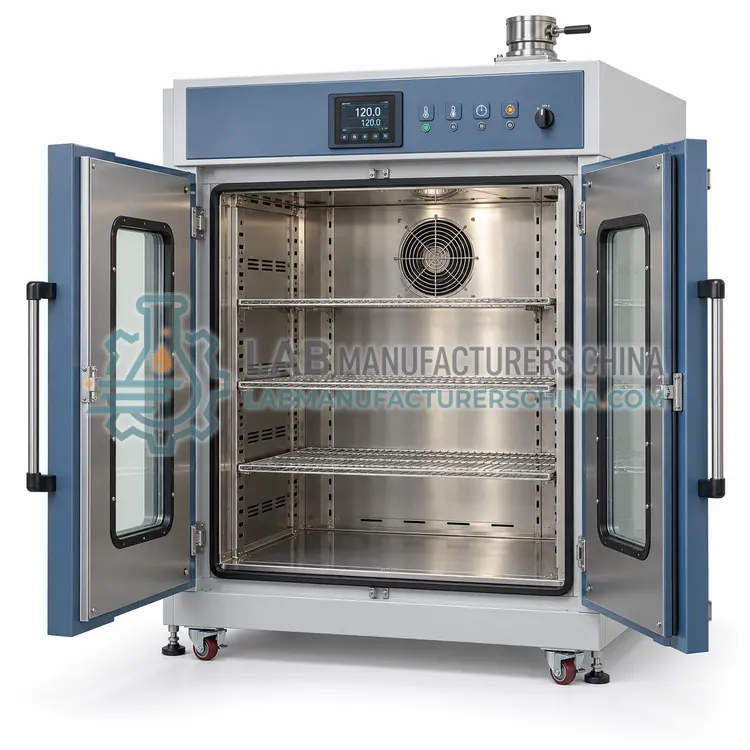
This floor-standing oven applies forced convection to volumes from about 250 liters to over 1000 liters, often with a double-door or cart-access design. Strong centrifugal fans and ducted air paths keep large volumes uniform, and multiple sensors support mapping across shelves and corners. Heating power runs from 3 to 12 kW and may need three-phase supply. Shelves, trays or trolleys are configurable, and mild-steel or stainless interiors are available depending on duty. Controls can be digital or programmable and often include data logging and alarms. It is used for bulk drying of powders and components, preheating molds, and industrial laboratory batches where throughput and consistency outweigh bench-top convenience.
How does it work?
A forced air oven adds a circulation fan to a standard heated chamber. Air is drawn over heating elements, pushed through ducts into the chamber and returned to the fan, so temperature gradients collapse and heat transfers to the load by convection. This shortens heat-up time and speeds recovery after the door opens. A Pt100 sensor and PID controller regulate the setpoint, while an adjustable fresh-air inlet and exhaust vent control humidity. Because moving air also moves light particles, samples must be placed so they cannot be blown around. Fan motors are usually external to the hot zone or heat-resistant, and some models let the fan be switched off for gravity operation. Chambers are stainless steel or coated steel, from about 50 to 800 liters.
What are the key features?
- Floor-standing chamber from 250 to 1000 L or more
- Centrifugal fan with ducted air distribution
- Multiple sensors for uniformity mapping
- Configurable shelves, trays or trolley access
- Heating power from 3 to 12 kW
- Optional programmable control and data logging
What are the technical specifications?
A typical large-capacity forced air oven configuration offers chamber volume of 250–1000+ L, temperature range of RT+10 to 300 C, temperature uniformity of ±2–4 C, air circulation of Centrifugal fan, ducted, number of shelves of 5–12 or trolley and heating power of 3–12 kW. Values are indicative of the product class; the exact figures for each configuration are confirmed on the quotation and the calibration documents supplied with the instrument.
Which applications is it used for?
The Large-Capacity Forced Air Oven is used in bulk powder drying, component and part batch drying, mold and tool preheating, industrial laboratory processing and large glassware batches. Across the wider Forced Air Ovens class, laboratories also deploy it for routine sample and glassware drying, curing and baking of coatings and dry-heat sterilization of instruments.
Which standards and certifications apply?
Relevant standards and methods include IEC 61010-1, IEC 61010-2-010, DIN 12880, ASTM E145, GB/T 30435 and ISO 9001. Certification candidates for this model are CE, ISO 9001 manufacturing and RoHS; each is to be confirmed for the specific configuration before shipment, and certificates are supplied only where they have been issued.
Place the oven with 15 to 30 cm clearance so the fan can draw cooling air, and keep the exhaust clear or ducted outside where fumes are produced. Do not place sealed containers or flammable solvents inside unless the oven is designed for them. Keep shelves about 70 percent loaded for even airflow, and avoid blocking the return ducts. Check and clean the fan and air ducts periodically, since dust build-up changes airflow and uniformity. Calibrate the temperature sensor and verify uniformity on a schedule, and allow recovery time after each door opening before recording results.
How do I select the right Large-Capacity Forced Air Oven?
Select a large-capacity forced air oven when batch volume exceeds about 250 liters or trolley loading is needed. Confirm floor space, door swing or trolley path, three-phase power and ventilation. In the RFQ, specify volume, shelf or trolley layout, uniformity target, air exchange, controller and whether a programmable profile is required.
How does it compare with other Forced Air Ovens variants?
Choose a forced air oven when uniformity and throughput matter, or when the load recovers slowly in a gravity oven. Set the chamber volume from batch size, usually with about 30 percent free space for airflow, and the temperature range with margin above the highest working temperature. Decide between a standard digital controller and a programmable one with ramp and soak segments. If the samples are light powders, either lower the fan speed or choose a gravity model. Confirm interior material, shelf count, air exchange rate and whether an inlet filter or HEPA option is needed for clean applications.
Full specifications
| Chamber volume | 250–1000+ L |
|---|---|
| Temperature range | RT+10 to 300 C |
| Temperature uniformity | ±2–4 C |
| Air circulation | Centrifugal fan, ducted |
| Number of shelves | 5–12 or trolley |
| Heating power | 3–12 kW |
| Heat-up time to 150 C | 25–45 min |
| Door type | Double door or trolley access |
| Interior material | Stainless or mild steel |
| Power supply | 380 V, 3-phase, 50/60 Hz |
Indicative values for this product class. Final specifications are confirmed on the quotation and in the calibration documents supplied with the instrument.
Applications
- Bulk powder drying
- Component and part batch drying
- Mold and tool preheating
- Industrial laboratory processing
- Large glassware batches
Key features
- Floor-standing chamber from 250 to 1000 L or more
- Centrifugal fan with ducted air distribution
- Multiple sensors for uniformity mapping
- Configurable shelves, trays or trolley access
- Heating power from 3 to 12 kW
- Optional programmable control and data logging
Frequently asked questions about Large-Capacity Forced Air Oven
Uniformity depends on fan capacity, ducted air distribution and not overloading the chamber. Designers use multiple sensors and mapping tests, and operators should leave airflow channels between trays and keep loads below about 70 percent of shelf area.
Most units above about 3 to 4 kW use 380 V three-phase supply. This lowers current per phase and suits industrial sites, but single-phase models exist at the low end of the range. Confirm the available supply before ordering.
Typically 25 to 45 minutes to reach 150 C, depending on chamber volume, heating power and load. Large metal loads absorb significant heat and extend recovery, so methods should include a stabilization stage before timing begins.
It dries samples and glassware, cures and bakes coatings, sterilizes heat-stable instruments and conditions materials. Circulated air gives faster heat-up and tighter uniformity than a gravity oven, so it suits routine high-throughput work between about 50 C and 300 C.
A gravity oven relies on rising warm air, which heats slowly and gives gradients of several degrees. A forced air oven uses a fan to circulate air, reaching temperature faster, recovering sooner after door openings and holding uniformity within one or two degrees.
No, unless it is specifically designed and certified for solvent use. Standard forced air ovens have motors, heaters and relays that can ignite flammable vapours, and the fan spreads vapour quickly. Use a vacuum oven or explosion-proof oven instead.
Related models