
Spectroscopy Instruments
光谱仪器
CSPI · Analytical & Instrumentation · 6 product types · 31 models
By Lab Manufacturers China Technical TeamLast reviewed
What are Spectroscopy Instruments?
Spectroscopy instruments measure how matter absorbs, emits or scatters electromagnetic radiation to identify substances and quantify them. This category covers UV-Vis, FTIR, Raman, fluorescence, NIR and atomic spectroscopy systems used in pharmaceutical, chemical, environmental, food and materials laboratories.
6 product types in Spectroscopy Instruments
The 6 product types below are grouped by the exact instrument you need.
- UVV5 models
UV-Vis
紫外可见光谱仪
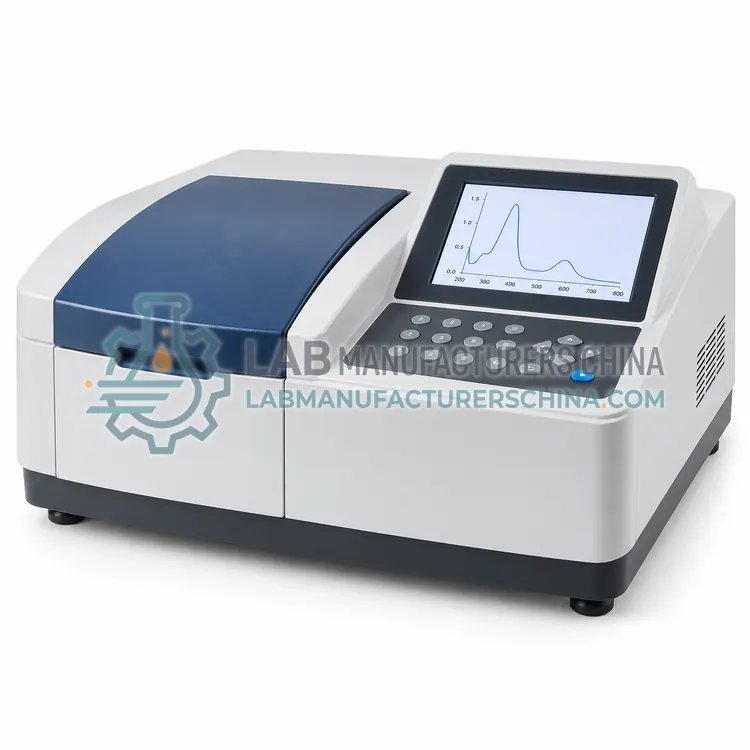
UV-Vis spectroscopy instruments measure how a sample absorbs, transmits or reflects light between about 190 and 1100 nm, and sometimes out to 3300 nm. Researchers and analysts use them to identify chromophores, quantify concentration by Beer–Lambert law, follow reaction kinetics and characterize optical materials.
- FTI5 models
FTIR
傅里叶变换红外光谱仪
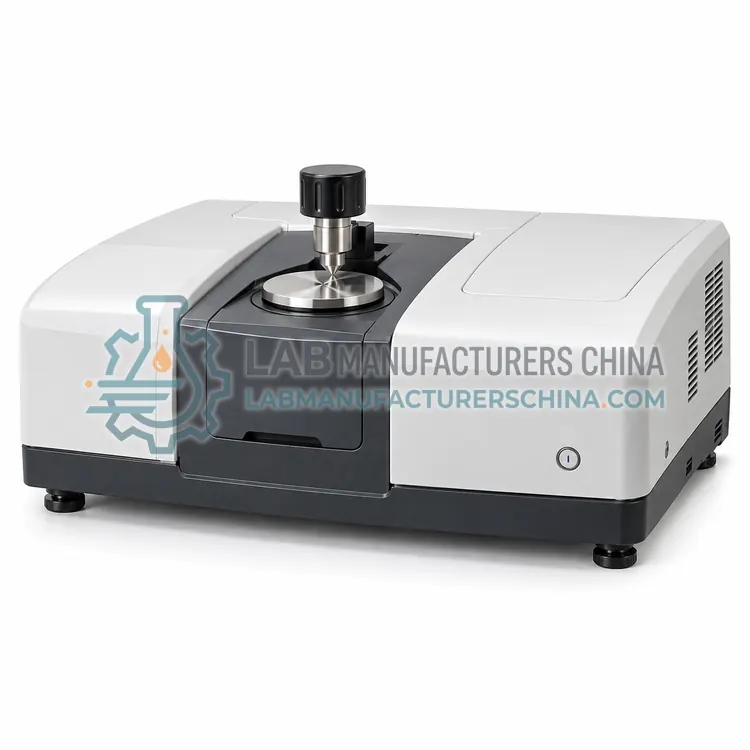
FTIR spectroscopy instruments use an interferometer to record the infrared absorption spectrum of a sample, typically from 4000 to 400 cm-1. The spectrum is a molecular fingerprint used by materials scientists, polymer chemists, forensic analysts and spectroscopists to identify functional groups, unknown materials and contaminants.
- RAM5 models
Raman
拉曼光谱仪
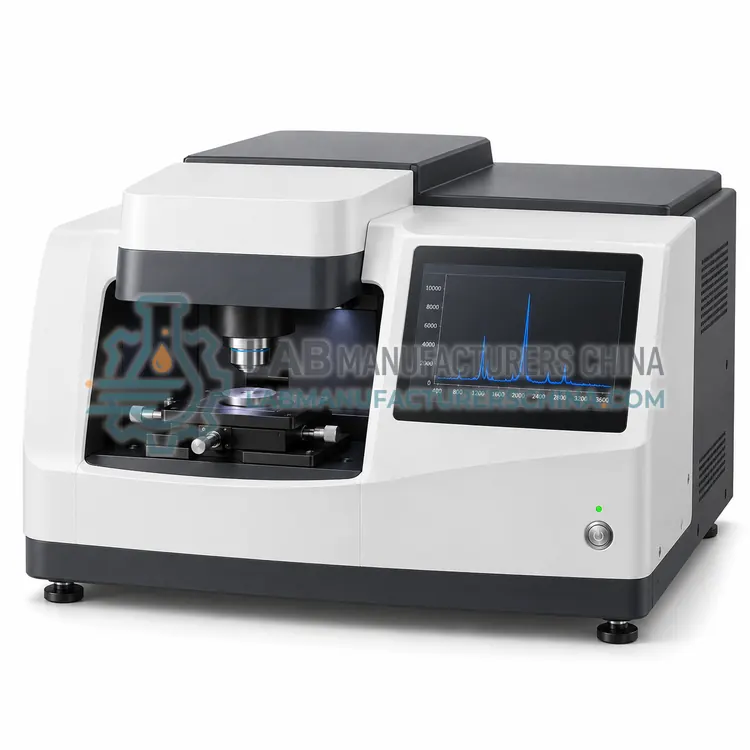
Raman spectrometers measure inelastically scattered laser light to obtain the vibrational fingerprint of a material. Laboratories use them for non-destructive identification of chemicals, polymorphs, carbon materials and minerals, often through glass or plastic packaging and with little or no sample preparation.
- FLU5 models
Fluorescence
荧光光谱仪
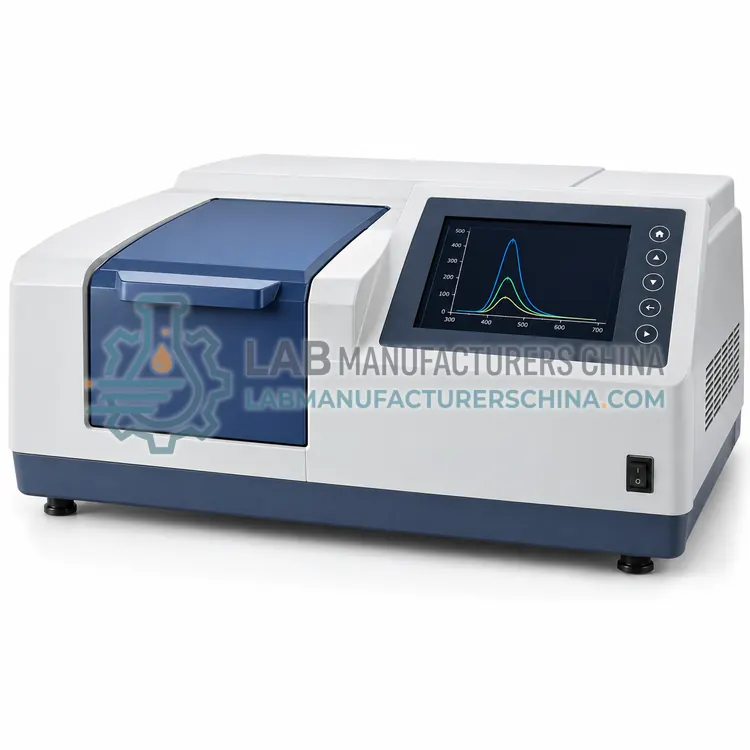
Fluorescence spectrometers measure the light a sample emits after absorbing excitation light. They detect and quantify fluorescent compounds at very low concentrations and are used in pharmaceutical, clinical, environmental, food and life-science laboratories for assays, labeling studies and trace analysis.
- NIR5 models
NIR
近红外光谱仪
Near-infrared spectrometers measure overtone and combination vibrational absorption or reflectance between roughly 780 and 2500 nm. Laboratories and production plants use them with chemometric models for fast, non-destructive screening of raw materials, powders, liquids and agricultural products.
- ATS6 models
Atomic Spectroscopy
原子光谱仪
Atomic spectroscopy instruments determine elemental composition by measuring the absorption or emission of light by free atoms. The category covers flame and graphite furnace atomic absorption, inductively coupled plasma optical emission and mass spectrometry, atomic fluorescence and microwave plasma systems.
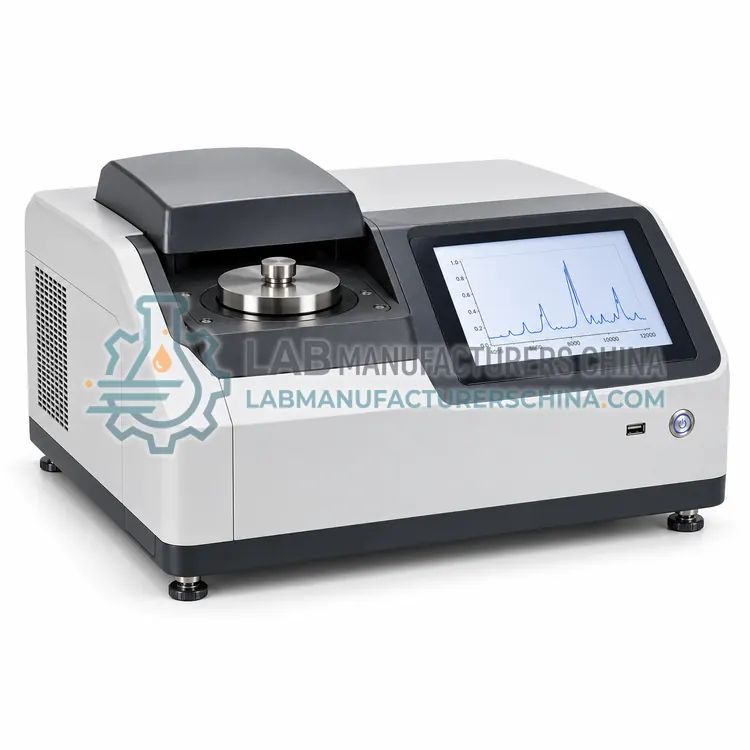
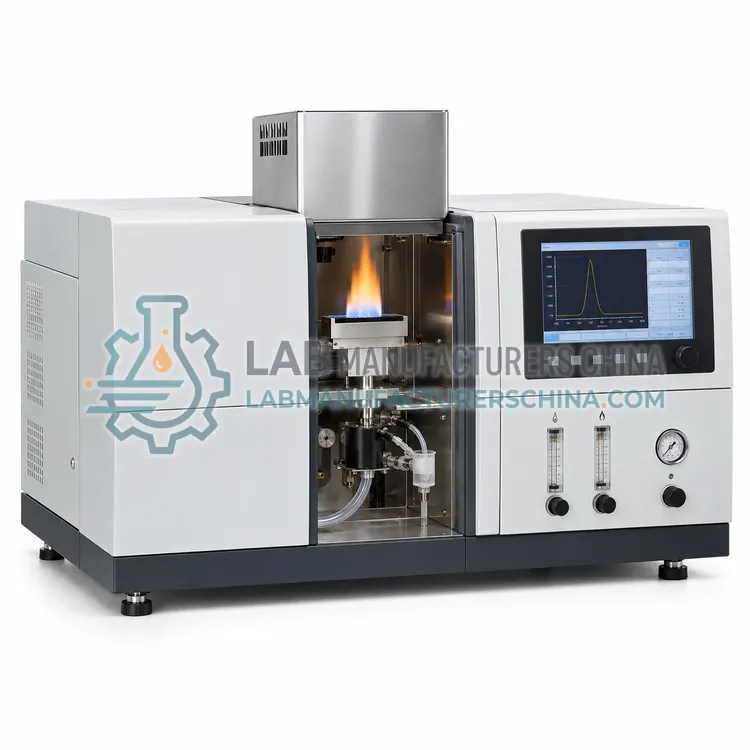
What are Spectroscopy Instruments?
Spectroscopy instruments are analytical systems that use the interaction between electromagnetic radiation and matter to reveal chemical composition, structure and concentration. Each technique probes a different physical process: UV-Vis and NIR measure electronic or overtone vibrational transitions through absorption, FTIR and Raman measure fundamental vibrational modes, fluorescence detects emitted light after excitation, and atomic spectroscopy measures free atoms in flames, furnaces or plasmas. A system generally combines a radiation source, a wavelength selector or interferometer, a sample interface and a detector, with software that converts raw intensity into spectra, peak positions and concentrations. Because different techniques respond to different functional groups and molecular environments, they are complementary rather than interchangeable. Laboratories select them by sample state, required specificity, detection limit and whether the analysis is qualitative identification or quantitative determination.
How do Spectroscopy Instruments work?
All spectroscopic methods measure the intensity of radiation before and after interaction with a sample and relate it to molecular or atomic properties. In UV-Vis and fluorescence, a source such as a deuterium or xenon lamp excites electrons and a monochromator or filter selects wavelengths; fluorescence records light emitted at longer wavelengths than the excitation. FTIR uses a Michelson interferometer to encode all wavelengths simultaneously, and a Fourier transform converts the interferogram into a spectrum of absorption bands. Raman uses a monochromatic laser and measures inelastically scattered photons shifted by vibrational energies. NIR uses diffuse reflectance or transmission with chemometric models to relate spectra to composition. Atomic spectroscopy introduces a sample into a flame, graphite furnace or plasma that atomizes it; atoms then absorb or emit characteristic lines under the Beer-Lambert law or atomic emission intensity, giving element-specific quantitation.
Where are Spectroscopy Instruments used?
Spectroscopy supports identification and quantitation wherever chemical information is needed. Pharmaceutical laboratories use UV-Vis and FTIR for identity and assay, NIR for raw material screening and blend uniformity, and Raman for polymorph and counterfeit detection. Chemical and polymer producers apply FTIR and Raman for functional-group analysis, additive identification and cure monitoring. Environmental testing uses UV-Vis and atomic spectroscopy for metals, anions and organic pollutants in water and soil. Food and agricultural laboratories measure moisture, protein and fat by NIR and check adulteration or origin by fluorescence and Raman. Materials, semiconductor and forensic laboratories use Raman and FTIR for contamination, coating and micro-sample analysis. Universities adopt these systems for teaching, method development and research across chemistry, biology and engineering.
Which standards apply to Spectroscopy Instruments?
Spectroscopic methods are covered by pharmacopoeial, ASTM, ISO and application-specific standards. UV-Vis follows USP <857> and Ph. Eur. 2.2.25, with wavelength and photometric accuracy verified by reference materials such as holmium oxide and potassium dichromate. FTIR identification follows Ph. Eur. 2.2.24, USP <197> and ASTM E1252, and NIR follows Ph. Eur. 2.2.40 and USP <1119>. Fluorescence spectroscopy is described in USP <853>, and Raman in Ph. Eur. 2.2.48. Atomic spectroscopic methods for elemental impurities are cited in USP <730>, USP <233> and ICH Q3D. General instrumental performance, terminology and validation are covered by ASTM E131, ASTM E275, ICH Q2(R2) and ISO/IEC 17025, while electrical safety for laboratory equipment follows IEC 61010-1.
How do I select the right spectroscopy equipment?
Match the technique to the question before comparing hardware. For quantitative analysis of colored or UV-absorbing solutions in solution, UV-Vis is the default. Use FTIR when functional groups or identity of solids, liquids or gases matter, and choose attenuated total reflectance or transmission depending on sample form. Select Raman for aqueous samples, sealed containers and polymorph discrimination, and fluorescence for trace-level aromatic or labeled analytes. NIR suits fast, non-destructive screening of powders and agricultural materials when a validated chemometric model exists. Atomic spectroscopy covers elemental determination, with flame or plasma techniques for higher concentrations and graphite furnace for trace levels. Within a technique, compare wavelength or wavenumber range, resolution, detector type, sample handling and software compliance. Confirm that reference standards, libraries and validated methods are available before purchase.
Spectroscopy Instruments comparison
| Subcategory | Principle | Typical use | Key spec |
|---|---|---|---|
| UV-Vis | Electronic absorption in UV and visible light | Assay, kinetics, spectra and concentration | 190–1100 nm |
| FTIR | Infrared absorption through an interferometer | Functional groups, identity and materials | 4000–400 cm-1 |
| Raman | Inelastic laser scattering by molecular vibrations | Non-destructive identification and imaging | Raman shift 200–3500 cm-1 |
| Fluorescence | Emission after electronic excitation | Trace analysis of fluorescent analytes | Ex 200–900 nm / Em 250–900 nm |
| NIR | Overtone and combination vibrational absorption or reflection | Rapid non-destructive screening and process control | 780–2500 nm |
| Atomic Spectroscopy | Absorption or emission by free atoms | Elemental determination and trace metals | ppb to percent levels |
Frequently asked questions about Spectroscopy Instruments
No single technique identifies everything. FTIR reveals functional groups, Raman gives complementary vibrational information and is strong for non-polar bonds, and UV-Vis shows conjugated systems. Mass spectrometry adds molecular weight and NMR adds skeletal detail. For identity work a combination of FTIR or Raman with confirmatory techniques against reference spectra or libraries gives the most reliable result.
FTIR measures absorption of infrared light by bonds with a changing dipole moment, such as carbonyl and hydroxyl groups. Raman measures inelastically scattered laser light from bonds with a changing polarizability, such as carbon-carbon and sulfur bonds. They are complementary, and water interferes strongly with FTIR but only weakly with Raman.
Choose UV-Vis for solutions with chromophores at moderate concentrations and simple quantitation. Choose fluorescence when the analyte is naturally fluorescent or can be labeled and low detection limits are required, since it is far more sensitive. Choose NIR for rapid, non-destructive measurement of solids, powders or process streams when a validated chemometric calibration model is available.
UV-Vis and fluorescence usually need only dilution, pH control and filtration. FTIR transmission requires transparent pellets, mulls or thin films, while attenuated total reflectance needs minimal preparation. Raman and NIR often measure solids and liquids with little or no preparation. Atomic spectroscopy requires acid digestion or dilution to avoid matrix effects, so sample preparation dominates both time and uncertainty.
For targeted identification and screening, handheld Raman, NIR and FTIR analyzers perform well against libraries after calibration. Benchtop instruments still offer higher spectral resolution, better signal-to-noise, more sampling accessories and easier qualification. Choose portable systems when samples cannot be brought to the laboratory or when rapid field decisions outweigh the need for maximum resolution.
Routine maintenance includes cleaning sample interfaces, checking lamp hours, verifying wavelength or wavenumber accuracy with reference standards, and replacing desiccant, filters or lamps on schedule. FTIR instruments are particularly sensitive to moisture, so purge gas and sealed optics matter. Keep records of reference checks and service so performance trends can be monitored over time.
Related categories
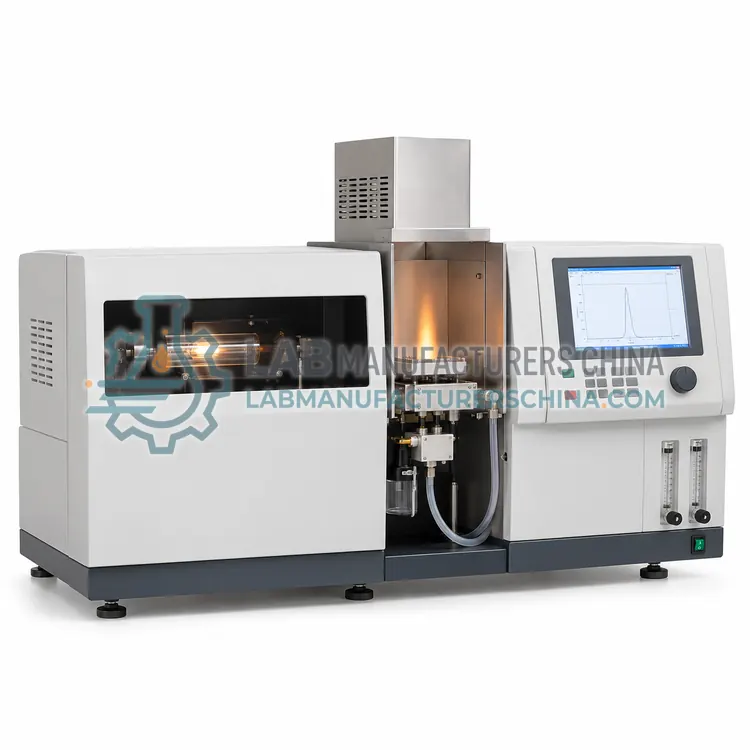 CAAS原子吸收光谱仪Atomic absorption spectrometers determine elemental concentrations by measuring light absorbed by free atoms produced in a flame, graphite furnace or hydride generation cell. They serve environmental, food, clinical, geochemical and pharmaceutical laboratories that need reliable trace-metal results at low cost.
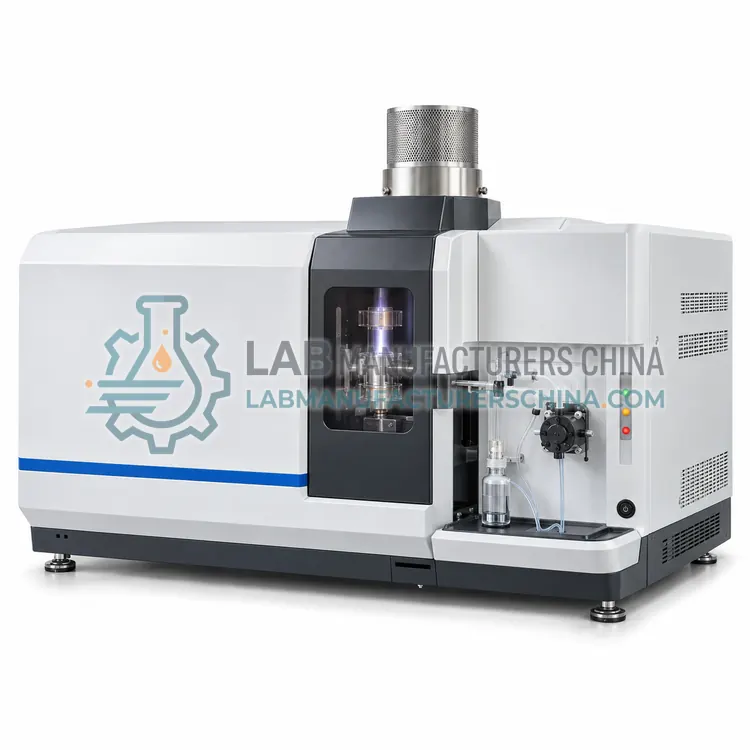 CICSICP 光谱仪ICP spectrometers use an inductively coupled argon plasma to atomize and ionize samples for elemental analysis by optical emission or mass spectrometry. They serve environmental, pharmaceutical, food, metallurgical and geological laboratories that need multi-element results.
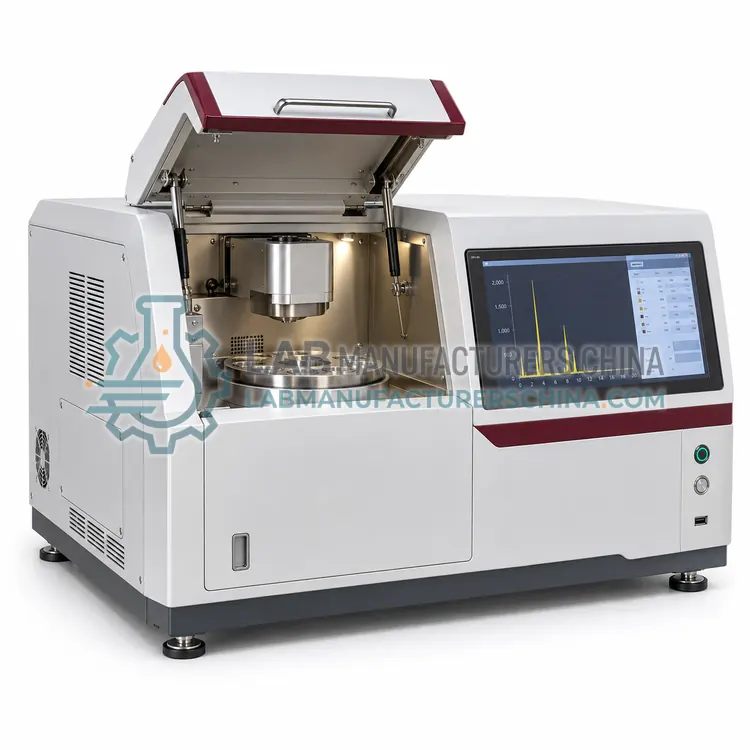 CXRAX 射线分析仪器X-ray analysis instruments use X-ray interaction with matter to determine elemental composition or crystal structure. The category covers X-ray fluorescence spectrometers, portable and benchtop XRF analyzers, and X-ray diffractometers for materials, environmental and industrial testing.
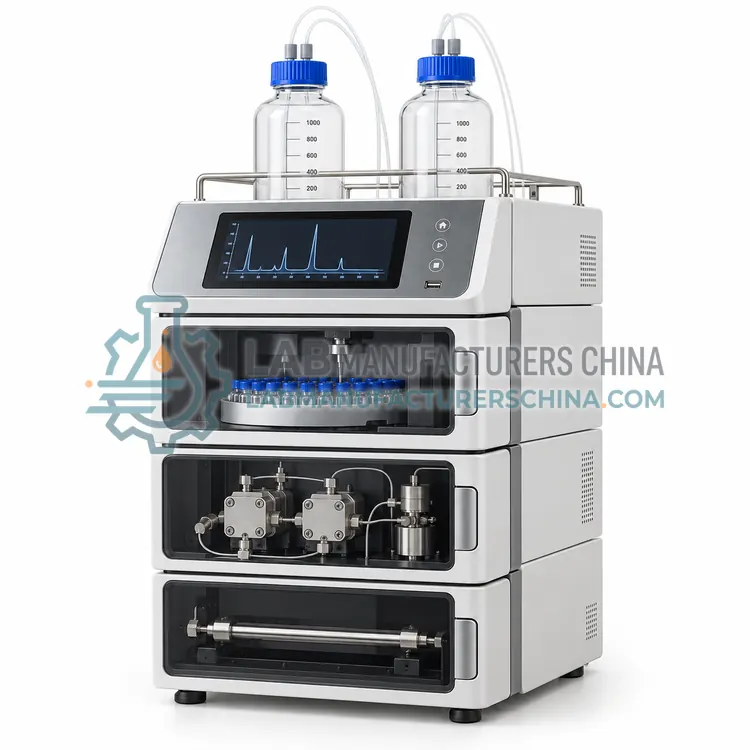 CCHI色谱仪器Chromatography instruments separate the components of a mixture between a mobile phase and a stationary phase, then detect and quantify each component. The category covers HPLC, UHPLC, gas chromatography, ion chromatography and flash chromatography systems used in QC, environmental, food, pharmaceutical and synthetic chemistry laboratories.