
Optical Instruments
光学仪器
COPI · Analytical & Instrumentation · 6 product types · 30 models
By Lab Manufacturers China Technical TeamLast reviewed
What are Optical Instruments?
Optical instruments measure light intensity, wavelength, colour, refractive index and optical rotation. The category covers spectrometers, colorimeters, optical power meters, lux meters, polarimeters and refractometers used for material identification, concentration measurement, illumination checking and optical component testing. They are routine tools in analytical, quality-control and research laboratories.
6 product types in Optical Instruments
The 6 product types below are grouped by the exact instrument you need.
- SPC5 models
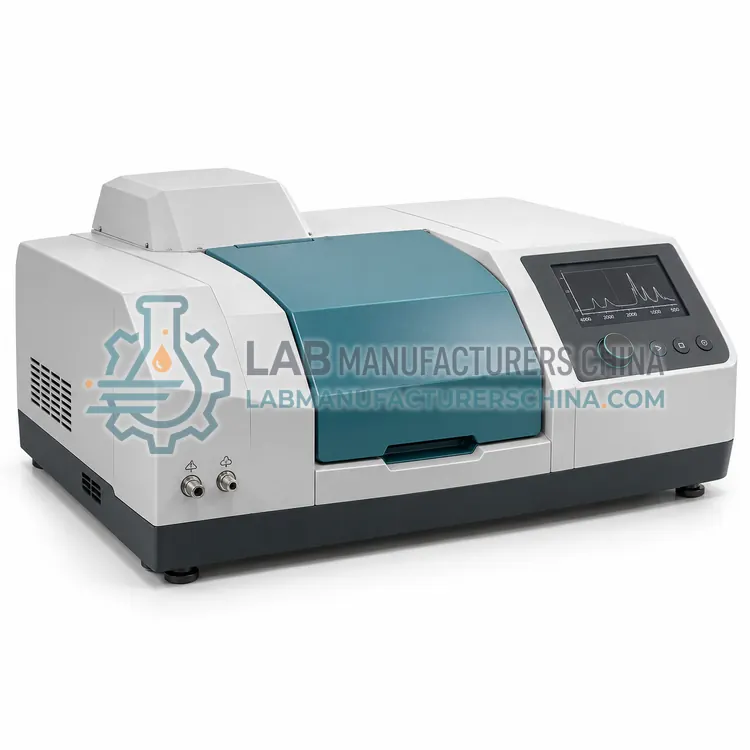
Spectrometers
光谱仪
Spectrometers disperse light into its component wavelengths and measure intensity against wavelength. As optical instruments they are defined by their optical design, spectral range and detector, and are used to identify substances, quantify concentration and characterize light sources and optical components.
- COL5 models
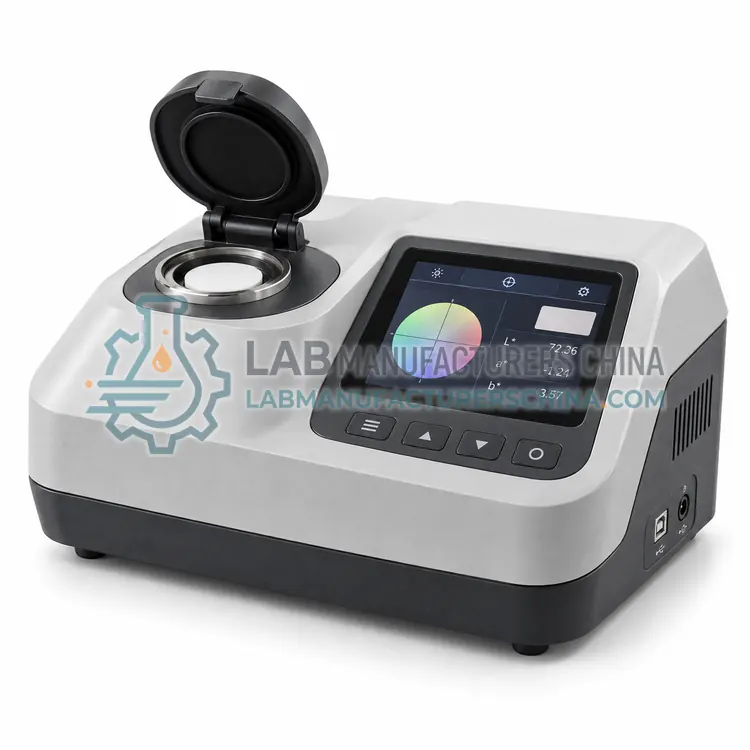
Colorimeters
色度计
Colorimeters measure the intensity of coloured light transmitted or reflected by a sample to determine concentration or colour. They use broad-band filters rather than a full monochromator, making them simple, rugged and inexpensive for routine colour and chemical measurements.
- OPM5 models
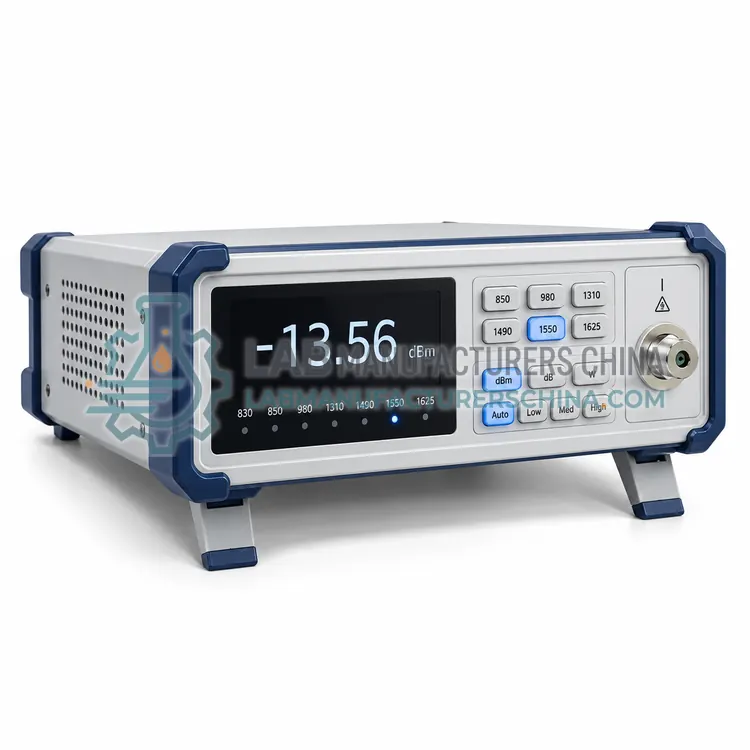
Optical Power Meters
光功率计
Optical power meters measure the radiant power of lasers, light-emitting diodes and optical fibres. They use calibrated photodiodes, thermopiles or pyroelectric sensors and are used to verify output, loss and stability in laser, fibre-optic and photonic production.
- LUM5 models
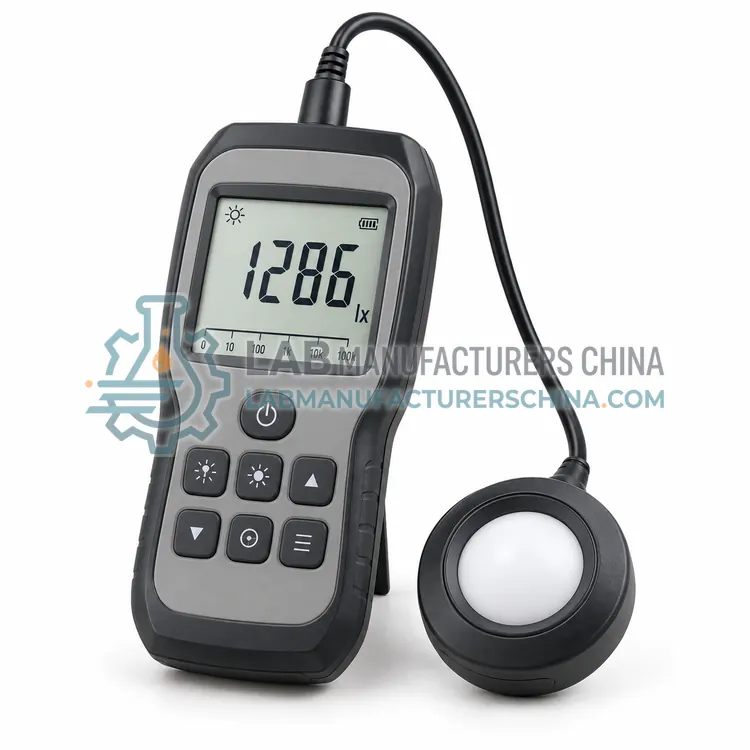
Lux Meters
照度计
Lux meters measure illuminance, the luminous flux falling on a surface, in lux or foot-candles. They use a photopic-filtered photodetector and are used to verify workplace lighting, displays, greenhouses and compliance with lighting standards.
- PLR5 models
Polarimeters
旋光仪
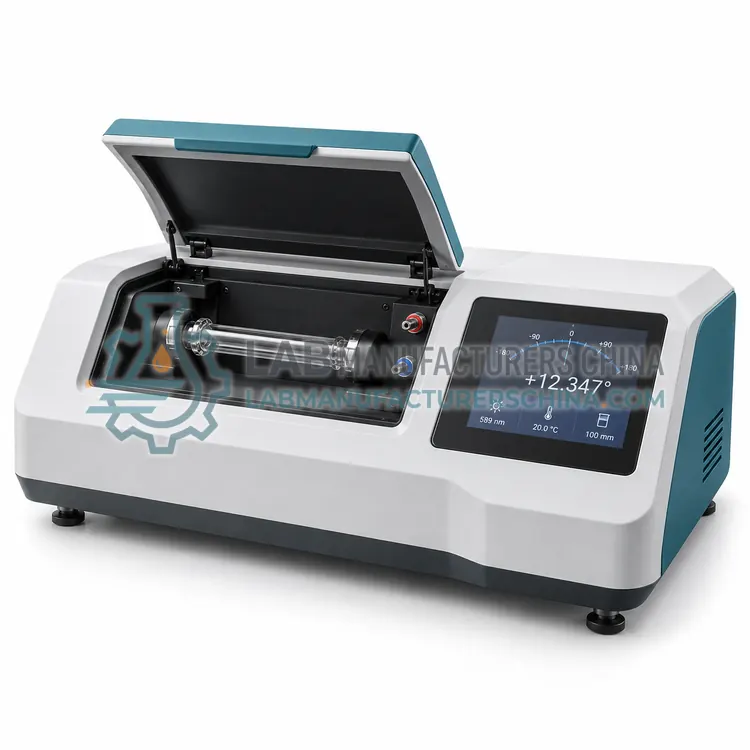
Polarimeters measure the rotation of plane-polarized light caused by optically active samples. As optical instruments they are defined by wavelength, angular resolution and temperature control, and are used to determine concentration, purity and identity of sugars and chiral compounds.
- RFR5 models
Refractometers
折光仪
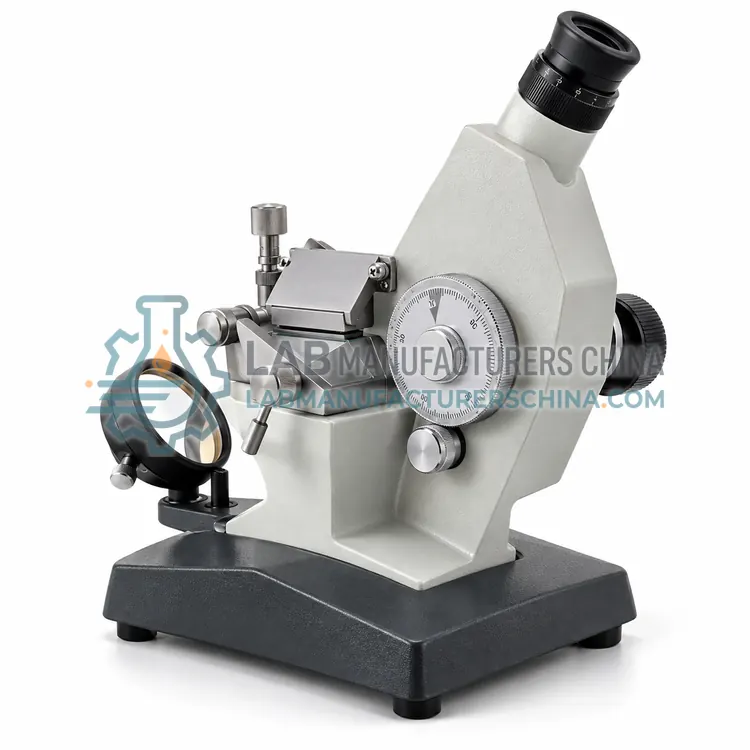
Refractometers measure the refractive index of liquids and solids, a value related to composition, purity and dissolved solids. As optical instruments they are defined by measuring range, accuracy and temperature control, and are used in food, chemical and pharmaceutical analysis.
What are Optical Instruments?
Optical instruments characterize light itself and the interaction of light with matter. Spectrometers disperse or filter light and record intensity against wavelength, allowing identification and quantification of absorbing or emitting substances. Colorimeters compare transmitted or reflected light through filters to report colour coordinates or concentration. Refractometers determine the refractive index of liquids and solids, which relates to composition, purity and dissolved solids content. Polarimeters measure optical rotation and therefore the concentration of optically active compounds such as sugars and chiral pharmaceuticals. Optical power meters and lux meters measure radiant or luminous intensity for laser, fibre-optic and lighting applications. Most instruments combine a stable light source, a wavelength selector, a sample interface and a detector, and report results in physical units traceable to photometric or radiometric references.
How do Optical Instruments work?
A spectrometer passes light from a source through a monochromator, grating or interference filter, then through or onto the sample and to a detector. Absorbance follows the Beer–Lambert law, so concentration is proportional to absorbance at a fixed path length. Colorimeters use broad-band filters and photodiodes to produce tristimulus or concentration readings. Refractometers measure the critical angle at which light is totally internally reflected at the sample–prism interface, and convert it to refractive index. Polarimeters pass plane-polarized light through the sample and measure the rotation angle with a second polarizer or a Faraday modulator. Optical power meters convert radiant flux to current in a calibrated photodiode, thermopile or pyroelectric sensor. Lux meters weight detector response with a photopic filter to match human vision. Calibration against reference standards keeps readings traceable.
Where are Optical Instruments used?
Pharmaceutical and food laboratories use polarimeters and refractometers to verify concentration, purity and identity of sugars, syrups, essential oils and chiral active ingredients. Chemical and petrochemical laboratories use spectrometers and colorimeters to measure colour scales, trace absorbance and reaction progress. Water and environmental testing relies on colorimetric and spectrophotometric methods for ions and residual contaminants. Lighting, display and signage manufacturers use lux meters and spectroradiometers to verify illuminance and colour rendering. Laser, fibre-optic and optoelectronic production lines use optical power meters for output and attenuation checks. Academic and metrology laboratories use these instruments for teaching, method development and calibration of working standards.
Which standards apply to Optical Instruments?
Spectrophotometric methods are described in pharmacopoeial chapters such as USP <857>, Ph. Eur. 2.2.25 and JP 2.24, and in ISO and ASTM methods for specific matrices. Refractometry follows Ph. Eur. 2.2.6 and USP <831>, and polarimetry follows Ph. Eur. 2.2.7 and USP <781>. Colorimetry for water and chemicals references ISO 7887 and standard methods published by APHA. Illuminance and photometric measurement guidance appears in CIE documents and ISO/CIE 19476. Laser power measurement guidance is given in IEC 60825 series safety documents. Electrical safety of laboratory optical instruments is generally assessed against IEC 61010-1, and calibration is traceable to national metrology institutes.
How do I select the right optical equipment?
Begin by defining the measurand: wavelength-resolved absorbance or emission points to a spectrometer, colour scale or concentration by filter points to a colorimeter, refractive index points to a refractometer, optical rotation points to a polarimeter, and illuminance or radiant power points to a lux meter or optical power meter. Then match the required spectral range, resolution and wavelength accuracy to the method. Consider the sample form, whether a flow cell or temperature control is needed, and the required measurement uncertainty. For regulated work, check data integrity features such as audit trails, user levels and compliance with 21 CFR Part 11 expectations. Confirm available reference standards, warm-up and calibration procedures, and the level of service support. Sample throughput, automation and interface options to a laboratory information system should also be specified.
Optical Instruments comparison
| Subcategory | Principle | Typical use | Key spec |
|---|---|---|---|
| Spectrometers | Dispersion or filtering with photometric detection | Identification and quantification by wavelength | 190–1100 nm typical range |
| Colorimeters | Broad-band filters and photodiodes | Colour scale and concentration checks | Colour difference ΔE about 0.05 |
| Optical Power Meters | Calibrated photodiode or thermopile | Laser and fibre-optic power measurement | 0.1 nW to 10 W depending on head |
| Lux Meters | Photopic-filtered photodiode | Illuminance and lighting verification | 0–200,000 lx typical |
| Polarimeters | Measurement of optical rotation of polarized light | Sugars, chiral compounds and purity | 0.001° resolution typical |
| Refractometers | Critical-angle measurement | Refractive index, Brix and purity | 1.3000–1.7200 nD typical |
Frequently asked questions about Optical Instruments
A spectrometer resolves many wavelengths and can record a full spectrum, so it supports identification and multi-wavelength quantification. A colorimeter uses a few broad-band filters and reports colour scale or single-wavelength concentration. Colorimeters are simpler and cheaper, while spectrometers are more flexible.
Frequency depends on use and the quality system. Many laboratories verify wavelength and absorbance accuracy daily or weekly and perform a full calibration against certified reference standards every six to twelve months. Instruments in regulated environments may require documented checks before each analytical run.
Refractive index and optical rotation both change with temperature because density and molecular conformation change. Readings are normally reported at 20 °C or 25 °C, and instruments often include Peltier or water-jacketed temperature control. Without control, small temperature drift causes significant errors in concentration.
Yes, provided the model supports the required pharmacopoeial method, is qualified and calibrated, and offers data integrity features. Regulated use typically requires user access control, audit trails, secure electronic records and documented installation, operational and performance qualification.
Typical items include cuvettes or flow cells, calibration and verification standards, printer or network connections, spare lamps, filter sets, temperature-control accessories and sample holders. Some refractometers and polarimeters also need matched tubes, protective covers and cleaning kits to keep optics clean.
Related categories
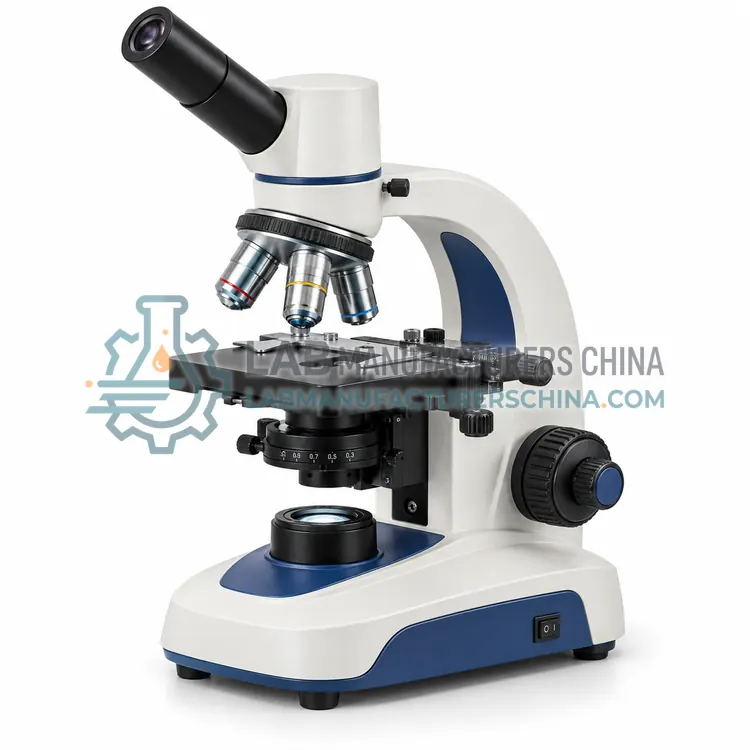 CLAM实验室显微镜Laboratory microscopes magnify and resolve fine detail of specimens using transmitted, reflected or fluorescence light. The category covers biological, fluorescence, inverted, metallurgical, polarizing and digital microscopes used in life science, materials, clinical and industrial inspection.
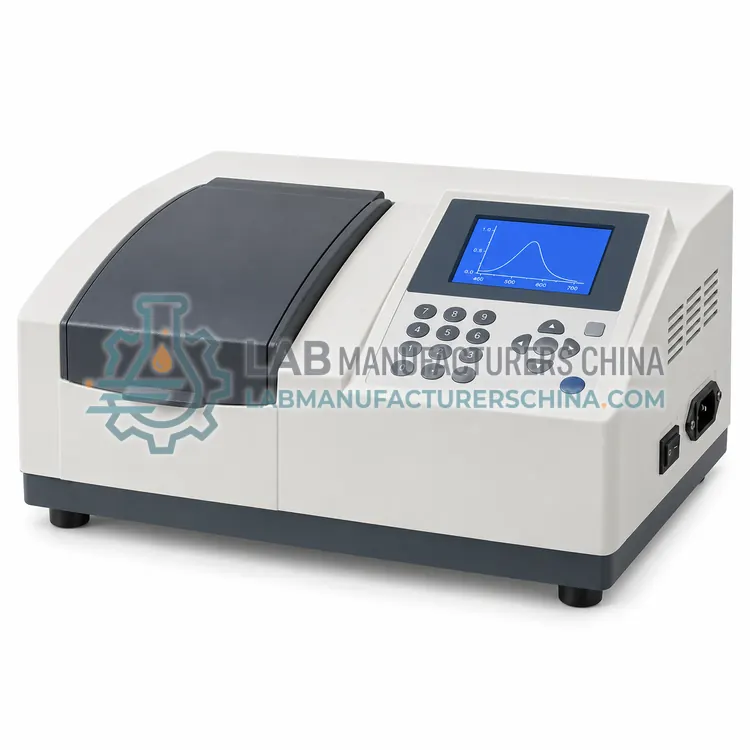 CANI分析仪器Analytical instruments measure the chemical, optical or physical properties of samples to identify substances and quantify their concentration. This category covers spectrophotometers, photometers, refractometers, polarimeters, turbidity meters and general analytical analyzers used in pharmaceutical, environmental, food, chemical and industrial quality-control laboratories.
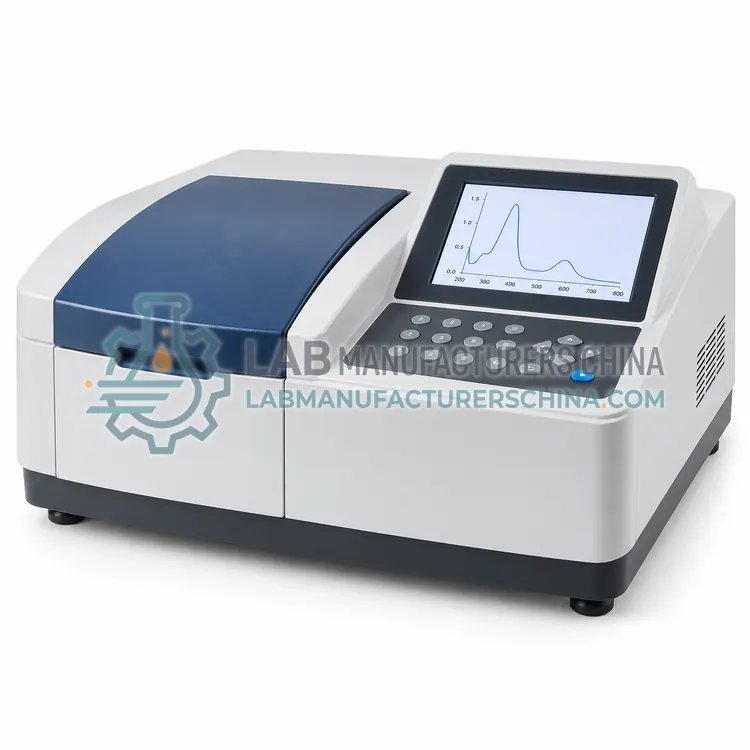 CSPI光谱仪器Spectroscopy instruments measure how matter absorbs, emits or scatters electromagnetic radiation to identify substances and quantify them. This category covers UV-Vis, FTIR, Raman, fluorescence, NIR and atomic spectroscopy systems used in pharmaceutical, chemical, environmental, food and materials laboratories.
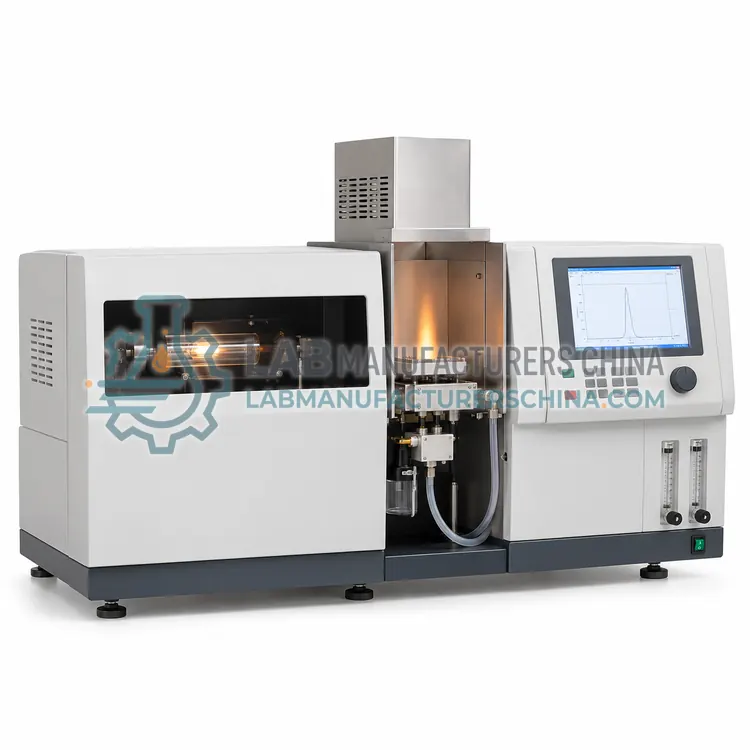 CAAS原子吸收光谱仪Atomic absorption spectrometers determine elemental concentrations by measuring light absorbed by free atoms produced in a flame, graphite furnace or hydride generation cell. They serve environmental, food, clinical, geochemical and pharmaceutical laboratories that need reliable trace-metal results at low cost.