
Mass Spectrometry Instruments
质谱仪器
CMSI · Analytical & Instrumentation · 5 product types · 25 models
By Lab Manufacturers China Technical TeamLast reviewed
What are Mass Spectrometry Instruments?
Mass spectrometry instruments ionize molecules or atoms, separate the ions by mass-to-charge ratio and detect them to identify and quantify compounds. The category covers GC-MS, LC-MS, ICP-MS, TOF and triple quadrupole systems used in pharmaceutical, clinical, food, environmental and materials laboratories.
5 product types in Mass Spectrometry Instruments
The 5 product types below are grouped by the exact instrument you need.
- GCM5 models
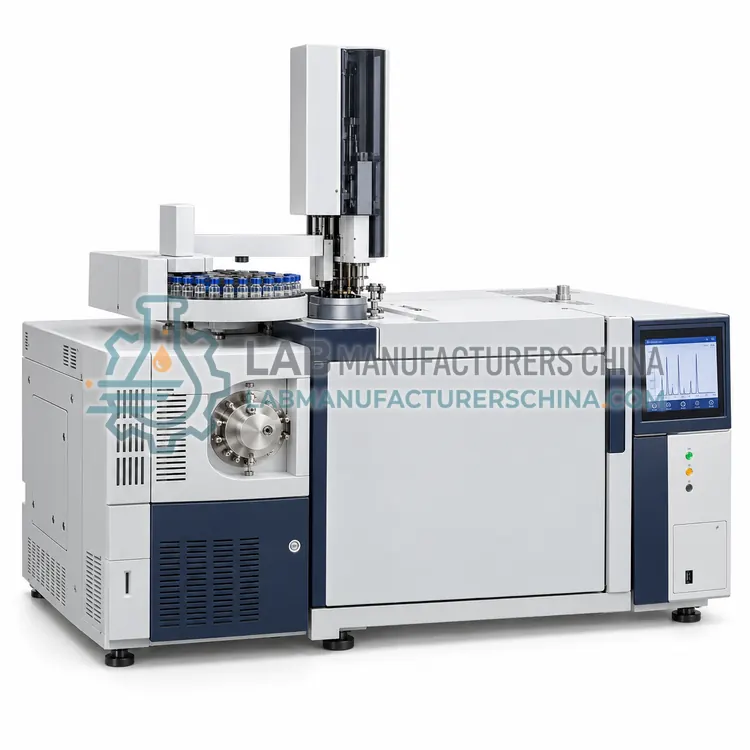
GC-MS
气相色谱质谱联用仪
GC-MS couples a gas chromatograph to a mass spectrometer so that volatile and semi-volatile compounds are separated in a capillary column and then identified by their mass spectra. It is used for qualitative and quantitative analysis in environmental, food safety, forensic, petrochemical, flavor and pharmaceutical laboratories.
- LCM5 models
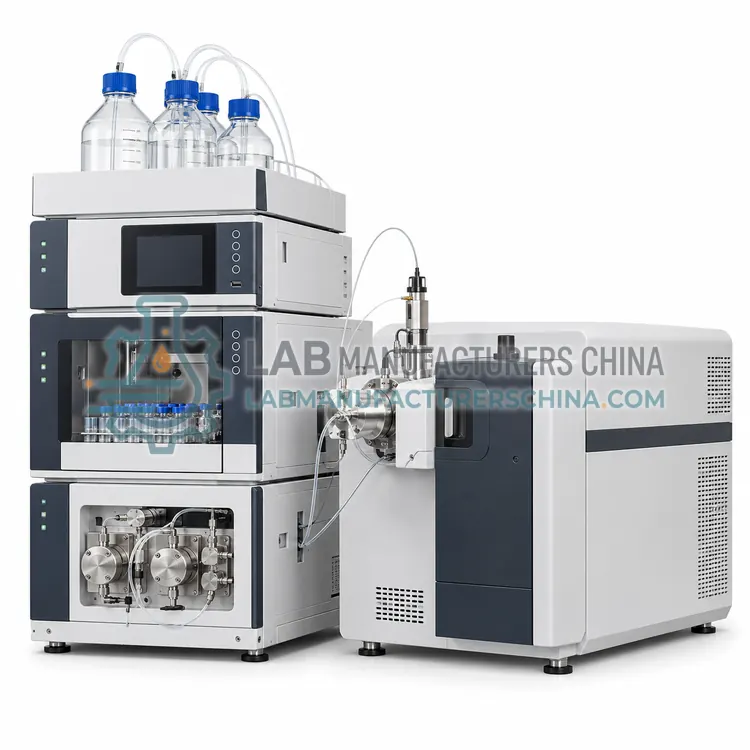
LC-MS
液相色谱质谱联用仪
LC-MS couples a liquid chromatograph to a mass spectrometer, separating compounds in solution and detecting them by mass-to-charge ratio after atmospheric-pressure ionization. It analyzes polar, non-volatile and thermally labile molecules and is used in pharmaceutical, bioanalytical, clinical, food safety and environmental laboratories.
- IMS5 models
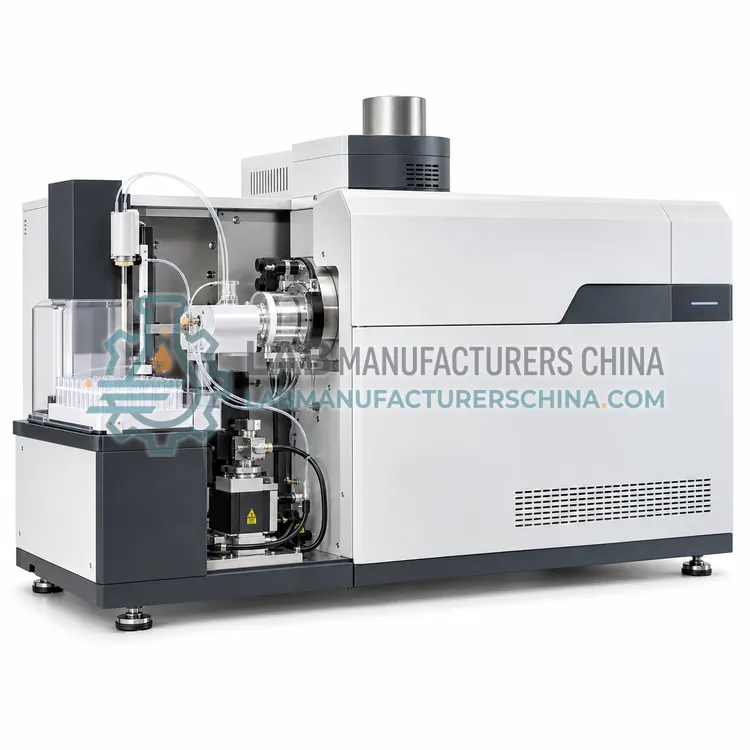
ICP-MS
电感耦合等离子体质谱仪
ICP-MS uses an argon inductively coupled plasma to atomize and ionize a sample, then separates the ions by mass-to-charge ratio to measure elements and isotopes at parts-per-trillion levels. It is used in environmental, pharmaceutical, food, clinical, geological and semiconductor laboratories for trace metal analysis.
- TOM5 models
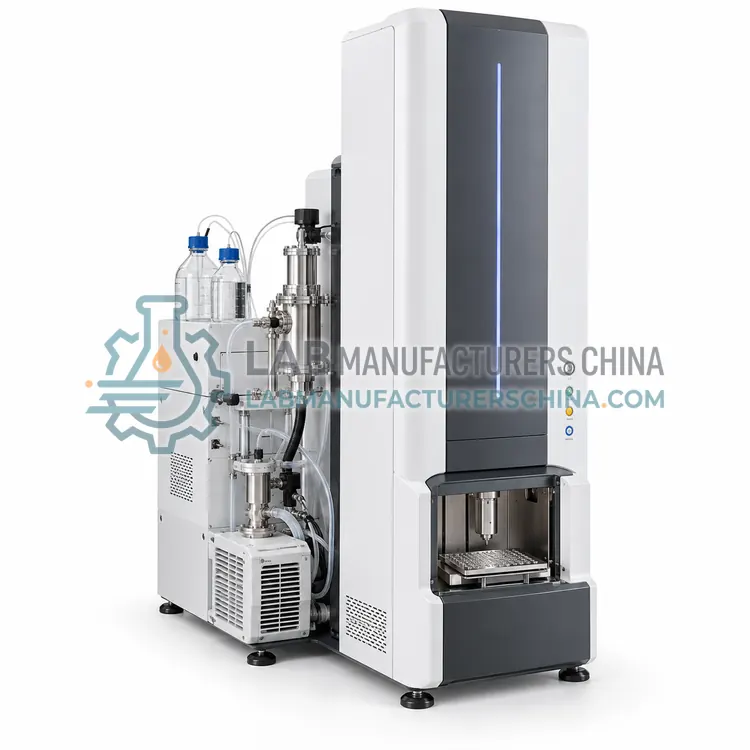
TOF-MS
飞行时间质谱仪
TOF-MS separates ions by the time they take to travel through a field-free flight tube, since lighter ions arrive before heavier ones of the same energy. It records full mass spectra rapidly with high mass accuracy and an essentially unlimited mass range, and is used for proteomics, polymer analysis, microbial identification and screening.
- TQM5 models
Triple Quadrupole MS
三重四极杆质谱仪
A triple quadrupole mass spectrometer uses two mass-filtering quadrupoles separated by a collision cell to isolate a precursor ion, fragment it and monitor selected product ions. It delivers selective, sensitive quantitation in complex matrices and is used in clinical, bioanalytical, food safety and environmental laboratories.
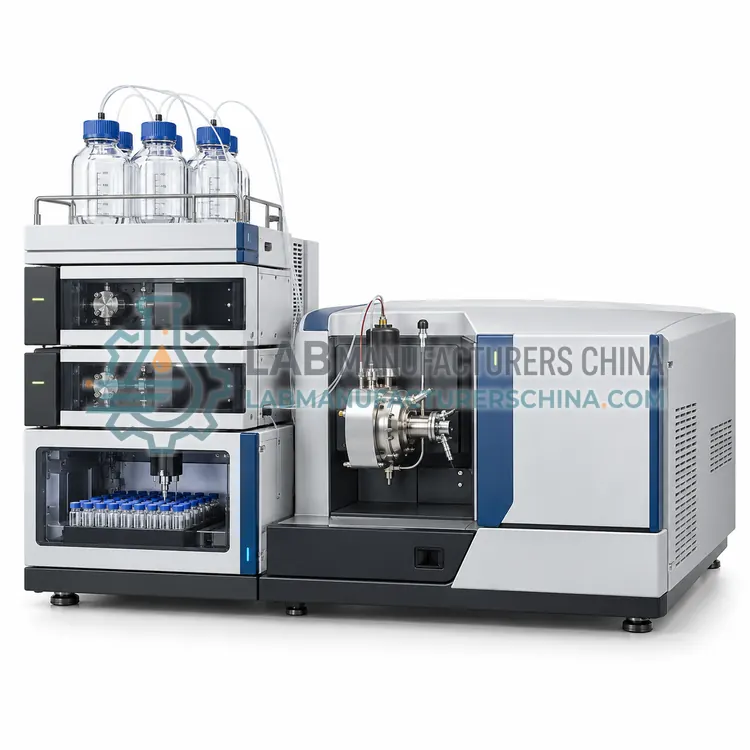
What are Mass Spectrometry Instruments?
A mass spectrometer measures the mass-to-charge ratio (m/z) of ions produced from a sample. Because mass is a fundamental property of every molecule and element, the technique provides highly specific identification and, with calibration, sensitive quantitation down to parts per trillion for many analytes. Instruments are usually described by two parts: the front end, which introduces and ionizes the sample, and the mass analyzer, which separates ions. Front ends include gas chromatography, liquid chromatography and inductively coupled plasma. Analyzers include quadrupoles, time-of-flight tubes, ion traps and Orbitrap-type designs. Systems are often used in combination, for example a liquid chromatograph with a triple quadrupole for targeted quantitation, or a time-of-flight analyzer for accurate-mass screening of unknowns. The category in this catalogue covers GC-MS, LC-MS, ICP-MS, TOF-MS and triple quadrupole MS platforms for routine and research laboratories.
How do Mass Spectrometry Instruments work?
Every mass spectrometer follows the same sequence: sample introduction, ionization, mass analysis and detection under vacuum. Ionization depends on the analyte. Electron ionization fragments volatile compounds from a gas chromatograph in a reproducible way, while electrospray and atmospheric-pressure chemical ionization create intact ions from liquid chromatography eluent. An argon plasma at about 6000 to 10000 K atomizes and ionizes elements in ICP-MS. Ions then pass through ion optics into the analyzer. A quadrupole uses radio-frequency and DC fields to transmit one m/z at a time, a time-of-flight analyzer measures how long ions take to cross a flight tube, and tandem designs fragment selected ions in a collision cell for structural or highly selective measurements. A detector, usually an electron multiplier, converts ion arrival into an electrical signal. Turbomolecular pumps maintain pressures of 10⁻⁵ to 10⁻⁷ mbar in the analyzer, and software converts signals into spectra and concentrations.
Where are Mass Spectrometry Instruments used?
Mass spectrometry is used wherever compounds must be identified or measured at low concentrations in complex samples. Pharmaceutical laboratories apply LC-MS and triple quadrupole systems to impurity profiling, pharmacokinetics and metabolite identification. Clinical laboratories quantify drugs, steroids and newborn-screening markers. Food safety and environmental laboratories use GC-MS and LC-MS/MS to test pesticides, veterinary drugs, PFAS, dioxins and volatile organic compounds against regulatory limits. ICP-MS measures trace and ultratrace elements in drinking water, soils, biological fluids, semiconductor chemicals and nuclear materials. Time-of-flight instruments support proteomics, metabolomics and microbial identification. Forensic and anti-doping laboratories rely on library matching and tandem confirmation. Research laboratories use accurate-mass data for unknown screening and structural elucidation.
Which standards apply to Mass Spectrometry Instruments?
Mass spectrometry methods are governed by application-specific standards rather than one instrument standard. Bioanalytical method validation follows ICH M10 and FDA guidance. Residue laboratories in food use SANTE/11312/2021 and EU Commission Decision 2002/657/EC for identification criteria. Environmental methods include US EPA 8270 for semivolatiles by GC-MS, EPA 6020 for elements by ICP-MS, EPA 1633 for PFAS and ISO 17294-2 for ICP-MS in water. Pharmacopoeial chapters such as USP <736> describe mass spectrometry in pharmaceutical analysis and Ph. Eur. 2.2.43 covers the technique. Laboratories operate under ISO 17025 or ISO 15189, and electrical safety of the instrument is covered by IEC 61010-1.
How do I select the right mass spectrometry equipment?
Begin with the analyte class. Volatile and semi-volatile organic compounds point to GC-MS. Polar, non-volatile and thermally labile molecules point to LC-MS. Metals and metalloids point to ICP-MS. Next decide between quantitation and discovery. Triple quadrupole systems give the lowest limits and best robustness for targeted methods, while time-of-flight and high-resolution systems give accurate mass and full-scan data for screening unknowns. Define the required limits of quantitation in the real matrix, the number of analytes, daily sample throughput and whether methods must comply with GLP, GMP or accreditation rules. Consider infrastructure: gases such as argon, nitrogen and helium, exhaust, power, floor space and service availability. Finally compare running costs, including columns, cones, source parts, vacuum pump maintenance and software licensing, rather than purchase price alone.
Mass Spectrometry Instruments comparison
| Subcategory | Principle | Typical use | Key spec |
|---|---|---|---|
| GC-MS | GC separation with electron-ionization mass detection | Volatile and semi-volatile organic compound analysis | Mass range up to m/z 1000 or more |
| LC-MS | LC separation with electrospray or APCI ionization | Polar, non-volatile and thermally labile compounds | Mass range up to m/z 2000–4000 |
| ICP-MS | Argon plasma ionization of elements with quadrupole detection | Trace and ultratrace elemental analysis | Detection limits at ng/L to pg/L |
| TOF-MS | Ion flight time measured over a flight tube | Accurate-mass screening and biomolecule analysis | Resolution 10,000–60,000+ |
| Triple Quadrupole MS | Two mass filters with a collision cell for MRM | Targeted trace quantitation in complex matrices | Sub-picogram on-column sensitivity |
Frequently asked questions about Mass Spectrometry Instruments
A mass spectrometer identifies and quantifies compounds by measuring the mass-to-charge ratio of their ions. Laboratories use it to detect drug residues, contaminants, metabolites, proteins and trace elements in complex samples, with much higher specificity than optical or chromatographic detectors alone.
GC-MS separates volatile, thermally stable compounds in a gas chromatograph and ionizes them by electron ionization. LC-MS separates polar, non-volatile or thermally labile compounds in a liquid chromatograph and ionizes them by electrospray or APCI. The choice follows the analyte, not the laboratory preference.
Triple quadrupole systems operated in MRM mode are the usual choice for targeted trace quantitation because of their selectivity, sensitivity and wide dynamic range. ICP-MS is used for elements. The best option still depends on the analytes, matrix and the regulatory limits involved.
Choose time-of-flight when you need accurate mass, full-scan data and retrospective analysis, for example in screening unknowns, metabolomics or protein characterization. Choose a triple quadrupole when the target list is known and the lowest limits and best robustness for quantitation matter most.
Most systems need stable power, temperature control, nitrogen or argon gas, exhaust for source and pump emissions, and adequate floor loading. GC-MS needs carrier gas, ICP-MS needs high-purity argon, and LC-MS usually needs a nitrogen generator. Service access and ventilation should be checked before delivery.
Related categories
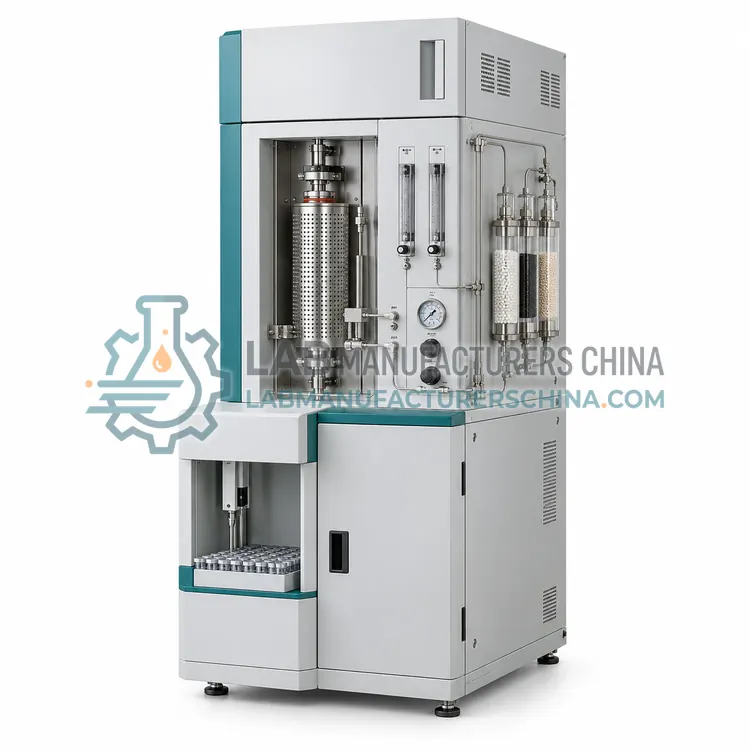 CEAI元素分析仪器Elemental analysis instruments determine the mass fraction of elements such as carbon, hydrogen, nitrogen, sulfur, oxygen and total organic carbon in solids, liquids and gases. The category covers CHNS, carbon-sulfur, oxygen-nitrogen-hydrogen and TOC analyzers used in chemistry, metallurgy, environmental and materials laboratories.
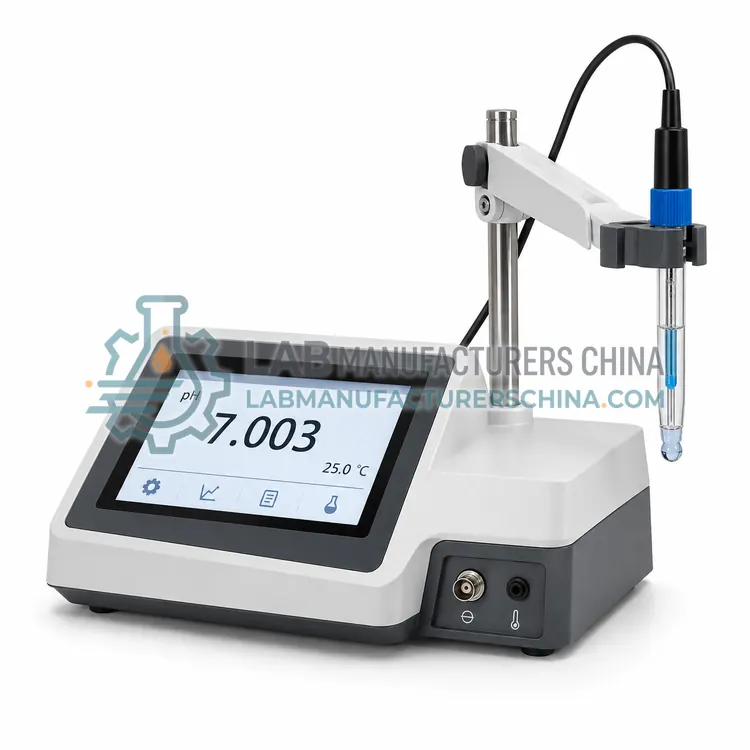 CELI电化学仪器Electrochemistry instruments measure electrical properties of solutions and electrode interfaces, including pH, conductivity, redox potential, ion activity, dissolved oxygen and current-potential behavior. The category covers pH, conductivity, ORP, ion and dissolved oxygen meters and potentiostats for water, process, pharmaceutical and battery laboratories.
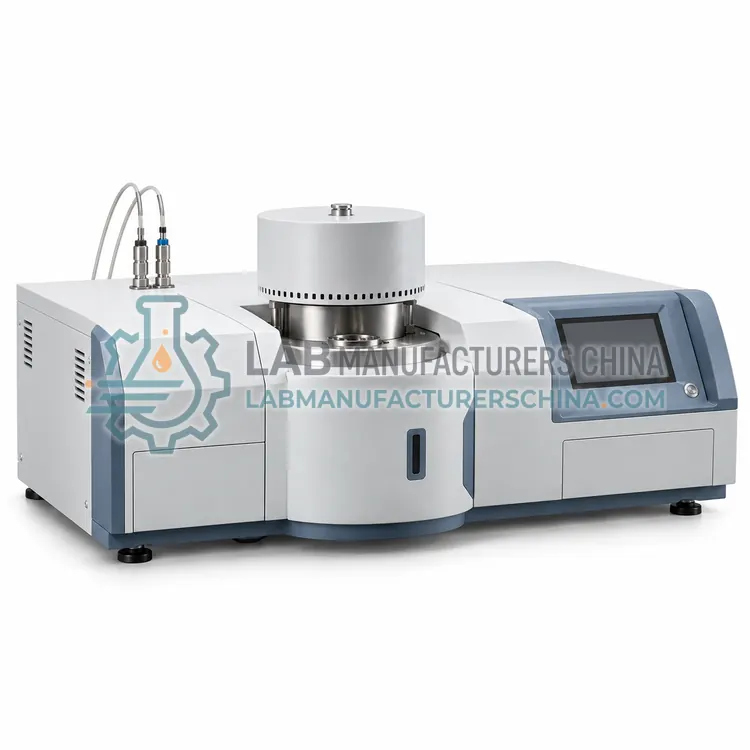 CTAI热分析仪器Thermal analysis instruments measure how a material's physical or chemical properties change with temperature or time under a controlled program. The category covers DSC, TGA, DTA, TMA, DMA and simultaneous thermal analyzers used for polymers, pharmaceuticals, ceramics, metals and energy materials.
 CPAI粒度分析仪器Particle analysis instruments measure the size, size distribution, surface charge and surface area of powders, suspensions and emulsions. The category includes laser and dynamic light scattering analyzers, zeta potential analyzers, sieve systems and gas-adsorption surface area analyzers used in pharmaceutical, battery, ceramics, pigment, mining and materials laboratories.