How do TOF-MS work?
In a time-of-flight mass spectrometer, ions are given the same kinetic energy by an accelerating potential of several hundred volts to 20 kV and then drift through a field-free tube. Flight time scales with the square root of m/z, so the detector, a microchannel plate or fast electron multiplier, records ions in order of mass. Resolution depends on flight path length and on correcting initial energy spread. A reflectron, an ion mirror, extends the path and refocuses ions of equal mass but different energies, raising resolution from about 1000 to 20000 or more. MALDI sources pulse ions naturally, while orthogonal acceleration converts continuous ESI or ICP beams into pulses. Time-to-digital converters or fast digitizers at gigahertz rates record the signals.
Which TOF-MS variants are available?
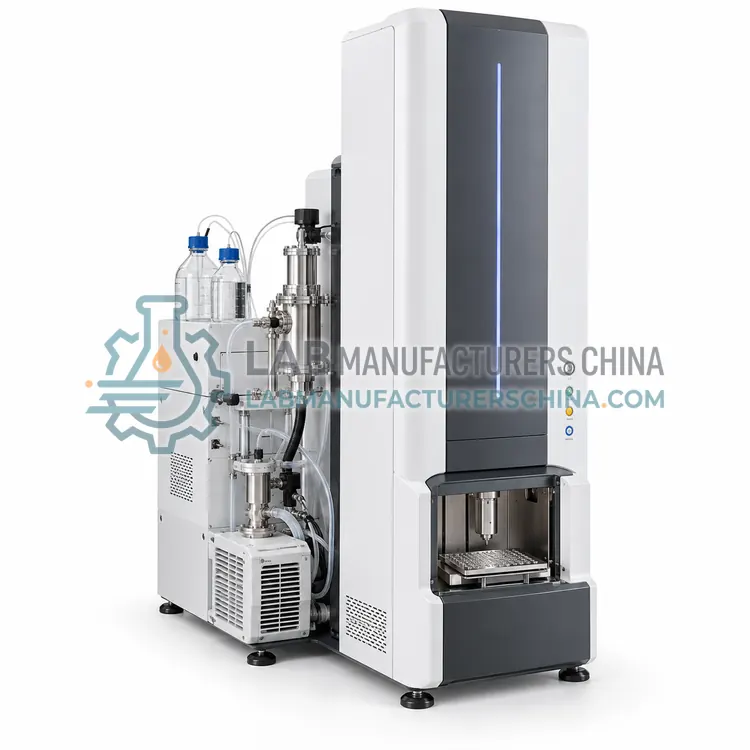
- Linear MALDI-TOF Mass Spectrometer for Microbial Identification — A linear MALDI-TOF mass spectrometer records protein fingerprints of whole bacterial or fungal cells, mostly ribosomal proteins between m/z 2000 and 20000, and matches them against a reference database.
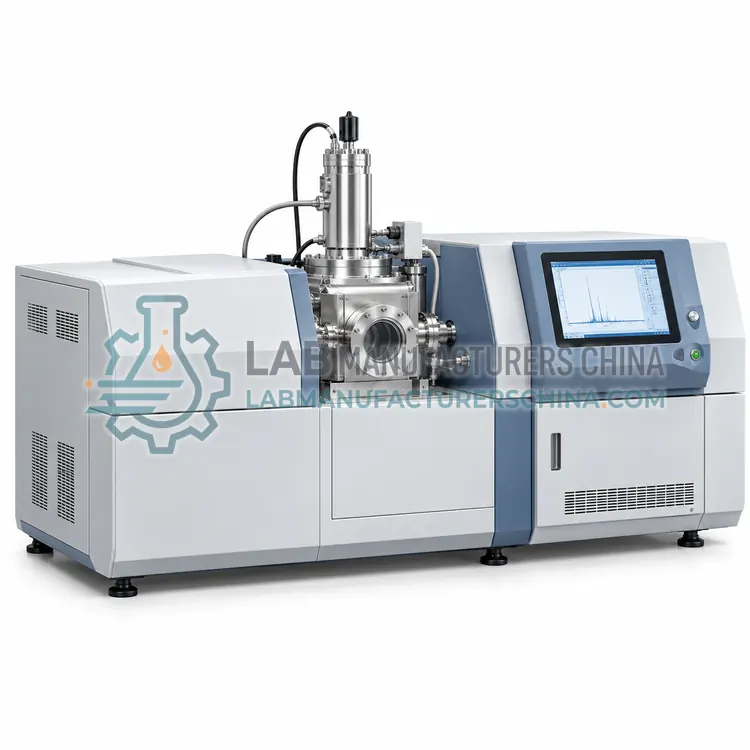
- Reflectron MALDI-TOF Mass Spectrometer — A reflectron MALDI-TOF adds an ion mirror to the flight path, reaching resolution of 15000 to 25000 and mass accuracy of a few ppm for peptides, oligonucleotides and polymers.
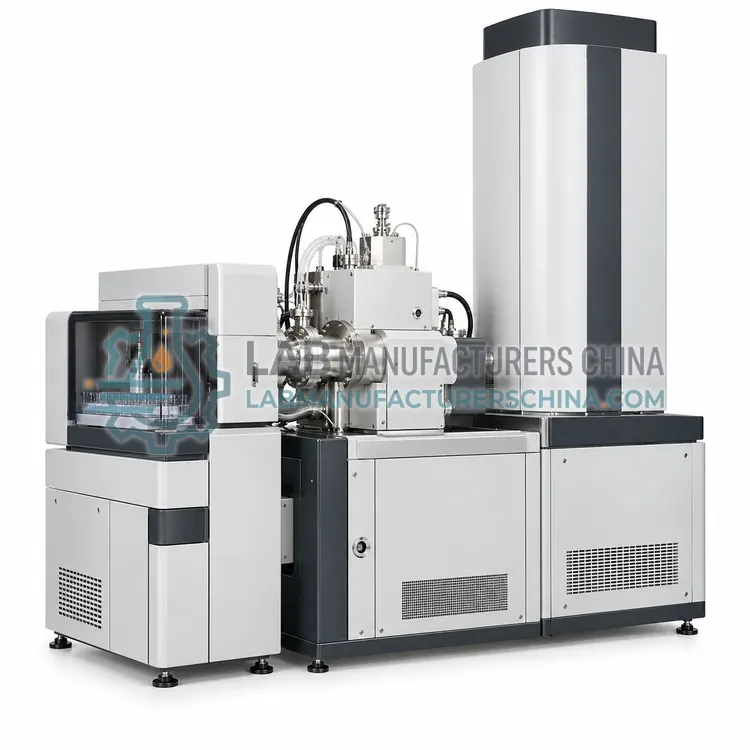
- MALDI-TOF/TOF Tandem Mass Spectrometer — A MALDI-TOF/TOF uses two time-of-flight sections separated by a collision or fragmentation region, selecting a precursor ion and recording its product ions.
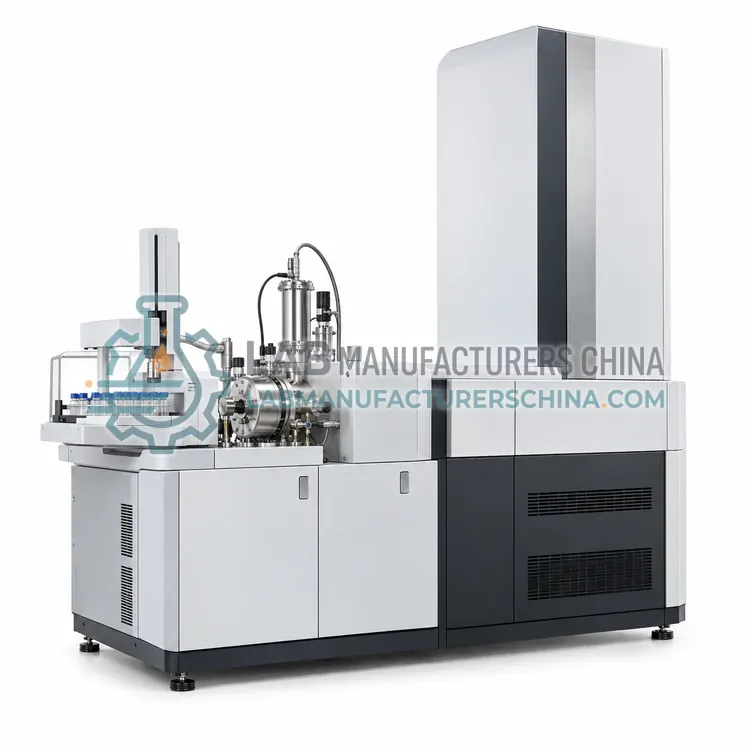
- Orthogonal-Acceleration ESI-TOF Mass Spectrometer — An orthogonal-acceleration ESI-TOF mass spectrometer pulses ions from a continuous electrospray beam into a reflectron TOF analyzer, delivering accurate-mass LC-MS data at 1 to 5 ppm.
- Multi-Reflecting TOF High-Resolution Mass Spectrometer — A multi-reflecting TOF folds the ion path between electrostatic mirrors to reach 50 to 100 m flight length in a benchtop housing.
How do I choose the right variant?
Select by ionization source and required resolving power. MALDI-TOF suits intact proteins, polymers and microbial identification, where linear mode reaches m/z above 100000 and reflectron mode improves accuracy for peptides. Orthogonal-acceleration ESI-TOF gives accurate mass for LC-MS at rates compatible with UHPLC. Multi-reflecting designs reach resolving power of 50000 to 100000 in a compact footprint for demanding screening. Consider mass accuracy, typically 1 to 5 ppm with calibration, resolution at your m/z range, acquisition rate, and dynamic range, which is narrower than quadrupoles. Decide whether tandem MS is needed, since TOF/TOF adds fragmentation for sequencing. Check software for microbial databases or polymer analysis, calibration strategy, and service support.
Where are TOF-MS used?
TOF-MS are specified in microbial identification in clinical microbiology, intact protein and peptide mass analysis, synthetic polymer molecular weight distribution, non-targeted food and environmental screening and oligonucleotide and biopharmaceutical characterization.
Which standards and certifications apply?
Work with TOF-MS is commonly governed by ASTM D7134, ISO 11260, ISO/TS 16940, USP <1052> Biotechnology-Derived Articles, ASTM E2933, ISO 15189, ISO/IEC 17025 and IEC 61010-1. Instrument certifications such as CE marking are confirmed per configuration and never assumed.
What are the key considerations before purchase?
TOF instruments are sensitive to temperature changes, because drift-tube expansion shifts flight time, so install them in a room stable within ±1 to 2 °C and away from drafts. Calibrate frequently with standards or internal lock mass to sustain mass accuracy below 5 ppm. MALDI systems require matrix preparation, such as alpha-cyano-4-hydroxycinnamic acid or sinapinic acid, and careful target plate cleaning. Detector microchannel plates degrade over time, so monitor gain and plan replacement, usually after several years. Keep the vacuum system leak tight, with analyzer pressure below 10^-6 mbar. Regulated laboratories, particularly those using MALDI for clinical microbiology, should confirm validated databases and software supporting audit trail and access control.