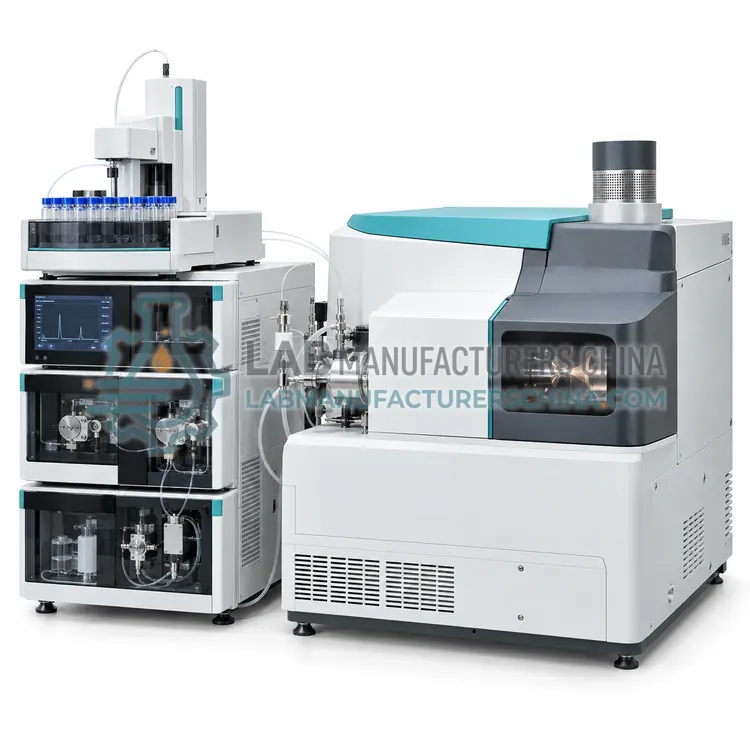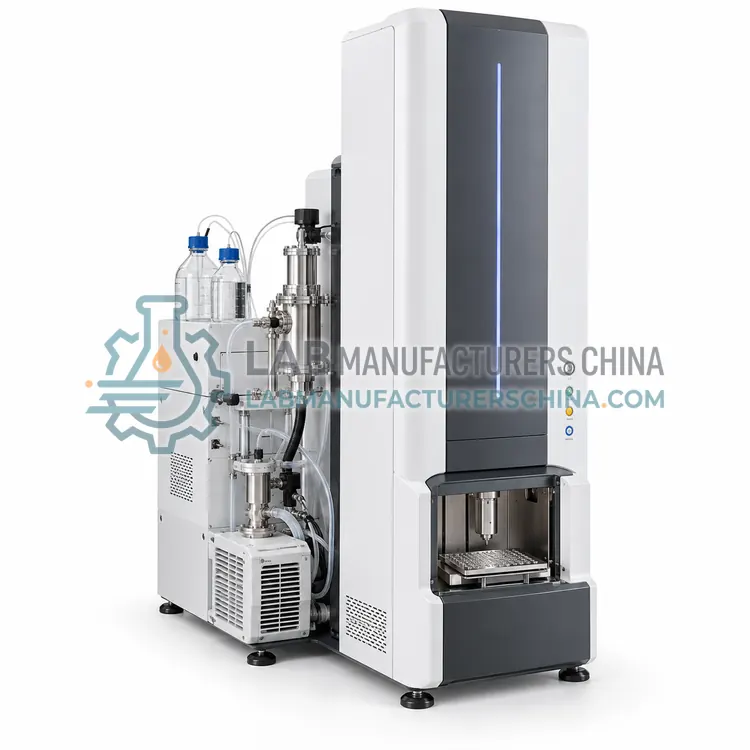
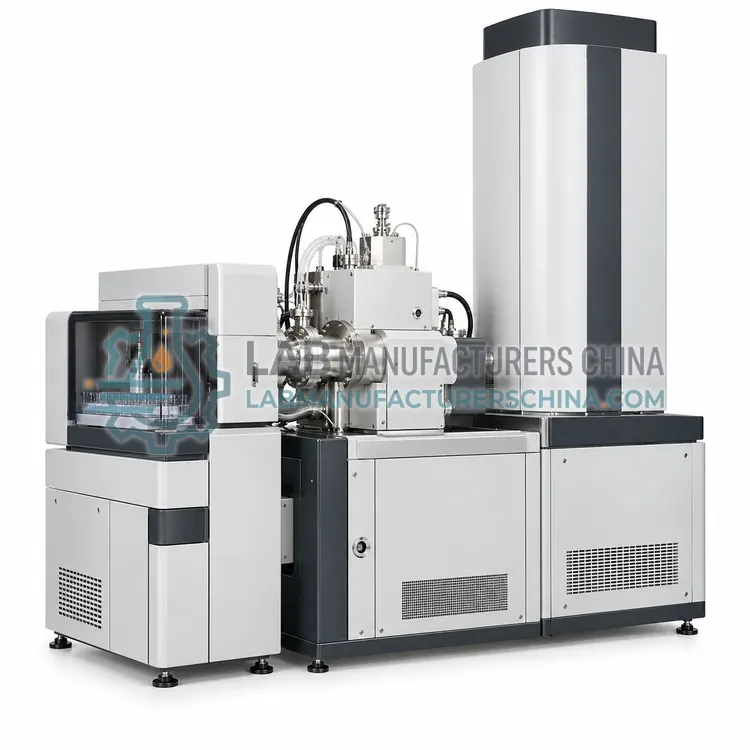
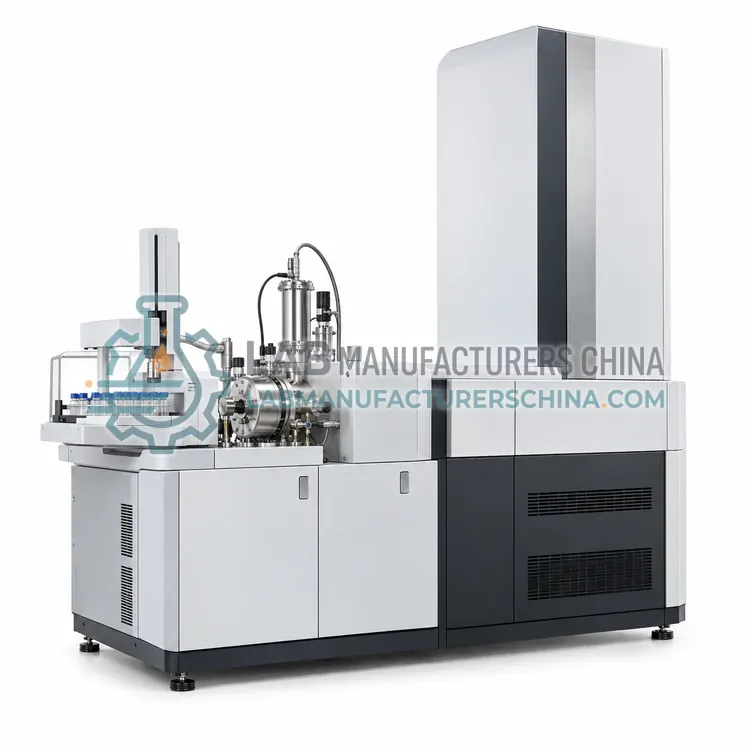
Linear MALDI-TOF Mass Spectrometer for Microbial Identification
用于微生物鉴定的线性 MALDI-TOF 质谱仪
- CE (to be confirmed)
- +3
Welcome to Lab Manufacturers China — laboratory instruments direct from a Chinese manufacturer
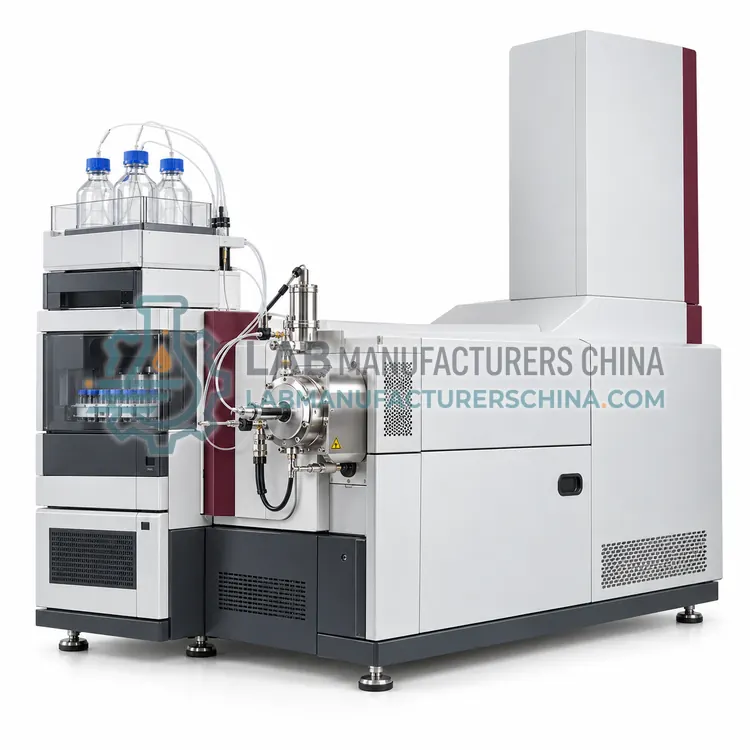
正交加速电喷雾飞行时间质谱仪(ESI-oa-TOF)
Price on request — FOB / CIF quoted per order
Prices depend on configuration, quantity and destination port.
| Mass range | m/z 50–10000 |
|---|---|
| Resolution | 20000–40000 FWHM |
| Mass accuracy (lock mass) | ≤ 3 ppm RMS |
| Acquisition rate | 10–50 spectra/s |
| In-spectrum dynamic range | ~10^4 |
| Sensitivity (reserpine, 1 pg on column) | S/N ≥ 500:1 (typical) |
By Lab Manufacturers China Technical TeamLast reviewed Standards: ASTM D7134, ISO 11260, ISO/TS 16940
An orthogonal-acceleration ESI-TOF mass spectrometer pulses ions from a continuous electrospray beam into a reflectron TOF analyzer, delivering accurate-mass LC-MS data at 1 to 5 ppm. It is used for intact protein mass, small-molecule screening, impurity identification and formula confirmation.
An orthogonal-acceleration ESI-TOF mass spectrometer pulses ions from a continuous electrospray beam into a reflectron TOF analyzer, delivering accurate-mass LC-MS data at 1 to 5 ppm. It is used for intact protein mass, small-molecule screening, impurity identification and formula confirmation.
An orthogonal-acceleration ESI-TOF extracts a continuous ion beam from an electrospray source through RF ion guides and pushes a slice of it, about 10 to 30 kHz, perpendicular to its original direction into a reflectron flight tube. Because the ion beam axis and flight axis are decoupled, velocity spread in the source has little effect on resolution, and all m/z values are recorded in every pulse, giving high duty cycle for full-scan work. Typical resolution is 20000 to 40000 FWHM, with mass accuracy of 1 to 3 ppm using a lock-mass sprayer. Acquisition rates of 10 to 50 spectra per second are compatible with UHPLC. Dynamic range is about four orders, narrower than a quadrupole. Without a front quadrupole, the instrument gives no precursor-selected MS/MS, though in-source fragmentation or all-ion fragmentation modes provide limited structural data. It is cost-effective when accurate mass alone is needed.
In a time-of-flight mass spectrometer, ions are given the same kinetic energy by an accelerating potential of several hundred volts to 20 kV and then drift through a field-free tube. Flight time scales with the square root of m/z, so the detector, a microchannel plate or fast electron multiplier, records ions in order of mass. Resolution depends on flight path length and on correcting initial energy spread. A reflectron, an ion mirror, extends the path and refocuses ions of equal mass but different energies, raising resolution from about 1000 to 20000 or more. MALDI sources pulse ions naturally, while orthogonal acceleration converts continuous ESI or ICP beams into pulses. Time-to-digital converters or fast digitizers at gigahertz rates record the signals.
A typical orthogonal-acceleration esi-tof mass spectrometer configuration offers mass range of m/z 50–10000, resolution of 20000–40000 FWHM, mass accuracy (lock mass) of ≤ 3 ppm RMS, acquisition rate of 10–50 spectra/s, in-spectrum dynamic range of ~10^4 and sensitivity (reserpine, 1 pg on column) of S/N ≥ 500:1 (typical). Values are indicative of the product class; the exact figures for each configuration are confirmed on the quotation and the calibration documents supplied with the instrument.
The Orthogonal-Acceleration ESI-TOF Mass Spectrometer is used in intact mass of antibodies and recombinant proteins, small-molecule formula confirmation in synthesis, non-targeted screening of food and environmental samples, impurity and degradant identification and peptide and oligonucleotide mass confirmation. Across the wider TOF-MS class, laboratories also deploy it for microbial identification in clinical microbiology, intact protein and peptide mass analysis and synthetic polymer molecular weight distribution.
Relevant standards and methods include ASTM D7134, ISO 11260, ISO/TS 16940, USP <1052> Biotechnology-Derived Articles, ASTM E2933, ISO 15189, ISO/IEC 17025 and IEC 61010-1. Certification candidates for this model are CE, ISO 9001 manufacturing and IEC 61010-1 safety; each is to be confirmed for the specific configuration before shipment, and certificates are supplied only where they have been issued.
TOF instruments are sensitive to temperature changes, because drift-tube expansion shifts flight time, so install them in a room stable within ±1 to 2 °C and away from drafts. Calibrate frequently with standards or internal lock mass to sustain mass accuracy below 5 ppm. MALDI systems require matrix preparation, such as alpha-cyano-4-hydroxycinnamic acid or sinapinic acid, and careful target plate cleaning. Detector microchannel plates degrade over time, so monitor gain and plan replacement, usually after several years. Keep the vacuum system leak tight, with analyzer pressure below 10^-6 mbar. Regulated laboratories, particularly those using MALDI for clinical microbiology, should confirm validated databases and software supporting audit trail and access control.
Select an oa-TOF when accurate mass at full-scan sensitivity is sufficient and MS/MS is not required, as in intact protein mass checks and screening. Choose Q-TOF if selected-precursor fragmentation is needed. In an RFQ, specify resolution, lock-mass approach, acquisition rate and deconvolution software.
Select by ionization source and required resolving power. MALDI-TOF suits intact proteins, polymers and microbial identification, where linear mode reaches m/z above 100000 and reflectron mode improves accuracy for peptides. Orthogonal-acceleration ESI-TOF gives accurate mass for LC-MS at rates compatible with UHPLC. Multi-reflecting designs reach resolving power of 50000 to 100000 in a compact footprint for demanding screening. Consider mass accuracy, typically 1 to 5 ppm with calibration, resolution at your m/z range, acquisition rate, and dynamic range, which is narrower than quadrupoles. Decide whether tandem MS is needed, since TOF/TOF adds fragmentation for sequencing. Check software for microbial databases or polymer analysis, calibration strategy, and service support.
| Mass range | m/z 50–10000 |
|---|---|
| Resolution | 20000–40000 FWHM |
| Mass accuracy (lock mass) | ≤ 3 ppm RMS |
| Acquisition rate | 10–50 spectra/s |
| In-spectrum dynamic range | ~10^4 |
| Sensitivity (reserpine, 1 pg on column) | S/N ≥ 500:1 (typical) |
| Ion sources | ESI, APCI |
| Pulser frequency | 10–30 kHz |
| Flight tube | Reflectron, V or W geometry |
| Polarity switching | ≤ 100 ms |
Indicative values for this product class. Final specifications are confirmed on the quotation and in the calibration documents supplied with the instrument.
A lock-mass sprayer continuously or periodically introduces a known reference compound through a second electrospray emitter. The software uses its measured mass to correct drift in real time, which keeps mass accuracy within a few ppm throughout long runs and across temperature changes.
Because the pulser samples a slice of the continuous ion beam many times per second and records all m/z values per pulse, 10 to 30 percent of ions can be used for full spectra. A scanning quadrupole uses only one m/z at a time, losing most ions.
Yes. Antibodies of about 150 kDa produce multiply charged envelopes between m/z 2000 and 5000, which fall within TOF range. Deconvolution software converts the envelope to zero-charge mass, and glycoforms are resolved with mass accuracy of about 10 to 50 ppm.
TOF analyzers theoretically have no upper mass limit, since every ion eventually reaches the detector. In practice MALDI-TOF in linear mode measures intact proteins and polymers above m/z 100000, while ESI-TOF instruments typically scan up to m/z 10000 to 20000, with multiply charged ions extending the effective molecular weight range.
A reflectron uses an electrostatic mirror to turn ions around. Ions with higher energy penetrate deeper and take longer in the mirror, so ions of the same mass but different energy arrive at the detector together. This corrects energy spread and lengthens the flight path, improving resolution.
With proper calibration, TOF instruments typically achieve 1 to 5 ppm mass accuracy, and multi-reflecting models can reach below 1 ppm with lock mass correction. Accuracy depends on temperature stability, calibration frequency, ion statistics and peak shape, so it must be verified during validation.
用于微生物鉴定的线性 MALDI-TOF 质谱仪
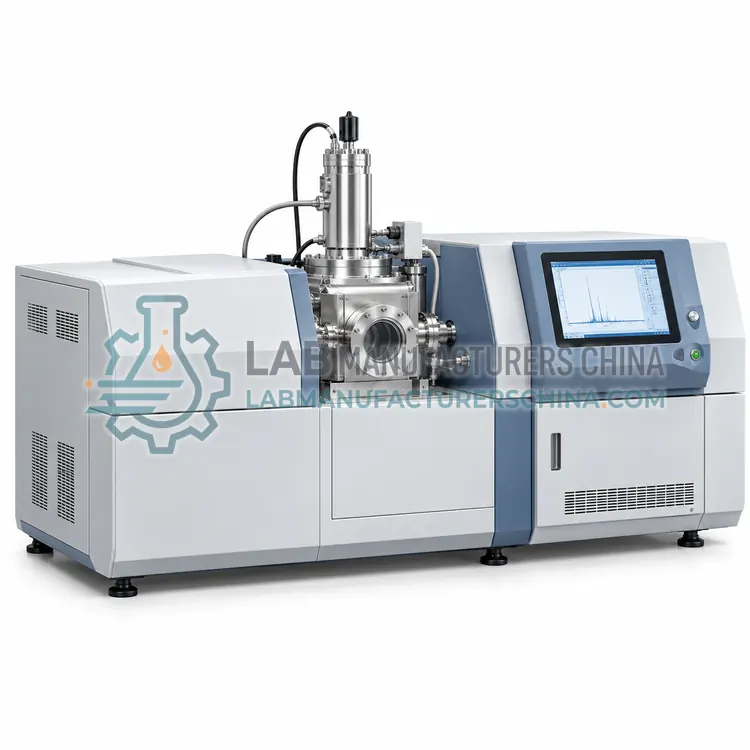
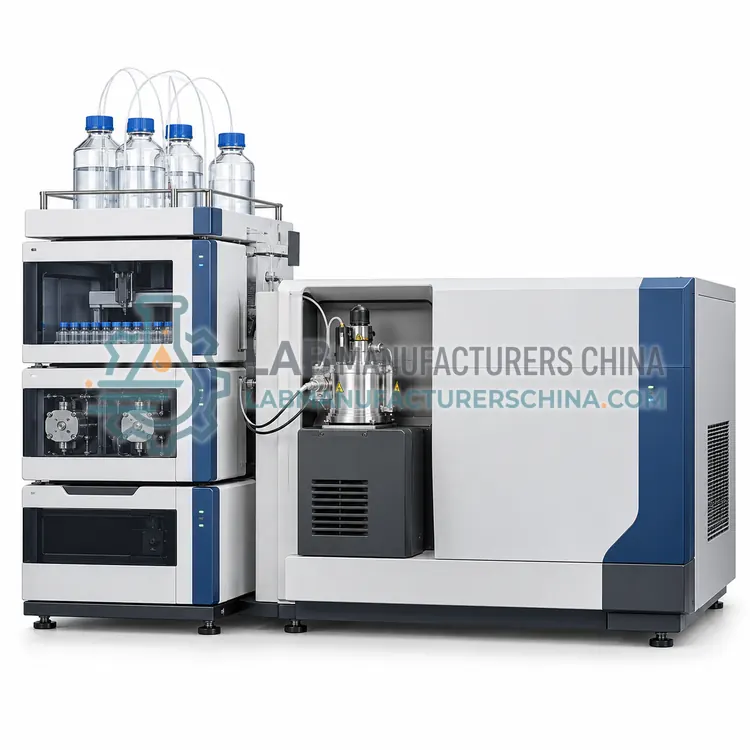
用于食品安全和残留分析的三重四极杆液相色谱串联质谱系统