How do Colorimeters work?
A colorimeter passes light from a lamp or light-emitting diode through a coloured filter, then through the sample or onto the sample, and measures the transmitted or reflected intensity with a photodetector. The filter selects a band where the analyte absorbs, so the measured change follows the Beer–Lambert law for concentration work. For colour measurement, the instrument uses tristimulus filters or illumination geometry to compute colour coordinates in spaces such as CIELAB. The electrical signal is converted to absorbance, transmittance, concentration or a colour difference value against a stored reference. Because filters are fixed, only a few wavelengths are available, which limits selectivity but keeps the instrument robust and easy to operate.
Which Colorimeters variants are available?
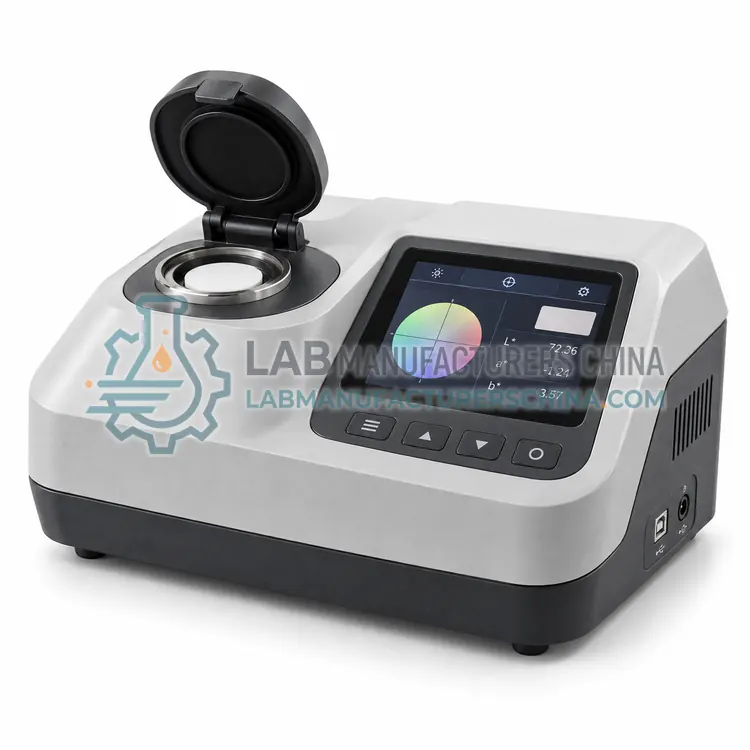
- Benchtop Colorimeter — A benchtop colorimeter is a stable laboratory instrument that measures absorbance or colour of liquid samples in fixed cells.
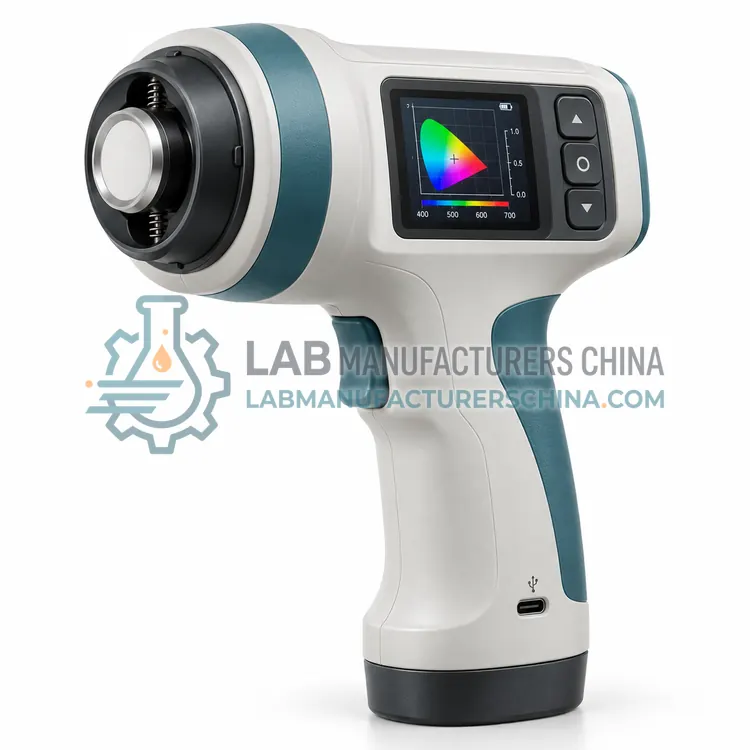
- Portable Colorimeter — A portable colorimeter is a battery-powered, compact instrument for measuring sample colour or concentration outside the laboratory.
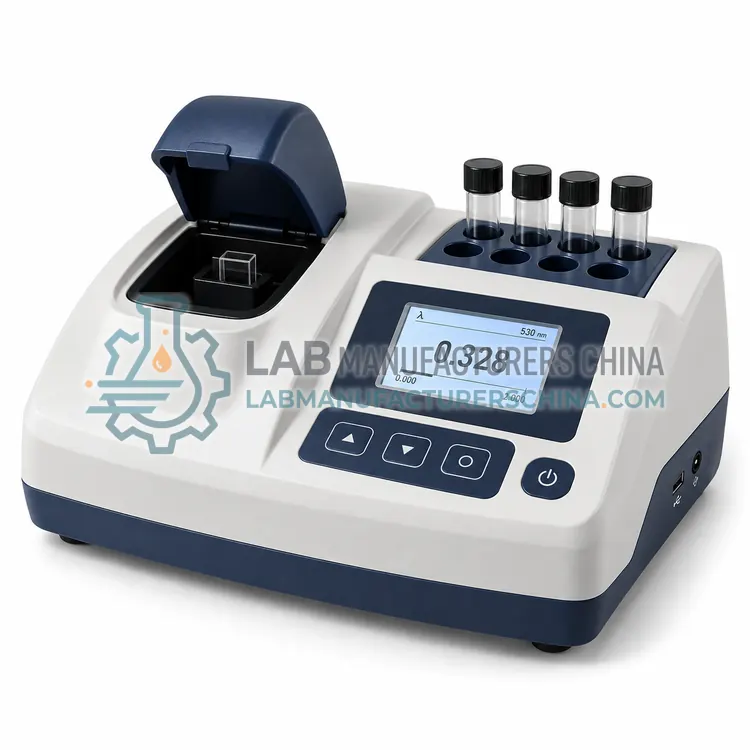
- Water Analysis Colorimeter — A water analysis colorimeter is a filter photometer dedicated to reagent-based tests for parameters such as chlorine, iron and nitrate.
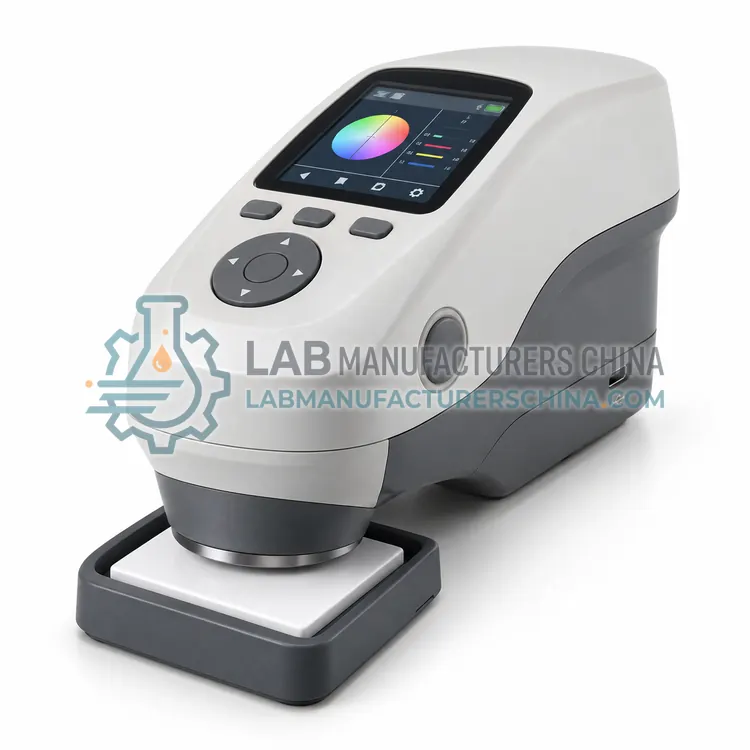
- Colour Difference Meter — A colour difference meter measures surface colour and reports it as coordinates and a difference value against a standard.
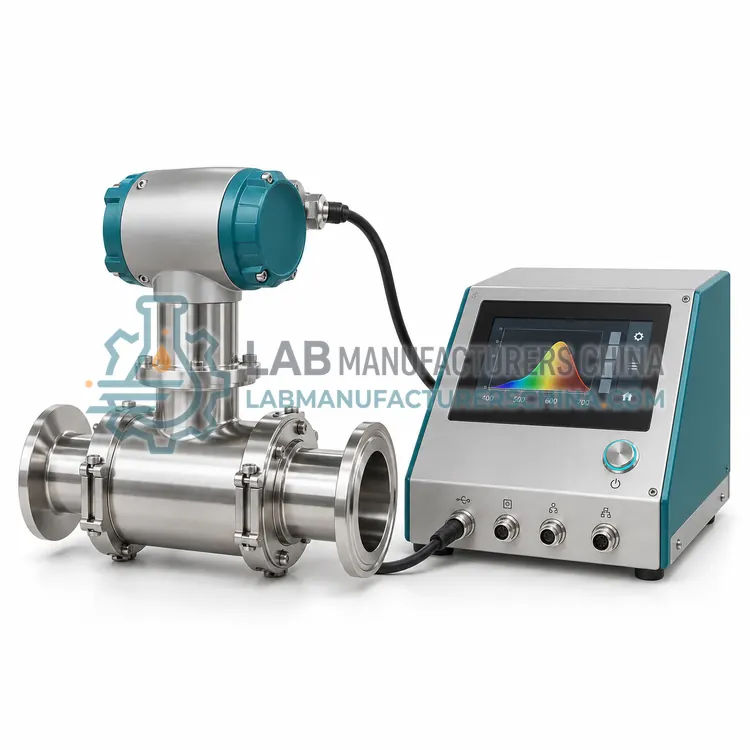
- Inline Process Colorimeter — An inline process colorimeter continuously measures the colour or concentration of a flowing stream and outputs a signal to a control system.
How do I choose the right variant?
Decide first whether the measurement concerns chemical concentration or surface colour. Concentration work in water, food or clinical testing suits a filter colorimeter with reagent-specific wavelengths, and pre-set calibrations speed routine testing. Colour grading of plastics, textiles, paints and packaging requires a colour difference meter with defined geometry and colour spaces. Portable models suit field and incoming inspection, while benchtop models give better repeatability for the laboratory. Check wavelength or illuminant options, measurement aperture, repeatability, data storage and connectivity, and the availability of certified colour standards for verification.
Where are Colorimeters used?
Colorimeters are specified in water and wastewater colour and ion testing, food and beverage colour grading, plastic, paint and coating colour control and clinical and biochemical colorimetric assays.
Which standards and certifications apply?
Work with Colorimeters is commonly governed by ISO 7887, ASTM D1209, ASTM E313, CIE 15 and USP <1061>. Instrument certifications such as CE marking are confirmed per configuration and never assumed.
What are the key considerations before purchase?
Place the instrument on a level, stable surface away from strong stray light, which can bias colour readings. Keep cells and apertures clean and free of scratches, and use matched cells for concentration measurement. Verify performance regularly with reference standards, filters or certified colour tiles, and record results for trend monitoring. For reagent-based water testing, follow reagent shelf life and blanking procedures. Recalibrate or re-standardize at the interval defined by the quality system, and clean the illumination path as instructed. Protect portable units from moisture and impact.