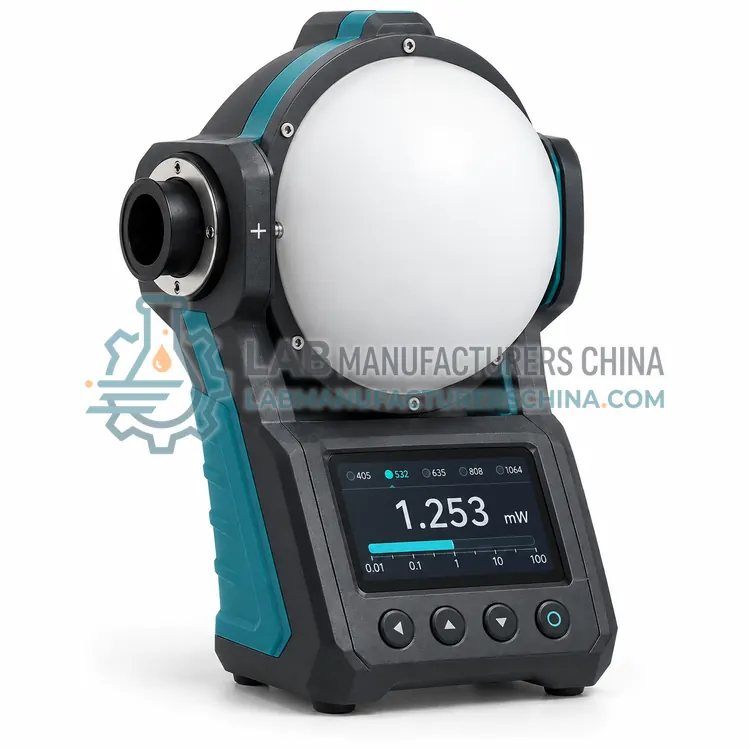
How do Optical Power Meters work?
An optical power meter converts incident light into an electrical signal with a sensor whose spectral response is known. Photodiodes are fast and sensitive and suit low to moderate power; thermopiles absorb light and measure the resulting temperature rise for higher powers and broad wavelength coverage; pyroelectric sensors respond to pulsed energy. The signal is amplified, digitized and displayed in watts, dBm or relative units. Calibration against a traceable reference sets the responsivity, and the meter applies wavelength correction when the source differs from the calibration wavelength. Attenuators, integrating spheres and diffusers adapt the sensor to high power or divergent beams. Linearity, noise floor and response time define the usable measurement range.
Which Optical Power Meters variants are available?
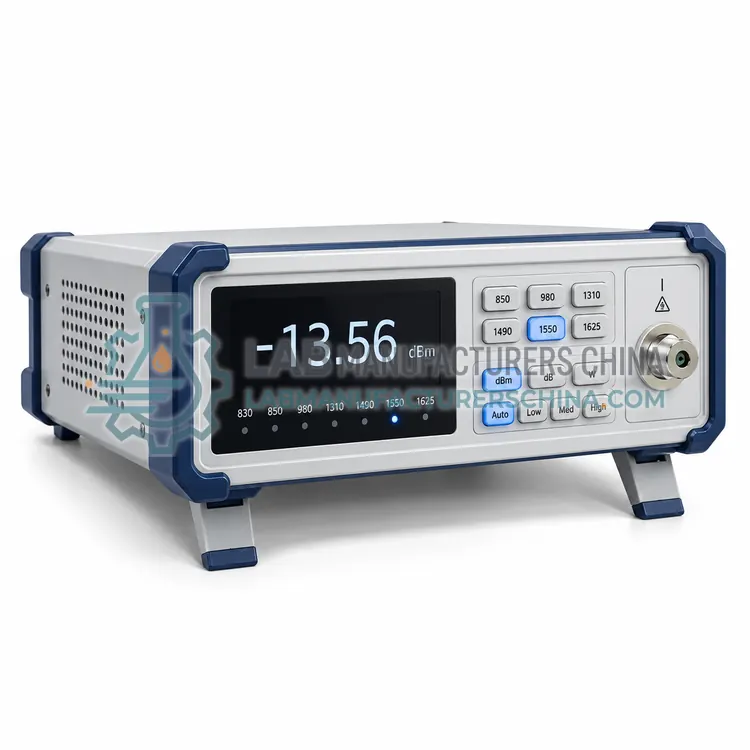
- Benchtop Optical Power Meter — A benchtop optical power meter is a laboratory instrument that provides stable, high-resolution power measurement with interchangeable sensors.
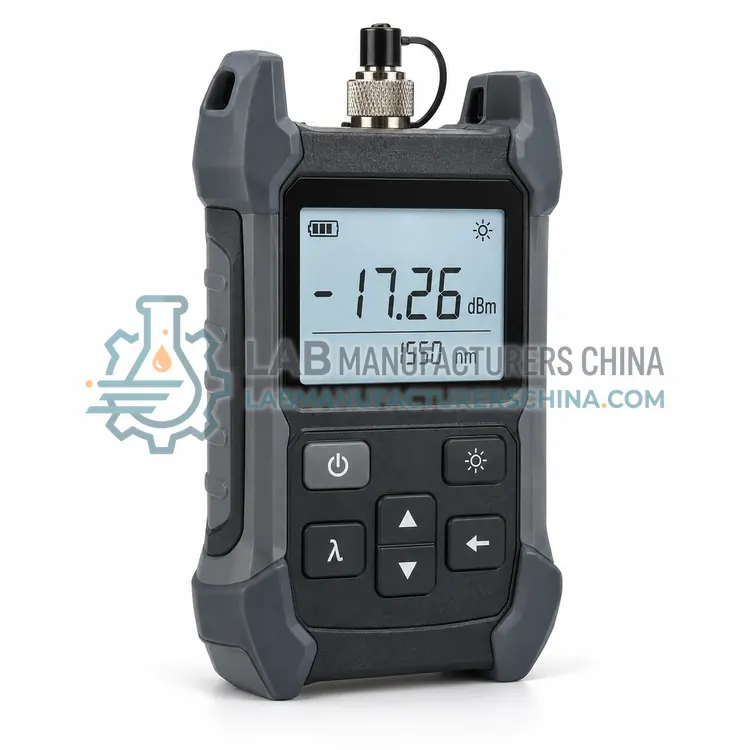
- Handheld Optical Power Meter — A handheld optical power meter is a compact, battery-powered instrument for measuring optical power in the field.
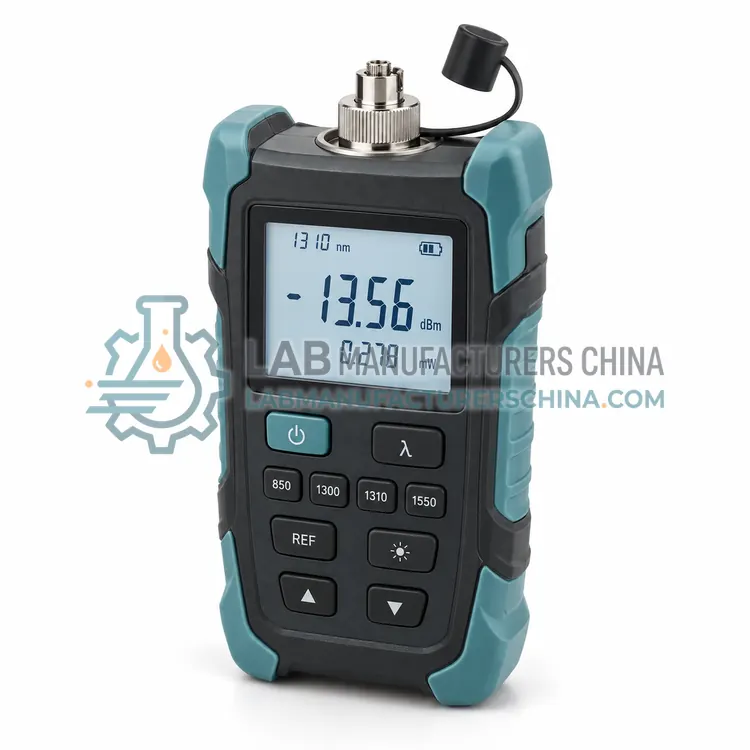
- Fibre-Optic Power Meter — A fibre-optic power meter is designed specifically for measuring optical power in fibre networks across telecom bands.
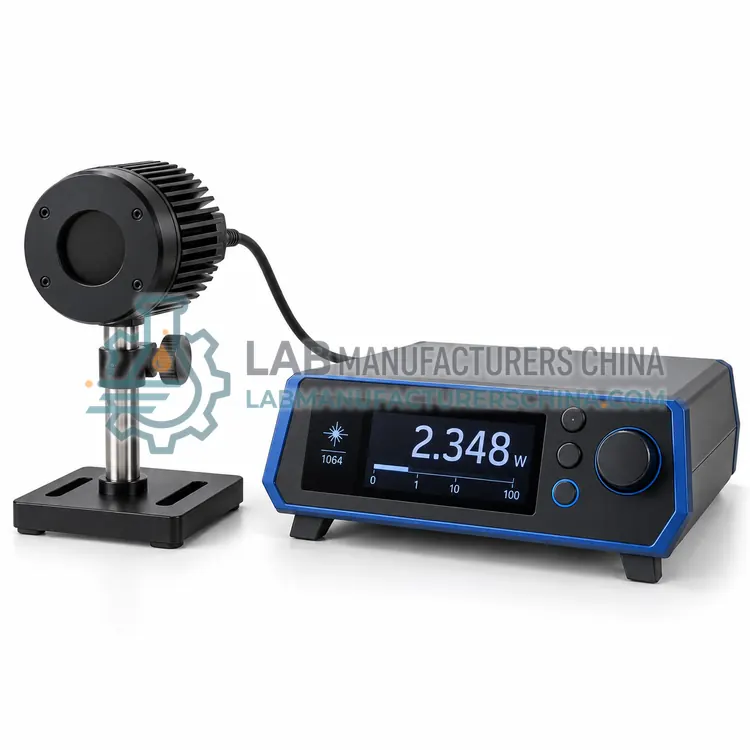
- Thermopile Laser Power Meter — A thermopile laser power meter measures medium to high laser power over a broad wavelength range by converting absorbed light into heat.
- Integrating Sphere Power Meter — An integrating sphere power meter collects light from divergent or high-power beams and averages it inside a coated sphere before measurement.
How do I choose the right variant?
Start with the sensor type because it sets the power range, wavelength coverage and response time. Choose a photodiode meter for low-power, high-sensitivity work in the visible and near-infrared, a thermopile meter for medium to high laser power and broad wavelengths, and a pyroelectric meter for pulsed sources. For free-space beams, integrating spheres handle divergence and high power density; for fibre testing, choose a meter with the right connector and calibrated telecom wavelengths. Then confirm the required accuracy, resolution, wavelength correction range, display units and connectivity to records or control systems.
Where are Optical Power Meters used?
Optical Power Meters are specified in laser output power verification, fibre-optic link loss and attenuation testing, LED and display source characterization and optical component and coating transmission checks.
Which standards and certifications apply?
Work with Optical Power Meters is commonly governed by IEC 60825-1, ISO 11554, IEC 61315, ISO 13694 and IEC 61010-1. Instrument certifications such as CE marking are confirmed per configuration and never assumed.
What are the key considerations before purchase?
Keep sensors clean and never exceed the specified maximum power or power density, which can damage the absorber permanently. Allow warm-up for stable readings and observe the recommended zeroing before low-level measurement. Calibration should be traceable and repeated at intervals defined by use and the quality system, typically annually. Follow laser safety requirements, including eye protection, beam enclosures and controlled areas, and mark the maximum permissible exposure for the setup. Store sensors with protective caps and document calibration certificates and corrections.