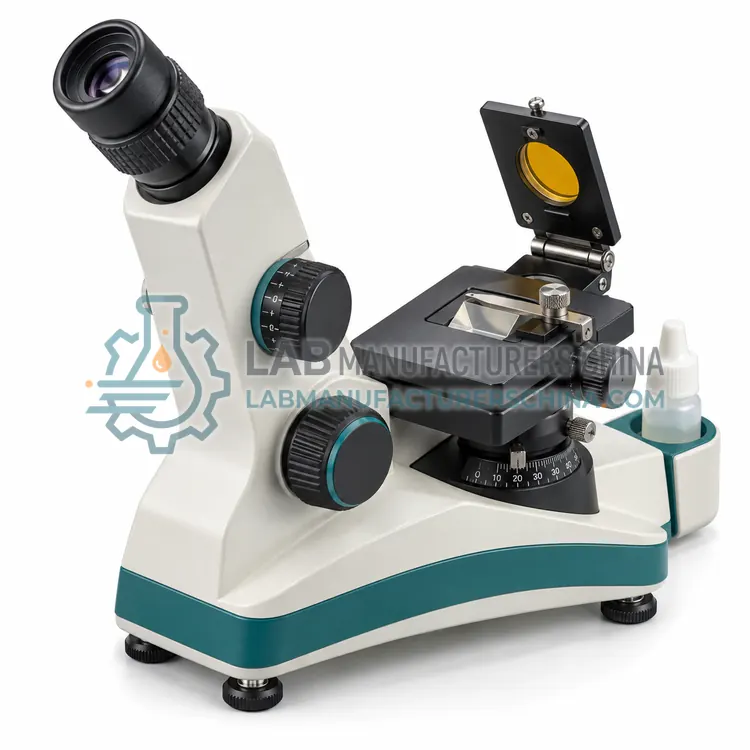
How do Refractometers work?
A refractometer measures the angle at which light is refracted or totally internally reflected at the boundary between a prism and the sample. In the critical-angle design, light passes through the sample and prism, and the boundary between the bright and dark fields gives the critical angle, which corresponds to the refractive index of the sample. In the grazing-incidence or reflection design, light reflects at a shallow angle to measure the index directly. Refractive index depends strongly on wavelength, so measurements are referenced to the sodium D line at 589 nm, and on temperature, so instruments include temperature control or compensation. The measured index is converted to concentration, commonly expressed as Brix for sugar solutions.
Which Refractometers variants are available?
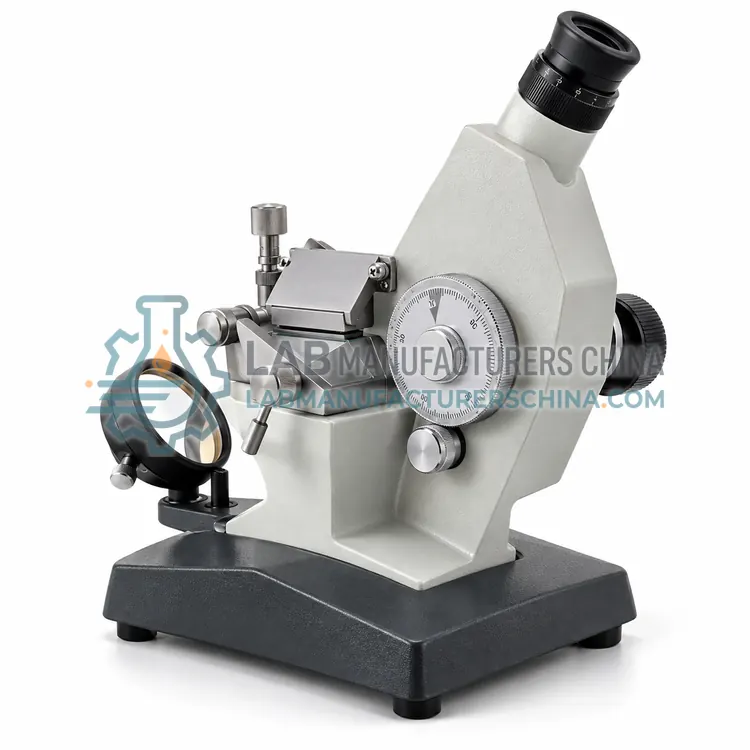
- Abbe Refractometer — An Abbe refractometer measures refractive index using the critical-angle principle with a temperature-controlled prism.
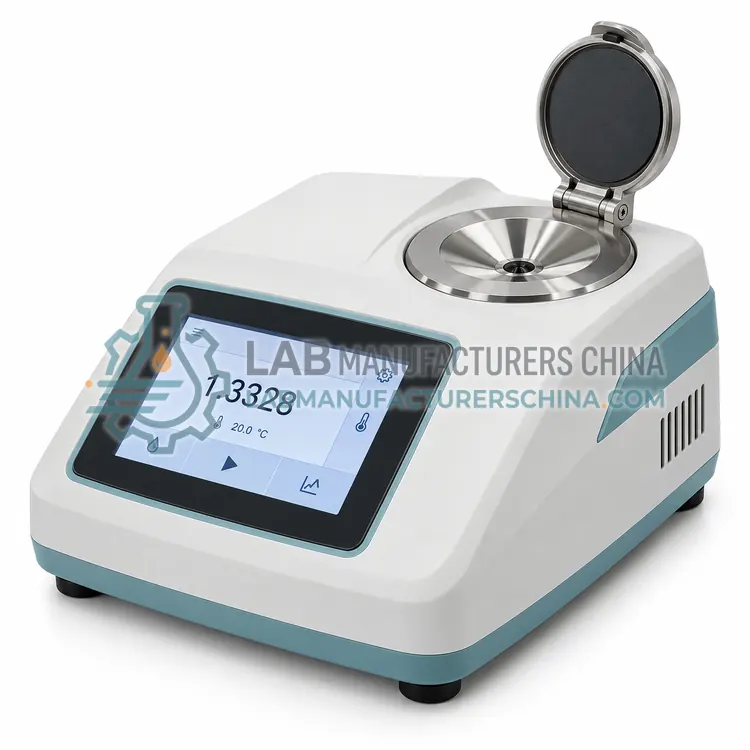
- Automatic Digital Refractometer — An automatic digital refractometer measures refractive index or Brix electronically with temperature control and direct display.
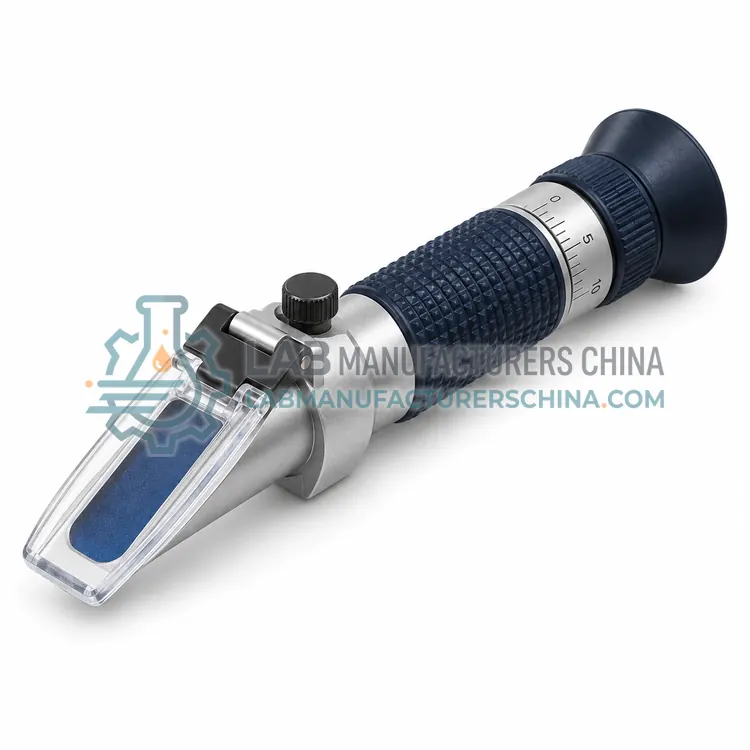
- Handheld Refractometer — A handheld refractometer is a compact optical tool for quick Brix or refractive index checks in the field or on the production floor.
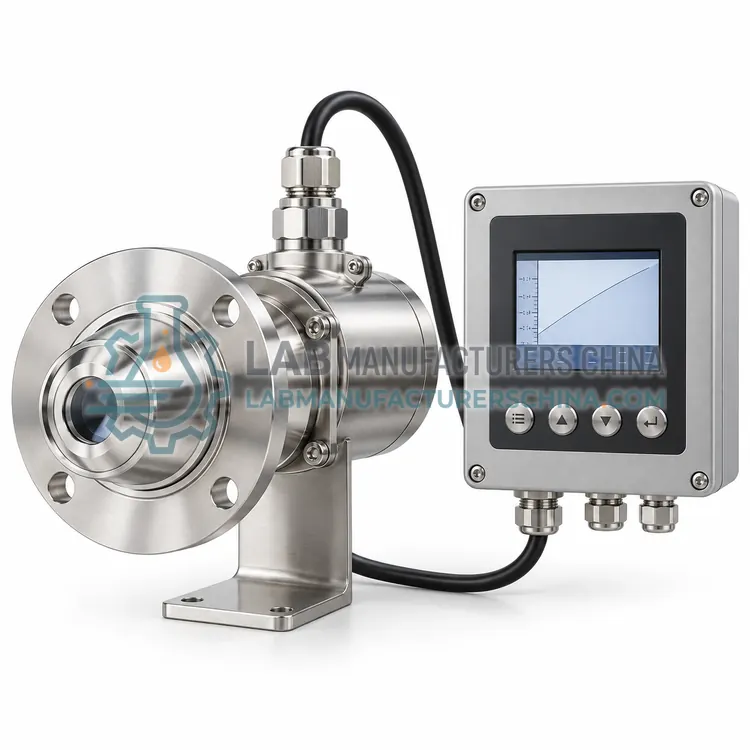
- Inline Process Refractometer — An inline process refractometer measures the refractive index of a flowing process liquid continuously through a pipeline mounting.
- Gem Refractometer — A gem refractometer measures the refractive index of gemstones to aid identification.
How do I choose the right variant?
Choose the design according to the measurement point. Handheld refractometers suit field and quick checks of fruit, beverages and process liquids, using ambient light and automatic temperature compensation. Benchtop Abbe refractometers provide controlled temperature and higher accuracy for laboratory methods. Automatic digital refractometers add electronic readout, temperature control and data output for regulated work. Inline process refractometers measure continuously through a pipeline for plant control. For gems, a refractometer with high index range and contact liquid is used. Confirm range, accuracy, temperature control and whether Brix or refractive index readout is required.
Where are Refractometers used?
Refractometers are specified in food and beverage sugar content testing, pharmaceutical liquid identity and purity, chemical concentration and purity checks and gemstone and mineral identification.
Which standards and certifications apply?
Work with Refractometers is commonly governed by USP <831>, Ph. Eur. 2.2.6, ISO 2173, ASTM D1218 and IEC 61010-1. Instrument certifications such as CE marking are confirmed per configuration and never assumed.
What are the key considerations before purchase?
Clean and dry the prism before and after each measurement, and apply the sample as a thin, even film covering the whole prism surface. Avoid scratching the prism with hard particles. Control temperature, since refractive index changes about 0.00045 per degree Celsius for water, and allow the sample to equilibrate. Standardize with distilled water or certified reference liquids and record the value. For Brix scales, note that the scale assumes a pure sucrose solution, so other dissolved solids may bias the reading. Keep prisms and seals in good condition, and recalibrate on a defined schedule.