Inline Process Refractometer
在线过程折光仪
- SKU RFR-0004
- Refractometers
- CE (to be confirmed)
- ISO 9001 manufacturing (to be confirmed)
Price on request — FOB / CIF quoted per order
Prices depend on configuration, quantity and destination port.
Key specifications
| Measurement range | 1.3200–1.5000 nD |
|---|---|
| Brix range | 0–85% |
| Accuracy | ±0.0002 nD |
| Prism material | Sapphire |
| Process temperature | −20 to 150 °C |
| Max process pressure | 1.0 MPa |
Request a quote Download brochure · to be provided
By Lab Manufacturers China Technical TeamLast reviewed Standards: USP <831>, Ph. Eur. 2.2.6, ISO 2173
What is the Inline Process Refractometer?
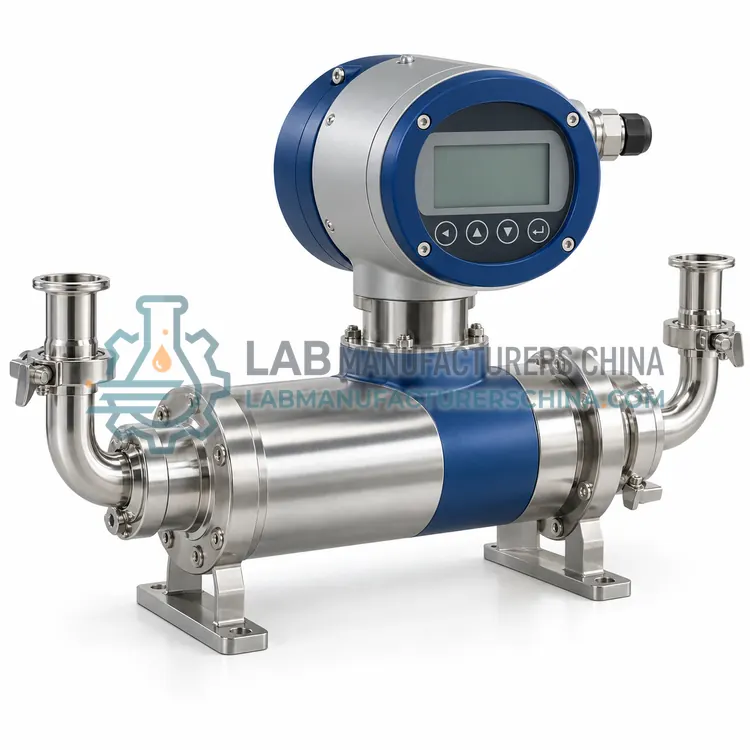
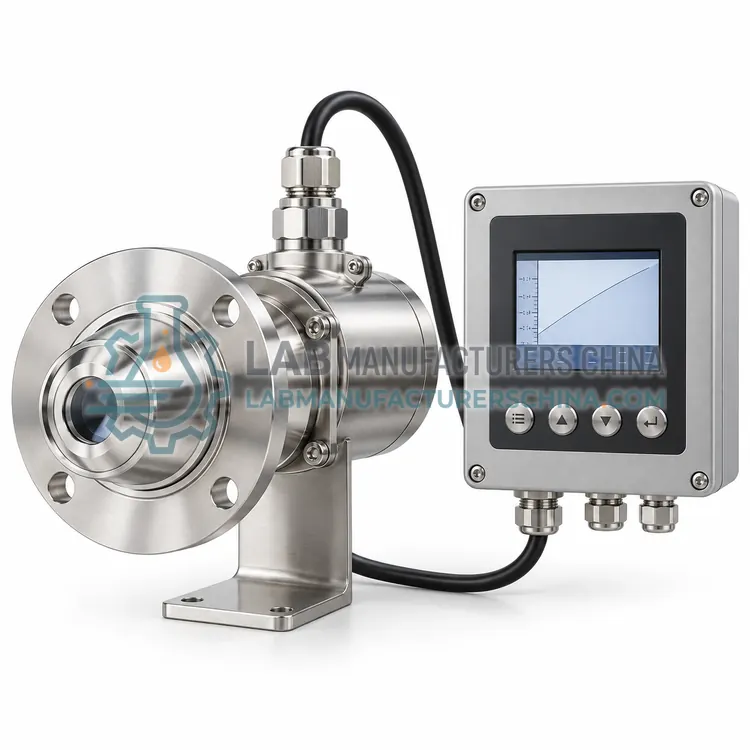
An inline process refractometer measures the refractive index of a flowing process liquid continuously through a pipeline mounting. It provides real-time concentration signals to a control system for chemical, food and beverage production.
What is the Inline Process Refractometer?
An inline process refractometer measures the refractive index of a flowing process liquid continuously through a pipeline mounting. It provides real-time concentration signals to a control system for chemical, food and beverage production.
Overview
An inline process refractometer mounts a sapphire or glass prism directly in a pipe or vessel and measures the critical angle of the flowing liquid, converting the refractive index to concentration such as Brix or a product-specific scale. The measurement is continuous and requires no sampling, so trends and excursions are captured immediately. Rugged wetted materials, high pressure and temperature ratings and sealed electronics suit plant environments. Outputs such as 4–20 mA, digital bus and alarm contacts connect to a distributed control system. Automatic prism cleaning and temperature compensation maintain accuracy in demanding processes.
How does it work?
A refractometer measures the angle at which light is refracted or totally internally reflected at the boundary between a prism and the sample. In the critical-angle design, light passes through the sample and prism, and the boundary between the bright and dark fields gives the critical angle, which corresponds to the refractive index of the sample. In the grazing-incidence or reflection design, light reflects at a shallow angle to measure the index directly. Refractive index depends strongly on wavelength, so measurements are referenced to the sodium D line at 589 nm, and on temperature, so instruments include temperature control or compensation. The measured index is converted to concentration, commonly expressed as Brix for sugar solutions.
What are the key features?
- Direct pipeline or vessel prism mounting
- Continuous concentration signal such as Brix
- Rugged wetted materials with high pressure ratings
- Analogue and digital outputs for control systems
- Automatic prism cleaning options
What are the technical specifications?
A typical inline process refractometer configuration offers measurement range of 1.3200–1.5000 nD, brix range of 0–85%, accuracy of ±0.0002 nD, prism material of Sapphire, process temperature of −20 to 150 °C and max process pressure of 1.0 MPa. Values are indicative of the product class; the exact figures for each configuration are confirmed on the quotation and the calibration documents supplied with the instrument.
Which applications is it used for?
The Inline Process Refractometer is used in soft drink and juice concentration control, sugar and syrup process monitoring, chemical concentration control and brewing and dairy process monitoring. Across the wider Refractometers class, laboratories also deploy it for food and beverage sugar content testing, pharmaceutical liquid identity and purity and chemical concentration and purity checks.
Which standards and certifications apply?
Relevant standards and methods include USP <831>, Ph. Eur. 2.2.6, ISO 2173, ASTM D1218 and IEC 61010-1. Certification candidates for this model are CE and ISO 9001 manufacturing; each is to be confirmed for the specific configuration before shipment, and certificates are supplied only where they have been issued.
Clean and dry the prism before and after each measurement, and apply the sample as a thin, even film covering the whole prism surface. Avoid scratching the prism with hard particles. Control temperature, since refractive index changes about 0.00045 per degree Celsius for water, and allow the sample to equilibrate. Standardize with distilled water or certified reference liquids and record the value. For Brix scales, note that the scale assumes a pure sucrose solution, so other dissolved solids may bias the reading. Keep prisms and seals in good condition, and recalibrate on a defined schedule.
How do I select the right Inline Process Refractometer?
Select an inline process refractometer for continuous concentration control in a pipeline. Confirm the wetted materials are compatible with the product, and that temperature and pressure ratings suit the process. Match the output signals to the control system, and include automatic cleaning where fouling is likely. Verify the accuracy at the control concentration rather than only across the full range.
How does it compare with other Refractometers variants?
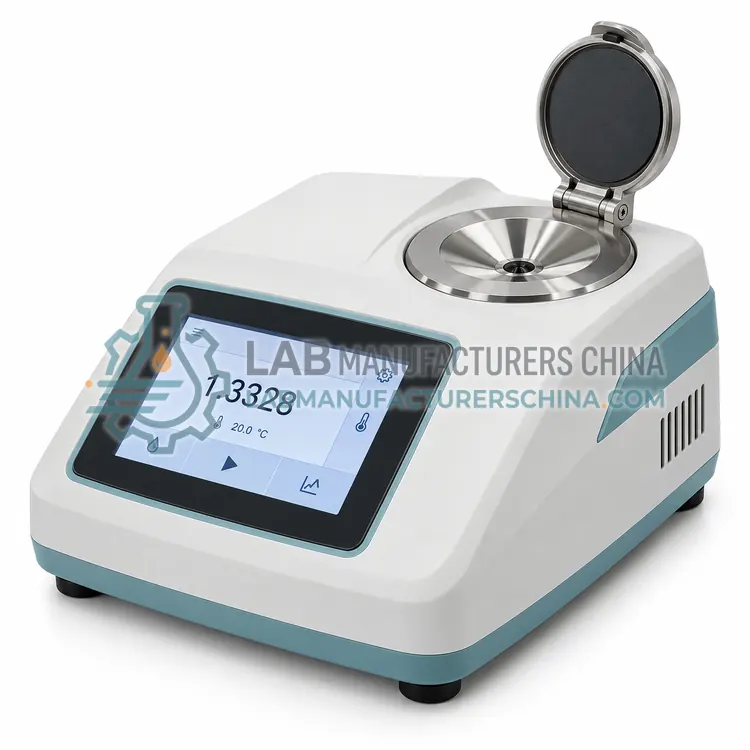
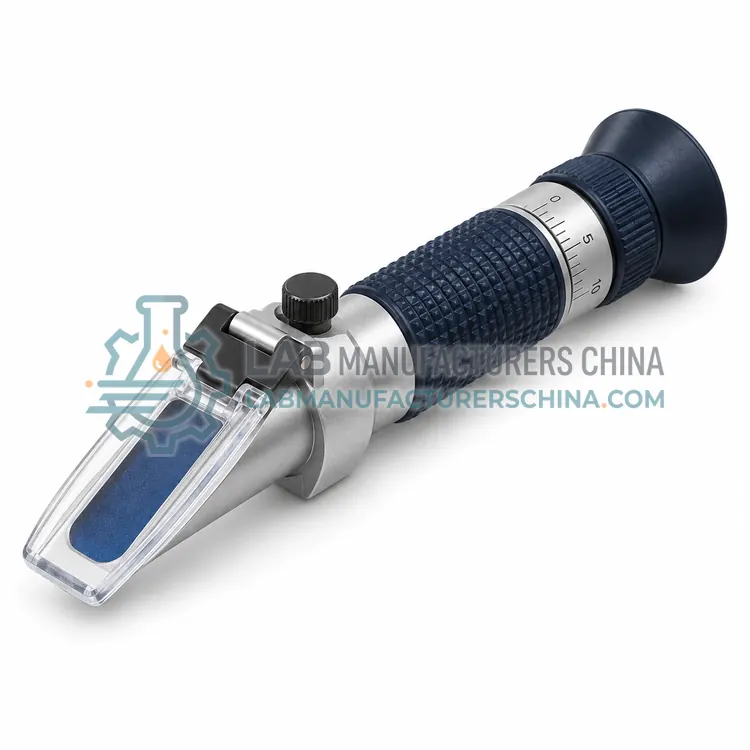
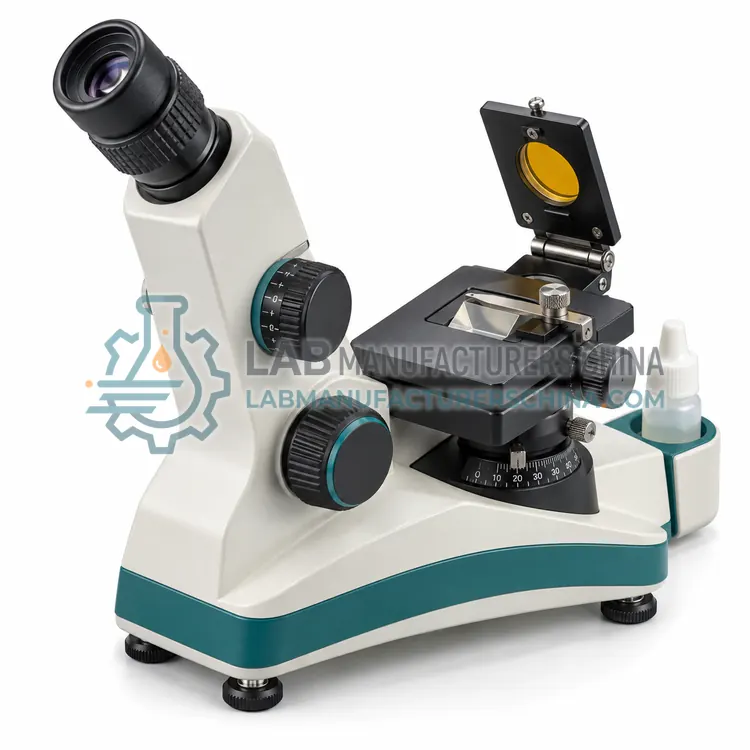
Choose the design according to the measurement point. Handheld refractometers suit field and quick checks of fruit, beverages and process liquids, using ambient light and automatic temperature compensation. Benchtop Abbe refractometers provide controlled temperature and higher accuracy for laboratory methods. Automatic digital refractometers add electronic readout, temperature control and data output for regulated work. Inline process refractometers measure continuously through a pipeline for plant control. For gems, a refractometer with high index range and contact liquid is used. Confirm range, accuracy, temperature control and whether Brix or refractive index readout is required.
Full specifications
| Measurement range | 1.3200–1.5000 nD |
|---|---|
| Brix range | 0–85% |
| Accuracy | ±0.0002 nD |
| Prism material | Sapphire |
| Process temperature | −20 to 150 °C |
| Max process pressure | 1.0 MPa |
| Output signals | 4–20 mA, RS-485/Modbus |
| Protection class | IP67 |
| Wetted materials | Stainless steel 316L and sapphire |
| Power supply | 24 V DC |
Indicative values for this product class. Final specifications are confirmed on the quotation and in the calibration documents supplied with the instrument.
Applications
- Soft drink and juice concentration control
- Sugar and syrup process monitoring
- Chemical concentration control
- Brewing and dairy process monitoring
Key features
- Direct pipeline or vessel prism mounting
- Continuous concentration signal such as Brix
- Rugged wetted materials with high pressure ratings
- Analogue and digital outputs for control systems
- Automatic prism cleaning options
Frequently asked questions about Inline Process Refractometer
Calibration is performed with reference liquids of known refractive index, often introduced through a calibration port, and sometimes with the process product itself against a laboratory reference. Zero and span adjustments are stored, and verification is repeated at defined intervals or after cleaning and maintenance.
Yes. Deposits on the prism change the critical angle and bias readings, so many installations include automatic cleaning by water, steam or cleaning-in-place cycles. A trend of the zero and span values helps detect gradual fouling before it affects product quality.
Yes, many process refractometers store multiple product-specific calibrations, so the same sensor can control different products when the recipe changes. The correct curve must be selected for the product in line, and switching should be linked to the batch or recipe system.
Brix is a scale expressing the dissolved solids content of a solution as the equivalent percentage of sucrose by mass. It is derived from refractive index using a defined table at a stated temperature. Brix is widely used in food and beverage testing for sugar content.
Refractive index changes with temperature, typically by about 0.00045 per degree Celsius for aqueous solutions. Readings are referenced to 20 °C or 25 °C, and instruments compensate or control temperature. Without this, small temperature differences cause significant concentration errors on the Brix scale.
An Abbe refractometer uses a visual or scale-based observation of the critical angle and usually a water-jacketed prism for temperature control. A digital refractometer uses an electronic sensor and displays the result directly, often with automatic temperature control and data output, giving better repeatability and easier documentation.
Related models