Lab Manufacturers China

Spectrometers

光谱仪

SPC · Optical Instruments · 5 models

By Lab Manufacturers China Technical TeamLast reviewed Standards: USP <857>, Ph. Eur. 2.2.25, ASTM E275

Standards referenced

  • USP <857>
  • Ph. Eur. 2.2.25
  • ASTM E275
  • ASTM E958
  • JP 2.24

What are Spectrometers?

Spectrometers disperse light into its component wavelengths and measure intensity against wavelength. As optical instruments they are defined by their optical design, spectral range and detector, and are used to identify substances, quantify concentration and characterize light sources and optical components.

5 models of Spectrometers

The 5 models below are current configurations; specifications are confirmed on quotation.

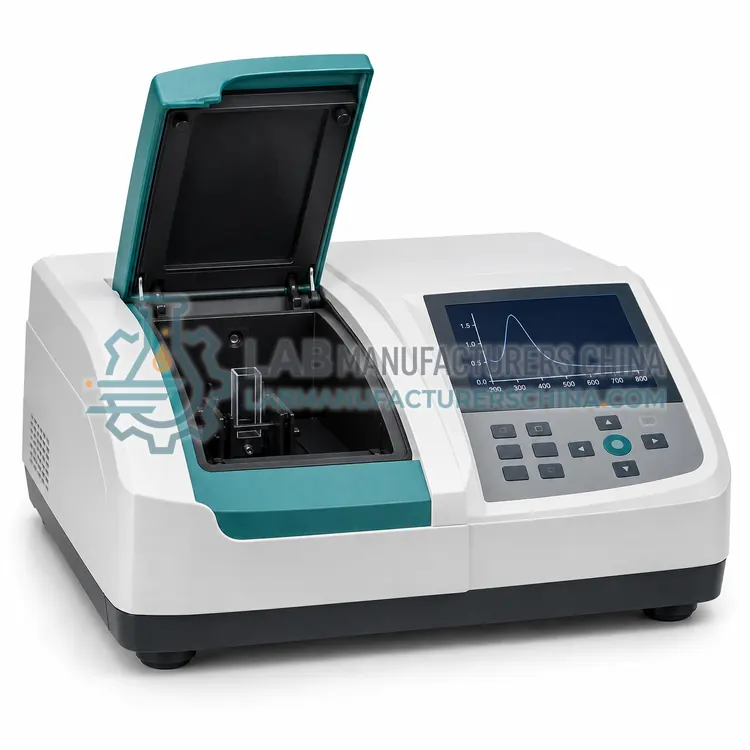
UV-Vis Spectrophotometer

紫外可见分光光度计

  • SPC-0001
  • Spectrometers
  • CE (to be confirmed)
  • ISO 9001 manufacturing (to be confirmed)
Wavelength range:
190–1100 nm
Spectral bandwidth:
2 nm
Wavelength accuracy:
±0.3 nm
Photometric range:
−3 to 3 A
Photometric accuracy:
±0.003 A at 1 A
Stray light:
≤0.05% T at 220 nm

A UV-Vis spectrophotometer measures light absorbed by a sample across the ultraviolet and visible range. It is the standard optical instrument for concentration measurement, colorimetric assays and identity testing in analytical, pharmaceutical and environmental laboratories.

Request a quote
View details

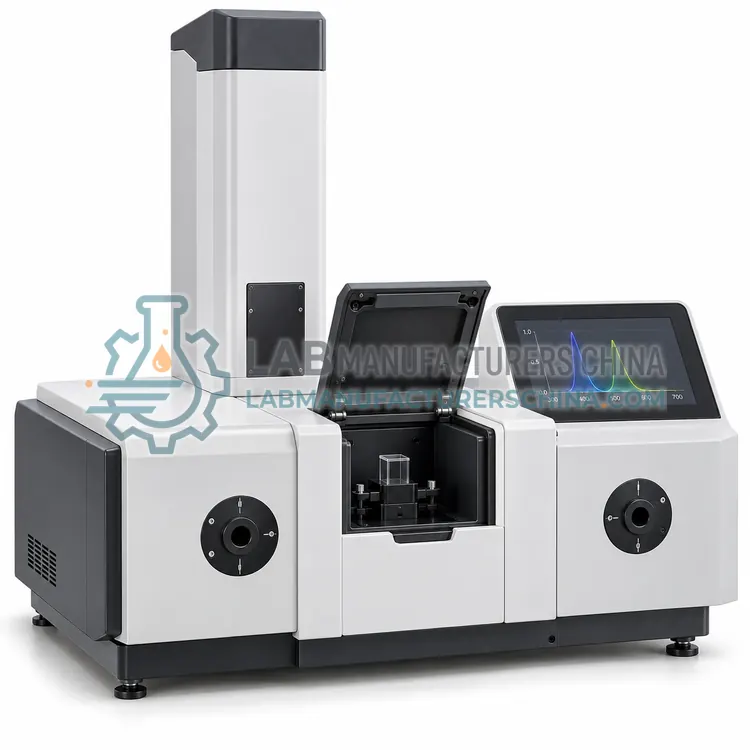
Fluorescence Spectrometer

荧光光谱仪

  • SPC-0002
  • Spectrometers
  • CE (to be confirmed)
  • ISO 9001 manufacturing (to be confirmed)
Excitation wavelength range:
200–900 nm
Emission wavelength range:
200–900 nm
Spectral bandwidth:
5 nm / 10 nm selectable
Light source:
150 W xenon lamp
Detector:
Photomultiplier tube
Wavelength accuracy:
±1.0 nm

A fluorescence spectrometer measures light emitted by a sample after excitation at a shorter wavelength. It offers very low detection limits for fluorescent compounds and is widely used in biochemical assays, pharmaceutical trace analysis and environmental monitoring.

Request a quote
View details

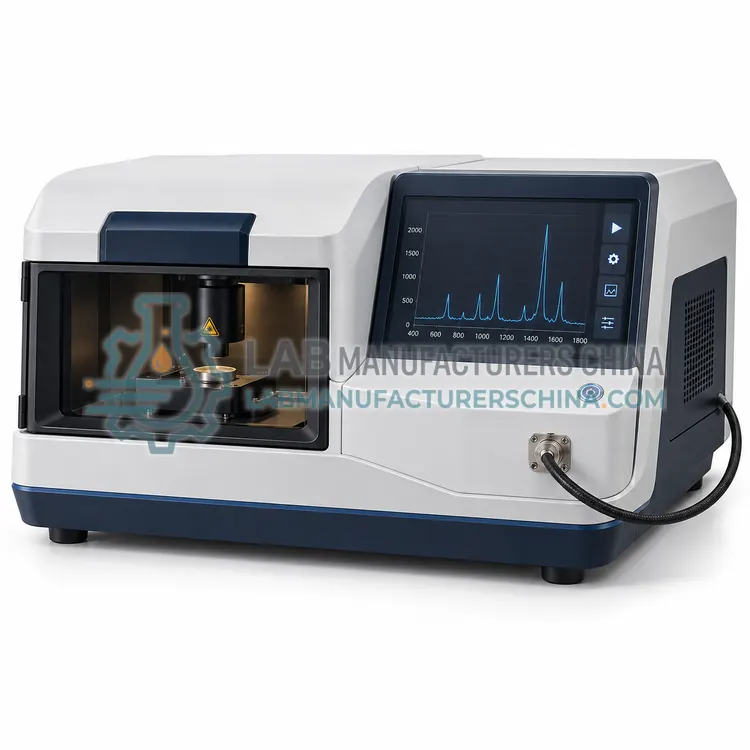
Raman Spectrometer

拉曼光谱仪

  • SPC-0003
  • Spectrometers
  • CE (to be confirmed)
  • ISO 9001 manufacturing (to be confirmed)
Laser wavelength:
532 nm or 785 nm
Laser power at sample:
Up to 100 mW
Spectral range:
200–3200 cm⁻¹
Spectral resolution:
≤2 cm⁻¹
Wavenumber accuracy:
±1 cm⁻¹
Wavenumber repeatability:
±0.2 cm⁻¹

A Raman spectrometer measures inelastic light scattering to reveal molecular vibrations without contact or sample preparation. It is used for rapid material identification, polymorph screening and through-package verification in pharmaceutical and materials laboratories.

Request a quote
View details

FTIR Spectrometer

傅里叶变换红外光谱仪

  • SPC-0004
  • Spectrometers
  • CE (to be confirmed)
  • ISO 9001 manufacturing (to be confirmed)
Spectral range:
4000–400 cm⁻¹
Resolution:
0.5–4 cm⁻¹ selectable
Signal-to-noise ratio:
30,000:1 at 4 cm⁻¹
Wavenumber accuracy:
±0.01 cm⁻¹
Wavenumber repeatability:
0.01 cm⁻¹
Interferometer:
Michelson with KBr beamsplitter

An FTIR spectrometer identifies chemical functional groups by measuring infrared absorption across the mid-infrared range. It is the standard optical instrument for material and polymer identification, contaminant analysis and incoming-goods verification in many quality-control laboratories.

Request a quote
View details

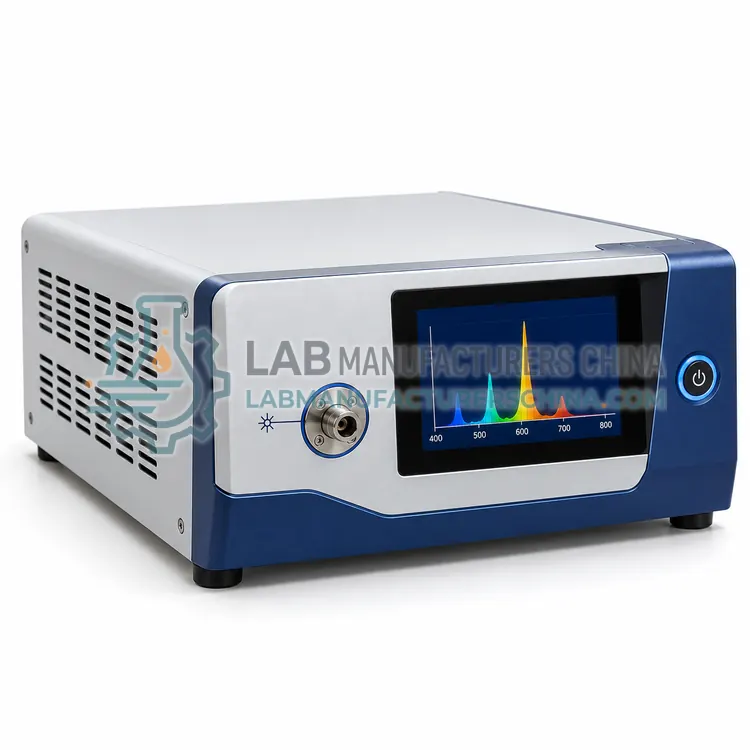
CCD Array Spectrometer

CCD 阵列光谱仪

  • SPC-0005
  • Spectrometers
  • CE (to be confirmed)
  • ISO 9001 manufacturing (to be confirmed)
Wavelength range:
200–1100 nm
Detector:
Linear CCD, 2048 pixels
Spectral resolution:
0.5–2 nm depending on slit
Integration time:
1 ms to 65 s
Optical bench:
Crossed Czerny-Turner
Grating:
600 lines/mm

A CCD array spectrometer is a compact optical instrument that records a full spectrum simultaneously using a linear detector array. Its fast acquisition and small size suit inline monitoring, portable measurement and rapid colour or transmission checks.

Request a quote
View details

Compare Spectrometers models

ModelWavelength rangeSpectral bandwidthWavelength accuracyStray lightDetector
UV-Vis SpectrophotometerSPC-0001190–1100 nm2 nm±0.3 nm≤0.05% T at 220 nmSilicon photodiode
Fluorescence SpectrometerSPC-0002—5 nm / 10 nm selectable±1.0 nm≤0.02% TPhotomultiplier tube
Raman SpectrometerSPC-0003————Cooled charge-coupled device
FTIR SpectrometerSPC-0004————DTGS or MCT
CCD Array SpectrometerSPC-0005200–1100 nm——≤0.2%Linear CCD, 2048 pixels

Indicative values for this product class. Final specifications are confirmed on the quotation and in the calibration documents supplied with the instrument.

How do Spectrometers work?

A spectrometer collects light from a source or sample and disperses it with a prism, diffraction grating or interferometer. The separated wavelengths fall on a detector, usually a photodiode, charge-coupled device or photomultiplier, which converts intensity into an electrical signal. The signal is digitized and plotted as intensity versus wavelength or wavenumber. Transmission, absorbance or emission bands reveal molecular or atomic structure, because specific groups absorb or emit at characteristic wavelengths. Optical resolution depends on slit width, grating groove density and detector pixel size, while sensitivity depends on source brightness, optical throughput and detector quantum efficiency. Wavelength calibration against emission lamps or reference standards keeps readings accurate and comparable between instruments.

Which Spectrometers variants are available?

  • UV-Vis Spectrophotometer — A UV-Vis spectrophotometer measures light absorbed by a sample across the ultraviolet and visible range.
  • Fluorescence Spectrometer — A fluorescence spectrometer measures light emitted by a sample after excitation at a shorter wavelength.
  • Raman Spectrometer — A Raman spectrometer measures inelastic light scattering to reveal molecular vibrations without contact or sample preparation.
  • FTIR Spectrometer — An FTIR spectrometer identifies chemical functional groups by measuring infrared absorption across the mid-infrared range.
  • CCD Array Spectrometer — A CCD array spectrometer is a compact optical instrument that records a full spectrum simultaneously using a linear detector array.

How do I choose the right variant?

Choose by measurand first: absorption in the ultraviolet and visible suits a UV-Vis spectrophotometer, trace fluorescence suits a fluorescence spectrometer, non-contact identification of solids and liquids suits a Raman spectrometer, functional-group analysis of solids and liquids suits an FTIR spectrometer, and rapid reflectance or transmission measurements suit a CCD array spectrometer. Then match spectral range, resolution and stray-light performance to the method. Consider whether a double-beam or array design is needed, the required detector sensitivity, and whether a flow cell, fibre probe or integrating sphere is required. Check wavelength accuracy, baseline stability, software for spectral libraries and data integrity, and available calibration standards before specifying.

Where are Spectrometers used?

Spectrometers are specified in pharmaceutical identity and content testing, chemical reaction monitoring, optical coating and filter characterization, food and beverage quality control and material and polymer identification.

Which standards and certifications apply?

Work with Spectrometers is commonly governed by USP <857>, Ph. Eur. 2.2.25, ASTM E275, ASTM E958 and JP 2.24. Instrument certifications such as CE marking are confirmed per configuration and never assumed.

What are the key considerations before purchase?

Install spectrometers on a stable bench away from vibration and large temperature swings, and allow warm-up for source and detector stability. Protect optics from dust and humidity; hygroscopic components such as KBr windows need desiccation or purging. Establish a calibration schedule covering wavelength accuracy, photometric accuracy and stray light, using traceable filters or lamps. Keep reference spectra and performance records for trend analysis. For regulated work, define user access, audit trails and electronic records, and document installation, operational and performance qualification. Regular lamp replacement and cleaning of sample compartments reduce drift.

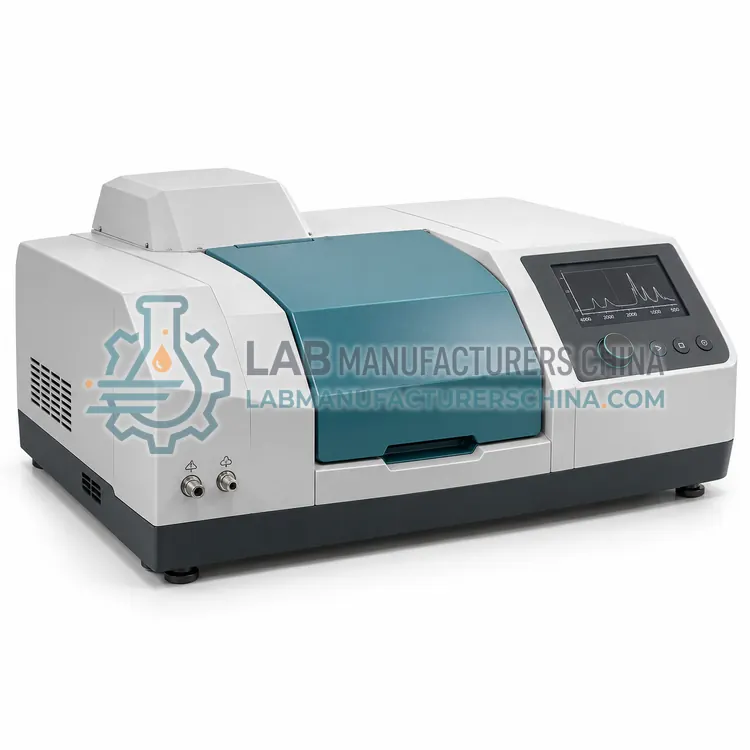
Frequently asked questions about Spectrometers

Concentration is usually measured with a UV-Vis spectrophotometer, because absorbance follows the Beer–Lambert law and many compounds absorb strongly in the ultraviolet. Fluorescence spectrometers offer lower detection limits for fluorescent analytes. The correct choice depends on the analyte, matrix and required limit of detection.

Need help specifying Spectrometers?

Request a quote