Portable Colorimeter
便携式色度计
- SKU COL-0002
- Colorimeters
- CE (to be confirmed)
- ISO 9001 manufacturing (to be confirmed)
Price on request — FOB / CIF quoted per order
Prices depend on configuration, quantity and destination port.
Key specifications
| Measurement principle | Filter photometry |
|---|---|
| Preset wavelengths | 420, 520, 620 nm |
| Light source | LED |
| Detector | Silicon photodiode |
| Photometric range | 0–3 A |
| Protection class | IP67 |
Request a quote Download brochure · to be provided
By Lab Manufacturers China Technical TeamLast reviewed Standards: ISO 7887, ASTM D1209, ASTM E313
What is the Portable Colorimeter?
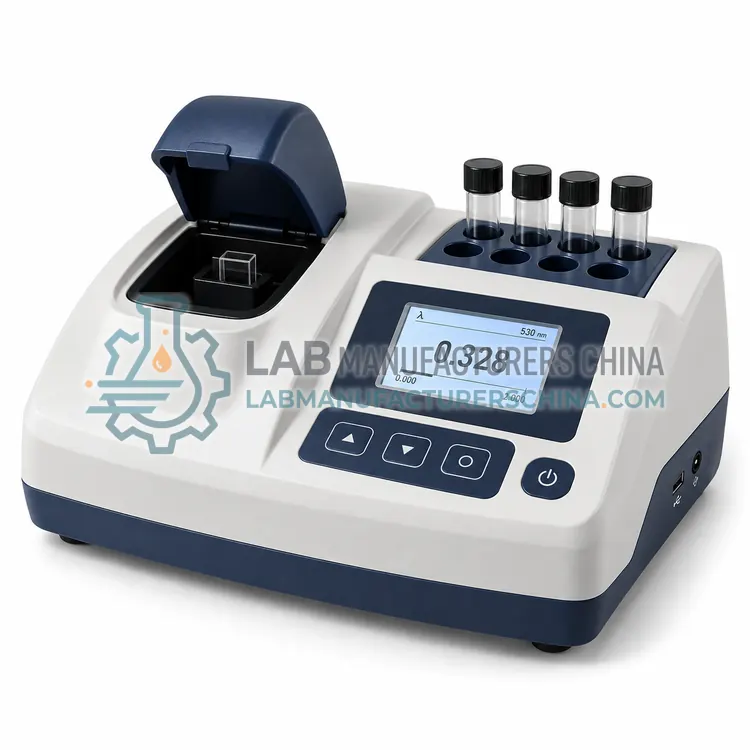
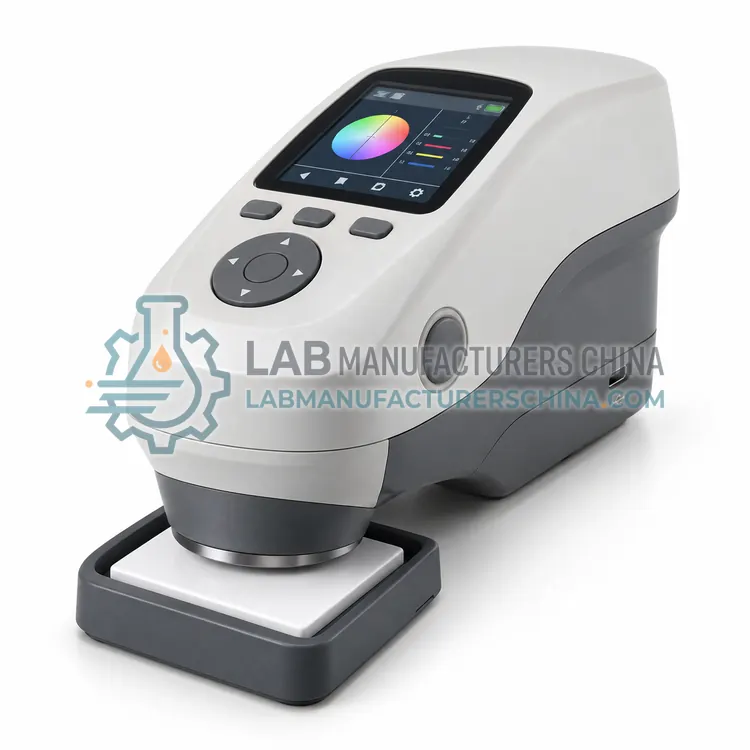
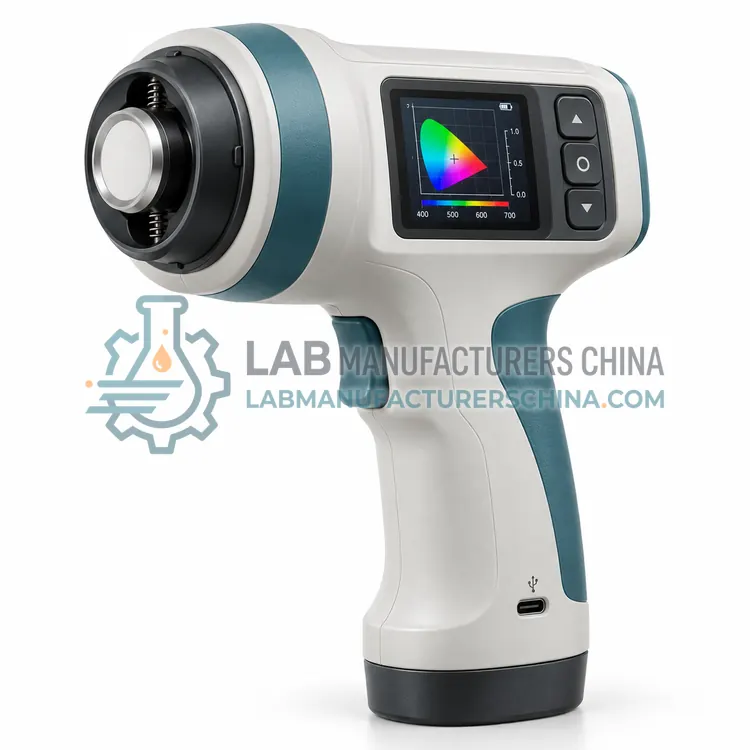
A portable colorimeter is a battery-powered, compact instrument for measuring sample colour or concentration outside the laboratory. Its rugged housing and preset wavelengths make it practical for field water testing and on-site quality inspection.
What is the Portable Colorimeter?
A portable colorimeter is a battery-powered, compact instrument for measuring sample colour or concentration outside the laboratory. Its rugged housing and preset wavelengths make it practical for field water testing and on-site quality inspection.
Overview
A portable colorimeter integrates a light-emitting diode source, filters, a photodetector and a battery into a handheld housing, usually sealed against dust and water. Preset wavelengths and menu-driven methods allow operators to run standard tests on site with minimal setup. Results are shown on a display and stored in internal memory or transferred by USB or wireless link. A rugged enclosure and long battery life support use in the field, while optional measurement cells and reagent kits cover common parameters. Performance is slightly lower than benchtop instruments but adequate for routine screening and field compliance checks.
How does it work?
A colorimeter passes light from a lamp or light-emitting diode through a coloured filter, then through the sample or onto the sample, and measures the transmitted or reflected intensity with a photodetector. The filter selects a band where the analyte absorbs, so the measured change follows the Beer–Lambert law for concentration work. For colour measurement, the instrument uses tristimulus filters or illumination geometry to compute colour coordinates in spaces such as CIELAB. The electrical signal is converted to absorbance, transmittance, concentration or a colour difference value against a stored reference. Because filters are fixed, only a few wavelengths are available, which limits selectivity but keeps the instrument robust and easy to operate.
What are the key features?
- Battery-powered handheld body with IP-rated sealing
- Preset wavelengths and reagent-based methods
- On-board data logging of measurement results
- USB or wireless data transfer to a computer
- Rugged housing for field and plant use
What are the technical specifications?
A typical portable colorimeter configuration offers measurement principle of Filter photometry, preset wavelengths of 420, 520, 620 nm, light source of LED, detector of Silicon photodiode, photometric range of 0–3 A and protection class of IP67. Values are indicative of the product class; the exact figures for each configuration are confirmed on the quotation and the calibration documents supplied with the instrument.
Which applications is it used for?
The Portable Colorimeter is used in field water and wastewater testing, drinking water disinfection checks, on-site industrial process control and environmental monitoring campaigns. Across the wider Colorimeters class, laboratories also deploy it for water and wastewater colour and ion testing, food and beverage colour grading and plastic, paint and coating colour control.
Which standards and certifications apply?
Relevant standards and methods include ISO 7887, ASTM D1209, ASTM E313, CIE 15 and USP <1061>. Certification candidates for this model are CE and ISO 9001 manufacturing; each is to be confirmed for the specific configuration before shipment, and certificates are supplied only where they have been issued.
Place the instrument on a level, stable surface away from strong stray light, which can bias colour readings. Keep cells and apertures clean and free of scratches, and use matched cells for concentration measurement. Verify performance regularly with reference standards, filters or certified colour tiles, and record results for trend monitoring. For reagent-based water testing, follow reagent shelf life and blanking procedures. Recalibrate or re-standardize at the interval defined by the quality system, and clean the illumination path as instructed. Protect portable units from moisture and impact.
How do I select the right Portable Colorimeter?
Choose a portable colorimeter for field or plant-floor testing where mains power and a bench are unavailable. Confirm the preset wavelengths match the required reagents, the enclosure suits the environment, and data export meets reporting needs. For trace work near detection limits, compare the specified repeatability against the method requirement before purchase.
How does it compare with other Colorimeters variants?
Decide first whether the measurement concerns chemical concentration or surface colour. Concentration work in water, food or clinical testing suits a filter colorimeter with reagent-specific wavelengths, and pre-set calibrations speed routine testing. Colour grading of plastics, textiles, paints and packaging requires a colour difference meter with defined geometry and colour spaces. Portable models suit field and incoming inspection, while benchtop models give better repeatability for the laboratory. Check wavelength or illuminant options, measurement aperture, repeatability, data storage and connectivity, and the availability of certified colour standards for verification.
Full specifications
| Measurement principle | Filter photometry |
|---|---|
| Preset wavelengths | 420, 520, 620 nm |
| Light source | LED |
| Detector | Silicon photodiode |
| Photometric range | 0–3 A |
| Protection class | IP67 |
| Battery life | About 5 h continuous use |
| Data storage | Up to 1,000 readings |
| Weight | About 500 g |
| Data interface | USB, Bluetooth |
Indicative values for this product class. Final specifications are confirmed on the quotation and in the calibration documents supplied with the instrument.
Applications
- Field water and wastewater testing
- Drinking water disinfection checks
- On-site industrial process control
- Environmental monitoring campaigns
Key features
- Battery-powered handheld body with IP-rated sealing
- Preset wavelengths and reagent-based methods
- On-board data logging of measurement results
- USB or wireless data transfer to a computer
- Rugged housing for field and plant use
Frequently asked questions about Portable Colorimeter
Portable colorimeters typically achieve photometric accuracy within a few thousandths of an absorbance unit and repeatability adequate for routine screening. They are generally less stable than benchtop instruments because of temperature and battery effects, so trace measurements near the detection limit are better performed in the laboratory.
Yes. They are usually zeroed with a blank before each test and verified periodically with a reference standard. A full service calibration is recommended every six to twelve months, or more often under heavy field use or after exposure to extreme conditions.
Low battery voltage can reduce source intensity and shift readings. Most instruments monitor battery level and display a warning, and some regulate the source current. Replace or recharge batteries promptly and re-zero the instrument after battery changes.
A colorimeter uses a few broad-band filters and is simple and economical, suitable for defined routine tests. A spectrophotometer uses a monochromator or grating to scan many wavelengths, giving higher selectivity and spectral information. Colorimeters are ideal where the method specifies a fixed wavelength.
Colour difference is most often expressed as ΔE*ab in the CIELAB space, calculated from differences in lightness and two chromatic axes. Smaller values indicate closer colour match. Acceptable limits depend on the industry and are agreed between supplier and customer.
Geometry defines the illumination and viewing angles, such as 45/0 or d/8. Different geometries respond differently to surface gloss, texture and orientation, so instruments with different geometries can give different values for the same sample. Comparing results requires consistent geometry.
Related models