Lab Manufacturers China

Raman

拉曼光谱仪

RAM · Spectroscopy Instruments · 5 models

By Lab Manufacturers China Technical TeamLast reviewed Standards: ASTM E1840, ASTM E2529, ASTM E2911

Standards referenced

  • ASTM E1840
  • ASTM E2529
  • ASTM E2911
  • USP <1120>
  • Ph. Eur. 2.2.48
  • IEC 60825-1
  • ISO 17025

What are Raman?

Raman spectrometers measure inelastically scattered laser light to obtain the vibrational fingerprint of a material. Laboratories use them for non-destructive identification of chemicals, polymorphs, carbon materials and minerals, often through glass or plastic packaging and with little or no sample preparation.

5 models of Raman

The 5 models below are current configurations; specifications are confirmed on quotation.

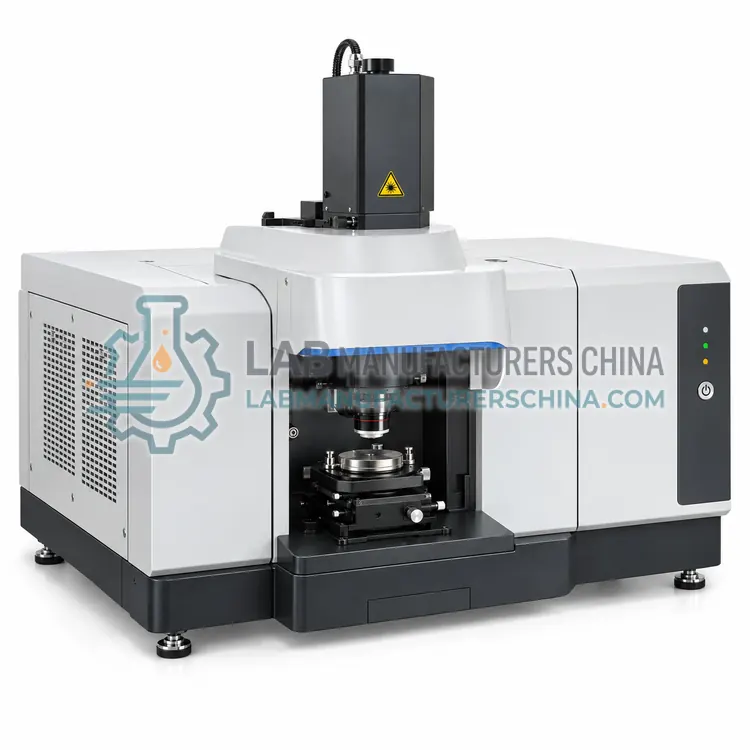
Benchtop Dispersive Raman Spectrometer

台式色散型拉曼光谱仪

  • RAM-0001
  • Raman
  • CE (to be confirmed)
  • IEC 60825-1 Class 1 (to be confirmed)
  • ISO 9001 manufacturing (to be confirmed)
Laser wavelength:
785 nm
Laser power:
10–500 mW (adjustable)
Spectral range:
200–3200 cm-1
Spectral resolution:
4 cm-1 (optional 2 cm-1)
Detector:
Cooled CCD, −60 °C
Acquisition time:
1–30 s typical

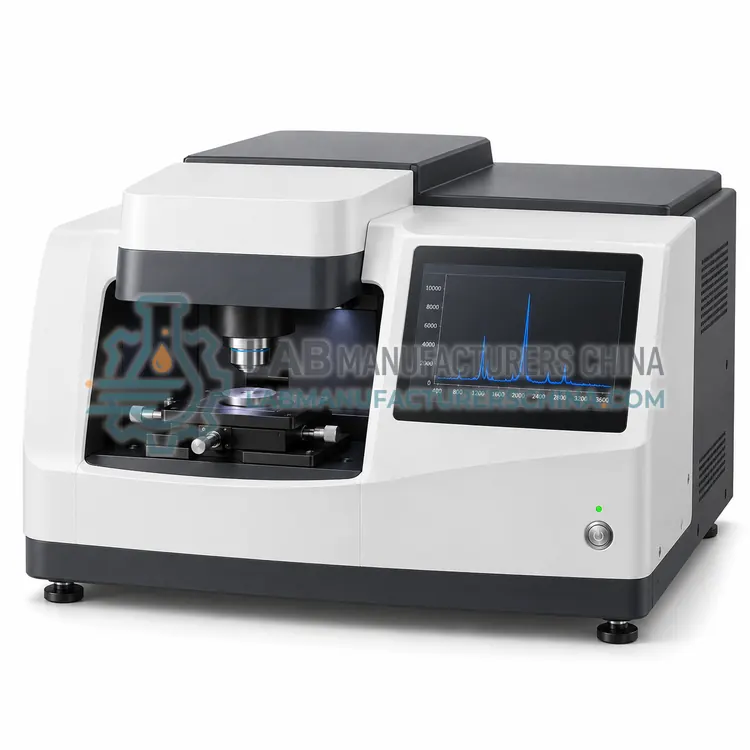
A benchtop dispersive Raman spectrometer combines a 785 nm laser, a spectrograph and a cooled CCD in a compact enclosure for routine identification of solids and liquids. It is the usual choice for QC laboratories needing 4 cm-1 resolution and fast spectra in seconds.

Request a quote
View details

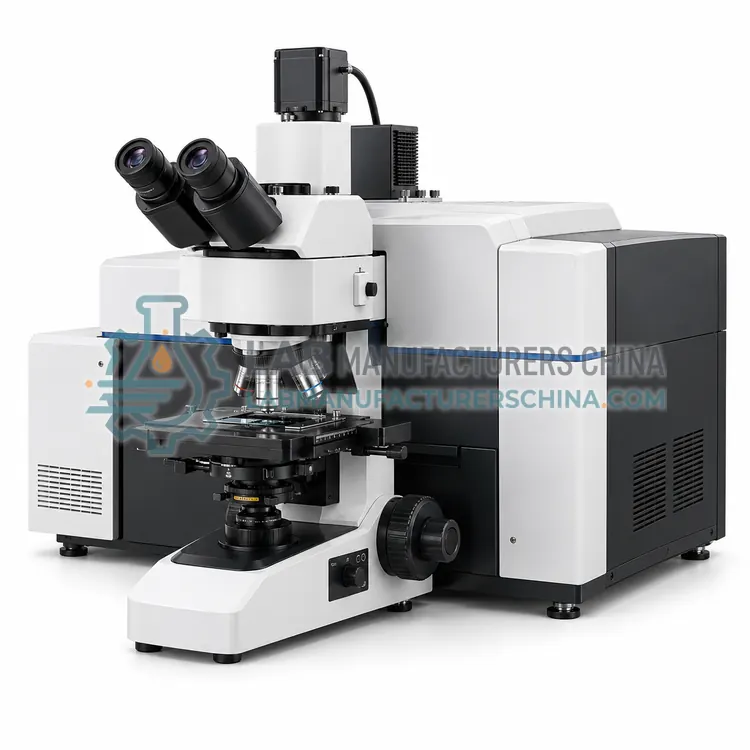
Confocal Raman Microscope

共聚焦拉曼显微镜

  • RAM-0002
  • Raman
  • CE (to be confirmed)
  • IEC 60825-1 (to be confirmed)
  • ISO 9001 manufacturing (to be confirmed)
Laser wavelengths:
532, 633, 785 nm (selectable)
Spatial resolution (lateral):
≤0.5 µm (532 nm, 100× objective)
Axial resolution:
≤2 µm (confocal)
Spectral resolution:
0.3–4 cm-1 (grating dependent)
Spectral range:
50–4000 cm-1
Lowest wavenumber:
≤10 cm-1 (with filters)

A confocal Raman microscope couples a Raman spectrometer with a research microscope to obtain spectra and chemical maps at micrometer spatial resolution. It is the suitable choice for particles, inclusions, thin films and layered materials, with depth resolution of about 1–2 µm.

Request a quote
View details

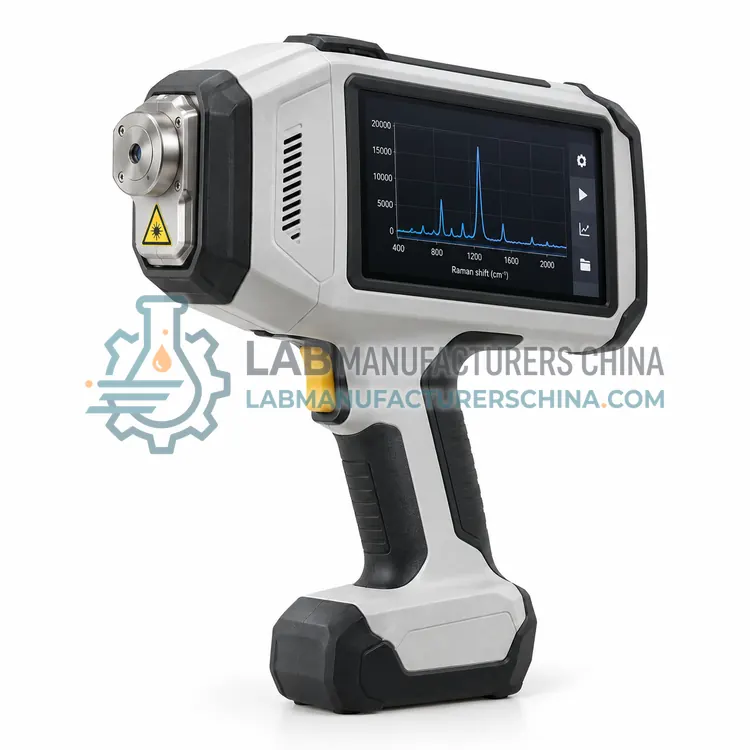
Handheld Raman Analyzer

手持式拉曼分析仪

  • RAM-0003
  • Raman
  • CE (to be confirmed)
  • IEC 60825-1 (to be confirmed)
  • MIL-STD-810 environmental testing (to be confirmed)
Laser wavelength:
785 nm or 1064 nm
Laser power:
Up to 500 mW
Spectral range:
250–2875 cm-1
Spectral resolution:
8–12 cm-1
Measurement time:
5–30 s typical
Weight:
0.6–2.0 kg

A handheld Raman analyzer is a battery-powered, ruggedized instrument with a built-in laser and spectral library for on-site material identification. It is used by pharmaceutical receiving teams, customs, security and field chemists to identify substances in under 30 seconds, often through packaging.

Request a quote
View details

FT-Raman Spectrometer with 1064 nm Excitation

1064 nm 激发的傅里叶变换拉曼光谱仪

  • RAM-0004
  • Raman
  • CE (to be confirmed)
  • IEC 60825-1 Class 1 (to be confirmed)
  • ISO 9001 manufacturing (to be confirmed)
Laser wavelength:
1064 nm (Nd:YAG)
Laser power:
Up to 2 W (adjustable)
Spectral range:
50–3600 cm-1
Spectral resolution:
2–4 cm-1 (optional 1 cm-1)
Wavenumber accuracy:
≤0.05 cm-1
Detector:
InGaAs (RT) or Ge (LN2)

An FT-Raman spectrometer uses a 1064 nm Nd:YAG laser and an interferometer with InGaAs or germanium detector to record Raman spectra without fluorescence from most colored, biological and polymeric samples. It is chosen when dispersive Raman at 532 or 785 nm is swamped by fluorescence.

Request a quote
View details

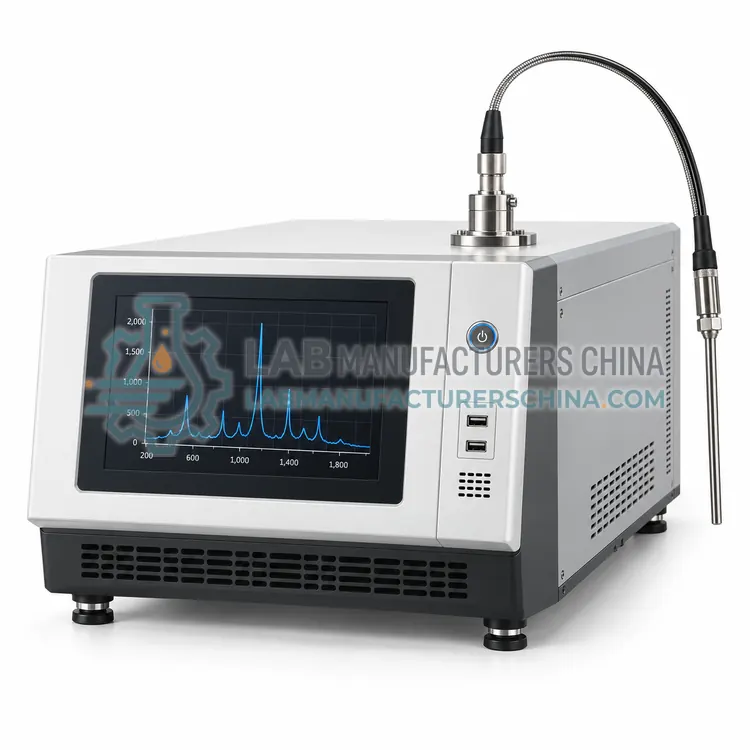
Fiber-Optic Probe Raman Analyzer for Process Monitoring

用于过程监测的光纤探头拉曼分析仪

  • RAM-0005
  • Raman
  • CE (to be confirmed)
  • ATEX/IECEx for hazardous areas (to be confirmed)
  • ISO 9001 manufacturing (to be confirmed)
Laser wavelength:
785 nm or 532 nm
Laser power (at probe):
Up to 450 mW
Fiber length:
5–100 m
Spectral range:
100–3400 cm-1
Spectral resolution:
4–6 cm-1
Probe temperature:
−40 to 200 °C

A fiber-optic probe Raman analyzer connects a remote immersion or non-contact probe to a rack-mounted spectrometer to monitor reactions, fermentations and crystallizations in real time. It provides multi-component concentration trends without sampling, supporting process analytical technology in pharmaceutical and chemical plants.

Request a quote
View details

Compare Raman models

ModelLaser wavelengthLaser powerSpectral rangeSpectral resolutionDetector
Benchtop Dispersive Raman SpectrometerRAM-0001785 nm10–500 mW (adjustable)200–3200 cm-14 cm-1 (optional 2 cm-1)Cooled CCD, −60 °C
Confocal Raman MicroscopeRAM-0002——50–4000 cm-10.3–4 cm-1 (grating dependent)Cooled CCD or EMCCD
Handheld Raman AnalyzerRAM-0003785 nm or 1064 nmUp to 500 mW250–2875 cm-18–12 cm-1—
FT-Raman Spectrometer with 1064 nm ExcitationRAM-00041064 nm (Nd:YAG)Up to 2 W (adjustable)50–3600 cm-12–4 cm-1 (optional 1 cm-1)InGaAs (RT) or Ge (LN2)
Fiber-Optic Probe Raman Analyzer for Process MonitoringRAM-0005785 nm or 532 nm—100–3400 cm-14–6 cm-1—

Indicative values for this product class. Final specifications are confirmed on the quotation and in the calibration documents supplied with the instrument.

How do Raman work?

When monochromatic laser light hits a sample, most photons scatter elastically, but about one in 10 million scatters inelastically with an energy shift equal to a vibrational energy of the molecule. This Raman shift, reported in cm-1, produces a spectrum of peaks characteristic of chemical bonds and crystal structure. A Raman spectrometer consists of a laser such as 532, 633, 785 or 1064 nm, focusing and collection optics, a notch or edge filter that rejects Rayleigh scattering, a dispersive spectrograph with CCD detector or an FT interferometer, and software. Shorter laser wavelengths give stronger signals but can excite fluorescence, while 785 and 1064 nm reduce fluorescence at lower signal. Polarization, confocal pinholes and surface enhancement increase selectivity and sensitivity, and calibration with standards such as silicon at 520.7 cm-1 and acetaminophen ensures accurate shifts.

Which Raman variants are available?

  • Benchtop Dispersive Raman Spectrometer — A benchtop dispersive Raman spectrometer combines a 785 nm laser, a spectrograph and a cooled CCD in a compact enclosure for routine identification of solids and liquids.
  • Confocal Raman Microscope — A confocal Raman microscope couples a Raman spectrometer with a research microscope to obtain spectra and chemical maps at micrometer spatial resolution.
  • Handheld Raman Analyzer — A handheld Raman analyzer is a battery-powered, ruggedized instrument with a built-in laser and spectral library for on-site material identification.
  • FT-Raman Spectrometer with 1064 nm Excitation — An FT-Raman spectrometer uses a 1064 nm Nd:YAG laser and an interferometer with InGaAs or germanium detector to record Raman spectra without fluorescence from most colored, biological and polymeric samples.
  • Fiber-Optic Probe Raman Analyzer for Process Monitoring — A fiber-optic probe Raman analyzer connects a remote immersion or non-contact probe to a rack-mounted spectrometer to monitor reactions, fermentations and crystallizations in real time.

How do I choose the right variant?

Choose a Raman spectrometer based on the sample's fluorescence behavior, spatial scale and operating environment. Laser wavelength is the first decision: 532 nm for strong signal from inorganics and carbon, 785 nm for general organics and pharmaceuticals, and 1064 nm for highly fluorescent or colored samples. Bulk identification can use a benchtop or handheld instrument, while samples smaller than 100 µm or requiring depth profiling and mapping need a confocal Raman microscope. Process monitoring requires a fiber-optic probe and a robust enclosure. Compare spectral resolution of 2–6 cm-1, spectral range, laser power, detector cooling and library options. Consider laser safety class, sample heating risk and compliance with 21 CFR Part 11 in regulated laboratories.

Where are Raman used?

Raman are specified in pharmaceutical raw material identification, polymorph and API form analysis, carbon nanomaterials and graphene characterization, gemstone and mineral identification, forensic and security screening and semiconductor stress and composition.

Which standards and certifications apply?

Work with Raman is commonly governed by ASTM E1840, ASTM E2529, ASTM E2911, USP <1120>, Ph. Eur. 2.2.48, IEC 60825-1 and ISO 17025. Instrument certifications such as CE marking are confirmed per configuration and never assumed.

What are the key considerations before purchase?

Operate Raman systems in rooms with controlled ambient light or use an enclosed sample compartment, since stray light raises the baseline. Treat lasers according to IEC 60825-1 classifications and use interlocks and protective eyewear where open beams are possible. Check wavenumber calibration daily with silicon and intensity response with a standard material, and track laser power drift. Avoid burning dark or absorbing samples by reducing power and using rastering or defocusing. Cooled CCD detectors need stable temperature, and dust should be kept off optics. Maintain spectral libraries and validate identification methods against known references, especially for regulated raw material identification.

Frequently asked questions about Raman

Raman spectroscopy identifies materials from their vibrational fingerprint. It is used for raw material identification, polymorph screening, carbon nanomaterial characterization, mineral and gemstone ID, forensic analysis and process monitoring, and it often works through glass or plastic containers.

Need help specifying Raman?

Request a quote