Lab Manufacturers China

NIR

近红外光谱仪

NIR · Spectroscopy Instruments · 5 models

By Lab Manufacturers China Technical TeamLast reviewed Standards: Ph. Eur. 2.2.40 Near-infrared spectrophotometry, USP <1119> Near-Infrared Spectroscopy, ASTM E1655 Standard Practices for Infrared Multivariate Quantitative Analysis

Standards referenced

  • Ph. Eur. 2.2.40 Near-infrared spectrophotometry
  • USP <1119> Near-Infrared Spectroscopy
  • ASTM E1655 Standard Practices for Infrared Multivariate Quantitative Analysis
  • ISO 12099 Guidelines for the application of near infrared spectrometry
  • ICH Q2(R2) Validation of analytical procedures
  • ISO/IEC 17025
  • IEC 61010-1

What are NIR?

Near-infrared spectrometers measure overtone and combination vibrational absorption or reflectance between roughly 780 and 2500 nm. Laboratories and production plants use them with chemometric models for fast, non-destructive screening of raw materials, powders, liquids and agricultural products.

5 models of NIR

The 5 models below are current configurations; specifications are confirmed on quotation.

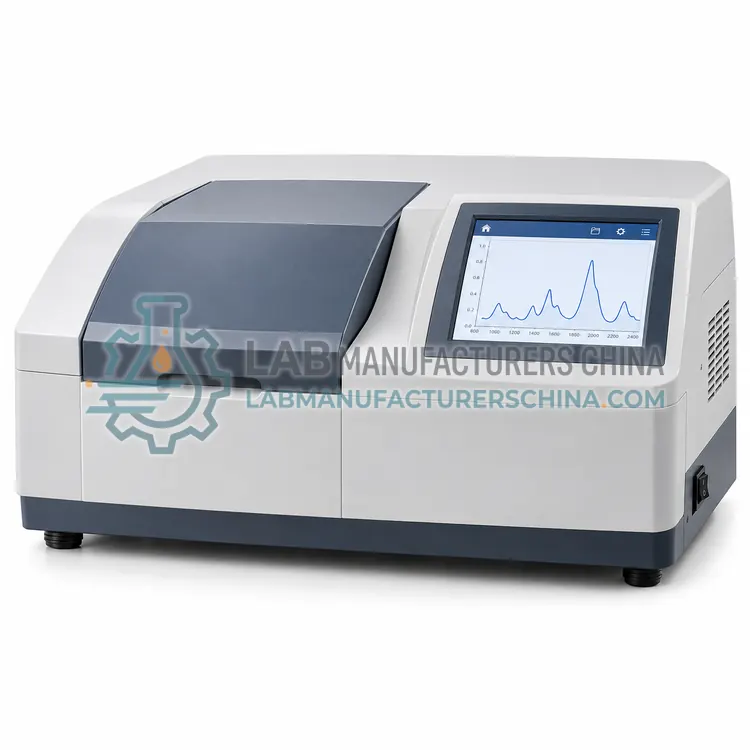
Benchtop FT-NIR Analyzer

台式傅里叶变换近红外分析仪

  • NIR-0001
  • NIR
  • CE (to be confirmed)
  • ISO 9001 manufacturing (to be confirmed)
  • 21 CFR Part 11 software compliance (to be confirmed)
Spectral range:
12500–4000 cm-1
Resolution:
2–16 cm-1 selectable
Wavenumber accuracy:
±0.1 cm-1
Wavenumber reproducibility:
±0.02 cm-1
Detector:
thermoelectrically cooled InGaAs
Interferometer:
Michelson with quartz beamsplitter

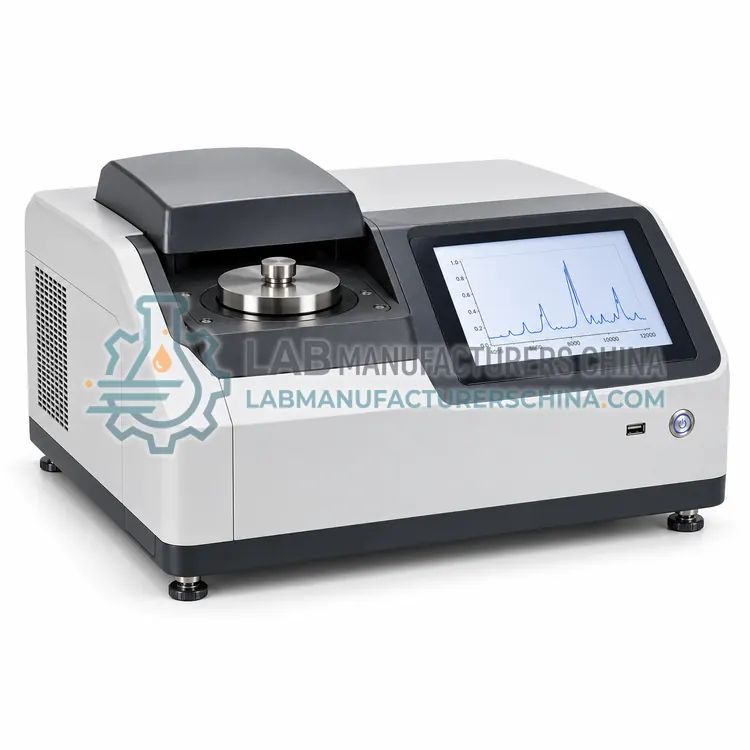
A benchtop FT-NIR analyzer uses an interferometer to record high-resolution near-infrared spectra of powders, liquids and solids. It is the laboratory standard for building and running quantitative calibration models and for raw material identification.

Request a quote
View details

Dispersive Grating NIR Spectrophotometer

色散光栅近红外分光光度计

  • NIR-0002
  • NIR
  • CE (to be confirmed)
  • ISO 9001 manufacturing (to be confirmed)
  • IP65 enclosure option (to be confirmed)
Wavelength range:
900–1700 nm or 1100–2500 nm
Detector:
linear InGaAs photodiode array
Spectral resolution:
5–10 nm
Wavelength accuracy:
±1 nm
Integration time:
1–100 ms
Light source:
tungsten halogen, 20 W

A dispersive grating NIR spectrophotometer uses a fixed grating and a detector array to capture near-infrared spectra quickly and without moving parts. It is chosen for compact, fast and rugged routine analysis and at-line quality checks.

Request a quote
View details

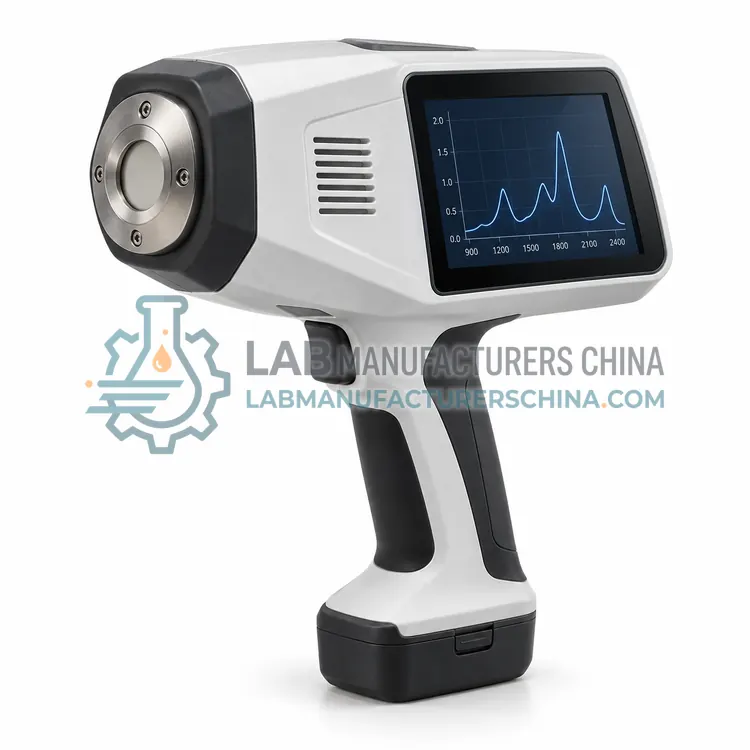
Handheld NIR Analyzer

手持式近红外分析仪

  • NIR-0003
  • NIR
  • CE (to be confirmed)
  • IP65 enclosure rating (to be confirmed)
  • ISO 9001 manufacturing (to be confirmed)
Wavelength range:
900–1700 nm
Spectral resolution:
8–12 nm
Measurement mode:
diffuse reflectance
Measurement time:
< 5 s per sample
Weight:
approximately 1 kg
Battery life:
≥ 8 h typical use

A handheld NIR analyzer is a battery-powered device for point-and-shoot identification and composition checks outside the laboratory. It is chosen for incoming material verification, warehouse screening and field work where samples cannot be brought indoors.

Request a quote
View details

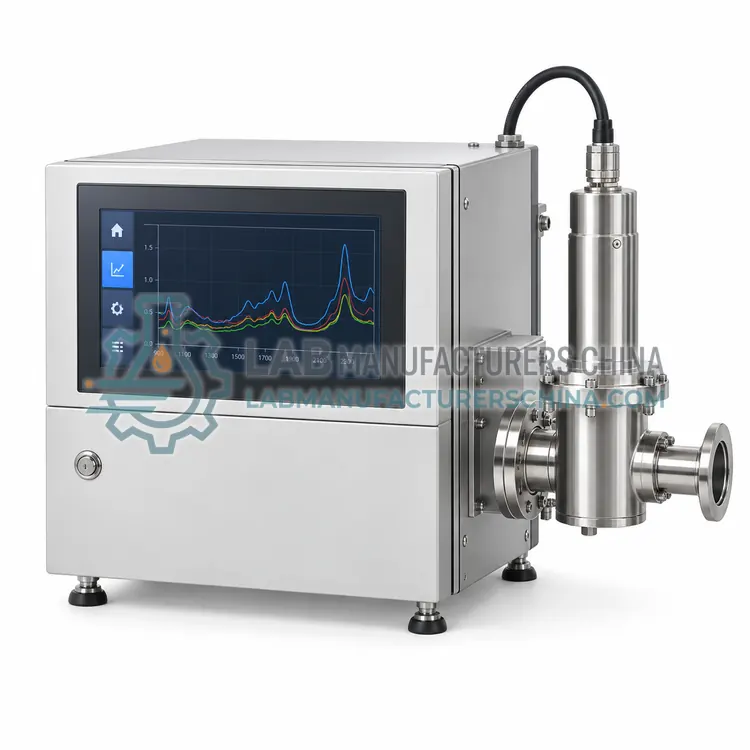
Online NIR Process Analyzer

在线近红外过程分析仪

  • NIR-0004
  • NIR
  • CE (to be confirmed)
  • ATEX hazardous area option (to be confirmed)
  • ISO 9001 manufacturing (to be confirmed)
Spectral range:
1000–2200 nm
Probe path length:
1–20 mm selectable
Fiber optic length:
up to 100 m
Scan interval:
1–60 s
Probe temperature rating:
up to 300 °C
Probe pressure rating:
up to 40 bar

An online NIR process analyzer measures composition continuously through fiber-optic probes installed on reactors, dryers, blenders or pipelines. It is chosen for real-time process control and for reducing laboratory sampling in continuous or batch manufacturing.

Request a quote
View details

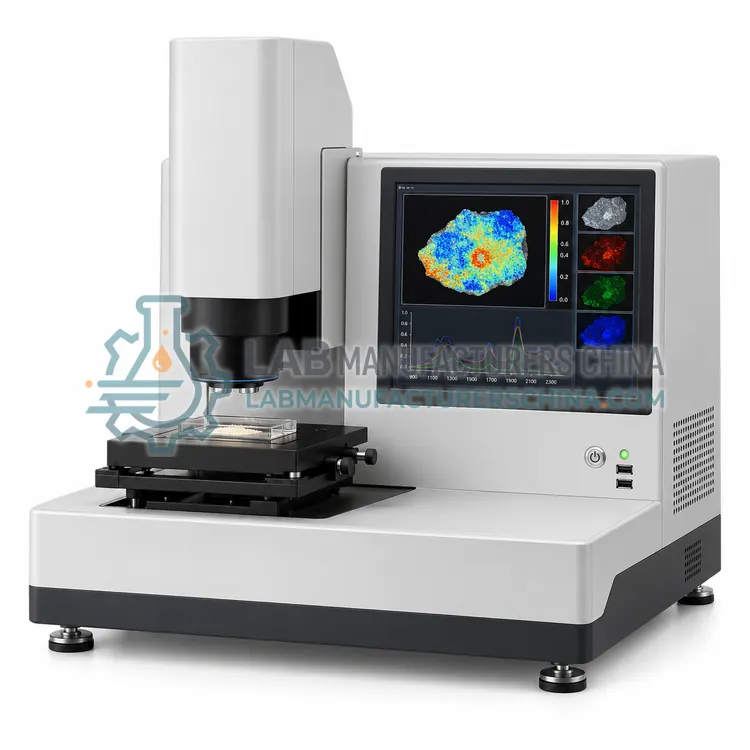
NIR Chemical Imaging System

近红外化学成像系统

  • NIR-0005
  • NIR
  • CE (to be confirmed)
  • ISO 9001 manufacturing (to be confirmed)
  • 21 CFR Part 11 software compliance (to be confirmed)
Spectral range:
1000–2500 nm
Spectral resolution:
5–10 nm
Spatial resolution:
10–200 µm
Field of view:
up to 100 × 100 mm
Detector:
InGaAs focal-plane array
Imaging mode:
pushbroom line scan

An NIR chemical imaging system captures a complete spectrum at every pixel of a sample surface. It is chosen to map ingredient distribution, detect minor components and investigate heterogeneity in tablets, powders and materials.

Request a quote
View details

Compare NIR models

ModelSpectral rangeDetectorSignal-to-noiseMeasurement timeCommunication
Benchtop FT-NIR AnalyzerNIR-000112500–4000 cm-1thermoelectrically cooled InGaAs≥ 10000:1 (peak to peak)10–60 s per spectrumEthernet / USB
Dispersive Grating NIR SpectrophotometerNIR-0002—linear InGaAs photodiode array≥ 3000:1—USB / Ethernet
Handheld NIR AnalyzerNIR-0003———< 5 s per sample—
Online NIR Process AnalyzerNIR-00041000–2200 nm———4–20 mA, Modbus, Ethernet
NIR Chemical Imaging SystemNIR-00051000–2500 nmInGaAs focal-plane array———

Indicative values for this product class. Final specifications are confirmed on the quotation and in the calibration documents supplied with the instrument.

How do NIR work?

Near-infrared spectroscopy probes overtones and combination bands of fundamental molecular vibrations, mainly of hydrogen-bearing groups such as O-H, N-H and C-H. Absorption in this region is weak, so light penetrates millimeters to centimeters into powders, grains and liquids, which allows bulk measurement with little sample preparation. Instruments use a polychromatic source and either a Fourier transform interferometer or a grating with a detector array to record reflectance, transmission or transflectance spectra. Because the bands are broad and overlapping, composition is predicted with multivariate calibration models built from a set of reference samples analyzed by a primary method such as Karl Fischer titration, Kjeldahl nitrogen or HPLC. Models use algorithms such as partial least squares regression and are validated for the specific product, instrument and measurement conditions.

Which NIR variants are available?

  • Benchtop FT-NIR Analyzer — A benchtop FT-NIR analyzer uses an interferometer to record high-resolution near-infrared spectra of powders, liquids and solids.
  • Dispersive Grating NIR Spectrophotometer — A dispersive grating NIR spectrophotometer uses a fixed grating and a detector array to capture near-infrared spectra quickly and without moving parts.
  • Handheld NIR Analyzer — A handheld NIR analyzer is a battery-powered device for point-and-shoot identification and composition checks outside the laboratory.
  • Online NIR Process Analyzer — An online NIR process analyzer measures composition continuously through fiber-optic probes installed on reactors, dryers, blenders or pipelines.
  • NIR Chemical Imaging System — An NIR chemical imaging system captures a complete spectrum at every pixel of a sample surface.

How do I choose the right variant?

Choose a NIR system from the sample form and the regulatory context, because the calibration model is often more valuable than the hardware. Benchtop FT-NIR analyzers suit laboratories that need high resolution and stable performance for many product models. Dispersive grating instruments with array detectors are compact and fast for routine quality checks. Handheld analyzers serve incoming material identification and field work. Process analyzers with fiber-optic probes measure at the reactor, dryer or blender. Chemical imaging systems map heterogeneity. For every option, confirm that validated calibrations exist or can be developed, and check wavelength range, resolution, photometric stability and whether the instrument can transfer models from another site.

Where are NIR used?

NIR are specified in raw material identification at goods receipt, moisture, protein, fat and starch determination in food and feed, pharmaceutical blend uniformity and tablet content monitoring, online polymer, chemical and petrochemical process control, agricultural grain and seed quality grading and textile, paper and material composition screening.

Which standards and certifications apply?

Work with NIR is commonly governed by Ph. Eur. 2.2.40 Near-infrared spectrophotometry, USP <1119> Near-Infrared Spectroscopy, ASTM E1655 Standard Practices for Infrared Multivariate Quantitative Analysis, ISO 12099 Guidelines for the application of near infrared spectrometry, ICH Q2(R2) Validation of analytical procedures, ISO/IEC 17025 and IEC 61010-1. Instrument certifications such as CE marking are confirmed per configuration and never assumed.

What are the key considerations before purchase?

Near-infrared results depend on representative sampling because the measurement volume is small relative to a batch. Sample presentation, particle size, packing density, temperature and moisture all shift spectra, so operators must follow a fixed procedure. Calibration models require ongoing maintenance: performance checks against reference samples, outlier detection, and updating when raw materials, processes or instruments change. Reference analyses must be accurate because model errors persist. Instruments should be qualified and models validated before use, with change control for software and calibration updates. Install units on stable benches or in the plant with protection from vibration, dust and temperature swings.

Frequently asked questions about NIR

FTIR measures fundamental vibrational absorptions in the mid-infrared from about 4000 to 400 cm-1, giving sharp characteristic bands for functional groups. NIR measures weak overtones and combination bands from about 12500 to 4000 cm-1, giving broad overlapping bands suited to quantitative models. FTIR identifies structure; NIR predicts composition in bulk samples.

Need help specifying NIR?

Request a quote