How do Atomic Spectroscopy work?
In atomic spectroscopy a sample is converted into free atoms in a flame, graphite furnace, plasma or hydride generation cell. The atoms absorb or emit light at wavelengths characteristic of each element. Atomic absorption passes a hollow-cathode lamp emission line through the atom cloud and measures the decrease in intensity according to the Beer-Lambert law. Atomic emission excites atoms in a plasma or flame and measures the light they emit as they relax. Atomic fluorescence excites atoms with a source and measures emitted light at a right angle, giving high sensitivity for hydride-forming elements. Inductively coupled plasma sources reach 6000 to 10000 K, atomizing and ionizing most elements; the resulting ions can be counted by mass spectrometry for very low detection limits. Calibration uses series of standards, internal standards, and background and matrix correction.
Which Atomic Spectroscopy variants are available?
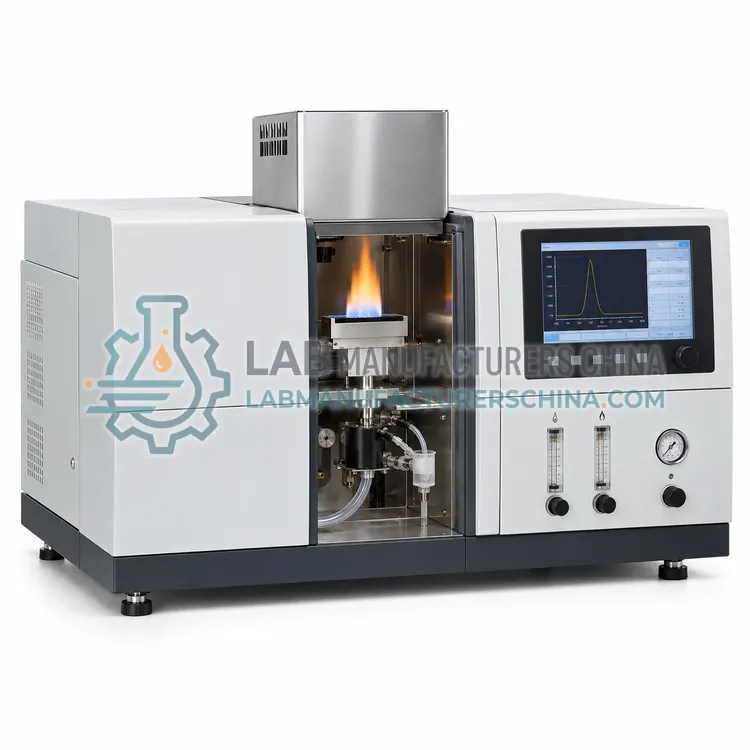
- Flame Atomic Absorption Spectrometer — A flame atomic absorption spectrometer atomizes samples in an acetylene flame and measures atomic absorption.
- Graphite Furnace Atomic Absorption Spectrometer — A graphite furnace atomic absorption spectrometer atomizes microlitre samples electrothermally inside a graphite tube.
- Inductively Coupled Plasma Optical Emission Spectrometer — An ICP-OES atomizes samples in an argon plasma and measures the light emitted by excited atoms and ions.
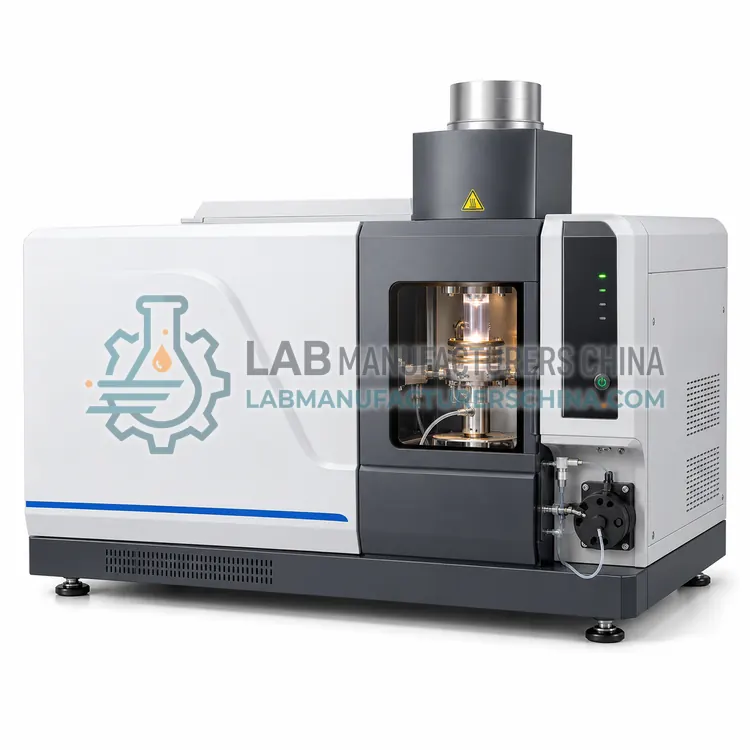
- Inductively Coupled Plasma Mass Spectrometer — An ICP-MS ionizes samples in an argon plasma and measures ions by mass spectrometry.
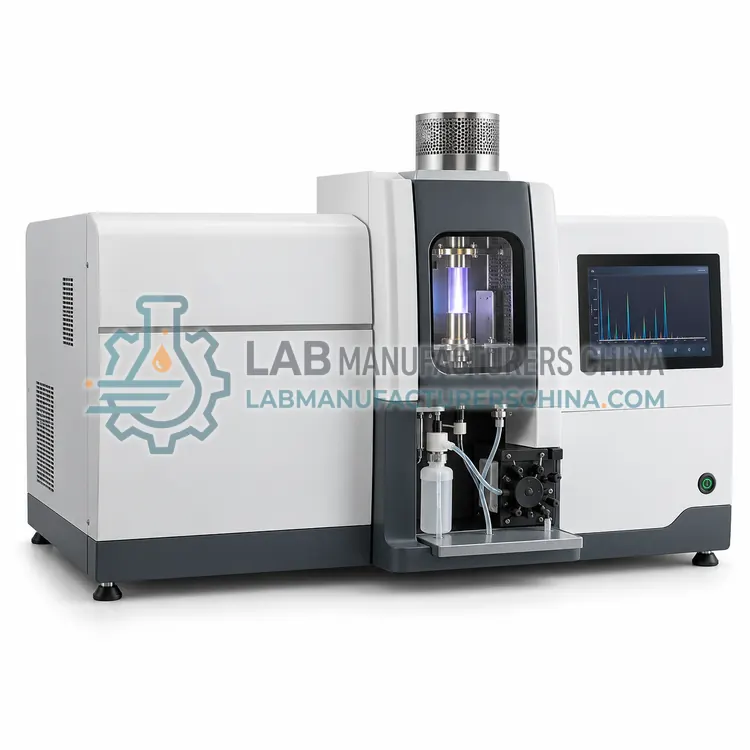
- Atomic Fluorescence Spectrometer for Hydride-Forming Elements — An atomic fluorescence spectrometer generates volatile hydrides and measures the fluorescence of the resulting atoms.
- Microwave Plasma Atomic Emission Spectrometer — A microwave plasma atomic emission spectrometer uses a nitrogen-fed plasma to excite elements for atomic emission.
How do I choose the right variant?
Choose the atomic technique by element, concentration and matrix. Flame atomic absorption is simple, robust and suited to milligram per litre levels in routine water, soil and metal samples. Graphite furnace atomic absorption reaches microgram per litre and below for a limited number of elements with small sample volumes. Inductively coupled plasma optical emission handles multi-element analysis at microgram per litre to percent levels with wide linear range. Inductively coupled plasma mass spectrometry reaches nanogram per litre and below for most elements and can measure isotopes. Atomic fluorescence is efficient for mercury, arsenic, selenium and antimony after hydride generation. Microwave plasma emission is an alternative to flame for some elements using nitrogen instead of acetylene. Confirm required detection limits, sample throughput, number of elements and available gases before selecting.
Where are Atomic Spectroscopy used?
Atomic Spectroscopy are specified in elemental impurity testing of pharmaceutical materials, trace metals in drinking water, wastewater and soil, food safety and nutritional element analysis, metals, alloys and industrial material certification, geological, mining and exploration assays and clinical and toxicological trace element measurement.
Which standards and certifications apply?
Work with Atomic Spectroscopy is commonly governed by USP <730> Plasma Spectrochemistry, USP <233> Elemental Impurities — Procedures, ICH Q3D Elemental Impurities, ISO 11885 Water quality — ICP-OES determination of elements, ISO 17294-2 Water quality — ICP-MS determination of elements, US EPA Method 200.7, US EPA Method 200.8, ISO/IEC 17025 and IEC 61010-1. Instrument certifications such as CE marking are confirmed per configuration and never assumed.
What are the key considerations before purchase?
Atomic spectroscopy installations need gas supplies, extraction and, for plasma systems, argon of high purity and substantial electrical power. Acetylene and nitrous oxide require proper regulators, flashback arrestors and ventilation. Sample preparation by acid digestion is a major source of error and contamination, so ultrapure acids and clean vessels are essential. Hollow-cathode lamps have limited life and may need warm-up and alignment. Background correction, internal standards and matrix matching control interferences from easily ionized elements, molecular species and viscosity. Verify performance daily with calibration standards and check stability with a continuing calibration verification. Maintain service records and monitor lamp, torch and graphite tube usage.