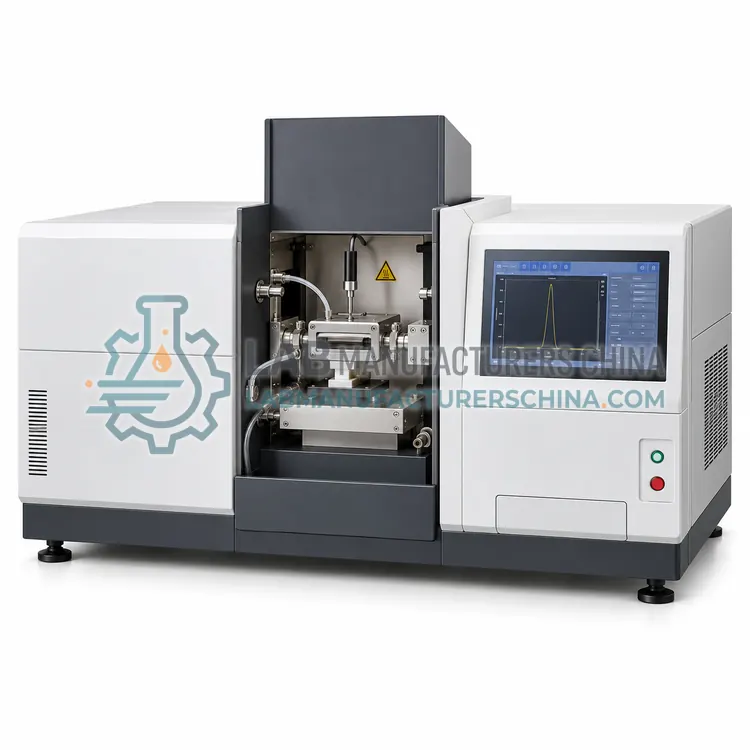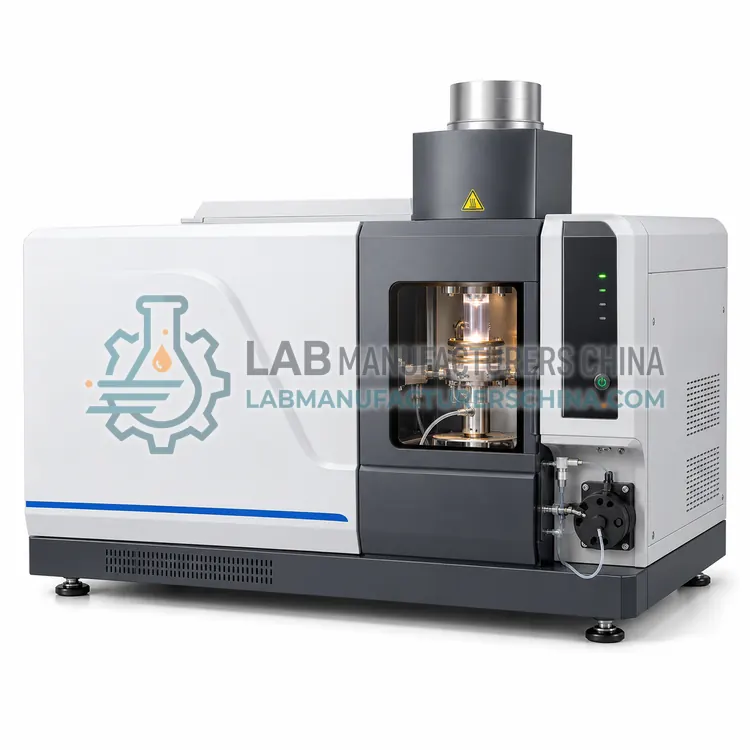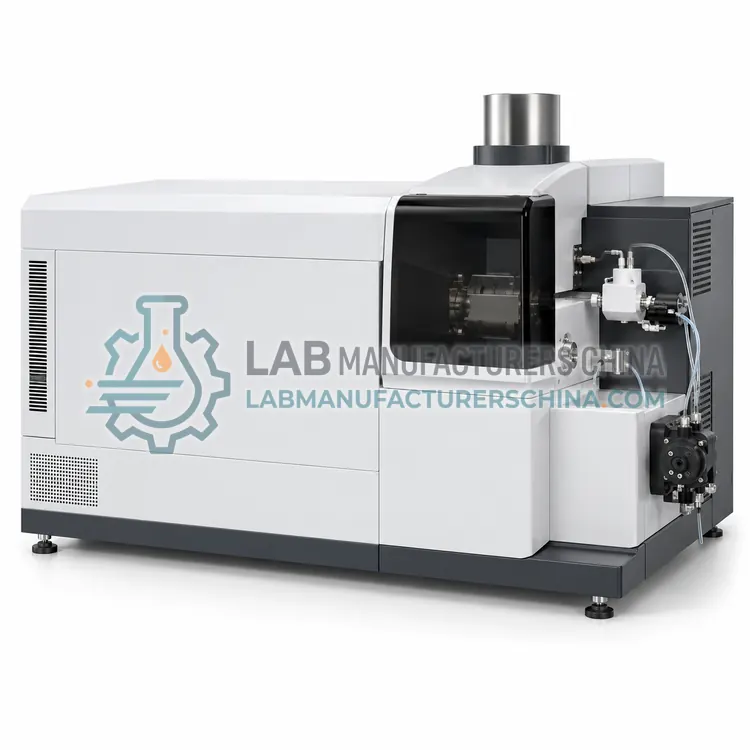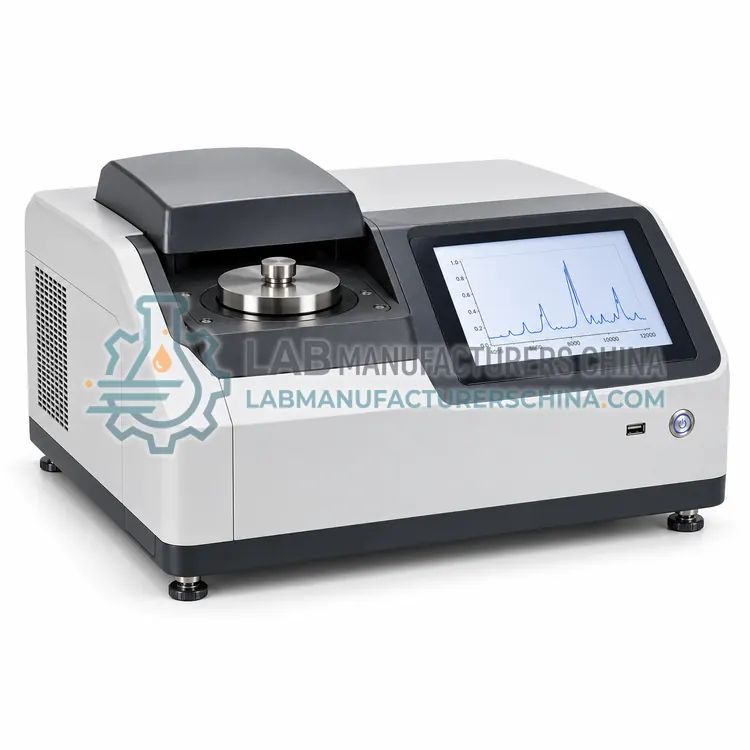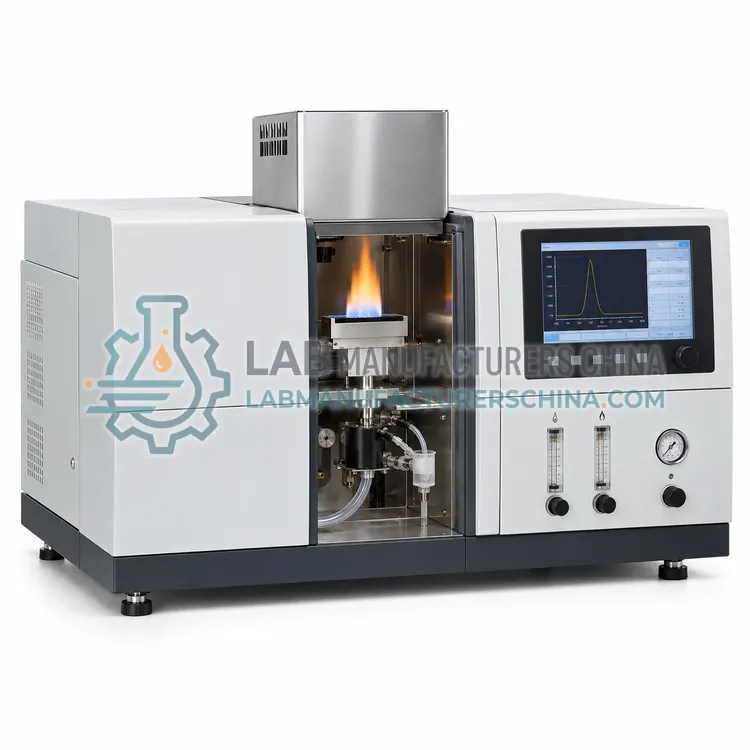
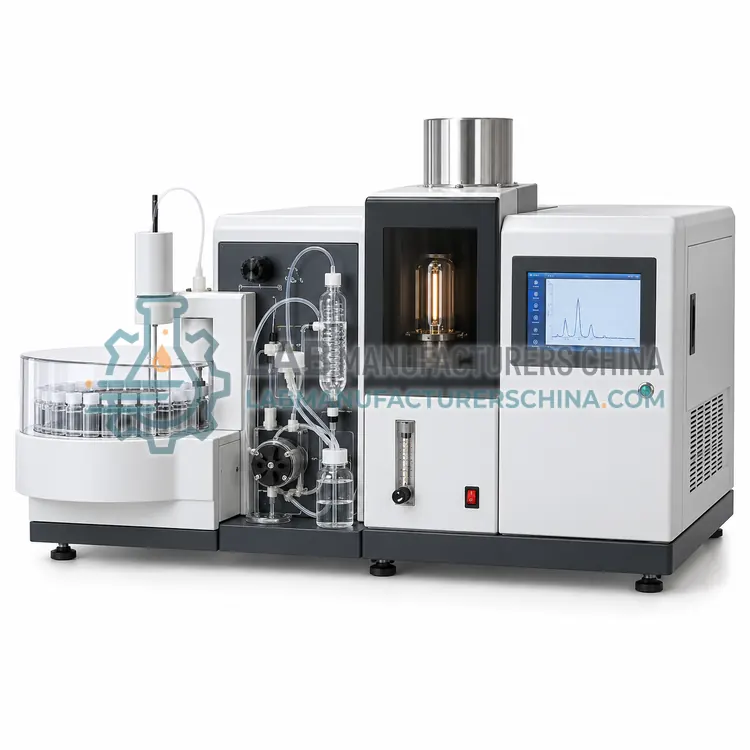
Atomic Fluorescence Spectrometer for Hydride-Forming Elements
氢化物发生原子荧光光谱仪
- SKU ATS-0005
- Atomic Spectroscopy
- CE (to be confirmed)
- ISO 9001 manufacturing (to be confirmed)
- IEC 61010-1 safety compliance (to be confirmed)
Price on request — FOB / CIF quoted per order
Prices depend on configuration, quantity and destination port.
Key specifications
| Elements | As, Hg, Se, Sb, Bi, Sn, Te |
|---|---|
| Detection limit | 0.01–0.5 µg/L |
| Light source | hollow-cathode lamp |
| Atomization | quartz tube at 200–900 °C |
| Detection | photomultiplier, right angle |
| Reductant | sodium borohydride or tin chloride |
Request a quote Download brochure · to be provided
By Lab Manufacturers China Technical TeamLast reviewed Standards: USP <730> Plasma Spectrochemistry, USP <233> Elemental Impurities — Procedures, ICH Q3D Elemental Impurities
What is the Atomic Fluorescence Spectrometer for Hydride-Forming Elements?
An atomic fluorescence spectrometer generates volatile hydrides and measures the fluorescence of the resulting atoms. It is chosen for sensitive, low-cost trace determination of mercury, arsenic, selenium, antimony, bismuth and tin in food, water and geological samples.
What is the Atomic Fluorescence Spectrometer for Hydride-Forming Elements?
An atomic fluorescence spectrometer generates volatile hydrides and measures the fluorescence of the resulting atoms. It is chosen for sensitive, low-cost trace determination of mercury, arsenic, selenium, antimony, bismuth and tin in food, water and geological samples.
Overview
This instrument converts analytes into volatile hydrides with sodium borohydride and acid, or into cold mercury vapor by reduction, then sweeps them into an atomizer such as a quartz tube or a small flame. A hollow-cathode or specially designed lamp excites the atoms, and the emitted fluorescence is detected at a right angle by a photomultiplier, which results in very low background and high sensitivity. Because the hydride generation step separates the analyte from most of the matrix, spectral interferences are limited and detection limits reach nanograms per litre. Instruments often measure several hydride-forming elements by changing lamps and reagents, and can be automated with continuous-flow or flow-injection manifolds. The technique is widely used for arsenic and mercury in food, water and geological samples, where it competes with ICP-MS at substantially lower cost.
How does it work?
In atomic spectroscopy a sample is converted into free atoms in a flame, graphite furnace, plasma or hydride generation cell. The atoms absorb or emit light at wavelengths characteristic of each element. Atomic absorption passes a hollow-cathode lamp emission line through the atom cloud and measures the decrease in intensity according to the Beer-Lambert law. Atomic emission excites atoms in a plasma or flame and measures the light they emit as they relax. Atomic fluorescence excites atoms with a source and measures emitted light at a right angle, giving high sensitivity for hydride-forming elements. Inductively coupled plasma sources reach 6000 to 10000 K, atomizing and ionizing most elements; the resulting ions can be counted by mass spectrometry for very low detection limits. Calibration uses series of standards, internal standards, and background and matrix correction.
What are the key features?
- Hydride generation and cold vapor mercury modes
- Right-angle fluorescence detection for low background
- Replaceable hollow-cathode or boosted-discharge lamps
- Continuous-flow or flow-injection automation
- Quartz tube atomizer with argon shielding
- Multi-element capability by lamp and reagent change
What are the technical specifications?
A typical atomic fluorescence spectrometer for hydride-forming elements configuration offers elements of As, Hg, Se, Sb, Bi, Sn, Te, detection limit of 0.01–0.5 µg/L, light source of hollow-cathode lamp, atomization of quartz tube at 200–900 °C, detection of photomultiplier, right angle and reductant of sodium borohydride or tin chloride. Values are indicative of the product class; the exact figures for each configuration are confirmed on the quotation and the calibration documents supplied with the instrument.
Which applications is it used for?
The Atomic Fluorescence Spectrometer for Hydride-Forming Elements is used in arsenic and mercury in rice, seafood and food, trace arsenic and selenium in drinking water, mercury in soil, sediment and geological samples and clinical and environmental toxicology screening. Across the wider Atomic Spectroscopy class, laboratories also deploy it for elemental impurity testing of pharmaceutical materials, trace metals in drinking water, wastewater and soil and food safety and nutritional element analysis.
Which standards and certifications apply?
Relevant standards and methods include USP <730> Plasma Spectrochemistry, USP <233> Elemental Impurities — Procedures, ICH Q3D Elemental Impurities, ISO 11885 Water quality — ICP-OES determination of elements, ISO 17294-2 Water quality — ICP-MS determination of elements, US EPA Method 200.7, US EPA Method 200.8, ISO/IEC 17025 and IEC 61010-1. Certification candidates for this model are CE, ISO 9001 manufacturing and IEC 61010-1 safety compliance; each is to be confirmed for the specific configuration before shipment, and certificates are supplied only where they have been issued.
Atomic spectroscopy installations need gas supplies, extraction and, for plasma systems, argon of high purity and substantial electrical power. Acetylene and nitrous oxide require proper regulators, flashback arrestors and ventilation. Sample preparation by acid digestion is a major source of error and contamination, so ultrapure acids and clean vessels are essential. Hollow-cathode lamps have limited life and may need warm-up and alignment. Background correction, internal standards and matrix matching control interferences from easily ionized elements, molecular species and viscosity. Verify performance daily with calibration standards and check stability with a continuing calibration verification. Maintain service records and monitor lamp, torch and graphite tube usage.
How do I select the right Atomic Fluorescence Spectrometer for Hydride-Forming Elements?
Select an atomic fluorescence spectrometer when the target list consists of hydride-forming elements and the lowest possible cost per test matters, as in routine food and water testing. Specify the elements, required detection limits and throughput. Confirm that argon, acid-resistant plumbing and reductant preparation are available, and that the autosampler supports the reagent volumes used.
How does it compare with other Atomic Spectroscopy variants?
Choose the atomic technique by element, concentration and matrix. Flame atomic absorption is simple, robust and suited to milligram per litre levels in routine water, soil and metal samples. Graphite furnace atomic absorption reaches microgram per litre and below for a limited number of elements with small sample volumes. Inductively coupled plasma optical emission handles multi-element analysis at microgram per litre to percent levels with wide linear range. Inductively coupled plasma mass spectrometry reaches nanogram per litre and below for most elements and can measure isotopes. Atomic fluorescence is efficient for mercury, arsenic, selenium and antimony after hydride generation. Microwave plasma emission is an alternative to flame for some elements using nitrogen instead of acetylene. Confirm required detection limits, sample throughput, number of elements and available gases before selecting.
Full specifications
| Elements | As, Hg, Se, Sb, Bi, Sn, Te |
|---|---|
| Detection limit | 0.01–0.5 µg/L |
| Light source | hollow-cathode lamp |
| Atomization | quartz tube at 200–900 °C |
| Detection | photomultiplier, right angle |
| Reductant | sodium borohydride or tin chloride |
| Carrier gas | argon 200–800 mL/min |
| Sampling | continuous flow or flow injection |
| Measurement time | 20–60 s per sample |
| Interface | USB / RS-232 |
Indicative values for this product class. Final specifications are confirmed on the quotation and in the calibration documents supplied with the instrument.
Applications
- Arsenic and mercury in rice, seafood and food
- Trace arsenic and selenium in drinking water
- Mercury in soil, sediment and geological samples
- Clinical and environmental toxicology screening
Key features
- Hydride generation and cold vapor mercury modes
- Right-angle fluorescence detection for low background
- Replaceable hollow-cathode or boosted-discharge lamps
- Continuous-flow or flow-injection automation
- Quartz tube atomizer with argon shielding
- Multi-element capability by lamp and reagent change
Frequently asked questions about Atomic Fluorescence Spectrometer for Hydride-Forming Elements
Hydride generation separates the analyte from the bulk matrix into a gas phase, greatly reducing interference, and fluorescence is measured against a dark background at 90 degrees to the excitation beam. Together these give very high sensitivity at nanogram per litre levels for arsenic, selenium and mercury at low instrument cost.
The method suits elements that form volatile hydrides with sodium borohydride: arsenic, selenium, antimony, bismuth, tin and tellurium. Mercury is measured by cold vapor generation instead. Other elements require different techniques such as AAS, ICP-OES or ICP-MS, and some can be measured after chemical vapor generation from their organometallic forms.
Acid type and concentration, sodium borohydride concentration and flow, reaction temperature and carrier gas flow all affect hydride yield. Interfering ions such as copper, nickel and cobalt can suppress generation, so masking agents or matrix matching are used. Because conditions are critical, all reagents should be prepared consistently and checked with standards.
Choose flame AAS for a few elements at milligram per litre levels with simple, low-cost operation. Choose graphite furnace AAS for microgram per litre trace levels with small samples. Choose ICP-OES for simultaneous multi-element work from microgram per litre to percent. Choose ICP-MS when the lowest detection limits or isotope ratios are required, accepting higher cost and matrix sensitivity.
Atomization produces smoke, molecular species and scattering that absorb or emit light unrelated to the analyte, which biases results if uncorrected. Deuterium, Zeeman or Smith-Hieftje correction subtracts these contributions. Matrix modifiers and standard addition further reduce structured background, particularly in graphite furnace analyses of complex samples.
Most samples need digestion or extraction to release the analytes and reduce matrix effects. Acid digestion in a closed vessel or microwave system is common, followed by dilution to a suitable acid concentration. Clean vessels, ultrapure reagents and method blanks control contamination. Solid samples measured by graphite furnace may need only suspension or slurry preparation in some methods.