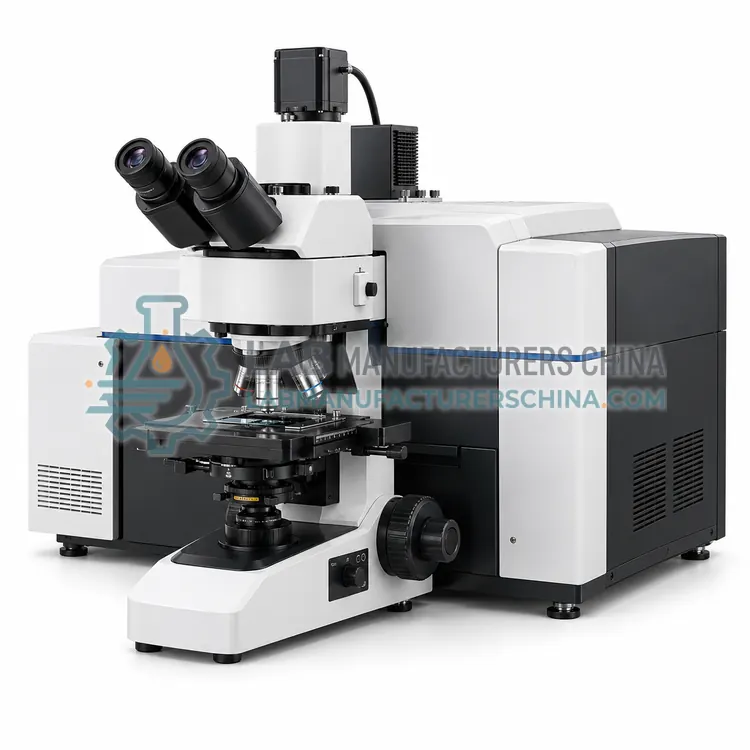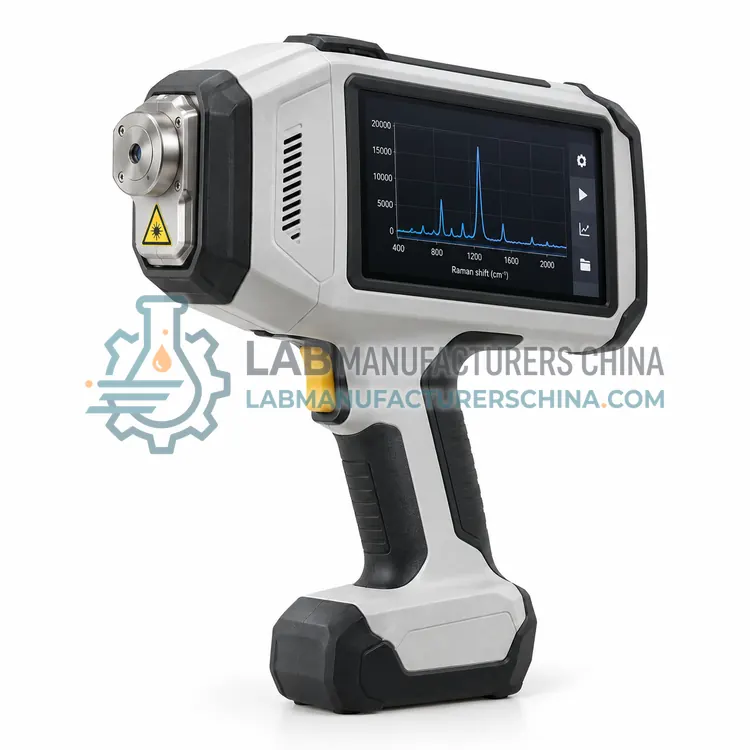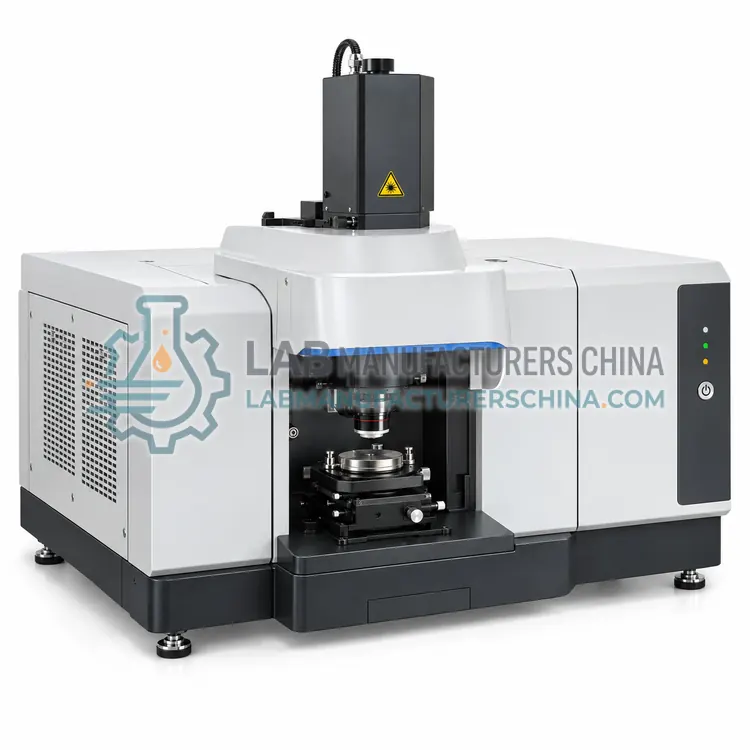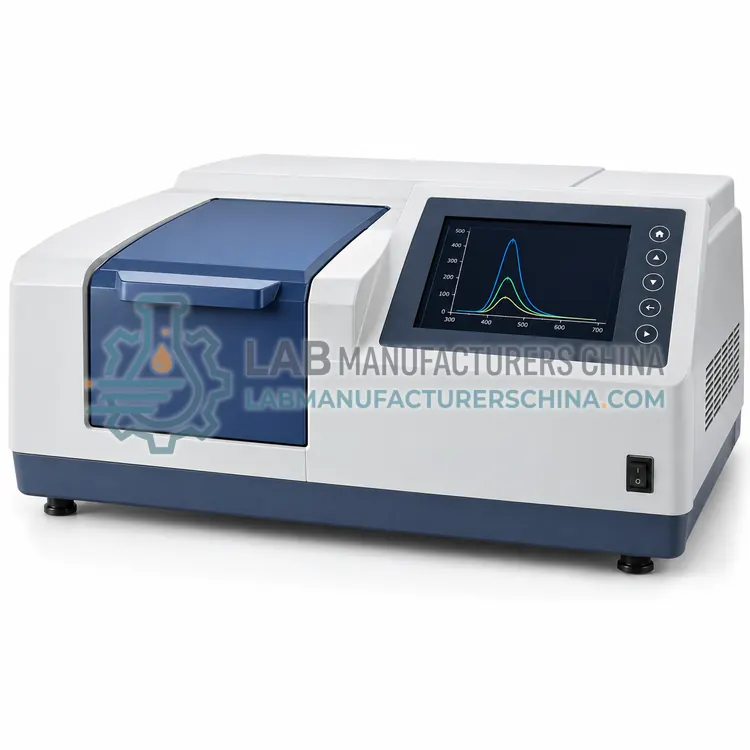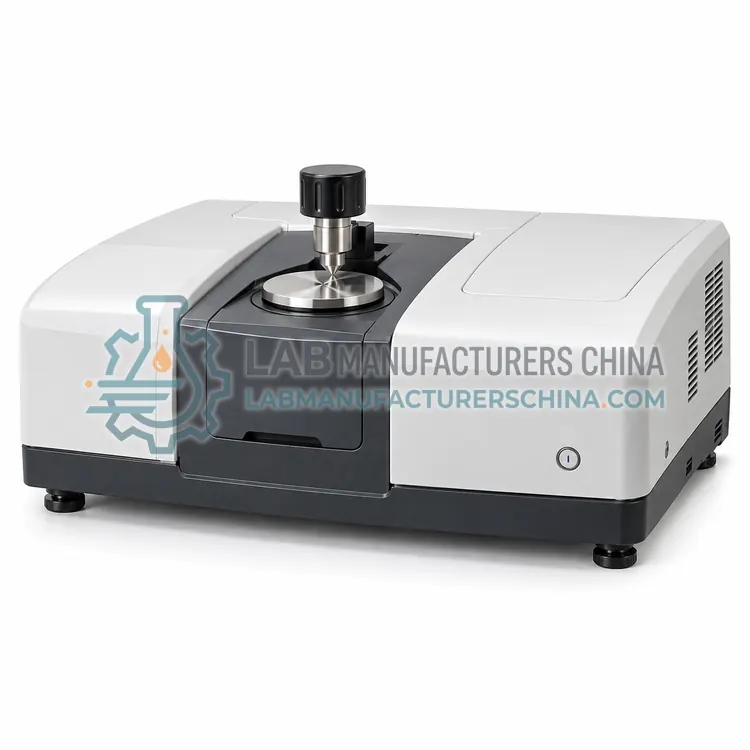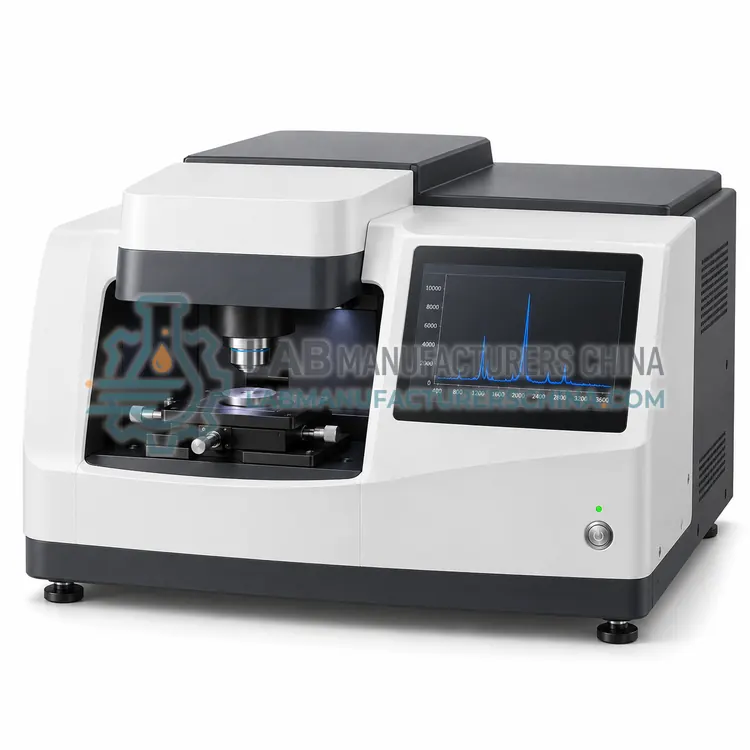
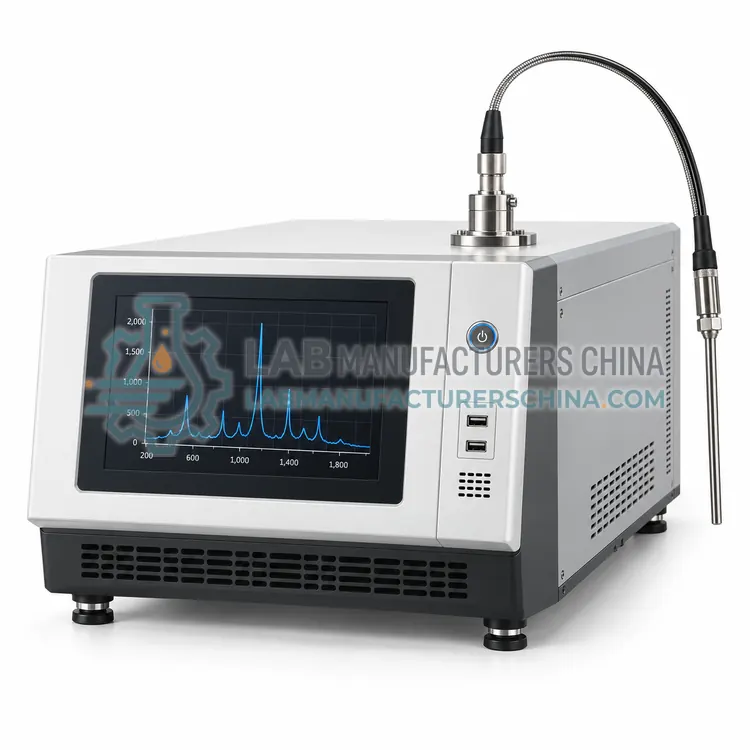
Fiber-Optic Probe Raman Analyzer for Process Monitoring
用于过程监测的光纤探头拉曼分析仪
- SKU RAM-0005
- Raman
- CE (to be confirmed)
- ATEX/IECEx for hazardous areas (to be confirmed)
- ISO 9001 manufacturing (to be confirmed)
Price on request — FOB / CIF quoted per order
Prices depend on configuration, quantity and destination port.
Key specifications
| Laser wavelength | 785 nm or 532 nm |
|---|---|
| Laser power (at probe) | Up to 450 mW |
| Fiber length | 5–100 m |
| Spectral range | 100–3400 cm-1 |
| Spectral resolution | 4–6 cm-1 |
| Probe temperature | −40 to 200 °C |
Request a quote Download brochure · to be provided
By Lab Manufacturers China Technical TeamLast reviewed Standards: ASTM E1840, ASTM E2529, ASTM E2911
What is the Fiber-Optic Probe Raman Analyzer for Process Monitoring?
A fiber-optic probe Raman analyzer connects a remote immersion or non-contact probe to a rack-mounted spectrometer to monitor reactions, fermentations and crystallizations in real time. It provides multi-component concentration trends without sampling, supporting process analytical technology in pharmaceutical and chemical plants.
What is the Fiber-Optic Probe Raman Analyzer for Process Monitoring?
A fiber-optic probe Raman analyzer connects a remote immersion or non-contact probe to a rack-mounted spectrometer to monitor reactions, fermentations and crystallizations in real time. It provides multi-component concentration trends without sampling, supporting process analytical technology in pharmaceutical and chemical plants.
Overview
The process Raman analyzer uses a 785 nm or 532 nm laser delivered through a 5–100 m fiber to an immersion probe with a sapphire or fused-silica window, which can be installed through a port in a reactor or flow cell. Return fibers carry scattered light to a rack-mounted spectrograph with a cooled CCD. Spectra are collected every 5–60 seconds and converted to concentration or conversion values using chemometric models such as PLS. Probes are available in stainless steel and Hastelloy for temperature up to 200 °C and pressure up to 100 bar. Non-contact optics with working distances up to 500 mm are used for slurries and through-window monitoring. Units are built into cabinets with purge options for hazardous areas, and communicate with control systems by OPC or Modbus. Model development and maintenance require chemometric expertise.
How does it work?
When monochromatic laser light hits a sample, most photons scatter elastically, but about one in 10 million scatters inelastically with an energy shift equal to a vibrational energy of the molecule. This Raman shift, reported in cm-1, produces a spectrum of peaks characteristic of chemical bonds and crystal structure. A Raman spectrometer consists of a laser such as 532, 633, 785 or 1064 nm, focusing and collection optics, a notch or edge filter that rejects Rayleigh scattering, a dispersive spectrograph with CCD detector or an FT interferometer, and software. Shorter laser wavelengths give stronger signals but can excite fluorescence, while 785 and 1064 nm reduce fluorescence at lower signal. Polarization, confocal pinholes and surface enhancement increase selectivity and sensitivity, and calibration with standards such as silicon at 520.7 cm-1 and acetaminophen ensures accurate shifts.
What are the key features?
- Remote immersion probe with sapphire window tolerates 200 °C and 100 bar.
- Fibers of 5–100 m separate the analyzer from the reactor area.
- Non-contact optic enables through-window and slurry measurements.
- Spectra every 5 to 60 seconds for real-time conversion trends.
- Chemometric software builds PLS models for concentration and polymorph.
- OPC and Modbus interfaces integrate with process control systems.
What are the technical specifications?
A typical fiber-optic probe raman analyzer for process monitoring configuration offers laser wavelength of 785 nm or 532 nm, laser power (at probe) of Up to 450 mW, fiber length of 5–100 m, spectral range of 100–3400 cm-1, spectral resolution of 4–6 cm-1 and probe temperature of −40 to 200 °C. Values are indicative of the product class; the exact figures for each configuration are confirmed on the quotation and the calibration documents supplied with the instrument.
Which applications is it used for?
The Fiber-Optic Probe Raman Analyzer for Process Monitoring is used in pharmaceutical crystallization monitoring, bioprocess and fermentation monitoring, reaction endpoint determination, polymerization conversion tracking and blending and hydrate formation. Across the wider Raman class, laboratories also deploy it for pharmaceutical raw material identification, polymorph and API form analysis and carbon nanomaterials and graphene characterization.
Which standards and certifications apply?
Relevant standards and methods include ASTM E1840, ASTM E2529, ASTM E2911, USP <1120>, Ph. Eur. 2.2.48, IEC 60825-1 and ISO 17025. Certification candidates for this model are CE, ATEX/IECEx for hazardous areas and ISO 9001 manufacturing; each is to be confirmed for the specific configuration before shipment, and certificates are supplied only where they have been issued.
Operate Raman systems in rooms with controlled ambient light or use an enclosed sample compartment, since stray light raises the baseline. Treat lasers according to IEC 60825-1 classifications and use interlocks and protective eyewear where open beams are possible. Check wavenumber calibration daily with silicon and intensity response with a standard material, and track laser power drift. Avoid burning dark or absorbing samples by reducing power and using rastering or defocusing. Cooled CCD detectors need stable temperature, and dust should be kept off optics. Maintain spectral libraries and validate identification methods against known references, especially for regulated raw material identification.
How do I select the right Fiber-Optic Probe Raman Analyzer for Process Monitoring?
Select a fiber-optic process Raman analyzer when real-time, non-invasive monitoring of a reaction or crystallization is needed. It requires calibration models and cannot replace laboratory methods for regulatory release. In an RFQ, specify laser wavelength, fiber length, probe material and ratings, hazardous-area requirements and control interface.
How does it compare with other Raman variants?
Choose a Raman spectrometer based on the sample's fluorescence behavior, spatial scale and operating environment. Laser wavelength is the first decision: 532 nm for strong signal from inorganics and carbon, 785 nm for general organics and pharmaceuticals, and 1064 nm for highly fluorescent or colored samples. Bulk identification can use a benchtop or handheld instrument, while samples smaller than 100 µm or requiring depth profiling and mapping need a confocal Raman microscope. Process monitoring requires a fiber-optic probe and a robust enclosure. Compare spectral resolution of 2–6 cm-1, spectral range, laser power, detector cooling and library options. Consider laser safety class, sample heating risk and compliance with 21 CFR Part 11 in regulated laboratories.
Full specifications
| Laser wavelength | 785 nm or 532 nm |
|---|---|
| Laser power (at probe) | Up to 450 mW |
| Fiber length | 5–100 m |
| Spectral range | 100–3400 cm-1 |
| Spectral resolution | 4–6 cm-1 |
| Probe temperature | −40 to 200 °C |
| Probe pressure | Up to 100 bar |
| Probe material | 316L stainless steel or Hastelloy |
| Acquisition interval | 5–60 s |
| Control interface | OPC, Modbus TCP, 4–20 mA |
Indicative values for this product class. Final specifications are confirmed on the quotation and in the calibration documents supplied with the instrument.
Applications
- Pharmaceutical crystallization monitoring
- Bioprocess and fermentation monitoring
- Reaction endpoint determination
- Polymerization conversion tracking
- Blending and hydrate formation
Key features
- Remote immersion probe with sapphire window tolerates 200 °C and 100 bar.
- Fibers of 5–100 m separate the analyzer from the reactor area.
- Non-contact optic enables through-window and slurry measurements.
- Spectra every 5 to 60 seconds for real-time conversion trends.
- Chemometric software builds PLS models for concentration and polymorph.
- OPC and Modbus interfaces integrate with process control systems.
Frequently asked questions about Fiber-Optic Probe Raman Analyzer for Process Monitoring
Process Raman monitors concentrations, reaction conversion, polymorph transitions and crystallization in real time using a probe in the vessel or flow line. It supports process analytical technology by reducing sampling and giving immediate feedback for control.
Spectra are collected together with reference values from HPLC or titration across the expected process range, then PLS or other chemometric models are fitted and validated on independent data. Models need periodic verification and updating when conditions change.
Yes, if the laser and spectrometer are located in a safe area or in a certified purged enclosure and only optical fiber enters the hazardous zone. Fiber power and probe materials must meet local ATEX or IECEx requirements and be verified.
Raman spectroscopy identifies materials from their vibrational fingerprint. It is used for raw material identification, polymorph screening, carbon nanomaterial characterization, mineral and gemstone ID, forensic analysis and process monitoring, and it often works through glass or plastic containers.
Use 532 nm for strong signals from inorganics and carbon, 785 nm as a good balance for organics and pharmaceuticals, and 1064 nm to avoid fluorescence in colored or biological samples. Shorter wavelengths give stronger scattering, since intensity scales with 1/λ4.
Fluorescence is usually much stronger than Raman scattering and produces a broad background that can swamp Raman peaks. Switching to a longer excitation wavelength, using photobleaching, time gating or baseline correction reduces this interference.
Related models