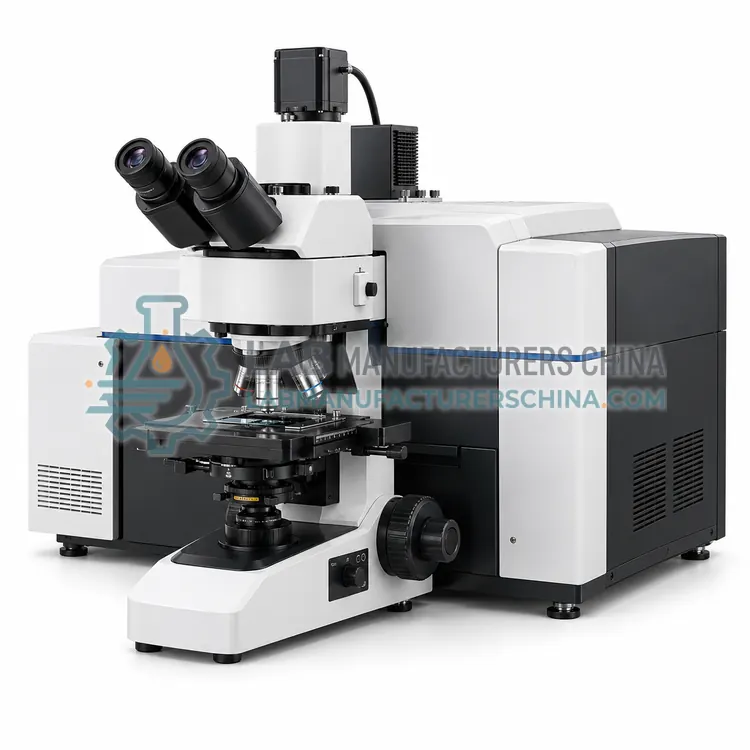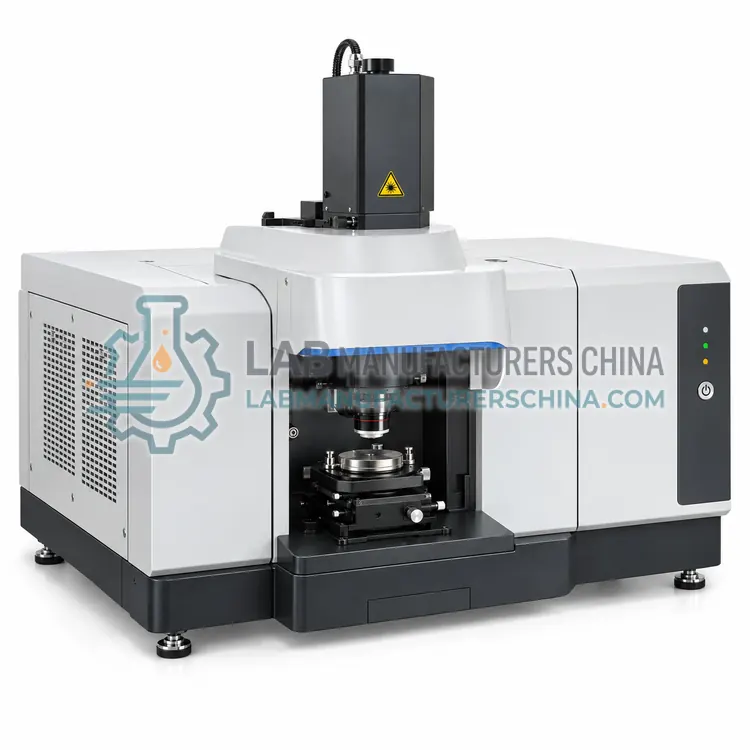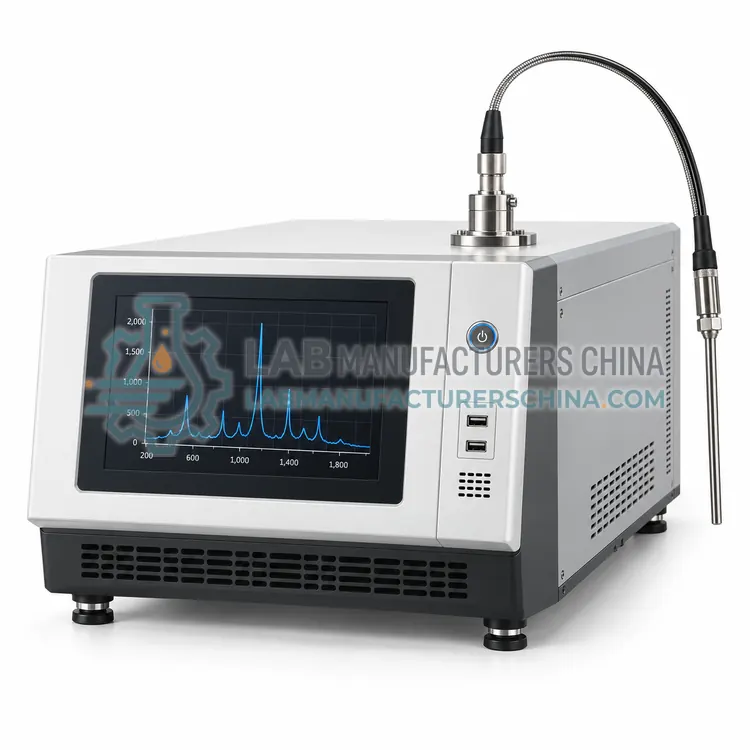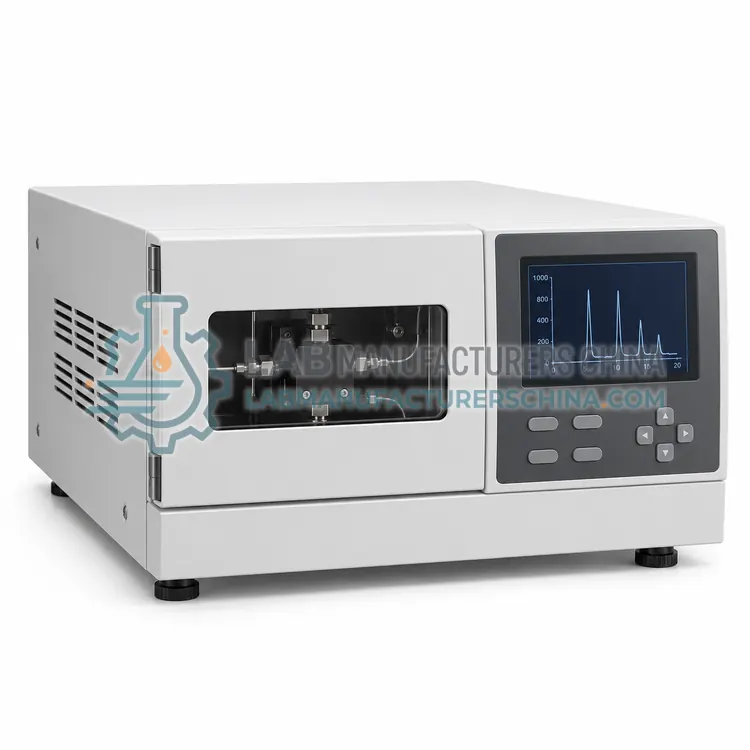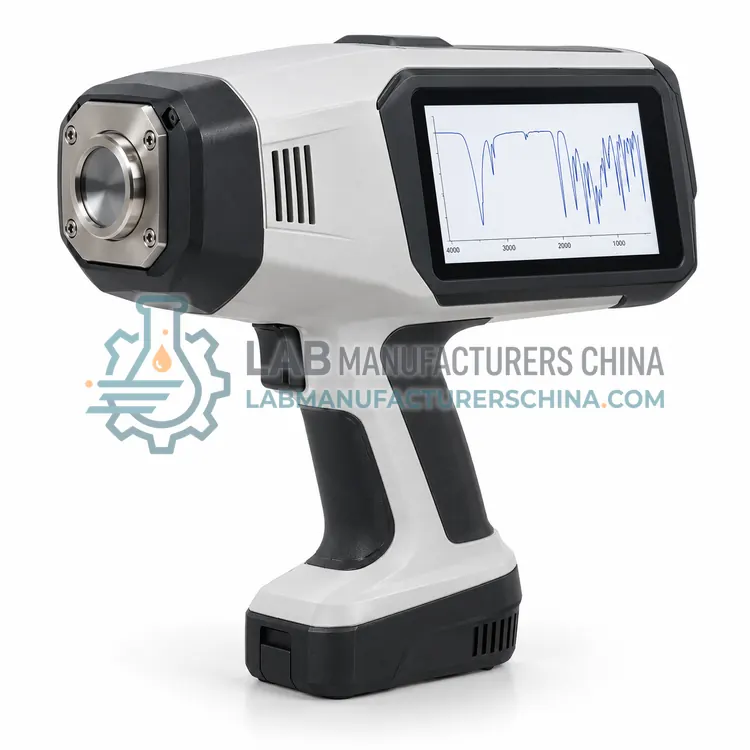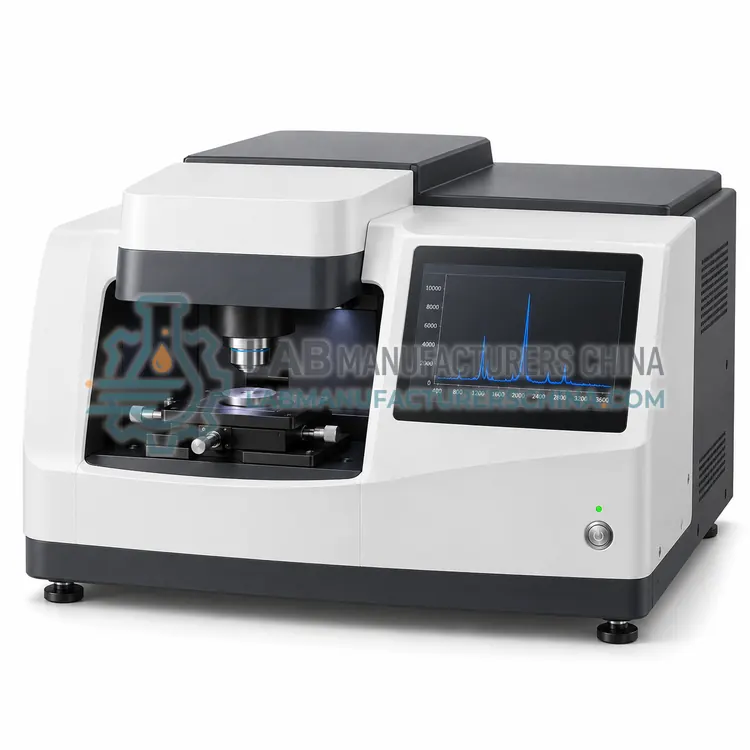
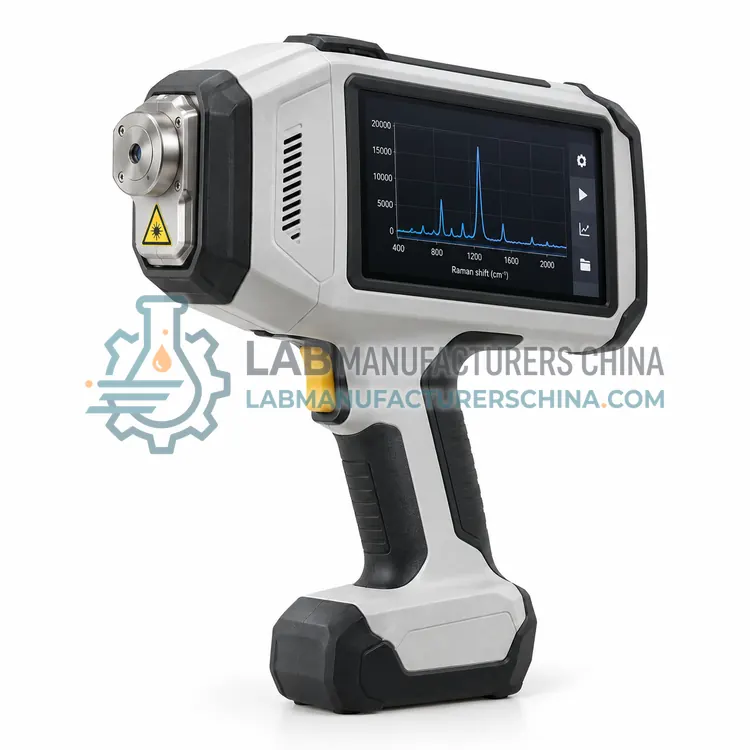
Handheld Raman Analyzer
手持式拉曼分析仪
- SKU RAM-0003
- Raman
- CE (to be confirmed)
- IEC 60825-1 (to be confirmed)
- MIL-STD-810 environmental testing (to be confirmed)
Price on request — FOB / CIF quoted per order
Prices depend on configuration, quantity and destination port.
Key specifications
| Laser wavelength | 785 nm or 1064 nm |
|---|---|
| Laser power | Up to 500 mW |
| Spectral range | 250–2875 cm-1 |
| Spectral resolution | 8–12 cm-1 |
| Measurement time | 5–30 s typical |
| Weight | 0.6–2.0 kg |
Request a quote Download brochure · to be provided
By Lab Manufacturers China Technical TeamLast reviewed Standards: ASTM E1840, ASTM E2529, ASTM E2911
What is the Handheld Raman Analyzer?
A handheld Raman analyzer is a battery-powered, ruggedized instrument with a built-in laser and spectral library for on-site material identification. It is used by pharmaceutical receiving teams, customs, security and field chemists to identify substances in under 30 seconds, often through packaging.
What is the Handheld Raman Analyzer?
A handheld Raman analyzer is a battery-powered, ruggedized instrument with a built-in laser and spectral library for on-site material identification. It is used by pharmaceutical receiving teams, customs, security and field chemists to identify substances in under 30 seconds, often through packaging.
Overview
The handheld Raman analyzer contains a 785 or 1064 nm laser with 100–500 mW power, a compact spectrograph with CCD detector, a touchscreen and a battery in a 0.6–2 kg housing rated IP67. Point-and-shoot nozzles, vial holders and spatial offset attachments allow analysis of powders, liquids and materials inside translucent containers. Onboard libraries with thousands of spectra cover narcotics, explosives, hazardous chemicals, pharmaceutical materials and polymers, and identification algorithms provide hit-quality indices and mixture components. Spectral resolution of 8–12 cm-1 is lower than benchtop instruments, and quantitation is limited. Laser safety follows Class 3B with interlocks. Pharmaceutical users verify incoming raw materials in line with 21 CFR 211.84, with validation and audit-trail features. Data export by Wi-Fi or USB and geotagging support chain-of-custody in field use.
How does it work?
When monochromatic laser light hits a sample, most photons scatter elastically, but about one in 10 million scatters inelastically with an energy shift equal to a vibrational energy of the molecule. This Raman shift, reported in cm-1, produces a spectrum of peaks characteristic of chemical bonds and crystal structure. A Raman spectrometer consists of a laser such as 532, 633, 785 or 1064 nm, focusing and collection optics, a notch or edge filter that rejects Rayleigh scattering, a dispersive spectrograph with CCD detector or an FT interferometer, and software. Shorter laser wavelengths give stronger signals but can excite fluorescence, while 785 and 1064 nm reduce fluorescence at lower signal. Polarization, confocal pinholes and surface enhancement increase selectivity and sensitivity, and calibration with standards such as silicon at 520.7 cm-1 and acetaminophen ensures accurate shifts.
What are the key features?
- Battery-powered IP67 body suits field, dock and warehouse environments.
- Point-and-shoot nozzle identifies substances through bags and translucent bottles.
- Onboard libraries cover narcotics, explosives, hazardous chemicals and pharmaceuticals.
- Mixture analysis reports up to three components with hit-quality index.
- Audit trail and password control support pharmaceutical incoming inspection.
- Wi-Fi and USB export with GPS tagging for chain-of-custody.
What are the technical specifications?
A typical handheld raman analyzer configuration offers laser wavelength of 785 nm or 1064 nm, laser power of Up to 500 mW, spectral range of 250–2875 cm-1, spectral resolution of 8–12 cm-1, measurement time of 5–30 s typical and weight of 0.6–2.0 kg. Values are indicative of the product class; the exact figures for each configuration are confirmed on the quotation and the calibration documents supplied with the instrument.
Which applications is it used for?
The Handheld Raman Analyzer is used in pharmaceutical incoming raw material verification, customs and border narcotics screening, explosives and hazardous chemical identification, counterfeit drug detection and field forensic screening. Across the wider Raman class, laboratories also deploy it for pharmaceutical raw material identification, polymorph and API form analysis and carbon nanomaterials and graphene characterization.
Which standards and certifications apply?
Relevant standards and methods include ASTM E1840, ASTM E2529, ASTM E2911, USP <1120>, Ph. Eur. 2.2.48, IEC 60825-1 and ISO 17025. Certification candidates for this model are CE, IEC 60825-1 and MIL-STD-810 environmental testing; each is to be confirmed for the specific configuration before shipment, and certificates are supplied only where they have been issued.
Operate Raman systems in rooms with controlled ambient light or use an enclosed sample compartment, since stray light raises the baseline. Treat lasers according to IEC 60825-1 classifications and use interlocks and protective eyewear where open beams are possible. Check wavenumber calibration daily with silicon and intensity response with a standard material, and track laser power drift. Avoid burning dark or absorbing samples by reducing power and using rastering or defocusing. Cooled CCD detectors need stable temperature, and dust should be kept off optics. Maintain spectral libraries and validate identification methods against known references, especially for regulated raw material identification.
How do I select the right Handheld Raman Analyzer?
Select a handheld Raman analyzer for on-site identification, particularly through packaging, where results are needed in seconds. For trace or high-resolution work, benchtop or microscope instruments are better. In an RFQ, specify laser wavelength, libraries, nozzle types, battery, validation needs and cybersecurity requirements for data handling.
How does it compare with other Raman variants?
Choose a Raman spectrometer based on the sample's fluorescence behavior, spatial scale and operating environment. Laser wavelength is the first decision: 532 nm for strong signal from inorganics and carbon, 785 nm for general organics and pharmaceuticals, and 1064 nm for highly fluorescent or colored samples. Bulk identification can use a benchtop or handheld instrument, while samples smaller than 100 µm or requiring depth profiling and mapping need a confocal Raman microscope. Process monitoring requires a fiber-optic probe and a robust enclosure. Compare spectral resolution of 2–6 cm-1, spectral range, laser power, detector cooling and library options. Consider laser safety class, sample heating risk and compliance with 21 CFR Part 11 in regulated laboratories.
Full specifications
| Laser wavelength | 785 nm or 1064 nm |
|---|---|
| Laser power | Up to 500 mW |
| Spectral range | 250–2875 cm-1 |
| Spectral resolution | 8–12 cm-1 |
| Measurement time | 5–30 s typical |
| Weight | 0.6–2.0 kg |
| Ingress protection | IP67 |
| Battery life | ≥4 h (swappable) |
| Operating temperature | −20 to 50 °C |
| Laser safety class | Class 3B with interlocks |
Indicative values for this product class. Final specifications are confirmed on the quotation and in the calibration documents supplied with the instrument.
Applications
- Pharmaceutical incoming raw material verification
- Customs and border narcotics screening
- Explosives and hazardous chemical identification
- Counterfeit drug detection
- Field forensic screening
Key features
- Battery-powered IP67 body suits field, dock and warehouse environments.
- Point-and-shoot nozzle identifies substances through bags and translucent bottles.
- Onboard libraries cover narcotics, explosives, hazardous chemicals and pharmaceuticals.
- Mixture analysis reports up to three components with hit-quality index.
- Audit trail and password control support pharmaceutical incoming inspection.
- Wi-Fi and USB export with GPS tagging for chain-of-custody.
Frequently asked questions about Handheld Raman Analyzer
Yes. The laser and scattered light can pass through transparent or translucent plastic, glass and paper, so many materials are identified without opening the container. Colored, opaque or fluorescent packaging can block or overwhelm the signal.
Handheld units use Class 3B lasers with safety interlocks that prevent emission unless the nozzle is in contact with or close to the sample. Users should be trained and follow laser safety guidance, and avoid pointing the unit at people.
It is commonly used for identity testing of incoming raw materials, supported by a validated method, library and procedure. It is not a substitute for assay or impurity testing, which require quantitative techniques such as HPLC.
Raman spectroscopy identifies materials from their vibrational fingerprint. It is used for raw material identification, polymorph screening, carbon nanomaterial characterization, mineral and gemstone ID, forensic analysis and process monitoring, and it often works through glass or plastic containers.
Use 532 nm for strong signals from inorganics and carbon, 785 nm as a good balance for organics and pharmaceuticals, and 1064 nm to avoid fluorescence in colored or biological samples. Shorter wavelengths give stronger scattering, since intensity scales with 1/λ4.
Fluorescence is usually much stronger than Raman scattering and produces a broad background that can swamp Raman peaks. Switching to a longer excitation wavelength, using photobleaching, time gating or baseline correction reduces this interference.
Related models