
Molecular Biology Equipment
分子生物学设备
CMBE · Life Science & Biotechnology · 5 product types · 25 models
By Lab Manufacturers China Technical TeamLast reviewed
What are Molecular Biology Equipment?
Molecular biology equipment covers instruments for extracting, amplifying, separating, visualizing and quantifying DNA and RNA. It includes nucleic acid extraction systems, thermal cyclers and real-time PCR instruments, electrophoresis units, gel documentation systems and spectrophotometric nucleic acid analyzers used in research, diagnostics, agriculture and forensics.
5 product types in Molecular Biology Equipment
The 5 product types below are grouped by the exact instrument you need.
- DRE5 models
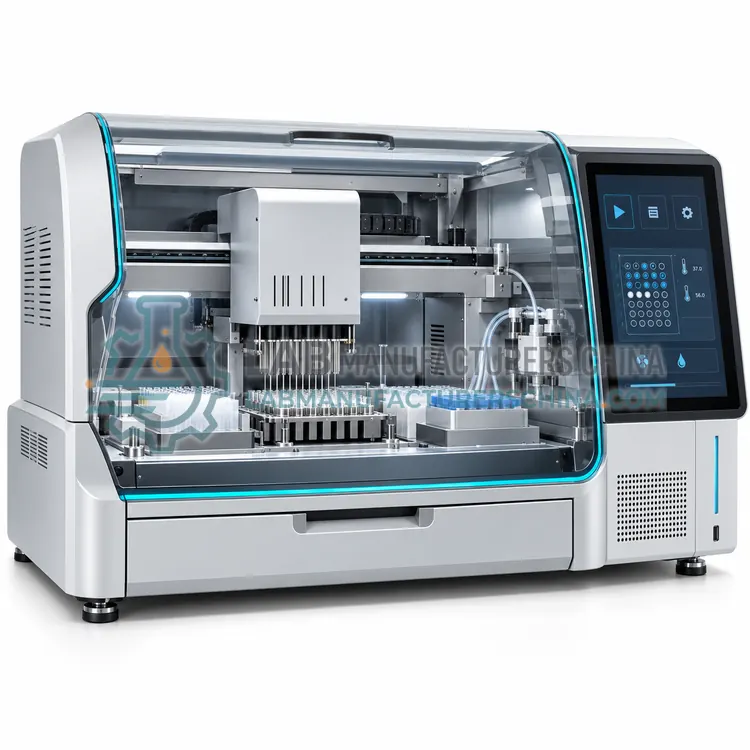
DNA/RNA Extraction
核酸提取系统
DNA/RNA extraction systems isolate nucleic acids from cells, tissue, blood or swabs by lysis, binding to a solid phase, washing and elution. Automated platforms use magnetic beads, silica columns or sealed cartridges, while vacuum manifolds handle column-based purification. They serve molecular biology, clinical diagnostics and testing laboratories.
- PCR5 models
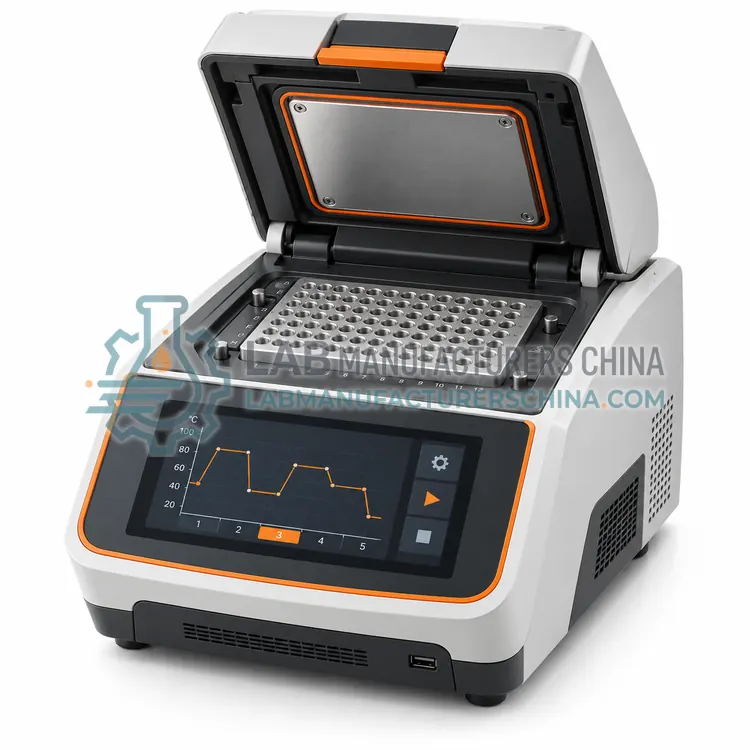
PCR
PCR 仪
PCR instruments amplify specific DNA or RNA targets through repeated cycles of denaturation, primer annealing and extension. The group covers endpoint thermal cyclers, real-time quantitative systems, high-resolution melt analysers, multiplex platforms for pathogen panels and portable field units used in molecular biology laboratories.
- ELE5 models
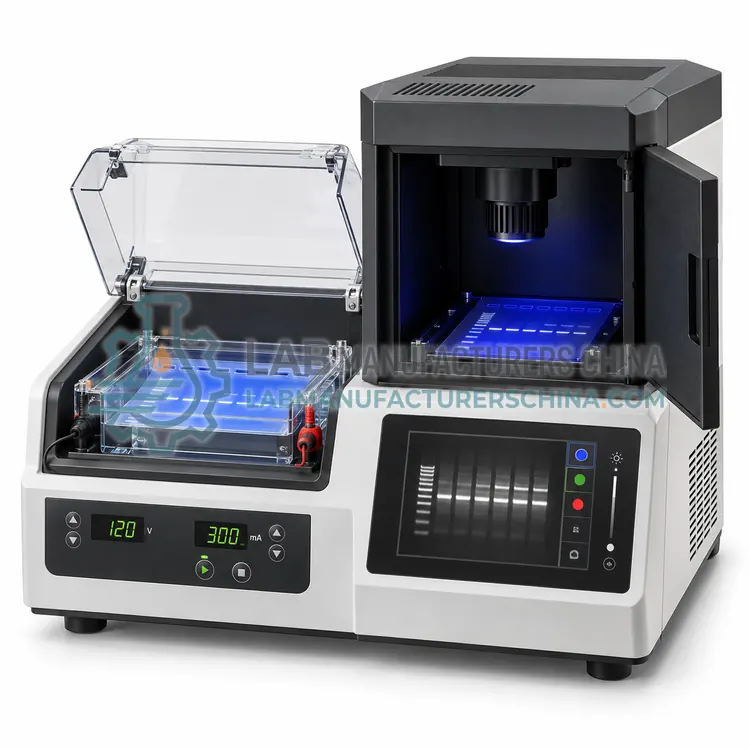
Electrophoresis
电泳仪
Electrophoresis instruments separate charged molecules such as DNA, RNA and oligonucleotides in a gel or sieving polymer under an electric field. The group includes automated agarose systems, multi-channel screening units, microfluidic chip analysers, programmable power supplies and denaturing urea-PAGE systems used in molecular biology laboratories.
- GED5 models
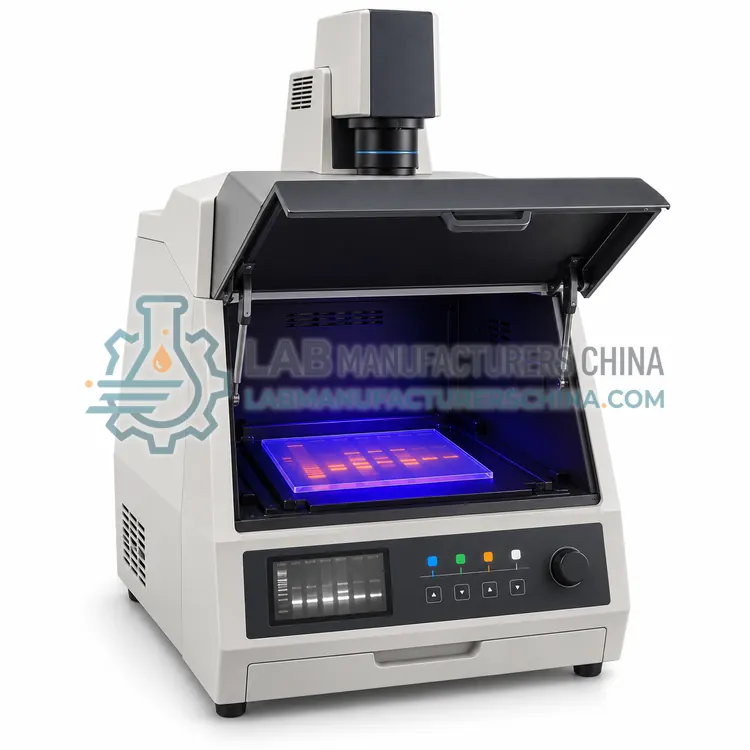
Gel Documentation
凝胶成像系统
Gel documentation systems record images of stained or fluorescent gels and blots inside a dark enclosure with controlled illumination and a sensitive camera. They cover UV transilluminator systems, blue-light LED units, multifluorescence imagers, chemiluminescence systems and automated multi-gel platforms used for molecular biology imaging.
- NUC5 models
Nucleic Acid Analysis
核酸分析
Nucleic acid analysis instruments measure the concentration, purity, integrity and fragment size of DNA and RNA before downstream applications. They include microvolume UV-Vis analysers, fluorescence quantification systems, capillary electrophoresis analysers, plate-based fluorometric readers and automated normalisation workstations used in molecular laboratories.
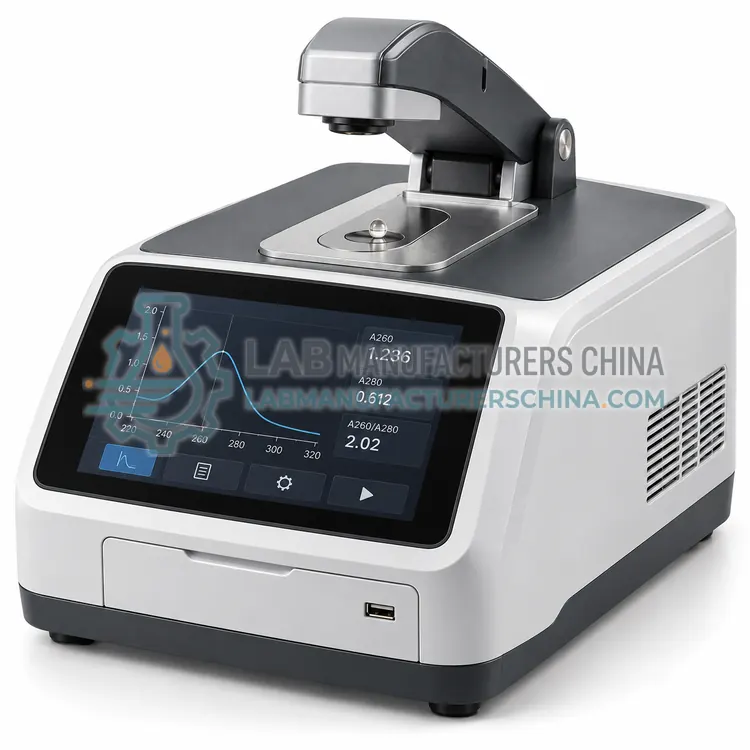
What are Molecular Biology Equipment?
Molecular biology equipment supports the standard workflow of nucleic acid work: isolate DNA or RNA from a sample, amplify a target, separate the products by size, visualize the result and quantify the material. Typical instruments are manual and automated extraction systems using magnetic beads or silica columns, thermal cyclers and real-time PCR instruments, horizontal and vertical electrophoresis tanks with power supplies, gel documentation imagers, and microvolume spectrophotometers or fluorometers for concentration and purity checks. The category serves academic research, clinical assay development, food and agricultural testing, and forensic laboratories. Instruments may be used for research only, or validated as part of regulated workflows when supplied with suitable software controls and qualification documentation.
How do Molecular Biology Equipment work?
Extraction instruments lyse cells and bind nucleic acids to silica membranes or paramagnetic beads, then wash away contaminants and elute purified material. Thermal cyclers repeat temperature steps for denaturation, annealing and extension, typically 25 to 40 cycles, using Peltier blocks with ramp rates of a few degrees per second. Real-time instruments add excitation optics and detectors to read fluorescent dyes or probes each cycle and derive quantification cycle (Cq) values. Electrophoresis applies an electric field across an agarose or polyacrylamide matrix so that charged nucleic acids migrate according to size. Gel documentation systems illuminate stained gels with UV, blue light or epi-white light and capture images with cooled cameras. Nucleic acid analyzers measure absorbance at 260 and 280 nm or use dye-binding fluorescence for quantification.
Where are Molecular Biology Equipment used?
Molecular biology equipment is used in academic research for cloning, gene expression and genotyping, and in clinical and public health laboratories for developing and running pathogen detection assays. Food safety and agricultural laboratories apply PCR and electrophoresis to GMO screening, species identification and pathogen testing. Forensic and paternity laboratories use extraction and amplification workflows for human identification. Biopharmaceutical quality groups use PCR to test for residual host-cell DNA and adventitious agents, and plasmid or vector characterization relies on electrophoresis and nucleic acid quantification. Teaching laboratories use robust, low-cost tanks, cyclers and imagers to train students in core techniques before they move to advanced platforms.
Which standards apply to Molecular Biology Equipment?
Molecular biology instruments are generally certified against the electrical and EMC standards for laboratory equipment: IEC 61010-1, IEC 61010-2-010 for heating, and IEC 61326-1. UV transilluminators are assessed for optical radiation under IEC 62471, and electrophoresis power supplies and tanks under IEC 61010-2-031 where applicable. For method quality, ISO 20395 covers requirements for evaluating nucleic acid quantification methods, and ISO 22174 and ISO 24276 address PCR-based detection of pathogens and GMOs in food. Diagnostic workflows may reference CLSI MM guidelines and ISO 15189, while research laboratories often follow MIQE guidelines for reporting real-time PCR experiments.
How do I select the right molecular biology equipment?
Start with the workflow step that is your bottleneck. If extraction limits throughput, compare manual column kits with automated magnetic bead systems by sample volume and batch size. For amplification, choose between a standard thermal cycler for end-point PCR and a real-time instrument when quantification is needed, then select 96-well or 384-well format and the number of optical channels for multiplexing. For separation, decide on agarose or polyacrylamide, gel size and the number of lanes per run. For imaging, match the light source to your stain and specify camera resolution and software features. For quantification, consider sample volume and the required concentration range. Confirm consumable compatibility, software data export and service support.
Molecular Biology Equipment comparison
| Subcategory | Principle | Typical use | Key spec |
|---|---|---|---|
| DNA/RNA Extraction | Lysis with silica or magnetic bead binding | Purifying DNA or RNA from samples | Samples per run, elution volume |
| PCR | Thermal cycling with optional fluorescence detection | Target amplification and quantification | Block format, ramp rate, optical channels |
| Electrophoresis | Electric field migration in gel matrix | Separating nucleic acids or proteins by size | Gel size, voltage, current range |
| Gel Documentation | Illumination and cooled-camera imaging | Imaging and documenting stained gels | Light source, camera resolution |
| Nucleic Acid Analysis | UV absorbance or dye fluorescence | Concentration and purity measurement | Sample volume, concentration range |
Frequently asked questions about Molecular Biology Equipment
A basic setup typically includes micropipettes, a microcentrifuge, a thermal cycler, an electrophoresis tank with power supply, a gel documentation system and a nucleic acid quantification device such as a microvolume spectrophotometer. Add a real-time PCR instrument and an extraction system when quantification or throughput is required.
A thermal cycler amplifies DNA and produces end-point products that are checked afterward, usually by gel electrophoresis. A real-time PCR instrument adds optics to measure fluorescence during each cycle, which enables quantification, melt curve analysis and multiplexed detection without opening the tube.
Manual spin-column extraction suits low volumes, typically fewer than 24 samples per run, and needs only a centrifuge. Automated magnetic bead systems process 24 to 96 samples with consistent yield and reduced cross-contamination risk, which benefits high-volume, diagnostic or biobank workflows.
Instruments follow IEC 61010-1 and IEC 61326-1 for safety and EMC. Method-level guidance includes ISO 20395 for nucleic acid quantification evaluation, ISO 22174 for PCR detection of foodborne pathogens, ISO 24276 for GMO detection, and the MIQE guidelines for reporting real-time PCR experiments.
Separate pre-amplification and post-amplification work into different rooms or cabinets, use filter tips, dedicated pipettes and aerosol-free extraction, include no-template controls in each run, and consider UNG-based carryover prevention. Clean surfaces regularly with dilute hypochlorite or a nucleic acid decontamination reagent.
Look for CE marking to IEC 61010-1 and EMC, and for diagnostic use, IVDR-related documentation where the manufacturer claims in vitro diagnostic intended use. ISO 9001 manufacturing and ISO 13485 quality systems are common supplier credentials. Always ask for test reports rather than relying on a logo.
Related categories
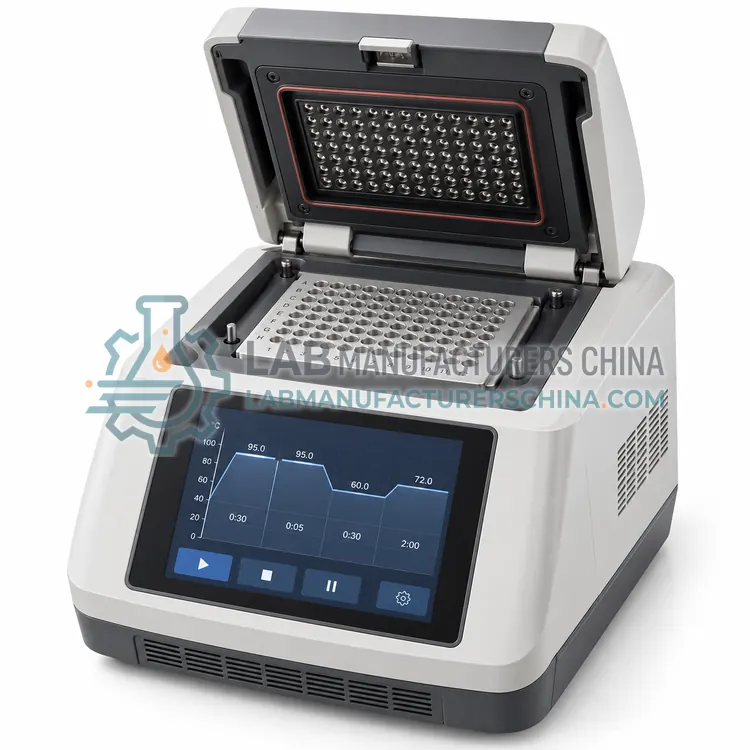 CPCEPCR 设备PCR equipment covers instruments and enclosures used to amplify and quantify nucleic acids by the polymerase chain reaction, including conventional, real-time, digital and gradient thermal cyclers and contamination-control workstations. Clinical, research, forensic, food safety and environmental laboratories use them to detect, quantify and study DNA and RNA targets.
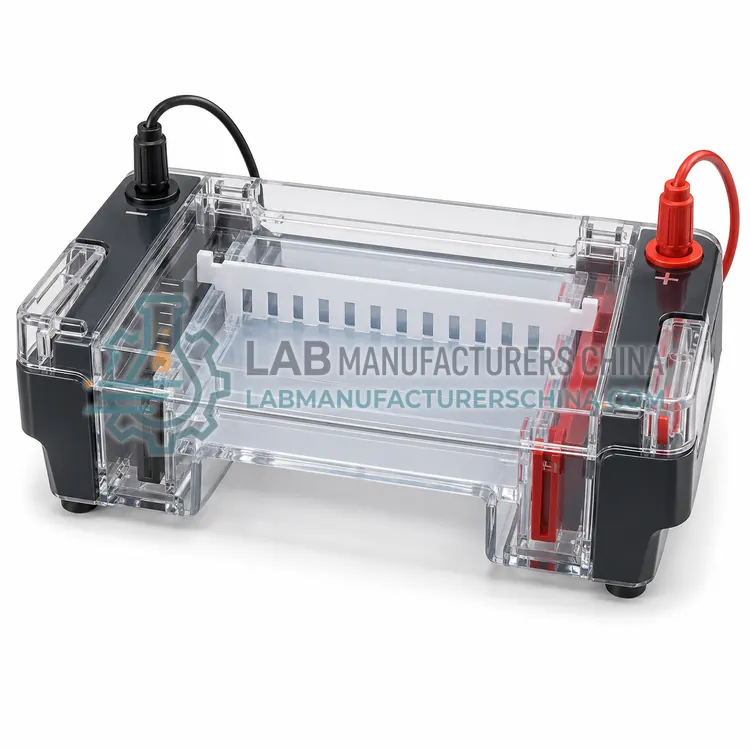 CELE电泳设备Electrophoresis equipment separates charged molecules such as DNA, RNA and proteins in an electric field through a gel or capillary. It includes horizontal and vertical gel tanks, power supplies, blotting systems and capillary electrophoresis analyzers used in molecular biology, clinical, quality control and forensic laboratories.
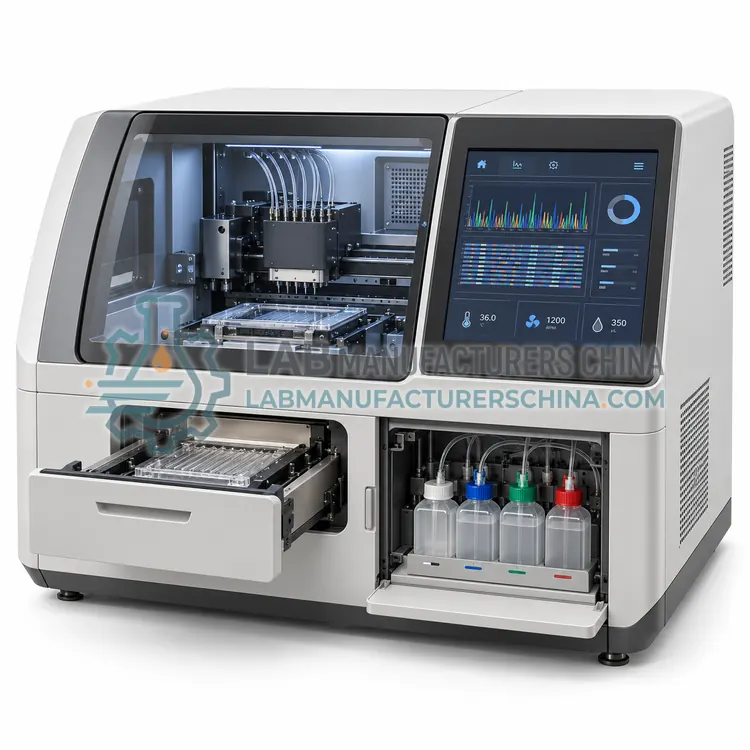 CGEE基因组学设备Genomics equipment covers the instruments used to extract, quantify, sequence and genotype nucleic acids, from automated extraction platforms and fragment analyzers to benchtop sequencers and library preparation systems. It is used by molecular biology, clinical, agrigenomics and microbial research laboratories.
 CPAE蛋白质分析设备Protein analysis equipment characterises proteins by concentration, size, charge, sequence, structure and binding behaviour, covering protein analyzers, western blot systems, protein electrophoresis, purification systems and protein imaging instruments. It is used in biochemistry, biopharmaceutical, clinical and food protein laboratories.