Lab Manufacturers China

Nucleic Acid Analysis

核酸分析

NUC · Molecular Biology Equipment · 5 models

By Lab Manufacturers China Technical TeamLast reviewed Standards: ISO 20395, ISO 13485 manufacturing, MIQE guidelines

Standards referenced

  • ISO 20395
  • ISO 13485 manufacturing
  • MIQE guidelines
  • CLSI MM06-A2
  • IEC 61010-1
  • IVDR (EU) 2017/746

What are Nucleic Acid Analysis?

Nucleic acid analysis instruments measure the concentration, purity, integrity and fragment size of DNA and RNA before downstream applications. They include microvolume UV-Vis analysers, fluorescence quantification systems, capillary electrophoresis analysers, plate-based fluorometric readers and automated normalisation workstations used in molecular laboratories.

5 models of Nucleic Acid Analysis

The 5 models below are current configurations; specifications are confirmed on quotation.

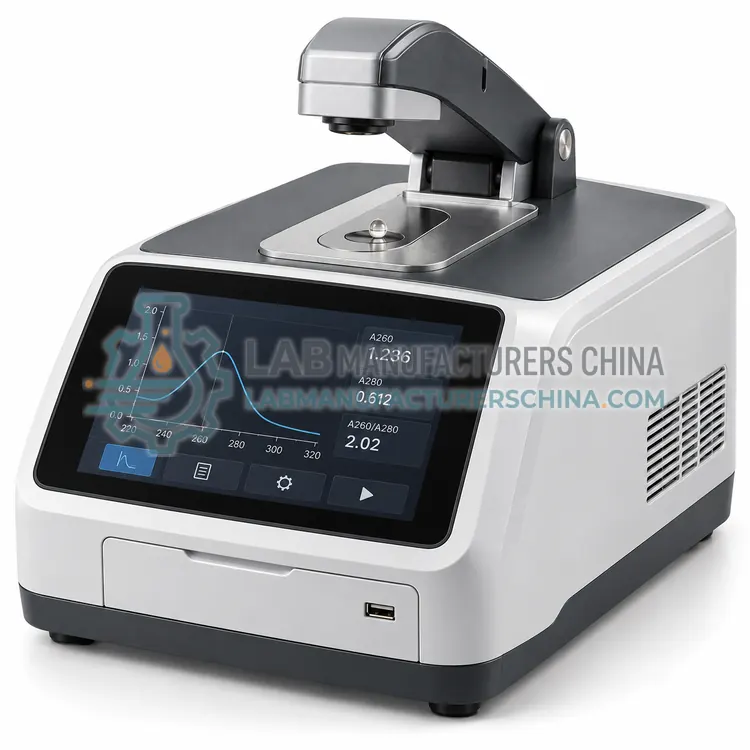
Microvolume UV-Vis Nucleic Acid Analyzer

微量紫外核酸分析仪

  • NUC-0001
  • Nucleic Acid Analysis
  • CE (to be confirmed)
  • ISO 9001 manufacturing (to be confirmed)
  • IEC 61010-1 test report (to be confirmed)
Wavelength range:
190-850 nm
Sample volume:
1-2 µL
Pathlength:
0.5-1 mm, corrected to 10 mm
Detection limit:
About 2 ng/µL dsDNA
Upper linear range:
15,000 ng/µL dsDNA
Repeatability:
Within 2 percent

A spectrophotometer that measures 1 to 2 µL samples at 260, 280 and 230 nm on a pedestal, reporting concentration and purity ratios in seconds. It is the routine instrument for plasmid and PCR template checks.

Request a quote
View details

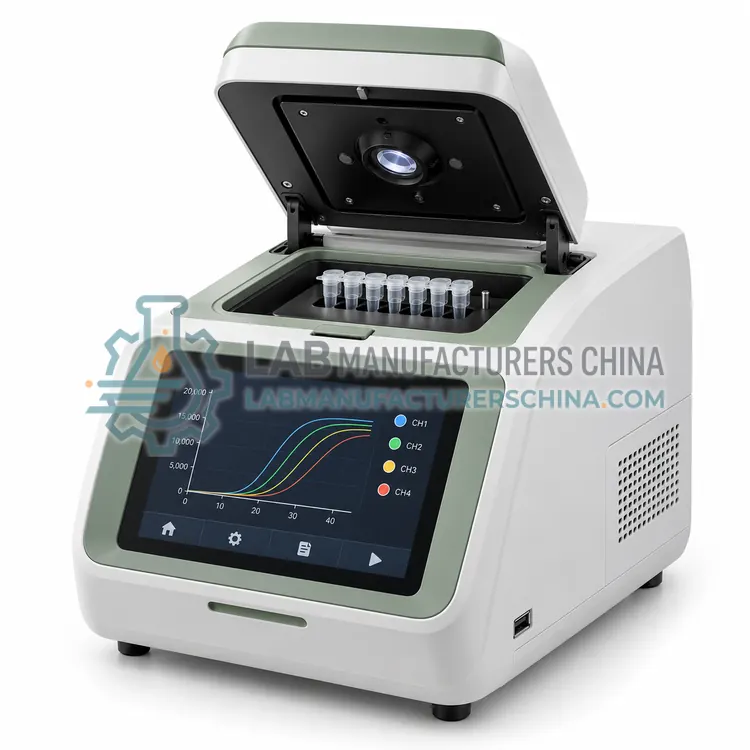
Fluorescence Nucleic Acid Quantification System

荧光核酸定量系统

  • NUC-0002
  • Nucleic Acid Analysis
  • CE (to be confirmed)
  • ISO 9001 manufacturing (to be confirmed)
  • IEC 61010-1 test report (to be confirmed)
Excitation wavelength:
470-490 nm
Emission wavelength:
510-530 nm
Detection limit:
0.2 ng/mL with high-sensitivity kit
Linear range:
0.2-1,000 ng/mL, extended with small-volume mode
Sample volume:
1-20 µL
Calibration:
2-5 point standard curve per kit

A fluorometer that uses dyes specific for double-stranded DNA or RNA to quantify as little as a few picograms in 1 to 20 µL samples. It tolerates protein, salt and free nucleotides that distort absorbance readings.

Request a quote
View details

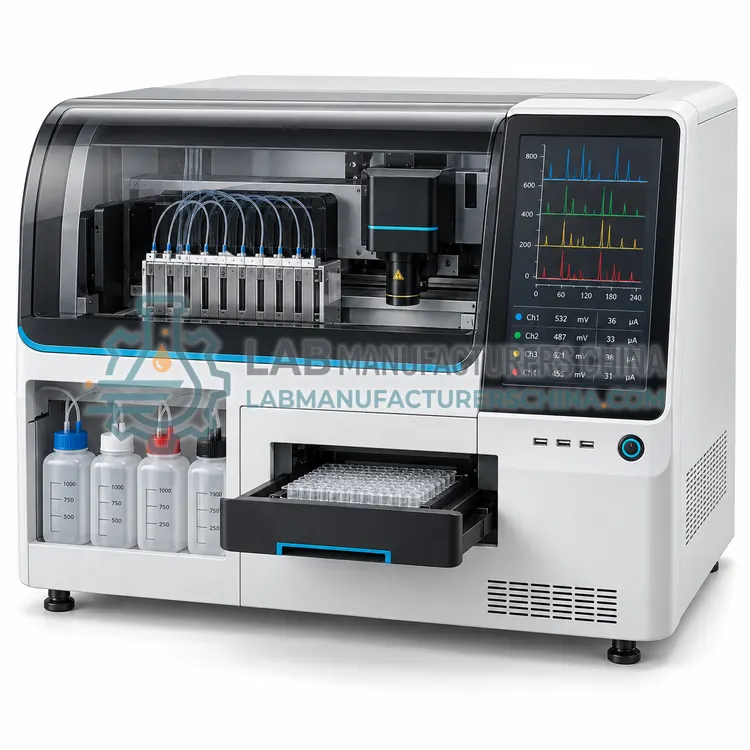
Automated Capillary Electrophoresis Nucleic Acid Analyzer

全自动毛细管电泳核酸分析仪

  • NUC-0003
  • Nucleic Acid Analysis
  • CE (to be confirmed)
  • ISO 13485 manufacturing (to be confirmed)
  • IEC 61010-1 test report (to be confirmed)
Number of capillaries:
8-96
Size range:
35 bp to 20 kb depending on assay
Resolution:
2-5 percent of fragment length
Sensitivity:
A few pg/µL
Run time per plate:
20-90 min for 96 samples
Detection:
Laser-induced fluorescence, 2-5 channels

An instrument that injects samples into sieving-polymer filled capillaries and reports fragment sizes, molarity and integrity values for each sample. It is used for routine sequencing library checks and high-throughput amplicon quality control.

Request a quote
View details

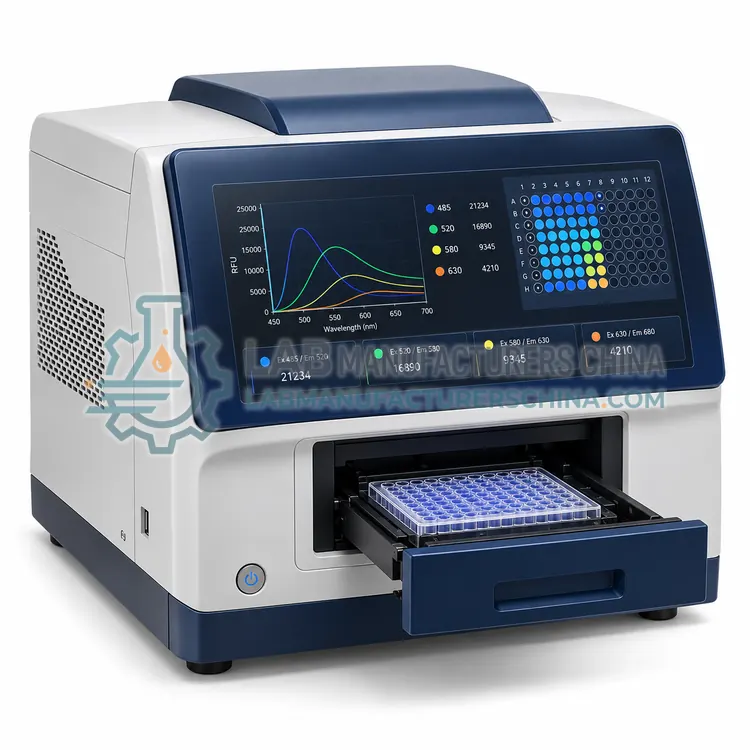
Fluorescence Microplate Reader for Nucleic Acid Quantification

核酸定量用荧光微孔板读数仪

  • NUC-0004
  • Nucleic Acid Analysis
  • CE (to be confirmed)
  • ISO 9001 manufacturing (to be confirmed)
  • IEC 61010-1 test report (to be confirmed)
Plate formats:
96 and 384 well
Excitation range:
400-700 nm, filter or monochromator
Emission range:
420-760 nm
Detection limit:
0.2-1 ng/mL with high-sensitivity kit
Sample volume:
2-20 µL per well
Throughput:
96 wells in 1-3 min

A plate reader that quantifies DNA or RNA in 96 or 384 wells with dye chemistry, giving high throughput and low sample use. It suits laboratories normalising hundreds of samples per day.

Request a quote
View details

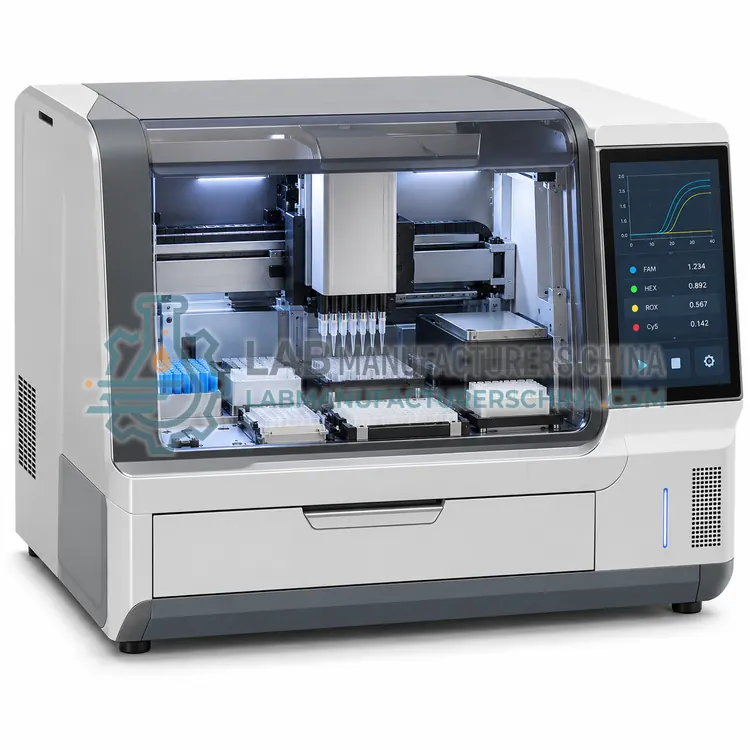
Automated Nucleic Acid Quantification and Normalization Workstation

自动核酸定量与均一化工作站

  • NUC-0005
  • Nucleic Acid Analysis
  • CE (to be confirmed)
  • ISO 13485 manufacturing (to be confirmed)
  • IEC 61010-1 test report (to be confirmed)
Plate formats:
96 and 384 well
Working volume:
5-50 µL
Pipetting accuracy:
CV below 5 percent at 5 µL
Measurement module:
Fluorescence or absorbance plate reader
Deck positions:
6-12 positions for plates and reservoirs
Normalisation modes:
Target concentration or fixed mass transfer

A robotic platform that measures concentration and then dilutes each sample to a target value, producing normalised plates ready for qPCR or sequencing. It removes error-prone manual pipetting steps from high-throughput molecular workflows.

Request a quote
View details

Compare Nucleic Acid Analysis models

ModelSample volumeDetection limitPower supplyData outputPlate formats
Microvolume UV-Vis Nucleic Acid AnalyzerNUC-00011-2 µLAbout 2 ng/µL dsDNA100-240 V, 50/60 Hz, 30-60 W——
Fluorescence Nucleic Acid Quantification SystemNUC-00021-20 µL0.2 ng/mL with high-sensitivity kit100-240 V, 50/60 Hz, 30-60 WConcentration, standard curve, raw fluorescence—
Automated Capillary Electrophoresis Nucleic Acid AnalyzerNUC-00031-20 µL per well—100-240 V, 50/60 Hz, 300-800 WElectropherogram, size and molarity table, integrity metrics—
Fluorescence Microplate Reader for Nucleic Acid QuantificationNUC-00042-20 µL per well0.2-1 ng/mL with high-sensitivity kit100-240 V, 50/60 Hz, 100-200 W—96 and 384 well
Automated Nucleic Acid Quantification and Normalization WorkstationNUC-0005——100-240 V, 50/60 Hz, 300-1,000 W—96 and 384 well

Indicative values for this product class. Final specifications are confirmed on the quotation and in the calibration documents supplied with the instrument.

How do Nucleic Acid Analysis work?

Two measurement principles dominate. Absorbance analysis uses a 1 mm or 0.5 mm pathlength in a microvolume cell and reads at 260 nm, where nucleic acids absorb strongly, then scales the result to a standard 10 mm path. A260 of 1.0 corresponds to about 50 µg/mL double-stranded DNA, 33 µg/mL single-stranded DNA and 40 µg/mL RNA, and ratios at 260/280 and 260/230 indicate protein or salt contamination. Fluorescence methods use dyes that bind specifically to double-stranded DNA or to total RNA, so signal comes only from the target, which makes them more tolerant of protein, salts and free nucleotides. Capillary electrophoresis separates fragments in a sieving polymer and reports sizes in base pairs together with molarity. Automated workstations combine measurement with pipetting so samples can be diluted to a target concentration.

Which Nucleic Acid Analysis variants are available?

  • Microvolume UV-Vis Nucleic Acid Analyzer — A spectrophotometer that measures 1 to 2 µL samples at 260, 280 and 230 nm on a pedestal, reporting concentration and purity ratios in seconds.
  • Fluorescence Nucleic Acid Quantification System — A fluorometer that uses dyes specific for double-stranded DNA or RNA to quantify as little as a few picograms in 1 to 20 µL samples.
  • Automated Capillary Electrophoresis Nucleic Acid Analyzer — An instrument that injects samples into sieving-polymer filled capillaries and reports fragment sizes, molarity and integrity values for each sample.
  • Fluorescence Microplate Reader for Nucleic Acid Quantification — A plate reader that quantifies DNA or RNA in 96 or 384 wells with dye chemistry, giving high throughput and low sample use.
  • Automated Nucleic Acid Quantification and Normalization Workstation — A robotic platform that measures concentration and then dilutes each sample to a target value, producing normalised plates ready for qPCR or sequencing.

How do I choose the right variant?

Choose the method by how much selectivity you need. Absorbance is fast, inexpensive and sufficient for routine plasmid or PCR checks, but it cannot distinguish DNA from RNA and is affected by protein, phenol and salts. Fluorescence dyes are selective for double-stranded DNA or RNA and need as little as a few picograms, which suits sequencing libraries and low-yield samples. Capillary electrophoresis adds size and integrity information that no spectrophotometer provides, which matters for library insert size and RNA integrity. Throughput then decides between single-tube devices, microplate readers and automated workstations that combine measurement with normalisation. Check the minimum sample volume, detection limit, linear range, required standards and the export format your data system accepts.

Where are Nucleic Acid Analysis used?

Nucleic Acid Analysis are specified in next-generation sequencing library quality control, template quantification before qPCR, plasmid and oligonucleotide quality checks, RNA integrity and purity assessment and normalisation of samples for screening panels.

Which standards and certifications apply?

Work with Nucleic Acid Analysis is commonly governed by ISO 20395, ISO 13485 manufacturing, MIQE guidelines, CLSI MM06-A2, IEC 61010-1 and IVDR (EU) 2017/746. Instrument certifications such as CE marking are confirmed per configuration and never assumed.

What are the key considerations before purchase?

Blank the instrument with the same buffer as the sample, because buffer absorbance differs and elution buffers containing guanidine or EDTA give misleading ratios. Keep the measurement pedestal clean and wipe it between samples to avoid carryover, and check microvolume accuracy with a reference standard periodically. Fluorescent assays need fresh standards and protection of dye reagents from light, and dye-based concentration depends on assay chemistry, so do not compare results from different kits. For fragment analysis, follow the vendor's sample and ladder preparation closely, since ionic strength affects injection. Store eluted nucleic acids cold, avoid repeated freeze-thaw, and record concentration, ratios and method with every sample.

Frequently asked questions about Nucleic Acid Analysis

A260/280 near 1.8 for DNA and 2.0 for RNA indicates low protein contamination, while A260/230 above about 2.0 suggests little carryover of salts, phenols or guanidine. Values well below these ranges usually mean the sample needs repurification.

Need help specifying Nucleic Acid Analysis?

Request a quote