Automated Nucleic Acid Quantification and Normalization Workstation
自动核酸定量与均一化工作站
- SKU NUC-0005
- Nucleic Acid Analysis
- CE (to be confirmed)
- ISO 13485 manufacturing (to be confirmed)
- IEC 61010-1 test report (to be confirmed)
Price on request — FOB / CIF quoted per order
Prices depend on configuration, quantity and destination port.
Key specifications
| Plate formats | 96 and 384 well |
|---|---|
| Working volume | 5-50 µL |
| Pipetting accuracy | CV below 5 percent at 5 µL |
| Measurement module | Fluorescence or absorbance plate reader |
| Deck positions | 6-12 positions for plates and reservoirs |
| Normalisation modes | Target concentration or fixed mass transfer |
Request a quote Download brochure · to be provided
By Lab Manufacturers China Technical TeamLast reviewed Standards: ISO 20395, ISO 13485 manufacturing, MIQE guidelines
What is the Automated Nucleic Acid Quantification and Normalization Workstation?
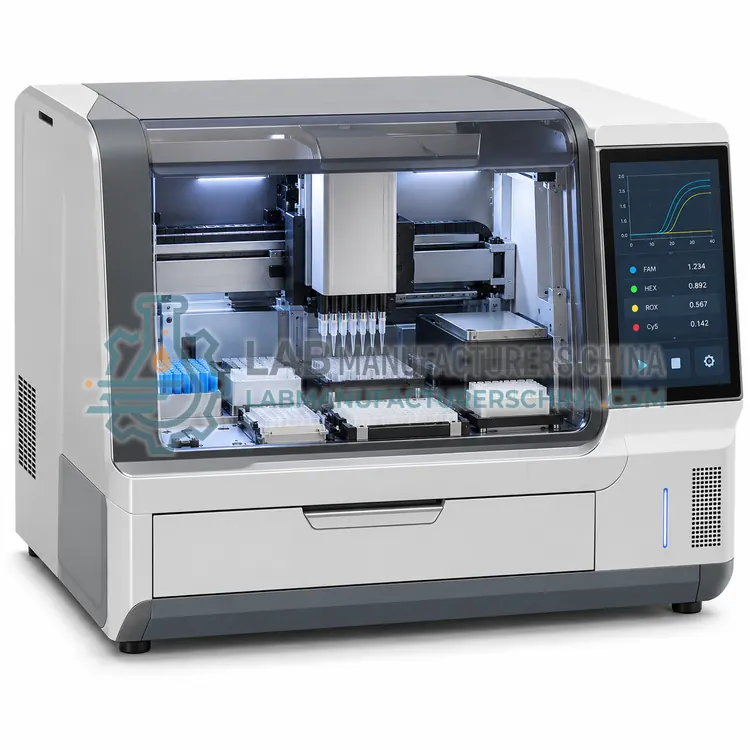
A robotic platform that measures concentration and then dilutes each sample to a target value, producing normalised plates ready for qPCR or sequencing. It removes error-prone manual pipetting steps from high-throughput molecular workflows.
What is the Automated Nucleic Acid Quantification and Normalization Workstation?
A robotic platform that measures concentration and then dilutes each sample to a target value, producing normalised plates ready for qPCR or sequencing. It removes error-prone manual pipetting steps from high-throughput molecular workflows.
Overview
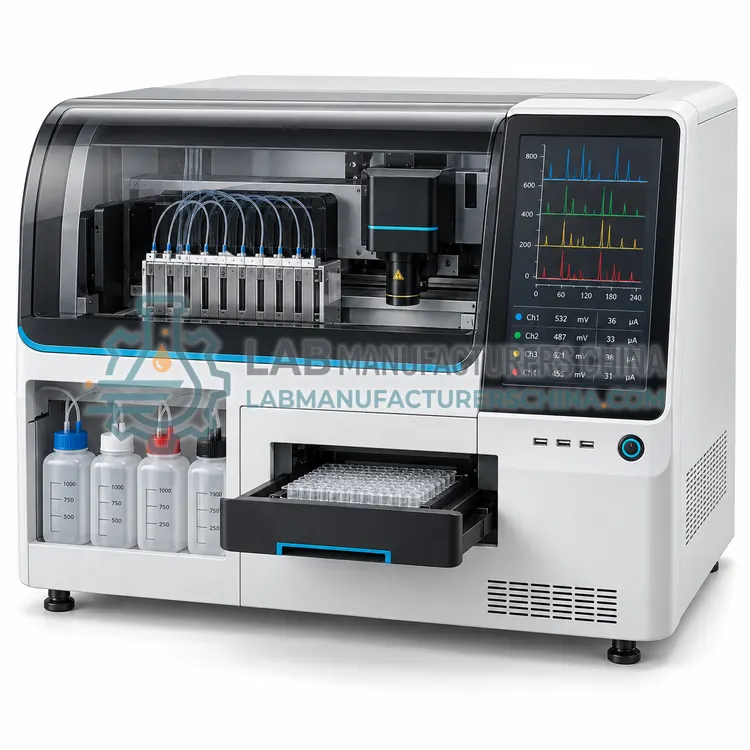
The normalisation workstation combines a plate reader or a fluorescence module with a robotic pipetting arm, a deck that holds sample plates, dilution plates, tips and reservoirs, and software that links measured concentrations to dilution volumes. After measurement, the software calculates the volume of sample and diluent needed per well to reach a target concentration or to transfer a fixed mass of nucleic acid, then executes the transfers and logs the actual volumes used. Working volumes are typically 5 to 50 µL, and accuracy depends on tip-based or syringe-based liquid handling calibrated for low volumes and on correct liquid-class settings for viscous solutions. Systems usually accept 96 and 384 well plates, integrate with laboratory information systems and export worklists, which makes them central to genotyping and sequencing library workflows where hundreds of samples are normalised per day.
How does it work?
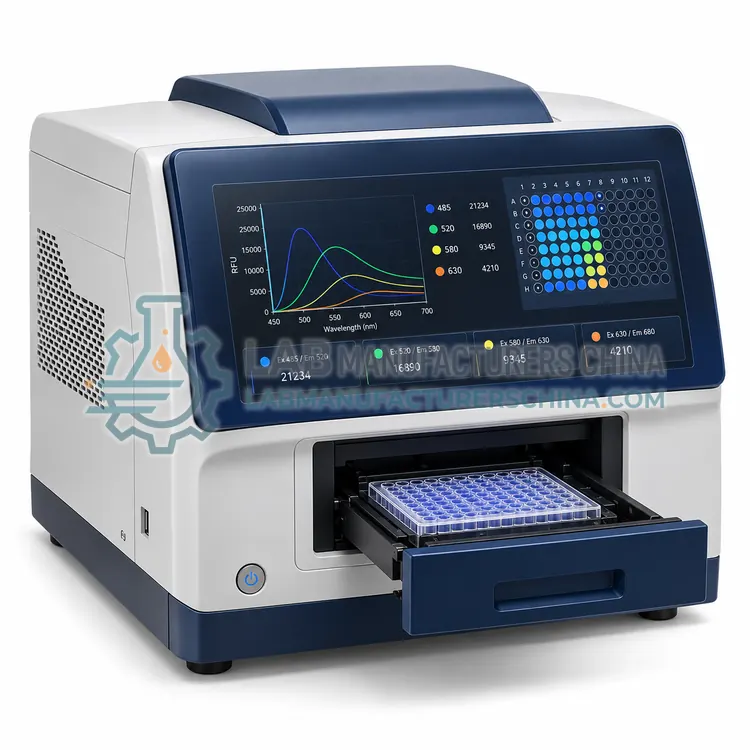
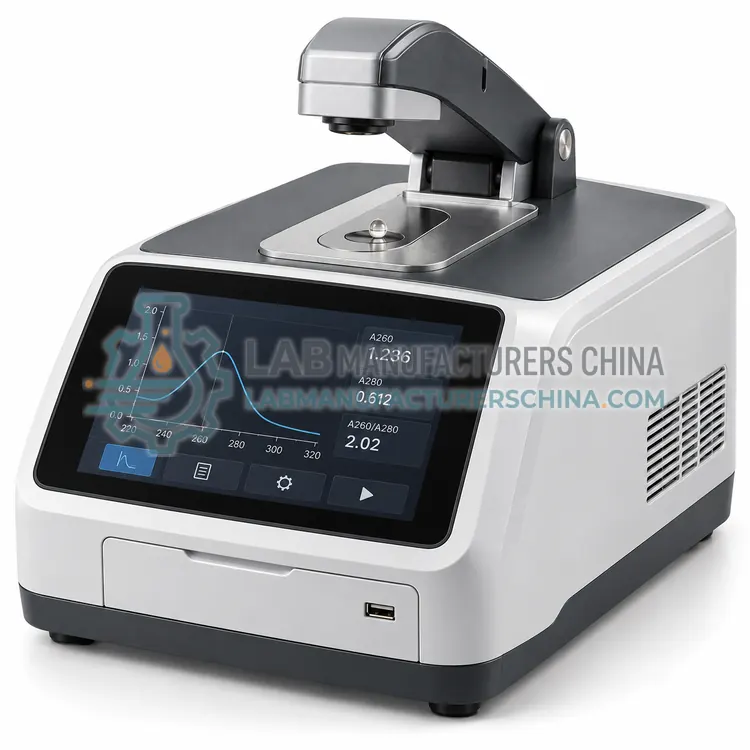
Two measurement principles dominate. Absorbance analysis uses a 1 mm or 0.5 mm pathlength in a microvolume cell and reads at 260 nm, where nucleic acids absorb strongly, then scales the result to a standard 10 mm path. A260 of 1.0 corresponds to about 50 µg/mL double-stranded DNA, 33 µg/mL single-stranded DNA and 40 µg/mL RNA, and ratios at 260/280 and 260/230 indicate protein or salt contamination. Fluorescence methods use dyes that bind specifically to double-stranded DNA or to total RNA, so signal comes only from the target, which makes them more tolerant of protein, salts and free nucleotides. Capillary electrophoresis separates fragments in a sieving polymer and reports sizes in base pairs together with molarity. Automated workstations combine measurement with pipetting so samples can be diluted to a target concentration.
What are the key features?
- Integrated concentration measurement and dilution.
- Robotic pipetting with 5 to 50 µL working volumes.
- Software computes sample and diluent volumes per well.
- Supports fixed-concentration or fixed-mass normalisation.
- Acceptance of 96 and 384 well plates.
- Worklist export for laboratory information systems.
What are the technical specifications?
A typical automated nucleic acid quantification and normalization workstation configuration offers plate formats of 96 and 384 well, working volume of 5-50 µL, pipetting accuracy of CV below 5 percent at 5 µL, measurement module of Fluorescence or absorbance plate reader, deck positions of 6-12 positions for plates and reservoirs and normalisation modes of Target concentration or fixed mass transfer. Values are indicative of the product class; the exact figures for each configuration are confirmed on the quotation and the calibration documents supplied with the instrument.
Which applications is it used for?
The Automated Nucleic Acid Quantification and Normalization Workstation is used in genotyping plate normalisation, sequencing library normalisation and pooling, qPCR panel template preparation and large plant or animal breeding cohorts. Across the wider Nucleic Acid Analysis class, laboratories also deploy it for next-generation sequencing library quality control, template quantification before qPCR and plasmid and oligonucleotide quality checks.
Which standards and certifications apply?
Relevant standards and methods include ISO 20395, ISO 13485 manufacturing, MIQE guidelines, CLSI MM06-A2, IEC 61010-1 and IVDR (EU) 2017/746. Certification candidates for this model are CE, ISO 13485 manufacturing and IEC 61010-1 test report; each is to be confirmed for the specific configuration before shipment, and certificates are supplied only where they have been issued.
Blank the instrument with the same buffer as the sample, because buffer absorbance differs and elution buffers containing guanidine or EDTA give misleading ratios. Keep the measurement pedestal clean and wipe it between samples to avoid carryover, and check microvolume accuracy with a reference standard periodically. Fluorescent assays need fresh standards and protection of dye reagents from light, and dye-based concentration depends on assay chemistry, so do not compare results from different kits. For fragment analysis, follow the vendor's sample and ladder preparation closely, since ionic strength affects injection. Store eluted nucleic acids cold, avoid repeated freeze-thaw, and record concentration, ratios and method with every sample.
How do I select the right Automated Nucleic Acid Quantification and Normalization Workstation?
Select the workstation when hundreds of samples are normalised daily and manual dilution is the limiting step. Compare pipetting accuracy at your smallest transfer volume, deck capacity, supported plate types and whether both concentration-based and mass-based normalisation are available. Confirm worklist and report formats, and include tip cost and service contracts in the budget.
How does it compare with other Nucleic Acid Analysis variants?
Choose the method by how much selectivity you need. Absorbance is fast, inexpensive and sufficient for routine plasmid or PCR checks, but it cannot distinguish DNA from RNA and is affected by protein, phenol and salts. Fluorescence dyes are selective for double-stranded DNA or RNA and need as little as a few picograms, which suits sequencing libraries and low-yield samples. Capillary electrophoresis adds size and integrity information that no spectrophotometer provides, which matters for library insert size and RNA integrity. Throughput then decides between single-tube devices, microplate readers and automated workstations that combine measurement with normalisation. Check the minimum sample volume, detection limit, linear range, required standards and the export format your data system accepts.
Full specifications
| Plate formats | 96 and 384 well |
|---|---|
| Working volume | 5-50 µL |
| Pipetting accuracy | CV below 5 percent at 5 µL |
| Measurement module | Fluorescence or absorbance plate reader |
| Deck positions | 6-12 positions for plates and reservoirs |
| Normalisation modes | Target concentration or fixed mass transfer |
| Throughput | 4-12 plates of 96 samples per hour |
| Tip sensing | Tip presence and liquid-level detection |
| Data handling | Batch reports, worklist export, audit log |
| Power supply | 100-240 V, 50/60 Hz, 300-1,000 W |
Indicative values for this product class. Final specifications are confirmed on the quotation and in the calibration documents supplied with the instrument.
Applications
- Genotyping plate normalisation
- Sequencing library normalisation and pooling
- qPCR panel template preparation
- Large plant or animal breeding cohorts
Key features
- Integrated concentration measurement and dilution.
- Robotic pipetting with 5 to 50 µL working volumes.
- Software computes sample and diluent volumes per well.
- Supports fixed-concentration or fixed-mass normalisation.
- Acceptance of 96 and 384 well plates.
- Worklist export for laboratory information systems.
Frequently asked questions about Automated Nucleic Acid Quantification and Normalization Workstation
Modern systems achieve coefficients of variation below about five percent at 5 µL with properly calibrated channels and matched tips, but accuracy falls for very viscous or foaming solutions, so liquid-class settings must be verified.
Yes, most systems support transferring a fixed amount of nucleic acid, which is often preferable for sequencing libraries. The software calculates sample volume from measured concentration and tops up with diluent.
It cannot reach the target concentration, so the software flags the well and either moves it to a lower target group or leaves it for manual handling. Set the minimum acceptable concentration before starting a batch.
A260/280 near 1.8 for DNA and 2.0 for RNA indicates low protein contamination, while A260/230 above about 2.0 suggests little carryover of salts, phenols or guanidine. Values well below these ranges usually mean the sample needs repurification.
Use fluorescence when the sample is scarce, when the template contains protein, phenol or free nucleotides, or when only double-stranded DNA should be measured. Dyes such as PicoGreen or RiboGreen report the target specifically, so values are less affected by contaminants.
For sequencing libraries, RNA samples and amplicon panels, yes. Concentration alone cannot show whether a library insert is the correct length or whether RNA is degraded, and those properties determine sequencing and qPCR performance.
Related models