
Fermentation Equipment
发酵设备
CFEE · Life Science & Biotechnology · 4 product types · 20 models
By Lab Manufacturers China Technical TeamLast reviewed
What are Fermentation Equipment?
Fermentation equipment covers the vessels and control systems used to cultivate microorganisms and cells under controlled conditions for research and production. It ranges from laboratory fermenters to pilot and production tanks with instrumentation for temperature, pH, dissolved oxygen, aeration and feeding.
4 product types in Fermentation Equipment
The 4 product types below are grouped by the exact instrument you need.
- LAF5 models
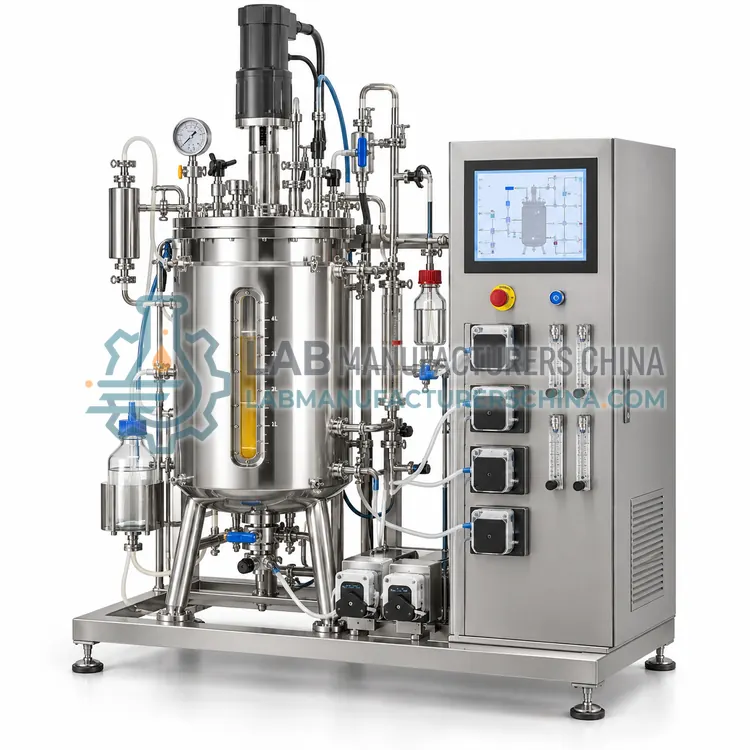
Laboratory Fermenters
实验室发酵罐
Laboratory fermenters are small-scale vessels, typically 1 to 10 litres, used to cultivate microorganisms under controlled temperature, pH, dissolved oxygen and agitation. They support strain screening, media optimization and early process development before scale-up.
- PIF5 models
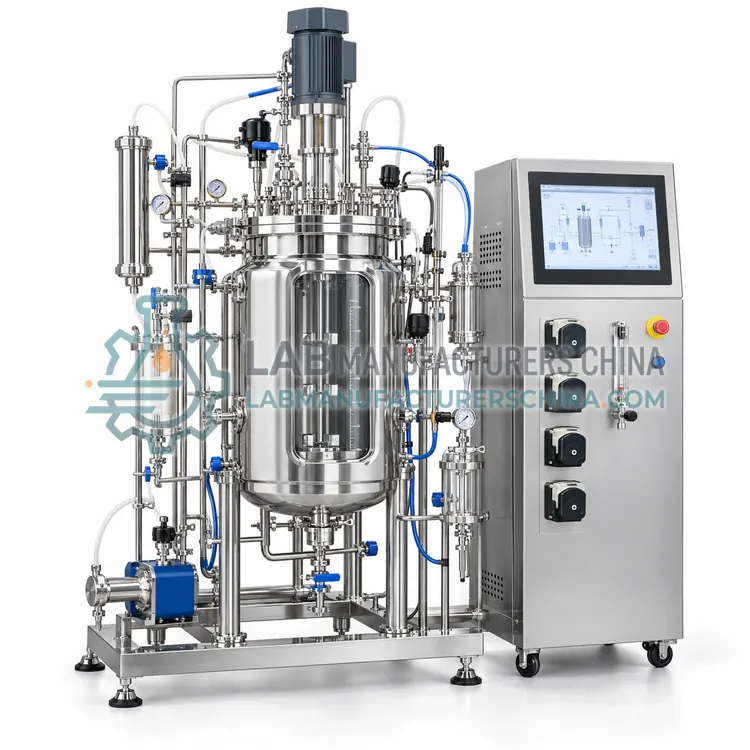
Pilot Fermenters
中试发酵罐
Pilot fermenters are intermediate-scale cultivation vessels, typically 50 to 500 litres, that reproduce laboratory conditions closely enough to verify and de-risk scale-up. They bridge bench development and production in enzyme, pharmaceutical and food fermentation.
- FCS5 models
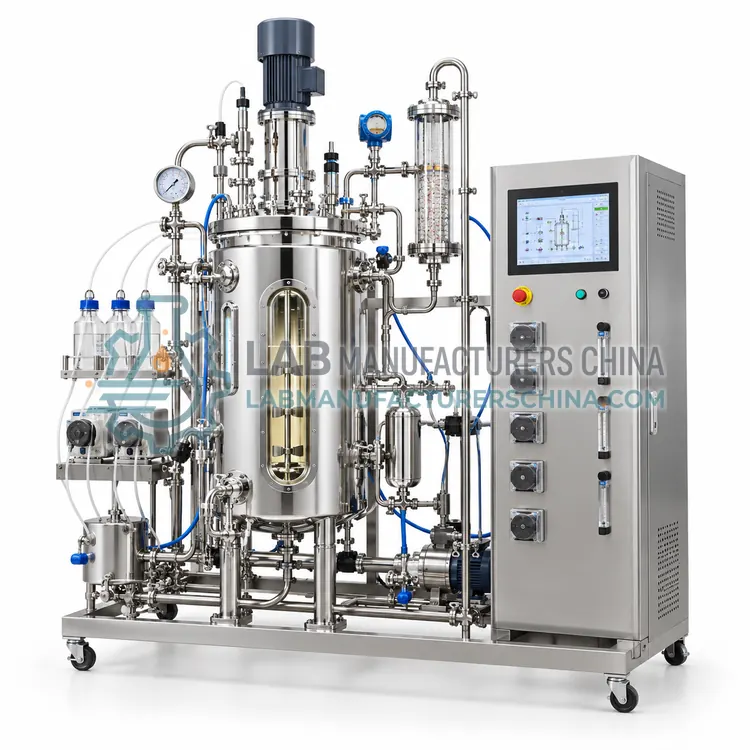
Fermentation Control Systems
发酵控制系统
Fermentation control systems regulate and record the parameters that govern microbial growth, including temperature, pH, dissolved oxygen, gas flow and feeding. They range from single-vessel controllers to networked supervisory systems that document whole batches.
- FET5 models
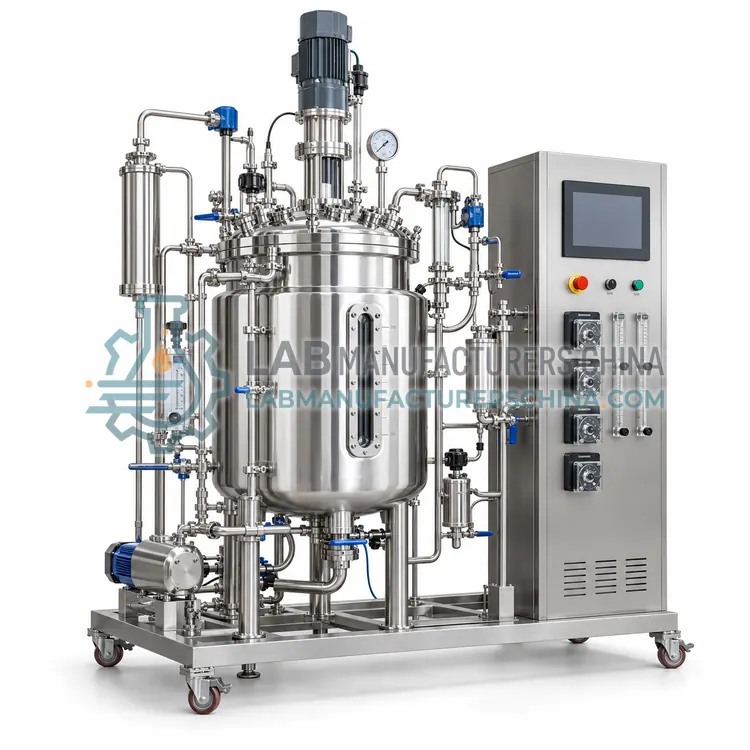
Fermentation Tanks
发酵罐体
Fermentation tanks are the vessels themselves, typically stainless steel and often jacketed, in which microbial or cell culture is carried out at production scale. Their geometry, mixing and heat transfer determine how well a process scales.
What are Fermentation Equipment?
Fermentation equipment is the hardware used to grow bacteria, yeasts, fungi or cultured cells in a defined liquid medium while controlling the conditions that determine growth and product formation. The family includes glass and stainless-steel vessels, stirred-tank and airlift designs, pilot and production tanks, and the instrumentation and controllers that regulate temperature, pH, dissolved oxygen, foam, aeration rate and nutrient feed. Small laboratory fermenters with 1 to 10 L working volume are used for strain screening and process development, while pilot systems of tens to hundreds of litres and production tanks up to several cubic metres support scale-up and manufacturing. Buyers include pharmaceutical and food producers, enzyme and biofuel companies, contract manufacturers and research institutes. Selection depends on organism type, oxygen demand, scale, sterilization method and the level of process control and recording required.
How do Fermentation Equipment work?
A fermenter provides a contained volume of sterile medium that is mixed and aerated while sensors track the parameters that affect growth. Agitation, usually with a motor-driven impeller or a magnetic stirrer, disperses oxygen and nutrients and prevents gradients; air or enriched oxygen is sparged through the vessel and leaves through a condenser and exhaust filter. Temperature is held by a water jacket or heating blanket driving a circulation bath. pH is measured with a steam-sterilizable electrode and corrected by pumps dosing acid or base. Dissolved oxygen is measured with a polarographic or optical probe and influenced by stirrer speed, gas flow and overpressure. Antifoam or a mechanical foam breaker controls foaming, and feed pumps add carbon source or inducers at a programmed rate. Controllers, often with PID loops and data logging, hold setpoints and record batch profiles for batch or fed-batch and, less often, continuous operation.
Where are Fermentation Equipment used?
Fermentation equipment is used wherever microorganisms or cells must be grown reproducibly. In pharmaceutical and biotechnology development it supports strain screening, media optimization and process development before scale-up. Production groups use it to manufacture antibiotics, recombinant proteins, enzymes, vitamins and vaccines. The food and beverage industry relies on it for starter cultures, amino acids, organic acids and fermentation-derived ingredients, and the biofuel sector for ethanol and other products. Academic and public laboratories use small vessels to study microbial physiology, metabolic engineering and synthetic biology. Contract manufacturers run multiple products in the same suite and value fast changeover and cleanability. Across these settings, the equipment must maintain sterility, deliver enough oxygen for the organism, and provide the control and records needed for reproducible batches.
Which standards apply to Fermentation Equipment?
Fermentation equipment for pharmaceutical production is specified against EU GMP Annex 1 for sterile manufacture and 21 CFR Part 211, with pressure vessels designed, built and inspected to GB/T 150 or the ASME Boiler and Pressure Vessel Code depending on the market. Biocompatibility of product-contact materials is assessed under USP <87>, <88> and <661>. Process control systems used in regulated manufacture must support 21 CFR Part 11 and EU GMP Annex 11 for data integrity and audit trails. Cleaning validation follows conventional GMP practice, and sterilization in place is qualified against accepted biological indicators. Sensors are calibrated against traceable standards, and electrical safety follows IEC 61010-1. Validation of the fermentation process itself draws on ICH Q11 principles for drug substance development.
How do I select the right fermentation equipment?
Define the organism and the oxygen demand first, because they set the mass-transfer requirement and therefore agitation power, gas flow and vessel geometry. Establish the working volume for your current and next scale, and decide whether you need glass, stainless steel or single-use, and whether sterilization is in situ or in an autoclave. List the control loops and their ranges, the number of sensor ports, feed lines and sampling devices you need, and confirm that pH and dissolved oxygen probes are steam-sterilizable if required. Consider whether cascade control, exhaust gas analysis, redox and off-gas measurement matter for your process. For regulated production, confirm clean-in-place and sterilize-in-place capability, material certificates, documentation packages, and data logging with audit trails. Finally, check service access, spares, sensor availability and the vendor's scale-up support.
Fermentation Equipment comparison
| Subcategory | Principle | Typical use | Key spec |
|---|---|---|---|
| Laboratory Fermenters | Glass or small stainless vessel with sensor-driven control | Strain screening and process development | Working volume 1–10 L |
| Pilot Fermenters | Stainless or single-use vessel scaled to reproduce laboratory results | Scale-up studies and small-batch production | Working volume 50–500 L |
| Fermentation Control Systems | PID loops and data logging regulate and record process parameters | Parameter control and batch documentation | Up to 16 control loops |
| Fermentation Tanks | Jacketed vessel provides the containment, mixing and heat transfer | Production-scale cultivation | Volume up to 10 m³ |
Frequently asked questions about Fermentation Equipment
It cultivates microorganisms or cells in a controlled sterile medium. Laboratories use it for strain screening, media optimization and process development, while production groups use larger tanks to manufacture antibiotics, recombinant proteins, enzymes, amino acids, vaccines and fermented food ingredients.
The terms overlap. Fermenter usually refers to vessels for microbial culture, often with high oxygen demand and robust agitation, while bioreactor is broader and includes cell culture systems with gentler mixing. Many manufacturers use the names interchangeably.
Choose a volume that supports your current process and the next scale-up step, and leave headspace of about 20 to 30 percent for foam and aeration. For development a 1 to 10 L vessel is common, with pilot runs of 50 to 500 L and production tanks above that.
Temperature, pH, dissolved oxygen and agitation speed are standard, with foam control and nutrient feed by pump. More advanced systems add redox potential, exhaust gas analysis, pressure and weight-based feed control to stabilize the process and support scale-up calculations.
You need them when changing products frequently or manufacturing sterile pharmaceuticals, because manual cleaning and autoclaving are slower and less reproducible. Single-use vessels are an alternative for smaller volumes where cleaning validation would be costly.
Related categories
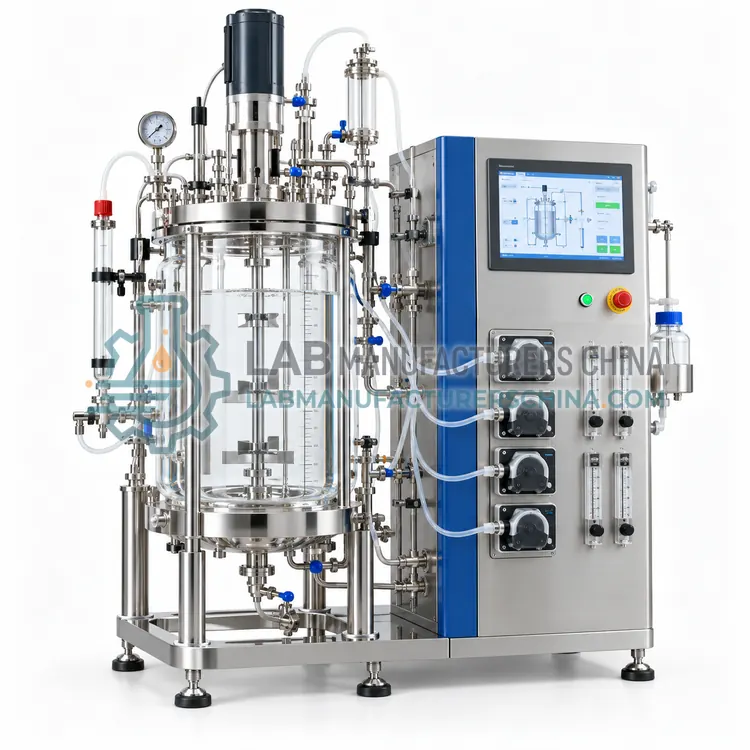 CBIO生物反应器Bioreactors are vessels that cultivate cells, tissues or microorganisms under controlled conditions of temperature, pH, dissolved oxygen and mixing. They range from glass benchtop units to stainless-steel, single-use, parallel and pilot systems used in bioprocess development and production.
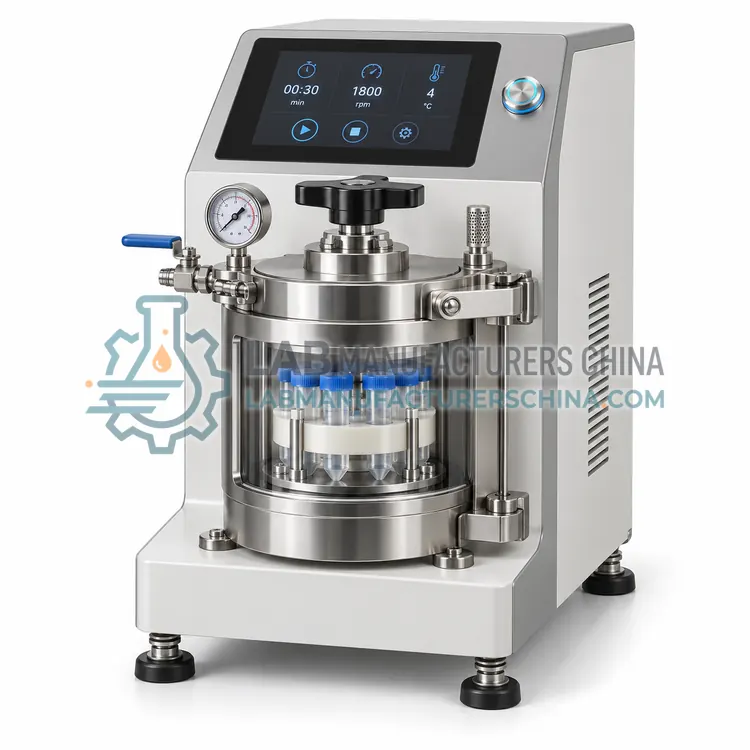 CLIF生命科学设备Life science equipment covers the instruments used to prepare, count, characterize and image biological samples, including homogenizers and centrifuges, flow cytometers, real-time PCR and sequencing-adjacent systems, protein analyzers, and microscopes. It supports research, biopharmaceutical development, diagnostics and academic teaching laboratories.
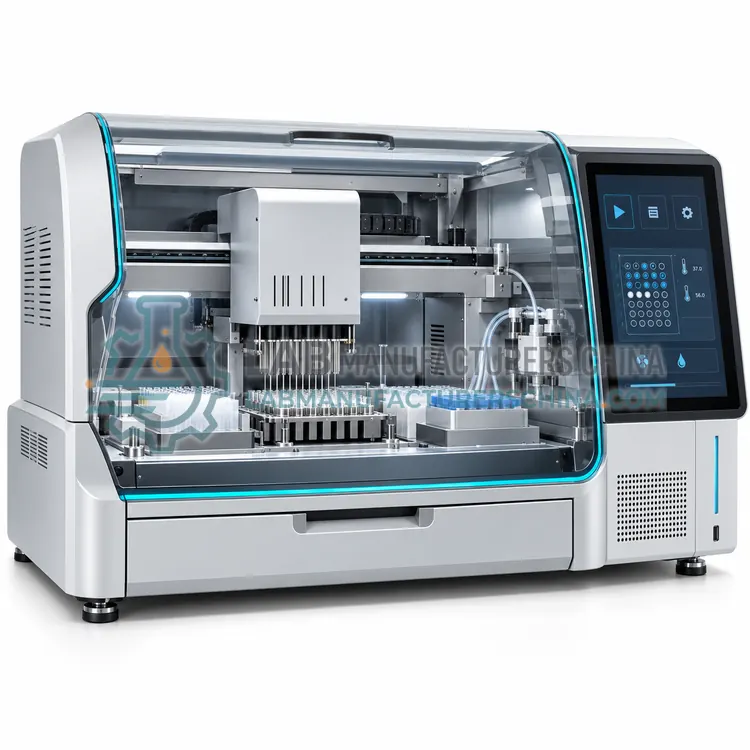 CMBE分子生物学设备Molecular biology equipment covers instruments for extracting, amplifying, separating, visualizing and quantifying DNA and RNA. It includes nucleic acid extraction systems, thermal cyclers and real-time PCR instruments, electrophoresis units, gel documentation systems and spectrophotometric nucleic acid analyzers used in research, diagnostics, agriculture and forensics.
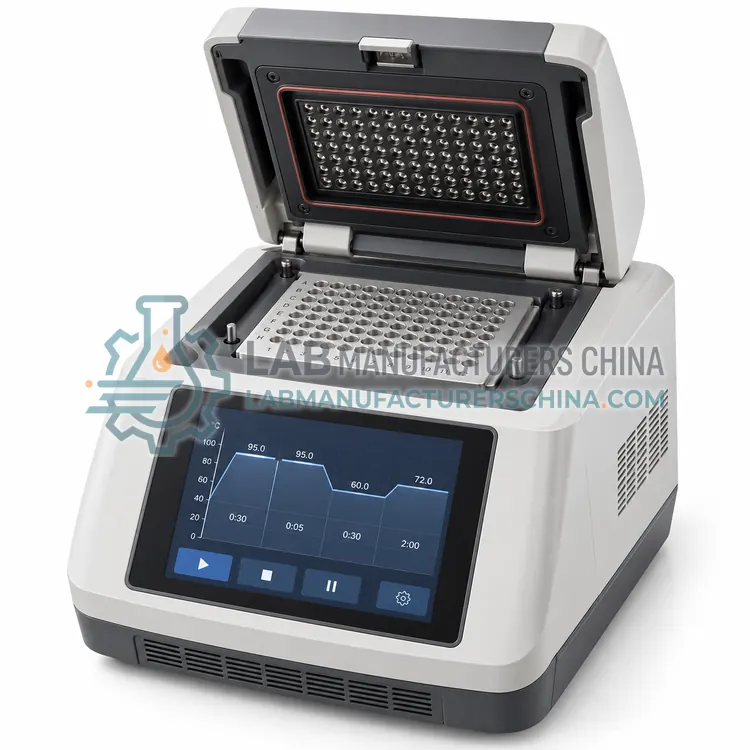 CPCEPCR 设备PCR equipment covers instruments and enclosures used to amplify and quantify nucleic acids by the polymerase chain reaction, including conventional, real-time, digital and gradient thermal cyclers and contamination-control workstations. Clinical, research, forensic, food safety and environmental laboratories use them to detect, quantify and study DNA and RNA targets.