
Paper Analysis Equipment
纸张分析设备
CPAP · Petroleum, Mining & Industrial Analysis · 5 product types · 25 models
By Lab Manufacturers China Technical TeamLast reviewed
What are Paper Analysis Equipment?
Paper analysis equipment measures the moisture, thickness, brightness, burst strength and overall physical quality of paper, board and packaging. It is used by paper mills, converters, packaging manufacturers and testing laboratories for grade control, customer specification compliance and troubleshooting of runnability and print performance.
5 product types in Paper Analysis Equipment
The 5 product types below are grouped by the exact instrument you need.
- MOT5 models
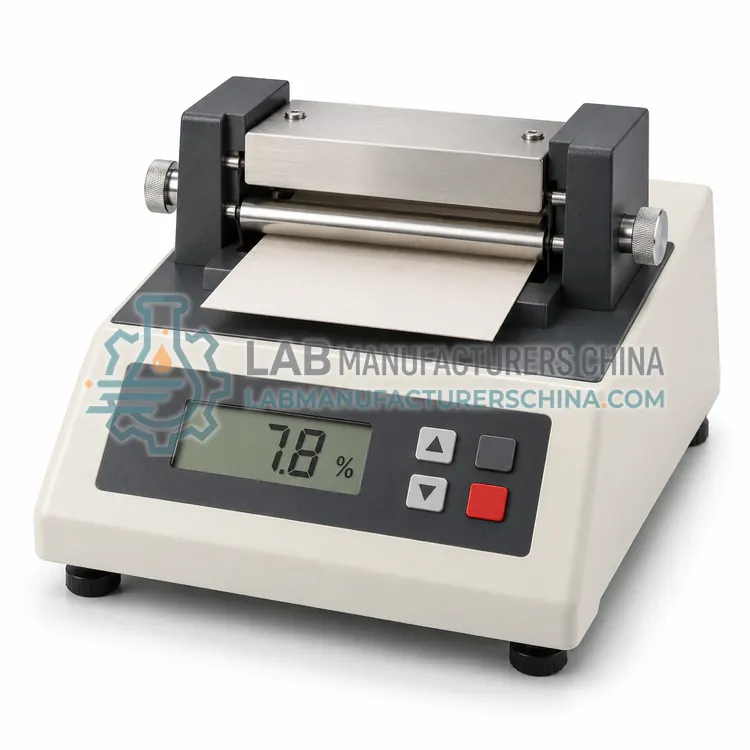
Moisture Testing
纸张水分测定仪
Moisture testing of paper determines the water content of pulp, paper and board using oven drying, halogen drying, Karl Fischer titration, microwave or near-infrared methods. Moisture affects strength, printability, dimensional stability and converting yield, so it is controlled at every stage from stock preparation to finishing.
- TTE5 models
Thickness Testing
纸张厚度测定仪
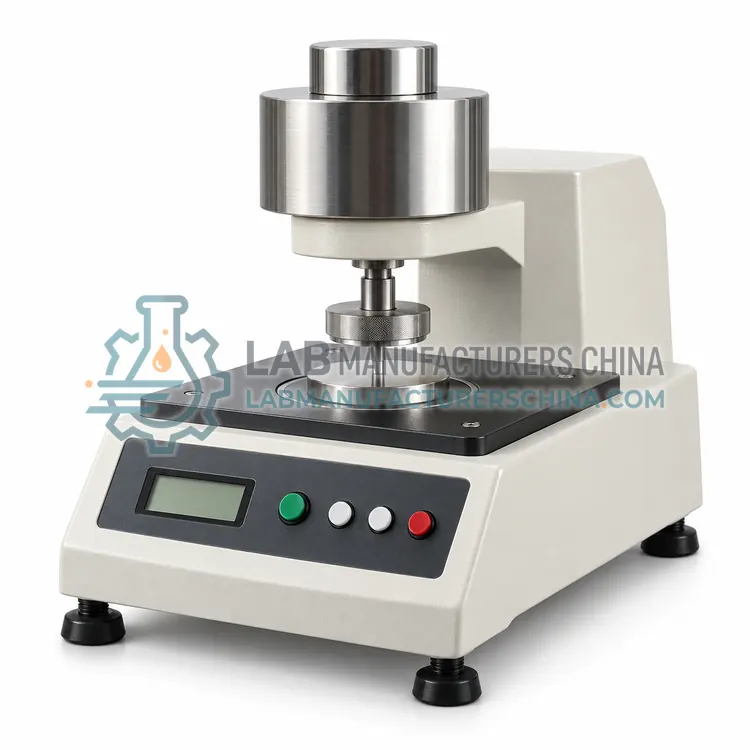
Paper thickness testing measures the distance between the two surfaces of a sheet or board under a specified pressure using a defined contact foot. Thickness with basis weight gives apparent density, and it determines converting performance, print uniformity and packaging strength.
- BRT5 models
Brightness Testing
纸张光学性能测定仪
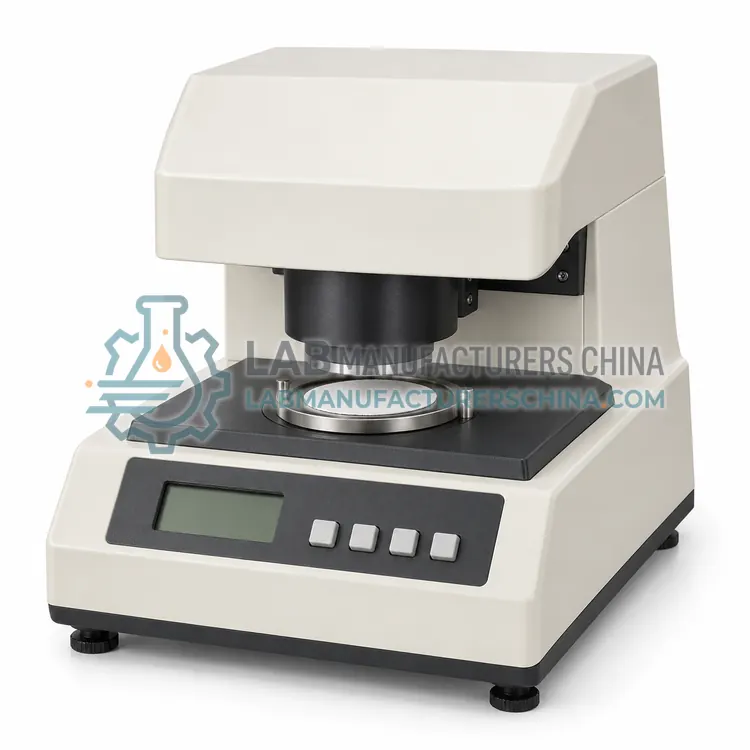
Brightness and related optical tests measure how paper reflects light in the blue region, how white it appears under defined illuminants, how much of the light it transmits, and how coloured it is. These values control the appearance of printed and packaging grades and are specified in nearly every paper product standard.
- BUA5 models
Burst Analysis
纸张耐破度测定仪
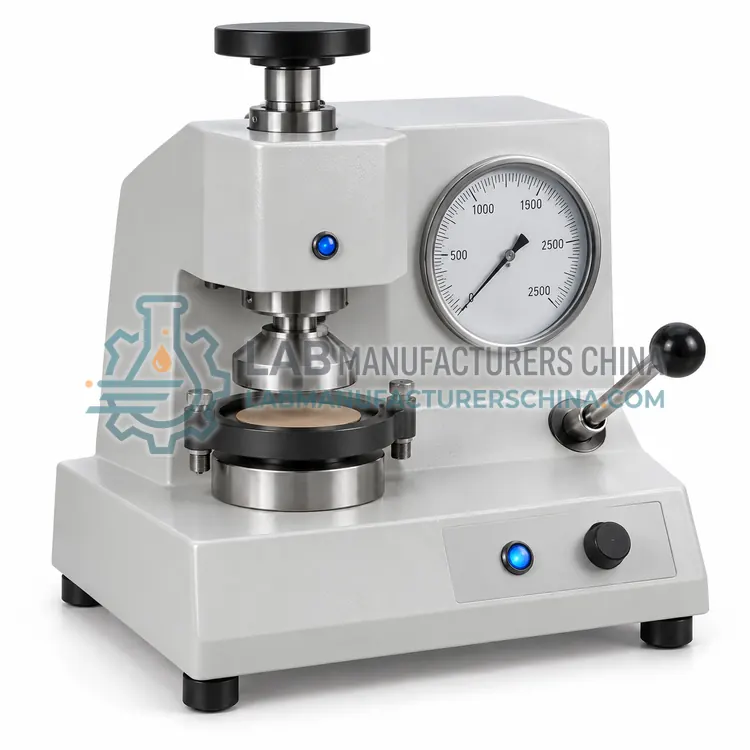
Burst testing measures the maximum hydraulic pressure a clamped paper, board or corrugated specimen withstands before it ruptures, expressed as bursting strength in kilopascals. It indicates the combined strength of the sheet and is widely specified for packaging and bag grades.
- PQA5 models
Paper Quality Analysis
纸张物理性能试验机
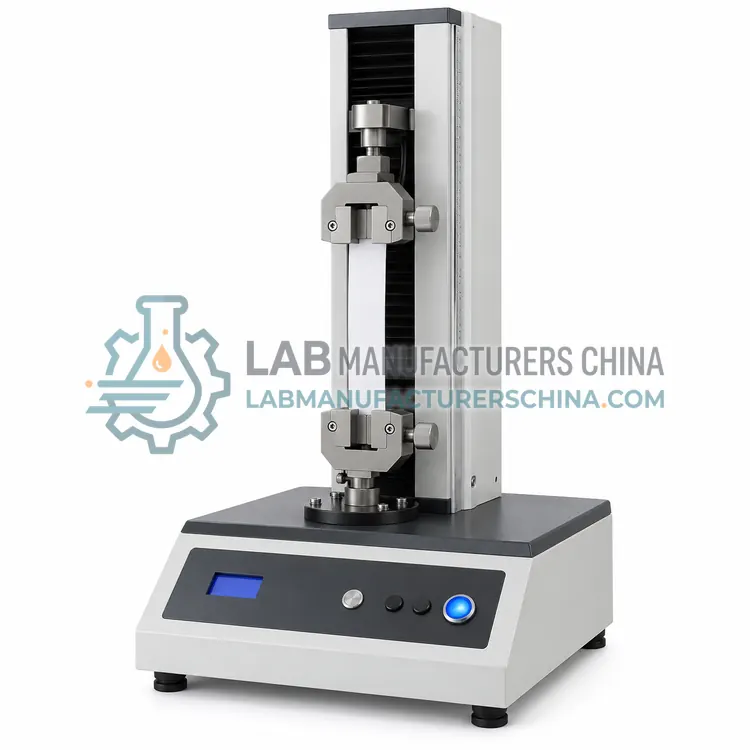
Paper quality testing measures the mechanical and surface properties that determine how a sheet performs in printing, converting and packaging, including tensile strength, tearing resistance, water absorbency, smoothness, porosity and folding endurance. These tests form the basis of grade specifications and runnability acceptance.
What are Paper Analysis Equipment?
Paper analysis equipment is the group of instruments used to measure the physical and optical properties that define paper and board quality. Moisture testers determine water content, which affects weight, strength and dimensional stability. Thickness gauges measure caliper and bulk. Brightness and color meters quantify optical appearance. Burst testers measure resistance to pressure, a key property for corrugated board and packaging. Broader quality analysis includes tensile, tear, smoothness, porosity and grammage. Because paper is hygroscopic and anisotropic, results depend on conditioning and on the direction the sample is cut from the sheet. Mills test during production and on finished reels, while converters test incoming paper and finished boxes. Standardized methods allow buyers and suppliers to compare results reliably.
How do Paper Analysis Equipment work?
Each instrument converts a physical property into a number under standard conditions. Moisture may be measured by oven drying with a balance, by a halogen or infrared moisture analyzer, or by the change in electrical resistance or capacitance of the sheet. A thickness gauge presses a flat anvil on the sheet at a defined pressure and reads the displacement with a precision sensor. Brightness meters illuminate the sample at a defined geometry and measure diffuse reflectance at 457 nm, with a photodetector and calibrated standards. A burst tester clamps a circular area of sheet and inflates a rubber diaphragm with hydraulic fluid until the paper ruptures, recording peak pressure. Samples are first conditioned at 23 C and 50 percent relative humidity to give repeatable results.
Where are Paper Analysis Equipment used?
Paper mills use moisture, thickness, brightness and burst data to control the machine, grade reels and certify product to customers. Corrugated board and carton manufacturers rely on burst strength and moisture to verify that board will survive stacking and transport. Printers and converters check brightness and thickness for print quality and runnability. Tissue, specialty paper and label producers monitor caliper and optical properties for consistent performance. Recycled paper operations test brightness and strength of deinked pulp products. Independent laboratories run these standard tests for third-party verification and dispute settlement. Quality teams also use the data to investigate problems such as curl, cracking at the fold, poor printability, or packaging failures during distribution.
Which standards apply to Paper Analysis Equipment?
Paper testing is highly standardized by ISO, TAPPI and GB/T methods. Sample conditioning follows ISO 187. Moisture content by oven drying is covered by ISO 287. Thickness and bulk follow ISO 534. ISO brightness is measured per ISO 2470-1, with color by ISO 5631. Burst strength of paper follows ISO 2758 and that of board ISO 2759. Tensile properties follow ISO 1924-2, tear strength ISO 1974, and smoothness ISO 8791. Equivalent TAPPI methods such as T 403 for bursting and T 452 for brightness are widely used in North America, and the Chinese GB/T series mirrors many ISO methods. Confirm which standard your customer specifies, since pressure, geometry and sample size differ between them.
How do I select the right paper analysis equipment?
Select instruments according to the grades you make and the standards your customers cite. A mill producing printing paper will prioritize brightness, thickness and moisture, while a corrugated plant will weight burst strength and compression. Check measuring range against your product: for example, a burst tester for kraft liner needs a higher pressure range than one for tissue. Compare accuracy, resolution, automatic sample feeding and software for statistics and reports. Decide between laboratory bench instruments and online sensors based on whether you need fast feedback for machine control. Ensure conditioning rooms or cabinets are available, since unconditioned paper gives unreliable results. Finally confirm calibration standards, such as certified brightness tiles and thickness gauge blocks, are available locally.
Paper Analysis Equipment comparison
| Subcategory | Principle | Typical use | Key spec |
|---|---|---|---|
| Moisture Testing | Oven, halogen, capacitance or IR | Moisture content control | Resolution of 0.01 percent |
| Thickness Testing | Anvil pressure and displacement sensing | Caliper and bulk | Resolution of 1 micrometer |
| Brightness Testing | Diffuse reflectance at 457 nm | Optical appearance control | Measuring geometry d/0 |
| Burst Analysis | Hydraulic diaphragm inflation to rupture | Packaging strength | Pressure range up to 1600 kPa |
| Paper Quality Analysis | Tensile, tear, smoothness and porosity | Overall runnability and print quality | Force and range of each module |
Frequently asked questions about Paper Analysis Equipment
Common paper quality instruments include moisture analyzers, thickness gauges, brightness and color meters, burst testers, tensile and tear testers, smoothness and porosity testers, and balances for grammage. Together they describe strength, appearance and runnability.
Paper absorbs and releases moisture with the surrounding air, changing its weight, stiffness and strength. Conditioning at 23 C and 50 percent relative humidity, as specified in ISO 187, brings samples to equilibrium so results are repeatable and comparable.
A burst tester measures the hydrostatic pressure needed to rupture a clamped circular area of paper or board when a rubber diaphragm is inflated beneath it. The result in kPa indicates resistance to pressure and is widely used for packaging grades.
ISO brightness is the diffuse blue reflectance factor of paper at an effective wavelength of 457 nm, measured with a defined instrument geometry per ISO 2470-1. It is expressed as a percentage relative to a perfect reflecting diffuser.
Paper moisture is measured by oven drying a weighed sample to constant mass, as in ISO 287, or faster with halogen or infrared moisture analyzers. Online sensors use capacitance or infrared absorption to track moisture continuously on the machine.
Related categories
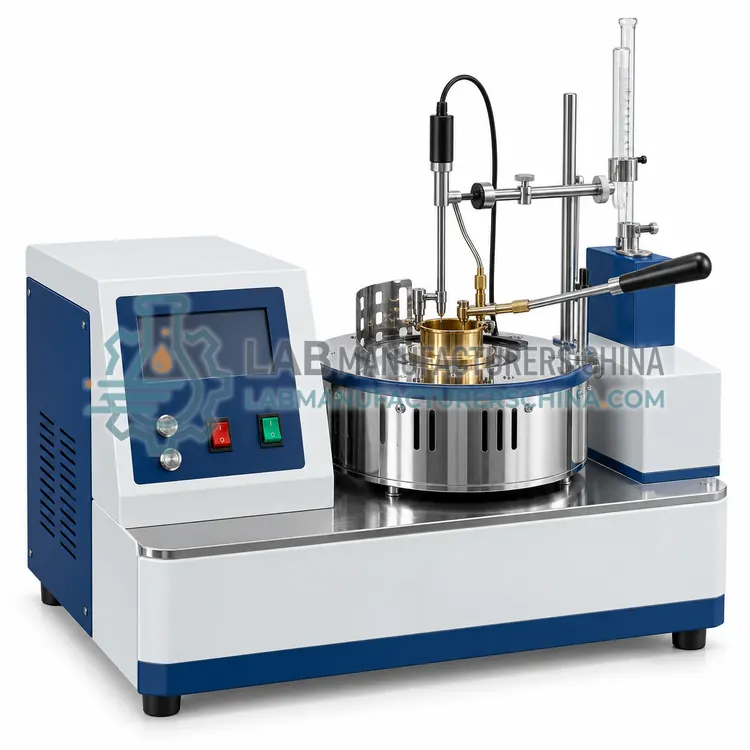 CPTE石油测试设备Petroleum testing equipment covers laboratory instruments that measure the physical, chemical and performance properties of crude oil and refined products, including flash point, distillation range, viscosity, sulfur content and octane or cetane quality. Refineries, terminals, fuel distributors and independent inspection laboratories use them to verify product specifications.
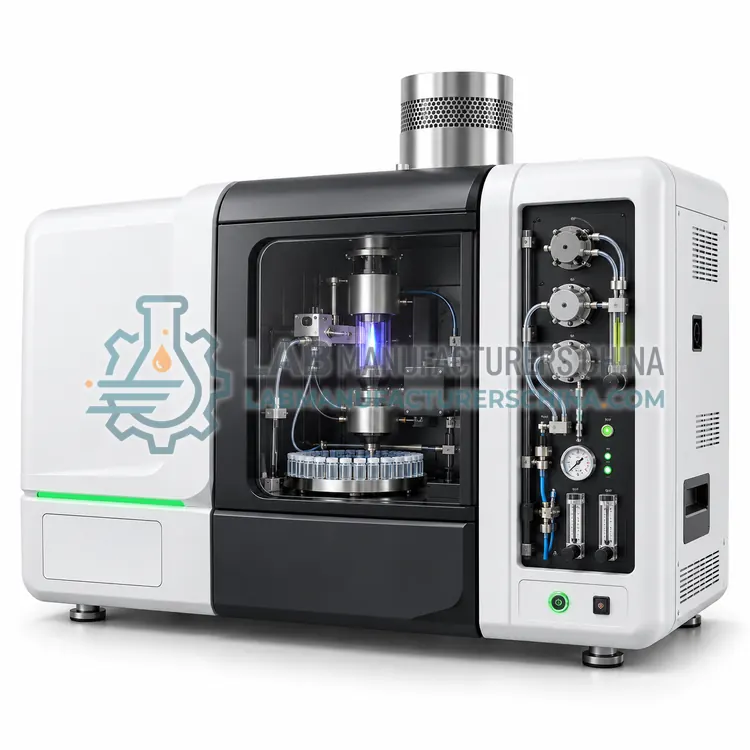 COTE油品检测设备Oil testing equipment covers laboratory and field instruments that measure the physical, chemical and electrical properties of mineral oils, insulating oils, edible oils and fuel oils. It is used by utilities, refineries, food processors and maintenance teams to verify quality, detect degradation and decide on oil change or treatment.
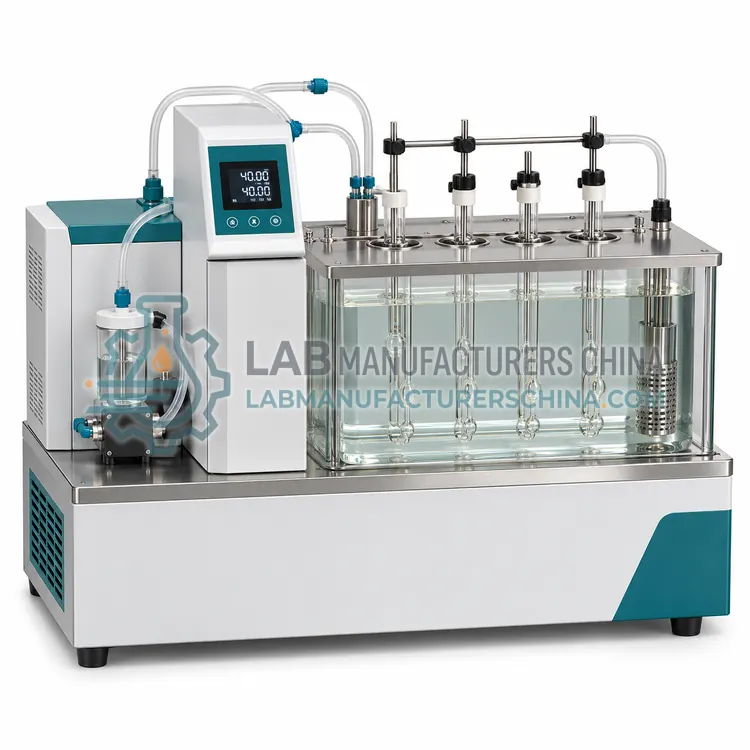 CLTE润滑剂检测设备Lubricant testing equipment covers instruments that measure the viscosity, wear protection, grease consistency, oxidation resistance and in-service condition of lubricating oils and greases. Lubricant formulators, base-oil producers, equipment makers and maintenance laboratories use it to qualify products and track degradation.
 CCTE煤炭检测设备Coal testing equipment covers laboratory instruments that measure the quality and composition of coal and coke, including calorific value, ash, sulfur, moisture and volatile matter. Mines, power plants, steel mills and trading laboratories use it to grade coal, price shipments and confirm contract and emissions compliance.