
Mining Laboratory Equipment
矿业实验室设备
CMLE · Petroleum, Mining & Industrial Analysis · 5 product types · 25 models
By Lab Manufacturers China Technical TeamLast reviewed
What are Mining Laboratory Equipment?
Mining laboratory equipment covers the instruments used to prepare mineral samples and to test ore properties: crushers, pulverizers, splitters and flotation cells, together with mineral analysis instruments such as X-ray diffraction and automated mineralogy systems. Mines, concentrators, geologists and assay laboratories use them.
5 product types in Mining Laboratory Equipment
The 5 product types below are grouped by the exact instrument you need.
- SCR5 models
Sample Crushers
矿石破碎机
Sample crushers reduce hard rock, ore and drill core from coarse lumps to a few millimetres in preparation for pulverizing and assay. Mineral laboratories use jaw, roll, cone and hammer crushers, choosing the machine by feed size, required product size and contamination tolerance.
- PUL5 models
Pulverizers
矿物制粉机
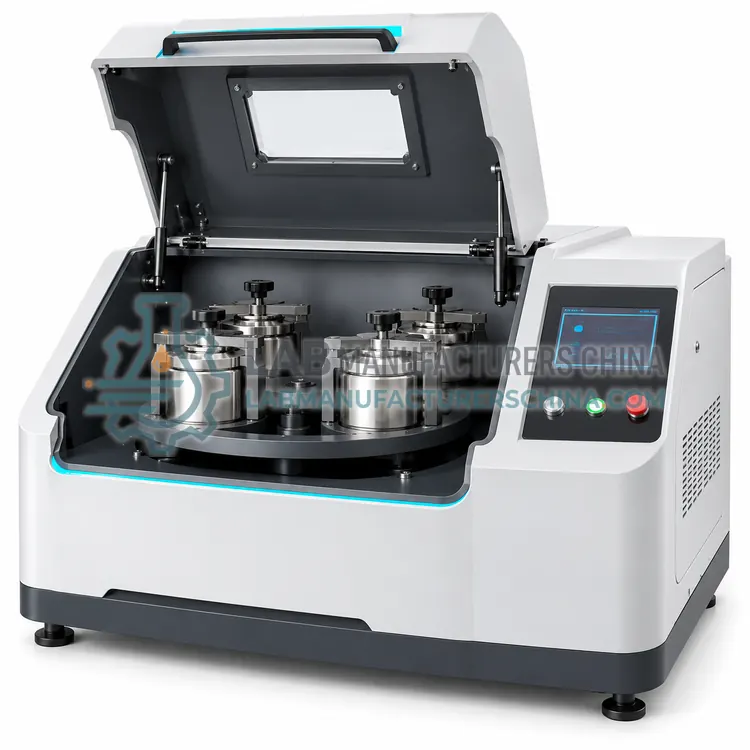
Mineral pulverizers grind crushed ore and rock to the fineness required for chemical assay or mineralogical study, typically 75 to 200 µm. Laboratories use ball, disc, mortar and jet mills, chosen by required size, sample mass, throughput and contamination limits.
- SPL5 models
Splitters
矿石缩分器
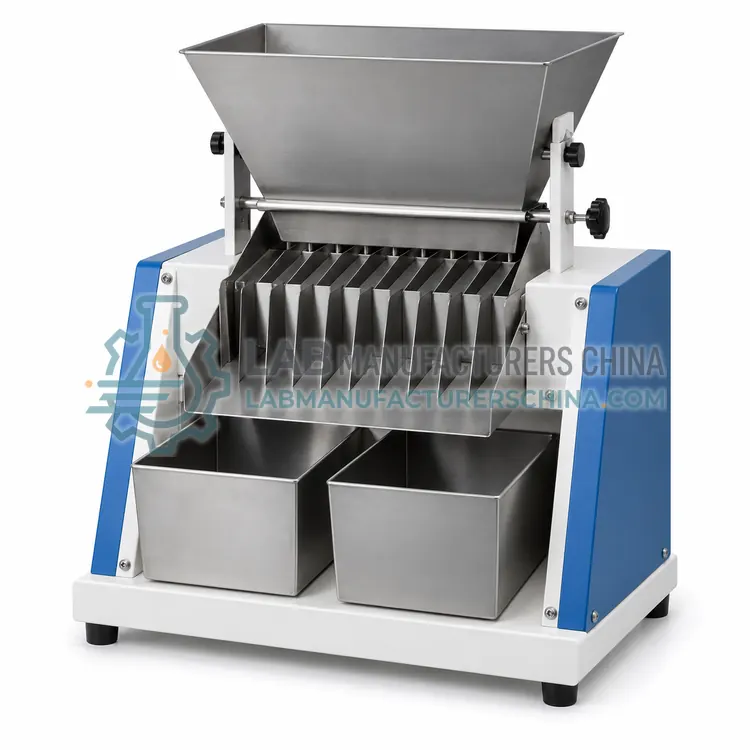
Splitters reduce a mineral sample to a representative subsample by mass and are used at every stage of ore preparation. Riffle, Vezin, rotary and cone dividers, and slurry splitters for pulps, are selected by particle size and sample mass.
- FLE5 models
Flotation Equipment
浮选试验设备
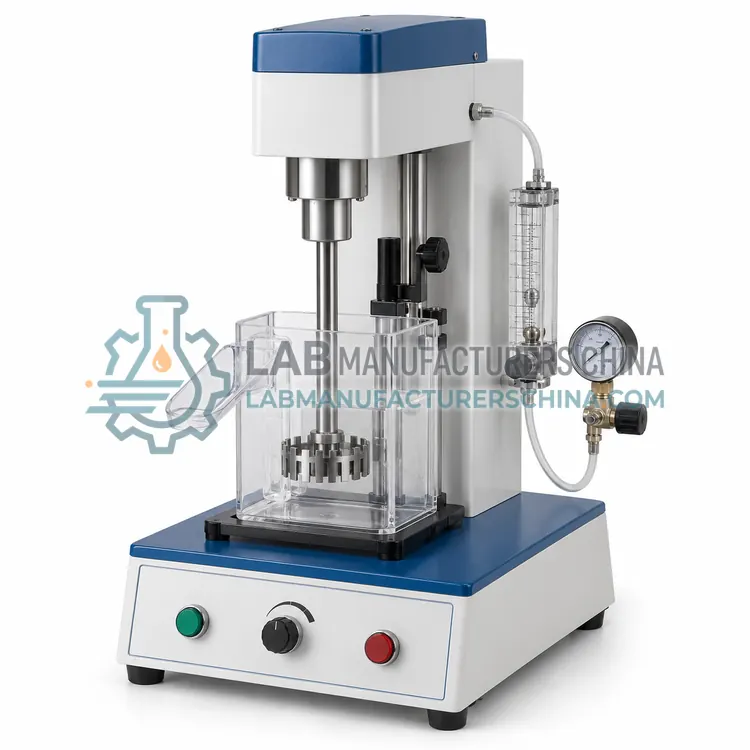
Flotation equipment reproduces concentrator froth flotation at bench scale, agitating a pulp with reagents and dispersing air to float selected minerals. Laboratories use it to test reagent schemes, pH, grind size and circuit configurations before plant trials.
- MIA5 models
Mineral Analysis
矿物分析仪器
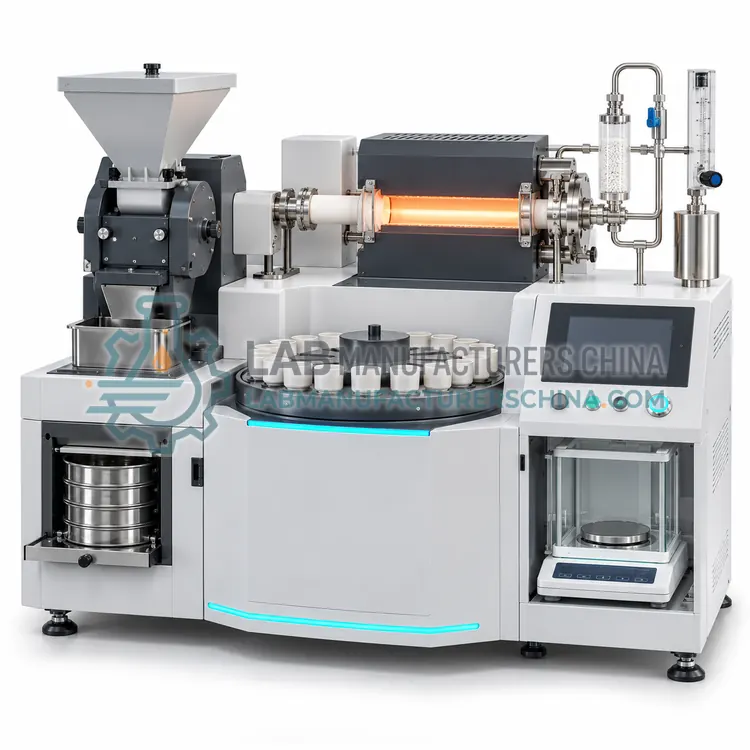
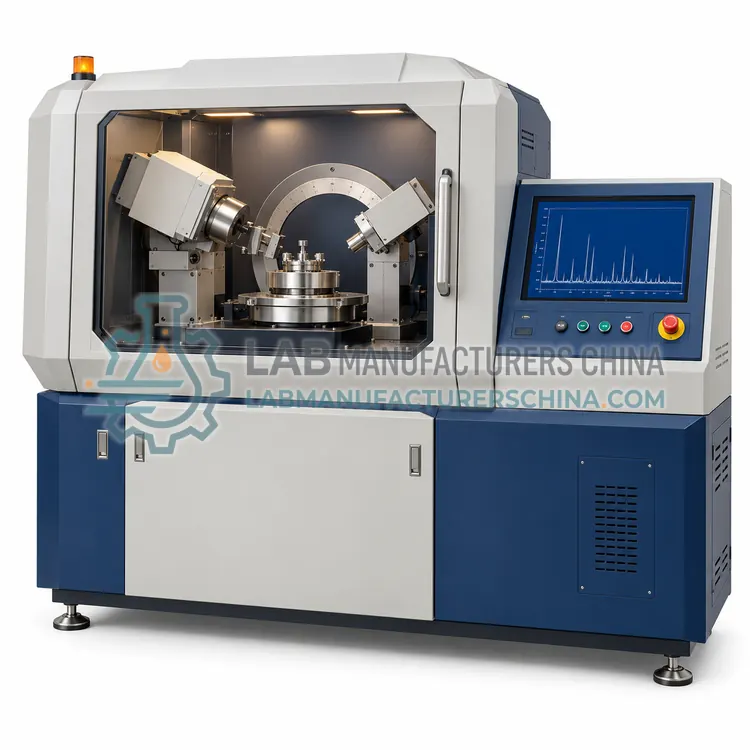
Mineral analysis in the mining laboratory identifies and quantifies the phases, elements and physical properties of ore, concentrates and tailings. X-ray diffraction, automated mineralogy, X-ray fluorescence and density or magnetic separation tests are combined to characterize a deposit.
What are Mining Laboratory Equipment?
Mining laboratory equipment is the instrument set that a mine, concentrator or geological laboratory uses to turn a field sample into a size-reduced, representative portion and then to measure the properties that determine how the ore will be processed. The chain usually begins with crushing and pulverizing, continues with splitting to obtain representative subsamples, and is followed by physical tests such as flotation, grindability, magnetic separation and density analysis, or by compositional analysis with X-ray diffraction, X-ray fluorescence and automated mineralogy. Sample preparation equipment is designed so that hard, abrasive rock and ore can be reduced without contaminating the sample with iron or chromium, because trace metals matter in assay work. Flotation and other process test units reproduce plant conditions at bench scale, usually following published procedures from ISO or ASTM, so that the results can be used for design and reconciliation.
How do Mining Laboratory Equipment work?
Size reduction works in stages because a single machine cannot reduce a 50 mm lump to 75 µm economically. Jaw and cone crushers break coarse rock by compression between steel surfaces, roll crushers crush further by passing material between two rotating rolls, and hammer mills or disc mills use impact and attrition. Pulverizing to analysis fineness is done in ring mills, planetary ball mills or mortar grinders, where impact and friction act on a small charge in a sealed bowl. Splitting devices reduce mass proportionally: riffle splitters pass material through alternating chutes, rotary dividers collect a falling stream in rotating vessels, and Vezin dividers take a sector-shaped cut from a falling stream. Flotation test cells agitate a pulp with reagents and disperse air to form a froth that carries selected minerals upward for collection. Mineral analysis instruments identify and quantify phases by diffraction, fluorescence or automated image analysis of polished sections.
Where are Mining Laboratory Equipment used?
Mines and concentrators use these instruments to characterize ore before flowsheet design, to check plant feed and product assays, and to test reagent schemes in flotation. Geological surveys and exploration companies test drill core and outcrop samples to establish grade, mineralogy and grindability, which feed resource estimates. Assay laboratories prepare and analyze concentrates, tailings and smelter feeds. Cement and industrial mineral producers test limestone, clay, silica sand and aggregates for chemical composition and physical properties. Research groups use automated mineralogy and diffraction to study liberation, alteration and phase changes. Because sample preparation determines the representativeness of every subsequent test, laboratories usually validate the whole chain, from field sample to analytical portion, with reference materials and replicate splits.
Which standards apply to Mining Laboratory Equipment?
Sampling and sample preparation procedures come from ISO 3082 for iron ores, ISO 12743 for copper, lead and zinc concentrates, and ASTM E877, which also defines the mass and particle size requirements at each stage. Froth flotation testing of hard coal is described in ISO 8858-1, and similar bench procedures exist for sulfide ores in industry practice. Chemical analysis of ores and concentrates refers to methods such as ISO 9516-1 and ISO 11535 for iron ores, with laboratory accreditation to ISO/IEC 17025 requiring method verification and proficiency testing. Crushing strength and grindability tests use procedures such as the Bond work index. Mineralogy by diffraction and automated image analysis is usually reported with documented reference standards, since no single international method covers all ore types. Instrument electrical safety is assessed to IEC 61010-1.
How do I select the right mining laboratory equipment?
Build the chain from the required final particle size backwards. Match the maximum feed size to the first crusher, and step reduction ratios down through roll or cone crushers, then pulverize to the fineness your analysis requires, usually 75 µm for assay work. Decide how much sample must be retained at each stage using the sampling standard, and then choose splitting equipment that handles that top size and mass. For flotation, select cell volume from the ore mass available: 1 to 3 L cells suit most bench tests, while larger cells are used for locked-cycle work. For mineral analysis, match the technique to the question: diffraction for phases, fluorescence for element concentrations, automated mineralogy for liberation and association. Always check contamination risk, since grinding media of hardened steel or chrome steel can bias trace element and iron assays.
Mining Laboratory Equipment comparison
| Subcategory | Principle | Typical use | Key spec |
|---|---|---|---|
| Sample Crushers | Compression, impact and roll crushing of coarse rock | First and second stage size reduction of ore | Feed 50–100 mm down to 1–10 mm |
| Pulverizers | Impact and attrition grinding in sealed bowls | Grinding to analysis fineness for assay | Product down to 75 µm |
| Splitters | Proportional mass reduction of flowing or poured samples | Obtaining representative subsamples | Split mass deviation ≤ 2–5 % |
| Flotation Equipment | Agitation and aeration of pulp with reagents to raise a froth | Bench testing of reagent schemes and circuits | Cell volume 0.5–10 L |
| Mineral Analysis | Diffraction, fluorescence and automated image analysis | Phase, element and liberation characterization | Detection from major to trace levels |
Frequently asked questions about Mining Laboratory Equipment
Crushers, pulverizers and splitters for preparing ore samples, flotation and other bench process test units, and mineral analysis instruments such as X-ray diffraction, X-ray fluorescence and automated mineralogy systems used to characterize ore.
Reduction ratio per stage is limited before equipment stalls or contaminates the sample, so material passes through two or three stages from coarse lump to pulverized powder. Each stage is followed by mixing and splitting to keep the sample representative.
The minimum mass depends on the top particle size and is defined in sampling standards such as ISO 3082 and ASTM E877. Retained mass decreases as particle size decreases, so dividing must follow effective size reduction.
A bench procedure in which intermediate products are recirculated between successive flotation stages until steady state is reached, so that the test approximates a continuous circuit and predicts concentrate grade and recovery more realistically.
Grinding bowl and media materials are selected for the elements being assayed: tungsten carbide for general work, agate or zirconia for trace element and iron-sensitive analyses. Bowls are cleaned between samples and blanks are run regularly.
X-ray diffraction identifies crystalline phases, X-ray fluorescence measures element concentrations, and automated mineralogy systems quantify mineral abundance, grain size and liberation from polished sections. The choice depends on whether the question is chemical or textural.
Related categories
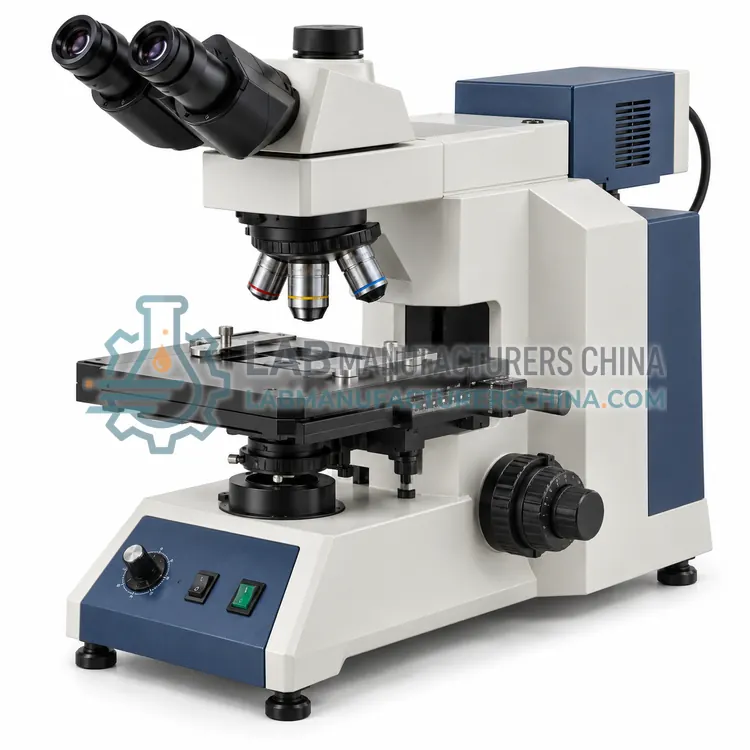 CMET金相与冶金实验室设备Metallurgical laboratory equipment covers the instruments used to prepare metal specimens, examine microstructure, test mechanical properties and determine chemical composition. Foundries, steel mills, heat treaters, welding shops and inspection bodies use it for quality control and failure analysis.
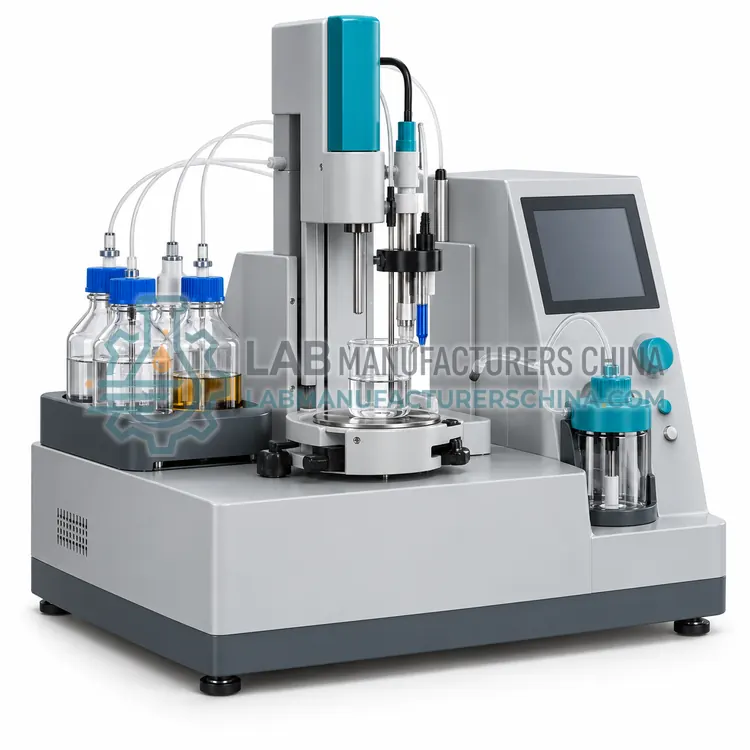 CCAE化学分析设备Chemical analysis equipment covers instruments that determine the composition and concentration of substances in industrial, petroleum, mining and environmental samples. It includes titrators, spectrometers, elemental analyzers, electrochemical analyzers and sample preparation systems used by QC laboratories, refineries, mineral assay labs and research institutes.
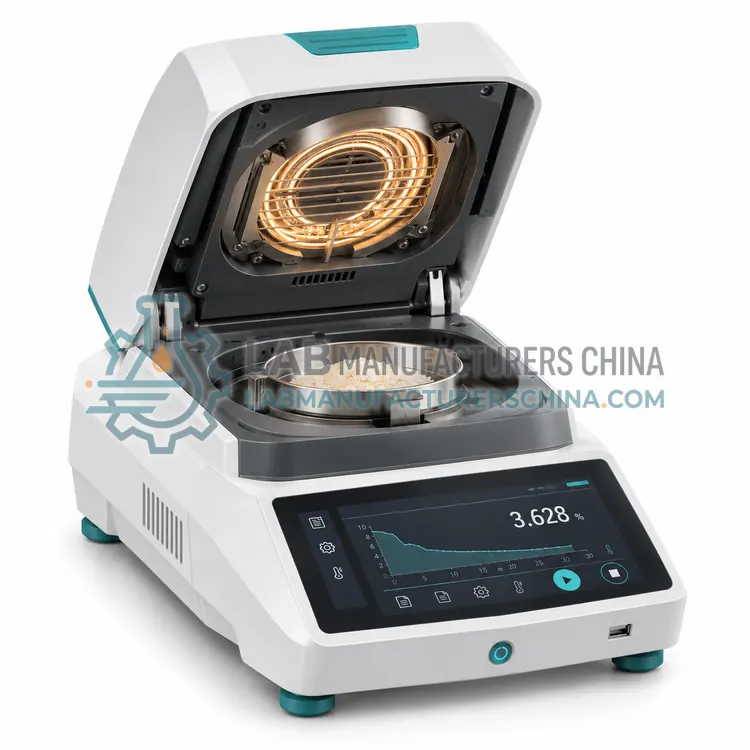 CIQC工业质量控制设备Industrial quality control equipment covers the analyzers, inspection tools, in-line process instruments, measurement systems and sample preparation devices used to verify that raw materials, intermediates and finished goods meet specification. It serves production laboratories, incoming inspection, process engineering and quality assurance teams across manufacturing sectors.
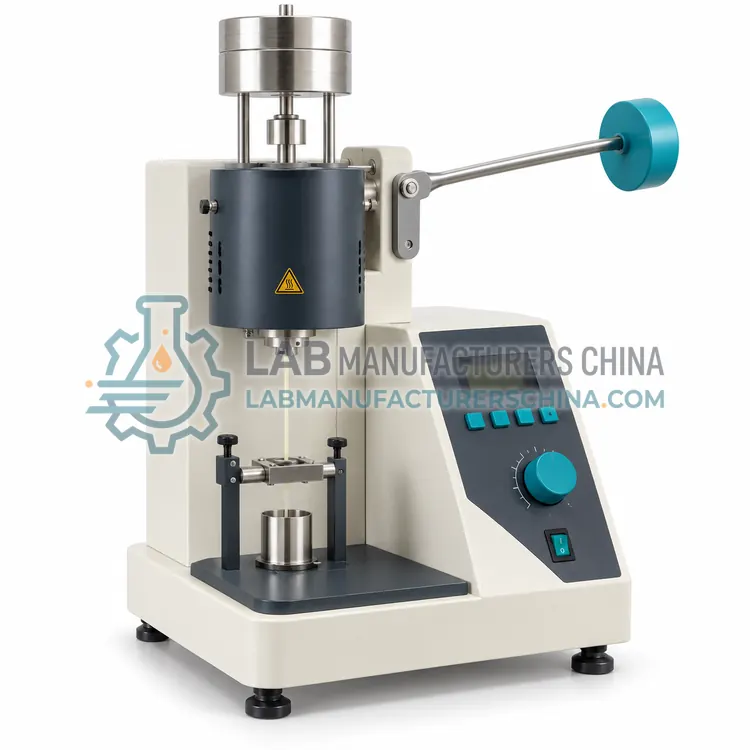 CPOL聚合物分析设备Polymer analysis equipment characterizes how plastics, elastomers and resins flow, melt, degrade and absorb light. It includes melt flow testers, differential scanning calorimeters, thermogravimetric analyzers, rheometers and spectrometers used by resin producers, compounders, converters and materials research laboratories to verify grade, composition and processing behavior.