Lab Manufacturers China

Mineral Analysis

矿物分析仪器

MIA · Mining Laboratory Equipment · 5 models

By Lab Manufacturers China Technical TeamLast reviewed Standards: ISO 9516-1, ISO 11535, ISO 3082

Standards referenced

  • ISO 9516-1
  • ISO 11535
  • ISO 3082
  • ASTM E877
  • ISO 13320
  • IEC 61010-1

What are Mineral Analysis?

Mineral analysis in the mining laboratory identifies and quantifies the phases, elements and physical properties of ore, concentrates and tailings. X-ray diffraction, automated mineralogy, X-ray fluorescence and density or magnetic separation tests are combined to characterize a deposit.

5 models of Mineral Analysis

The 5 models below are current configurations; specifications are confirmed on quotation.

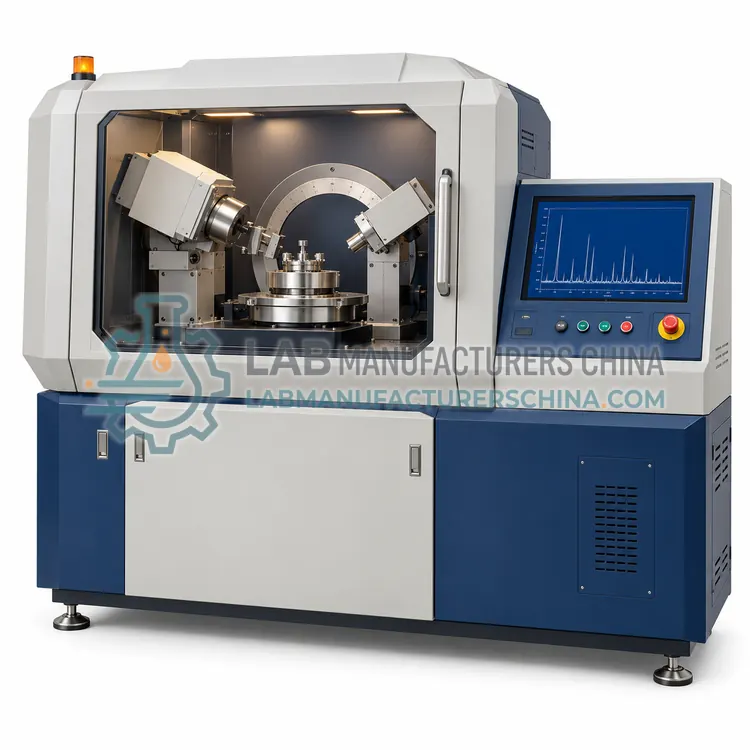
X-ray Diffraction Analyzer for Minerals

矿物 X 射线衍射分析仪

  • MIA-0001
  • Mineral Analysis
  • CE (to be confirmed)
  • ISO 9001 manufacturing (to be confirmed)
Two-theta range:
3–160°
Angular accuracy:
± 0.01°
X-ray tube:
Cu anode, 1–3 kW
Detector:
Silicon strip or solid state
Minimum scan time:
5–15 min per pattern
Phase detection limit:
About 0.5–1 % with careful preparation

An X-ray diffraction analyzer identifies and quantifies crystalline phases in ore and process samples by measuring diffraction angles and peak intensities. It detects even minor phases and supports Rietveld quantification with careful sample preparation.

Request a quote
View details

Automated Mineralogy System

自动矿物学分析系统

  • MIA-0002
  • Mineral Analysis
  • CE (to be confirmed)
  • ISO 9001 manufacturing (to be confirmed)
Accelerating voltage:
15–25 kV
Detector:
Energy-dispersive X-ray spectrometer
Measurement spacing:
1–20 µm selectable
Sample format:
Polished resin block, 25–50 mm
Analysis time per sample:
20 min to 6 h depending on spacing
Minimum grain size resolved:
About 1–2 µm

An automated mineralogy system combines a scanning electron microscope with energy-dispersive spectrometry and software to map minerals on polished sections. It quantifies mineral abundance, grain size, association and liberation by size class, supporting circuit design and plant diagnosis.

Request a quote
View details

X-ray Fluorescence Spectrometer for Mineral Assay

矿石化验 X 射线荧光光谱仪

  • MIA-0003
  • Mineral Analysis
  • CE (to be confirmed)
  • ISO 9001 manufacturing (to be confirmed)
Element range:
Na to U with vacuum or helium path
Concentration range:
From about 1 mg/kg to 100 %
X-ray tube power:
1–4 kW
Detector:
Flow proportional and scintillation, or SDD
Sample format:
Pressed pellet or fused bead, 32–40 mm
Measurement time:
2–10 min per sample

An X-ray fluorescence spectrometer determines element concentrations in ores, concentrates and tailings from pressed powders or fused beads, covering major and trace elements in one measurement. It is the workhorse of mineral assay.

Request a quote
View details

Davis Tube Magnetic Separator for Mineral Testing

戴维斯管磁选试验机

  • MIA-0004
  • Mineral Analysis
  • CE (to be confirmed)
  • ISO 9001 manufacturing (to be confirmed)
Feed particle size:
< 0.5 mm typical
Pulp density:
10–20 % solids by mass
Magnetic field strength:
Up to about 0.2 T, adjustable
Tube diameter:
10–25 mm
Tube inclination:
About 30° adjustable
Wash water rate:
200–800 mL/min

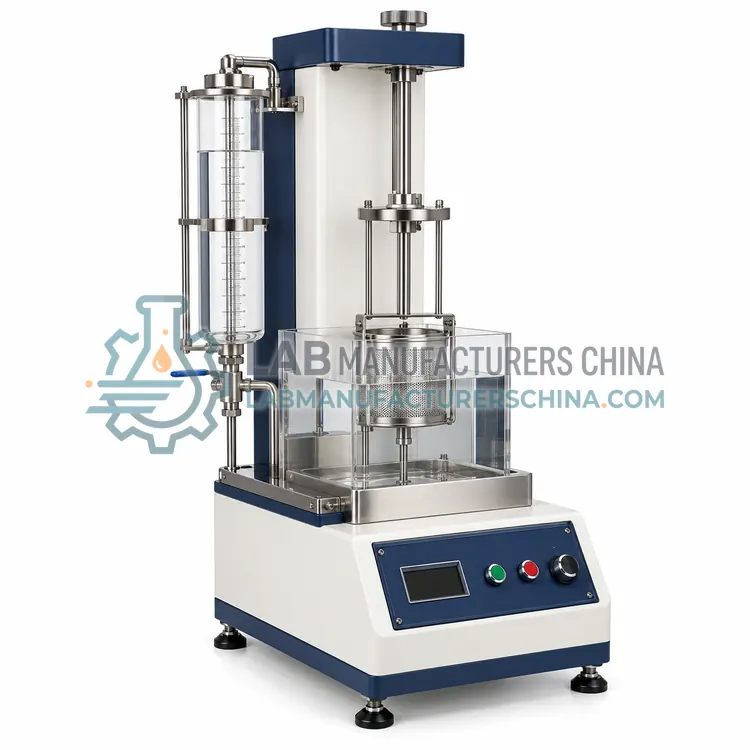
A Davis tube magnetic separator passes a dilute ore pulp through a magnetic field in a glass tube and collects the magnetic fraction, quantifying magnetic recovery, iron grade and the mass yield of a magnetite concentrate.

Request a quote
View details

Sink-Float Analysis Apparatus for Density Separation

浮沉分析装置

  • MIA-0005
  • Mineral Analysis
  • CE (to be confirmed)
  • ISO 9001 manufacturing (to be confirmed)
Specific gravity range:
1.25–3.5 depending on liquid
Particle size:
0.5–50 mm depending on vessel
Sample mass:
0.5–50 kg per test
Liquid temperature control:
± 1 °C recommended
Vessel volume:
2–50 L
Recovery screens:
0.5 and 1 mm apertures

A sink-float apparatus separates a mineral or coal sample in liquids of known specific gravity, giving float and sink fractions that describe composition and washability. It is used for gravity circuit design and quality control.

Request a quote
View details

Compare Mineral Analysis models

ModelDetectorSample format
X-ray Diffraction Analyzer for MineralsMIA-0001Silicon strip or solid state—
Automated Mineralogy SystemMIA-0002Energy-dispersive X-ray spectrometerPolished resin block, 25–50 mm
X-ray Fluorescence Spectrometer for Mineral AssayMIA-0003Flow proportional and scintillation, or SDDPressed pellet or fused bead, 32–40 mm
Davis Tube Magnetic Separator for Mineral TestingMIA-0004——
Sink-Float Analysis Apparatus for Density SeparationMIA-0005——

Indicative values for this product class. Final specifications are confirmed on the quotation and in the calibration documents supplied with the instrument.

How do Mineral Analysis work?

Each technique answers a different question. X-ray diffraction measures the angles at which a crystalline sample diffracts a monochromatic beam; lattice spacings follow Bragg's law, and the resulting pattern identifies phases, with peak intensities refined to give approximate weight fractions. Automated mineralogy combines a scanning electron microscope with energy-dispersive spectrometry, acquiring element maps of polished sections and converting them into mineral classifications, from which abundance, grain size, association and liberation are calculated. X-ray fluorescence excites a pressed or fused sample and measures the fluorescent radiation of each element, giving concentrations from major to trace levels after matrix correction. Density separation compares a sample's behaviour in a liquid of known specific gravity, which indicates mineral composition and washability. Magnetic separation tests quantify the fraction that is recoverable by magnetic separation, which matters for magnetite ores and for removing iron-bearing gangue.

Which Mineral Analysis variants are available?

  • X-ray Diffraction Analyzer for Minerals — An X-ray diffraction analyzer identifies and quantifies crystalline phases in ore and process samples by measuring diffraction angles and peak intensities.
  • Automated Mineralogy System — An automated mineralogy system combines a scanning electron microscope with energy-dispersive spectrometry and software to map minerals on polished sections.
  • X-ray Fluorescence Spectrometer for Mineral Assay — An X-ray fluorescence spectrometer determines element concentrations in ores, concentrates and tailings from pressed powders or fused beads, covering major and trace elements in one measurement.
  • Davis Tube Magnetic Separator for Mineral Testing — A Davis tube magnetic separator passes a dilute ore pulp through a magnetic field in a glass tube and collects the magnetic fraction, quantifying magnetic recovery, iron grade and the mass yield of a magnetite concentrate.
  • Sink-Float Analysis Apparatus for Density Separation — A sink-float apparatus separates a mineral or coal sample in liquids of known specific gravity, giving float and sink fractions that describe composition and washability.

How do I choose the right variant?

Choose the technique by the question, not by habit. Bulk element concentrations, including penalty elements, are best determined by X-ray fluorescence with pressed powders for speed or fused beads for accuracy. Phase identification and quantification require X-ray diffraction, which is also used to follow alteration and to check grinding products for unwanted phases. Where the texture matters, that is, how grains are associated and how well the valuable mineral is liberated, automated mineralogy is the appropriate tool, since bulk assays cannot reveal locking. Physical tests such as density separation and magnetic separation are used to predict processing behaviour and to build washability or recovery curves. Laboratories often combine techniques: X-ray diffraction to identify what is present, X-ray fluorescence to quantify elements, and automated mineralogy to explain why a flotation or magnetic separation result was achieved.

Where are Mineral Analysis used?

Mineral Analysis are specified in ore and concentrate phase identification, elemental assay including penalty elements, mineral liberation and texture analysis, washability and magnetic recovery testing and feasibility study and plant diagnosis support.

Which standards and certifications apply?

Work with Mineral Analysis is commonly governed by ISO 9516-1, ISO 11535, ISO 3082, ASTM E877, ISO 13320 and IEC 61010-1. Instrument certifications such as CE marking are confirmed per configuration and never assumed.

What are the key considerations before purchase?

Sample preparation dominates data quality in mineral analysis. Diffraction needs a fine, randomly oriented powder, so back-loading, side-loading or spray drying is used to avoid preferred orientation, and grinding must not alter soft phases. X-ray fluorescence needs consistent particle size, binder and pressing pressure, or fused beads prepared with a suitable flux; calibration is then built from certified reference materials that bracket the sample range. Automated mineralogy relies on well-polished, carbon-coated sections and on a mineral list and classification rules that match the deposit, so the scheme should be documented and validated against assay data. Heavy liquids used in density separation are hazardous and need fume extraction, splash protection and safe disposal. Instruments require stable power, temperature control and regular performance checks with reference standards.

Frequently asked questions about Mineral Analysis

X-ray diffraction identifies crystalline phases directly from their diffraction pattern. Automated mineralogy identifies and maps minerals from element data on polished sections, and is preferred when grain size, association and liberation also need to be measured.

Need help specifying Mineral Analysis?

Request a quote