Sink-Float Analysis Apparatus for Density Separation
浮沉分析装置
- SKU MIA-0005
- Mineral Analysis
- CE (to be confirmed)
- ISO 9001 manufacturing (to be confirmed)
Price on request — FOB / CIF quoted per order
Prices depend on configuration, quantity and destination port.
Key specifications
| Specific gravity range | 1.25–3.5 depending on liquid |
|---|---|
| Particle size | 0.5–50 mm depending on vessel |
| Sample mass | 0.5–50 kg per test |
| Liquid temperature control | ± 1 °C recommended |
| Vessel volume | 2–50 L |
| Recovery screens | 0.5 and 1 mm apertures |
Request a quote Download brochure · to be provided
By Lab Manufacturers China Technical TeamLast reviewed Standards: ISO 9516-1, ISO 11535, ISO 3082
What is the Sink-Float Analysis Apparatus for Density Separation?
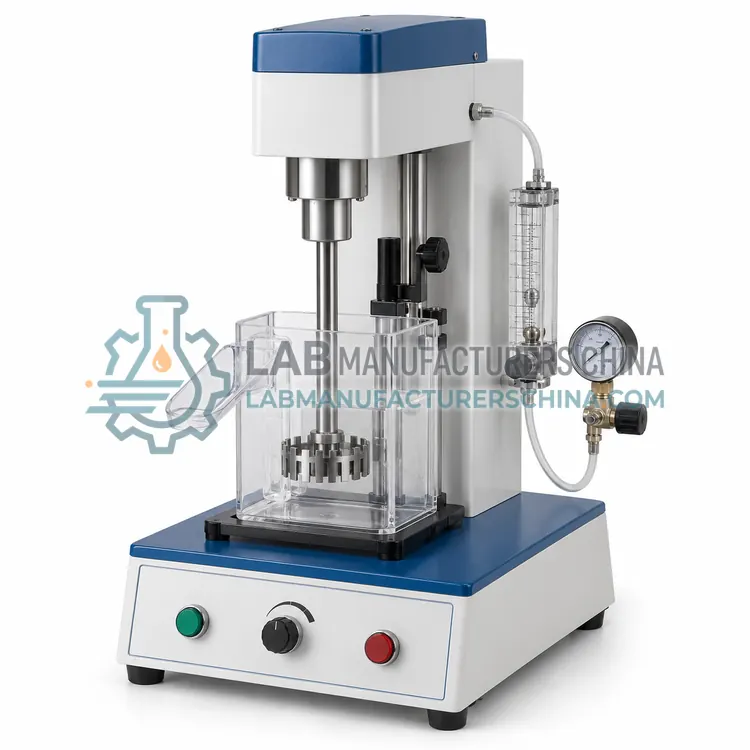
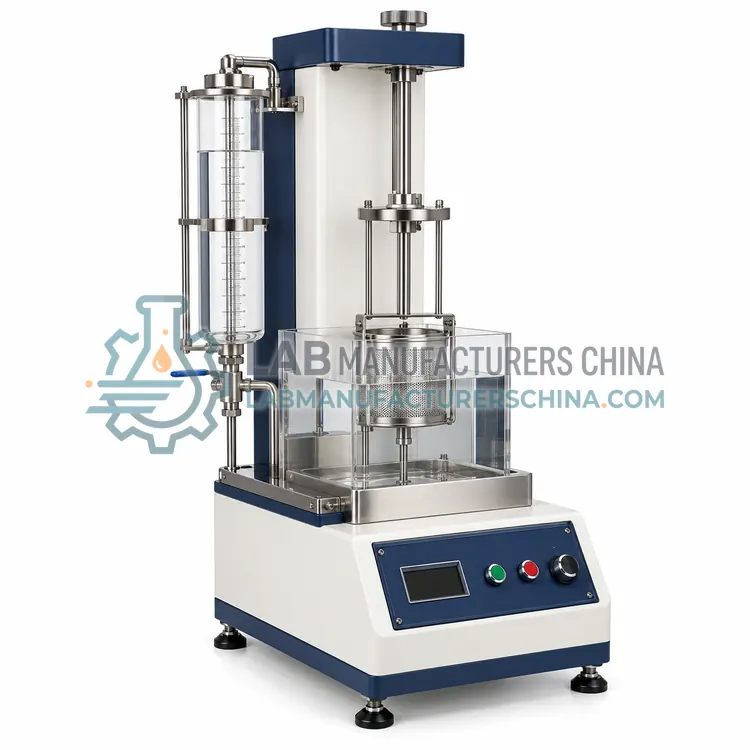
A sink-float apparatus separates a mineral or coal sample in liquids of known specific gravity, giving float and sink fractions that describe composition and washability. It is used for gravity circuit design and quality control.
What is the Sink-Float Analysis Apparatus for Density Separation?
A sink-float apparatus separates a mineral or coal sample in liquids of known specific gravity, giving float and sink fractions that describe composition and washability. It is used for gravity circuit design and quality control.
Overview
The sample is immersed in a liquid whose specific gravity lies between those of the minerals to be separated. Lighter particles float and heavier particles sink, and each fraction is recovered, washed, dried and weighed, then assayed or analysed as required. By repeating at a series of densities, a washability or partition curve is built that predicts how a dense medium or jig circuit will perform at a given cut point. Liquids range from dense salt solutions for low specific gravities to organic heavy liquids and suspensions such as fine magnetite for higher values. Apparatus includes glass or stainless steel separating vessels, stirrers, skimmers and screens for recovering fines, and drying ovens. Because many heavy liquids are toxic or volatile, fume extraction, splash protection, correct labelling and controlled disposal are essential.
How does it work?
Each technique answers a different question. X-ray diffraction measures the angles at which a crystalline sample diffracts a monochromatic beam; lattice spacings follow Bragg's law, and the resulting pattern identifies phases, with peak intensities refined to give approximate weight fractions. Automated mineralogy combines a scanning electron microscope with energy-dispersive spectrometry, acquiring element maps of polished sections and converting them into mineral classifications, from which abundance, grain size, association and liberation are calculated. X-ray fluorescence excites a pressed or fused sample and measures the fluorescent radiation of each element, giving concentrations from major to trace levels after matrix correction. Density separation compares a sample's behaviour in a liquid of known specific gravity, which indicates mineral composition and washability. Magnetic separation tests quantify the fraction that is recoverable by magnetic separation, which matters for magnetite ores and for removing iron-bearing gangue.
What are the key features?
- Separating vessels in glass or stainless steel
- Liquids from dense salt solutions to organic heavy liquids
- Stirrers and skimmers for fraction recovery
- Screens for washing and recovering fines
- Drying oven for constant-mass weighing
- Labelled containers and bunded storage for liquids
What are the technical specifications?
A typical sink-float analysis apparatus for density separation configuration offers specific gravity range of 1.25–3.5 depending on liquid, particle size of 0.5–50 mm depending on vessel, sample mass of 0.5–50 kg per test, liquid temperature control of ± 1 °C recommended, vessel volume of 2–50 L and recovery screens of 0.5 and 1 mm apertures. Values are indicative of the product class; the exact figures for each configuration are confirmed on the quotation and the calibration documents supplied with the instrument.
Which applications is it used for?
The Sink-Float Analysis Apparatus for Density Separation is used in washability curves for coal and mineral preparation, dense medium circuit cut point prediction, gravity concentrate grade estimation and quality control for heavy mineral products. Across the wider Mineral Analysis class, laboratories also deploy it for ore and concentrate phase identification, elemental assay including penalty elements and mineral liberation and texture analysis.
Which standards and certifications apply?
Relevant standards and methods include ISO 9516-1, ISO 11535, ISO 3082, ASTM E877, ISO 13320 and IEC 61010-1. Certification candidates for this model are CE and ISO 9001 manufacturing; each is to be confirmed for the specific configuration before shipment, and certificates are supplied only where they have been issued.
Sample preparation dominates data quality in mineral analysis. Diffraction needs a fine, randomly oriented powder, so back-loading, side-loading or spray drying is used to avoid preferred orientation, and grinding must not alter soft phases. X-ray fluorescence needs consistent particle size, binder and pressing pressure, or fused beads prepared with a suitable flux; calibration is then built from certified reference materials that bracket the sample range. Automated mineralogy relies on well-polished, carbon-coated sections and on a mineral list and classification rules that match the deposit, so the scheme should be documented and validated against assay data. Heavy liquids used in density separation are hazardous and need fume extraction, splash protection and safe disposal. Instruments require stable power, temperature control and regular performance checks with reference standards.
How do I select the right Sink-Float Analysis Apparatus for Density Separation?
Select the sink-float apparatus when gravity separation performance must be predicted and liquids can be used safely. Specify the specific gravity range you need, vessel sizes for your particle size, recovery screens and ventilation provisions, and define the disposal route for spent liquids.
How does it compare with other Mineral Analysis variants?
Choose the technique by the question, not by habit. Bulk element concentrations, including penalty elements, are best determined by X-ray fluorescence with pressed powders for speed or fused beads for accuracy. Phase identification and quantification require X-ray diffraction, which is also used to follow alteration and to check grinding products for unwanted phases. Where the texture matters, that is, how grains are associated and how well the valuable mineral is liberated, automated mineralogy is the appropriate tool, since bulk assays cannot reveal locking. Physical tests such as density separation and magnetic separation are used to predict processing behaviour and to build washability or recovery curves. Laboratories often combine techniques: X-ray diffraction to identify what is present, X-ray fluorescence to quantify elements, and automated mineralogy to explain why a flotation or magnetic separation result was achieved.
Full specifications
| Specific gravity range | 1.25–3.5 depending on liquid |
|---|---|
| Particle size | 0.5–50 mm depending on vessel |
| Sample mass | 0.5–50 kg per test |
| Liquid temperature control | ± 1 °C recommended |
| Vessel volume | 2–50 L |
| Recovery screens | 0.5 and 1 mm apertures |
| Drying oven | Ambient to 110 °C |
| Ventilation | Fume hood for organic liquids |
Indicative values for this product class. Final specifications are confirmed on the quotation and in the calibration documents supplied with the instrument.
Applications
- Washability curves for coal and mineral preparation
- Dense medium circuit cut point prediction
- Gravity concentrate grade estimation
- Quality control for heavy mineral products
Key features
- Separating vessels in glass or stainless steel
- Liquids from dense salt solutions to organic heavy liquids
- Stirrers and skimmers for fraction recovery
- Screens for washing and recovering fines
- Drying oven for constant-mass weighing
- Labelled containers and bunded storage for liquids
Frequently asked questions about Sink-Float Analysis Apparatus for Density Separation
Enough to define the curve through the region where the cut point will lie, commonly five to seven densities. More closely spaced fractions improve resolution in the critical range but multiply the work involved.
Very fine particles settle slowly and adhere to surfaces, so recovery becomes unreliable below about 0.5 mm. Coarse particles need larger vessels and longer settling times, and are usually tested in a screened basket.
Use a fume hood, gloves and eye protection, label everything clearly, keep the smallest working volume and store in bunded trays. Spent liquids are segregated by type and sent for authorised disposal or recycling.
X-ray diffraction identifies crystalline phases directly from their diffraction pattern. Automated mineralogy identifies and maps minerals from element data on polished sections, and is preferred when grain size, association and liberation also need to be measured.
An assay reports element concentrations in the sample, such as percent copper or grams per tonne gold. Mineralogy reports which minerals are present, in what proportion, at what grain size and how they are associated, which explains processing behaviour.
Fusion dissolves the sample in a borate flux to form a homogeneous glass, which removes particle size and mineralogical effects and reduces matrix differences between samples and calibration standards, improving accuracy for major elements.