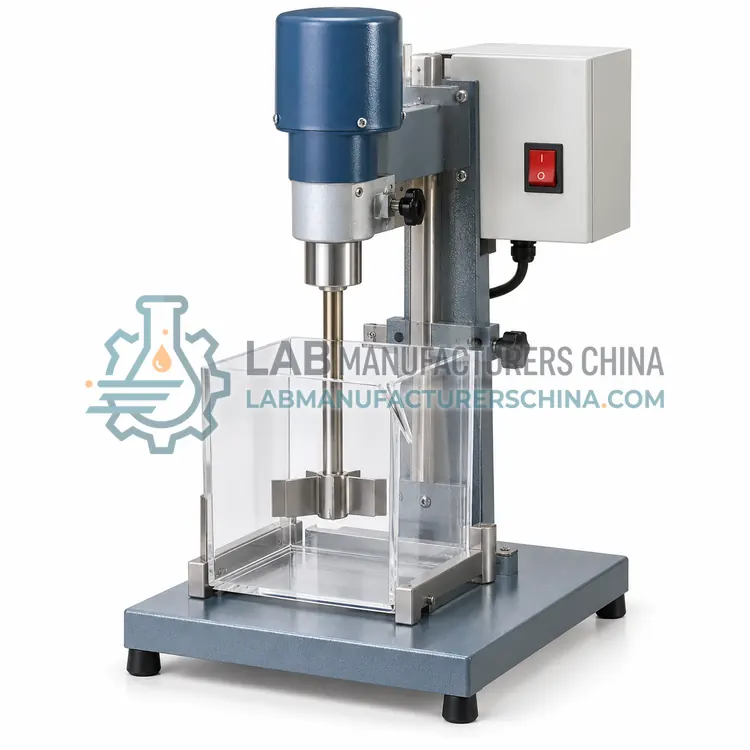
How do Flotation Equipment work?
Froth flotation separates particles by their surface chemistry. The ore is ground to a size at which the target mineral is liberated, mixed with water to form a pulp of a chosen solids concentration, and conditioned with collectors that make selected minerals hydrophobic and frothers that stabilise bubbles. Air is dispersed into the pulp, either by a mechanical impeller that draws air from above or by forced air through a sparger, and hydrophobic particles attach to rising bubbles to form a froth that is scraped off as concentrate. Hydrophilic particles remain in the pulp and are discharged as tailings. Bench equipment therefore needs controllable agitation, aeration, pH and reagent addition, plus a cell that allows froth to be removed at a steady rate. Results are scaled up using retention time, solids concentration and reagent dosage per tonne, with grinding and liberation established separately by the ore's size distribution.
Which Flotation Equipment variants are available?
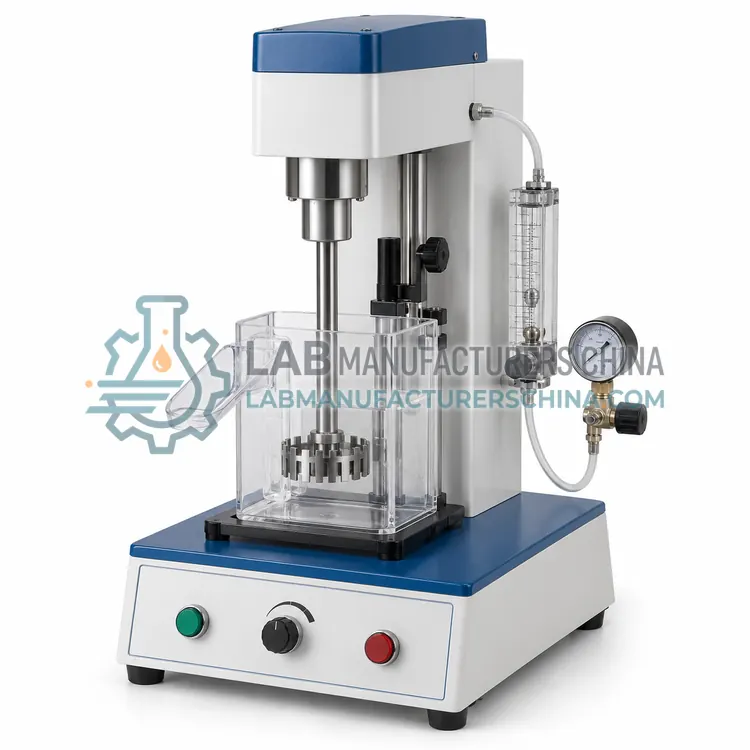
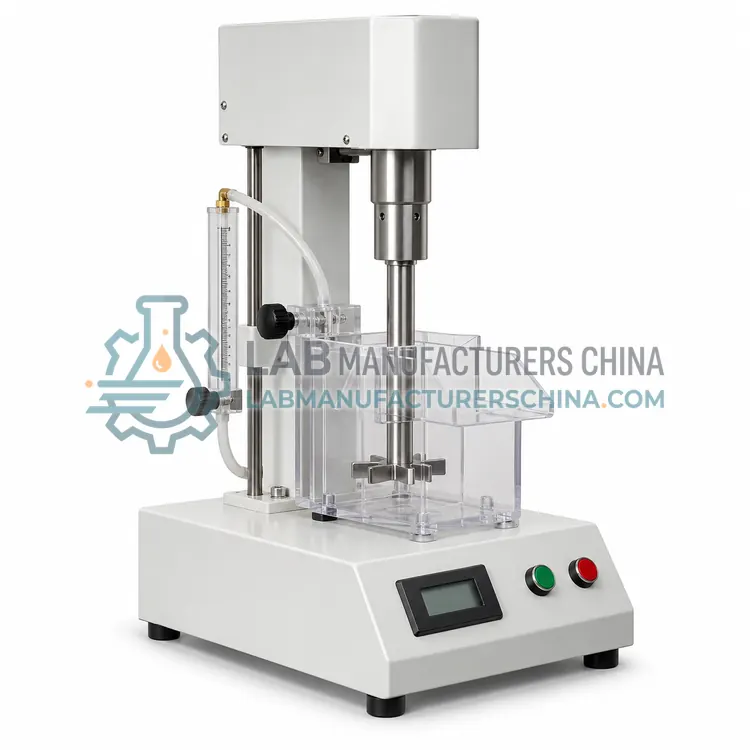
- Laboratory Sub-Aeration Flotation Machine — A laboratory sub-aeration flotation machine disperses air supplied from an external blower through a mechanical impeller, giving independent control of agitation and aeration.
- Self-Aerating Laboratory Flotation Cell — A self-aerating laboratory flotation cell draws air down the impeller shaft by the suction created as the impeller rotates, needing no blower.
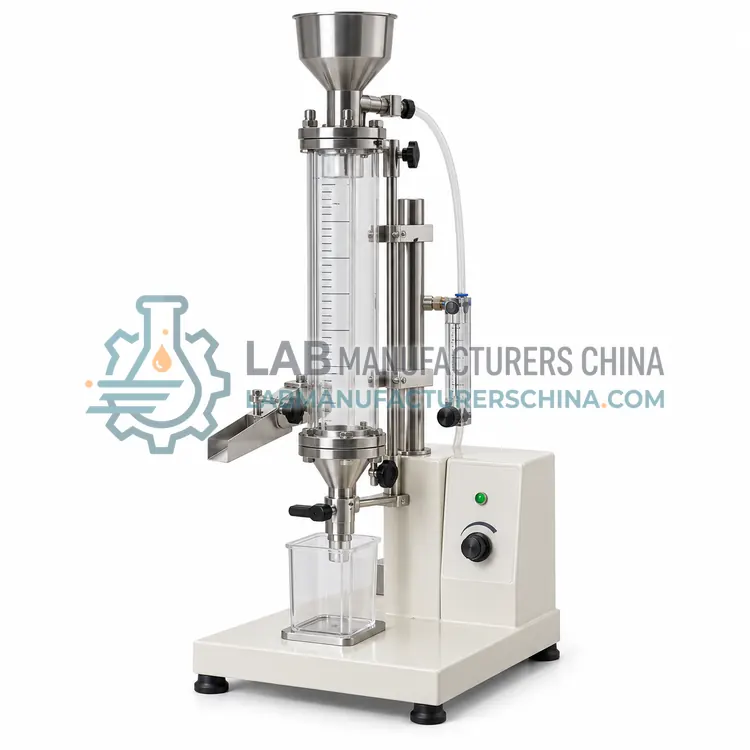
- Laboratory Flotation Column — A laboratory flotation column is a tall, unagitated cell in which air is sparged at the base and pulp flows counter-current to rising bubbles, with wash water added near the top.
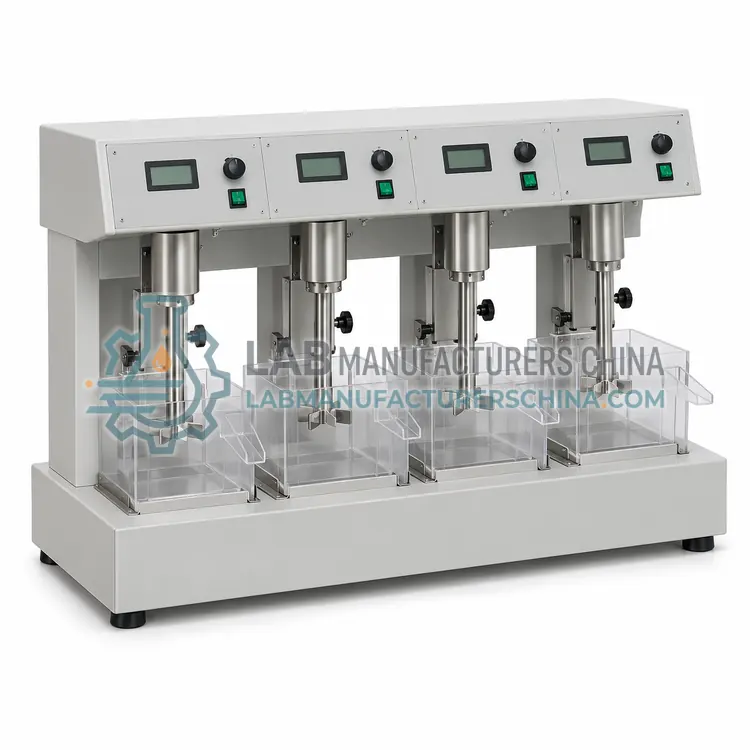
- Multi-Cell Laboratory Flotation Bank — A multi-cell laboratory flotation bank links three to eight cells in series so that rougher, cleaner and scavenger stages can be tested continuously.
- Laboratory Conditioning Tank for Flotation Feed — A laboratory conditioning tank mixes pulp with reagents for a set contact time before flotation, with controlled agitation, temperature and pH.
How do I choose the right variant?
Start from the ore mass available and the question to be answered. A single self-aerating or sub-aeration cell of one to three litres suits reagent screening, pH and dosage tests with a few hundred grams of sample. Multi-cell banks of three to eight cells are used for rougher, cleaner and scavenger configurations or for locked-cycle tests that approximate a continuous circuit. Flotation columns suit fine particles and cleaner duties where a deep froth and wash water give better grade. Conditioning tanks are needed whenever reagents require contact time before flotation, which is often the decisive step for collector performance. Check impeller and air-flow ranges against the pulp density you will use, whether froth scraping is manual or automatic, and whether the machine can hold pH, temperature and air rate stable enough for reproducible recoveries. Plan reagent dosing and water supply as part of the package.
Where are Flotation Equipment used?
Flotation Equipment are specified in reagent scheme development for ore bodies, rougher, cleaner and scavenger circuit configuration, grind size and liberation optimization, pilot plant flowsheet verification and grade and recovery forecasting for feasibility studies.
Which standards and certifications apply?
Work with Flotation Equipment is commonly governed by ISO 8858-1, ASTM D5114, ISO 3082, ISO 12743, ASTM E877 and IEC 61010-1. Instrument certifications such as CE marking are confirmed per configuration and never assumed.
What are the key considerations before purchase?
Calibrate and record the basic variables with every test: solids concentration, grind size distribution, pH, reagent dosages, air flow, impeller speed and flotation time. Rinse the cell and impeller thoroughly between tests, because residual collector changes the next result, and use consistent water quality, since dissolved ions affect flotation strongly in recycled plant water. Check impeller clearance and wear, air spargers, scraper blades and pH electrodes on a schedule. Provide splash guards, eye protection and fume extraction for reagent and acid handling, and store collectors and frothers safely. For result transfer to plant, run replicate tests and report grade and recovery with the metal balance closed; locked-cycle or cycle tests are then used to estimate steady-state performance before any plant trial.