Lab Manufacturers China

Burst Analysis

纸张耐破度测定仪

BUA · Paper Analysis Equipment · 5 models

By Lab Manufacturers China Technical TeamLast reviewed Standards: ISO 2758, ISO 2759, ISO 12625-11

Standards referenced

  • ISO 2758
  • ISO 2759
  • ISO 12625-11
  • ASTM D774
  • TAPPI T403
  • TAPPI T810
  • IEC 61010-1

What are Burst Analysis?

Burst testing measures the maximum hydraulic pressure a clamped paper, board or corrugated specimen withstands before it ruptures, expressed as bursting strength in kilopascals. It indicates the combined strength of the sheet and is widely specified for packaging and bag grades.

5 models of Burst Analysis

The 5 models below are current configurations; specifications are confirmed on quotation.

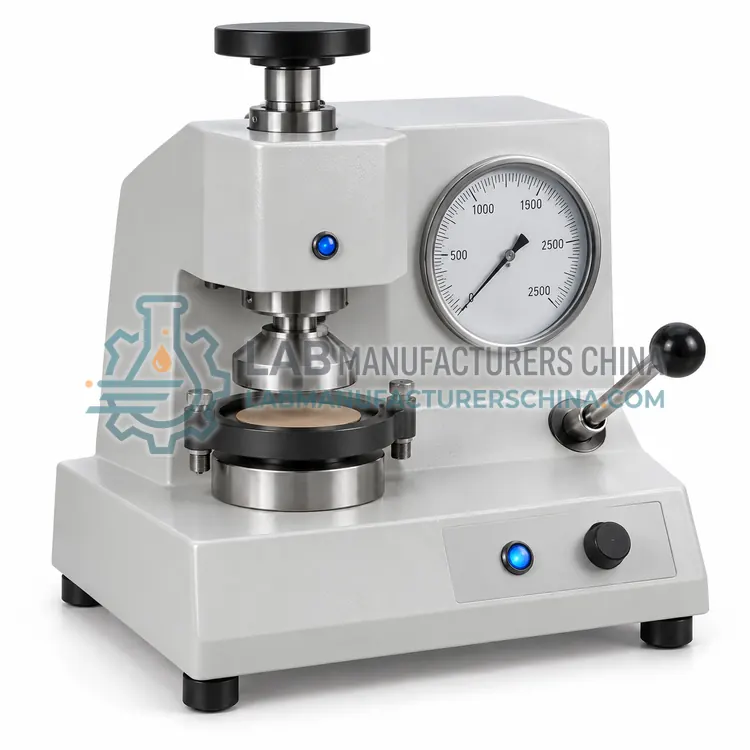
Hydraulic Bursting Strength Tester for Paper

纸张液压耐破度仪

  • BUA-0001
  • Burst Analysis
  • CE (to be confirmed)
  • ISO 9001 manufacturing (to be confirmed)
Measuring range:
0–1600 kPa
Resolution:
1 kPa
Test area diameter:
30.5 mm per ISO 2758
Pressure rise rate:
95 ± 10 mL/min fluid displacement
Clamping pressure:
About 700–1200 kPa, specified by method
Diaphragm thickness:
0.9 mm typical for paper

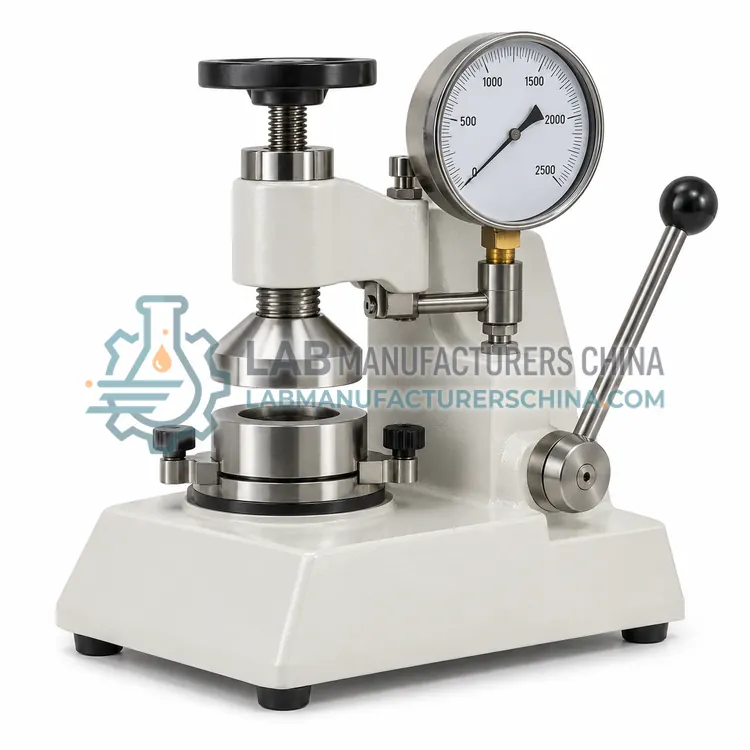
A hydraulic bursting strength tester for paper applies increasing fluid pressure behind a rubber diaphragm to burst a clamped specimen. It is the reference configuration for ISO 2758 and TAPPI T403 testing of paper and light board.

Request a quote
View details

Digital Bursting Strength Tester for Paper and Board

纸张与纸板数字耐破度仪

  • BUA-0002
  • Burst Analysis
  • CE (to be confirmed)
  • ISO 9001 manufacturing (to be confirmed)
Measuring range:
0–6000 kPa with selectable transducers
Resolution:
1 kPa or better
Test area diameter:
30.5 mm or 112.8 mm options
Clamping:
Pneumatic or hydraulic, automatic
Pressure rise rate:
Per standard, 95 mL/min typical
Statistics:
Mean, range and standard deviation

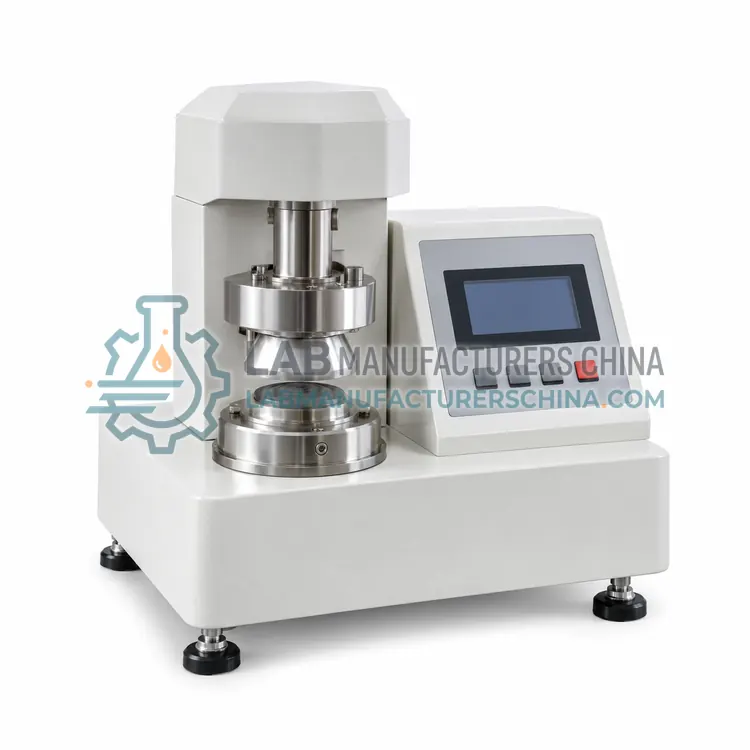
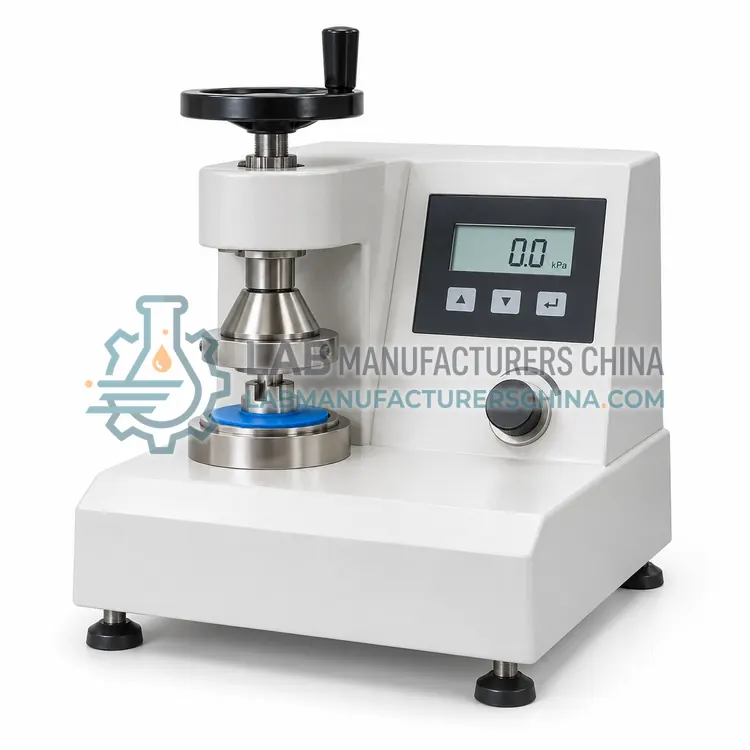
A digital bursting strength tester records the rupture pressure electronically and displays it with statistics, often with automatic clamping and selectable pressure ranges for paper and board. It suits laboratories testing a range of grades in one day.

Request a quote
View details

Hydraulic Bursting Strength Tester for Corrugated Board

瓦楞纸板液压耐破度仪

  • BUA-0003
  • Burst Analysis
  • CE (to be confirmed)
  • ISO 9001 manufacturing (to be confirmed)
Measuring range:
0–6000 kPa
Test area diameter:
31 mm or 112.8 mm per standard
Clamping pressure:
Higher than for paper, per method
Support plate:
Provided to spread load over flutes
Pressure rise rate:
Per standard edition
Diaphragm:
Thicker grade for board testing

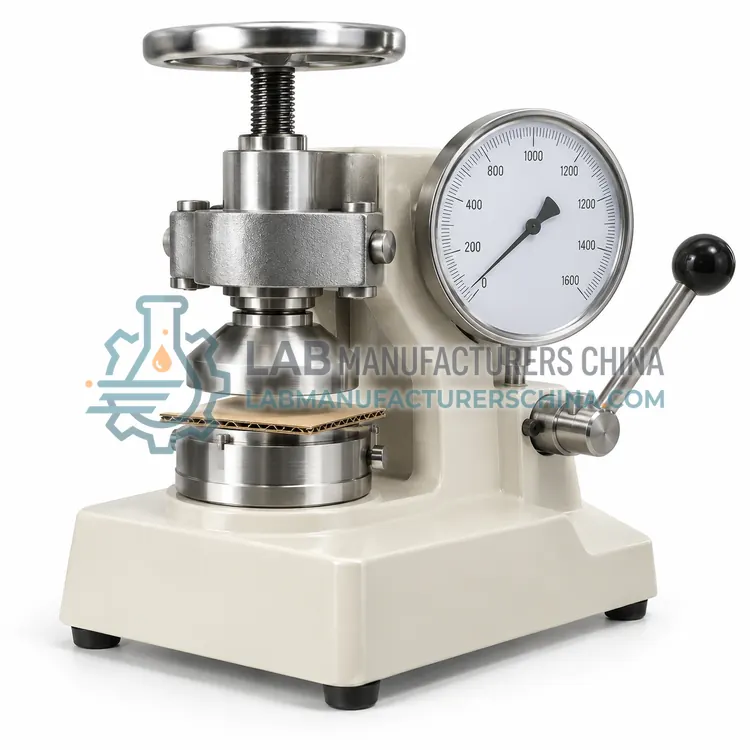
A hydraulic bursting strength tester for corrugated board uses a large test area and a support plate so that the combined structure bursts rather than collapsing. It is used for carton board quality control and specification testing.

Request a quote
View details

Pneumatic Bursting Strength Tester for Tissue Paper

薄页纸气动耐破度仪

  • BUA-0004
  • Burst Analysis
  • CE (to be confirmed)
  • ISO 9001 manufacturing (to be confirmed)
Measuring range:
0–600 kPa
Resolution:
0.1 kPa
Test area diameter:
30 mm typical for tissue
Pressure source:
Regulated compressed air
Pressure rise rate:
Controlled per the standard
Clamping pressure:
Lower than for board, adjustable

A pneumatic bursting strength tester uses compressed air behind the diaphragm to burst light tissue specimens, giving a fast and clean measurement with minimal hydraulic hardware. It is used for tissue, sanitary paper and lightweight grades.

Request a quote
View details

Bursting Strength Tester for Linerboard and Fluting

箱纸板与瓦楞芯纸耐破度仪

  • BUA-0005
  • Burst Analysis
  • CE (to be confirmed)
  • ISO 9001 manufacturing (to be confirmed)
Measuring range:
0–1600 kPa
Resolution:
1 kPa
Test area diameter:
30.5 mm per paper method
Clamping pressure:
Per paper method
Specimen orientation:
Machine and cross direction
Typical grade range:
Linerboard 100–300 g/m²

A bursting strength tester configured for linerboard and fluting measures the bursting strength of the uncombined component papers used to make corrugated board. It supports the calculation of expected board strength and the control of base paper quality.

Request a quote
View details

Compare Burst Analysis models

ModelMeasuring rangeResolutionTest area diameterPressure rise rateClamping pressure
Hydraulic Bursting Strength Tester for PaperBUA-00010–1600 kPa1 kPa30.5 mm per ISO 275895 ± 10 mL/min fluid displacementAbout 700–1200 kPa, specified by method
Digital Bursting Strength Tester for Paper and BoardBUA-00020–6000 kPa with selectable transducers1 kPa or better30.5 mm or 112.8 mm optionsPer standard, 95 mL/min typical—
Hydraulic Bursting Strength Tester for Corrugated BoardBUA-00030–6000 kPa—31 mm or 112.8 mm per standardPer standard editionHigher than for paper, per method
Pneumatic Bursting Strength Tester for Tissue PaperBUA-00040–600 kPa0.1 kPa30 mm typical for tissueControlled per the standardLower than for board, adjustable
Bursting Strength Tester for Linerboard and FlutingBUA-00050–1600 kPa1 kPa30.5 mm per paper method—Per paper method

Indicative values for this product class. Final specifications are confirmed on the quotation and in the calibration documents supplied with the instrument.

How do Burst Analysis work?

A circular specimen is clamped between two platens under a defined clamping pressure and a rubber diaphragm expands against it as hydraulic or pneumatic pressure increases at a controlled rate. The maximum pressure reached at rupture is recorded as the bursting strength, and the value is affected by clamping pressure, diaphragm condition, the rate of pressure rise and specimen conditioning. Standards define the clamping force, the free test area, the pressure rise rate and the diaphragm material and thickness, so the instrument must be configured exactly as the method specifies. Because the diaphragm stretches with every test, it must be replaced at defined intervals and its condition checked, since a stiff or hardened diaphragm gives high and erratic readings. Corrugated board requires a larger test area and a support plate to prevent local crushing.

Which Burst Analysis variants are available?

  • Hydraulic Bursting Strength Tester for Paper — A hydraulic bursting strength tester for paper applies increasing fluid pressure behind a rubber diaphragm to burst a clamped specimen.
  • Digital Bursting Strength Tester for Paper and Board — A digital bursting strength tester records the rupture pressure electronically and displays it with statistics, often with automatic clamping and selectable pressure ranges for paper and board.
  • Hydraulic Bursting Strength Tester for Corrugated Board — A hydraulic bursting strength tester for corrugated board uses a large test area and a support plate so that the combined structure bursts rather than collapsing.
  • Pneumatic Bursting Strength Tester for Tissue Paper — A pneumatic bursting strength tester uses compressed air behind the diaphragm to burst light tissue specimens, giving a fast and clean measurement with minimal hydraulic hardware.
  • Bursting Strength Tester for Linerboard and Fluting — A bursting strength tester configured for linerboard and fluting measures the bursting strength of the uncombined component papers used to make corrugated board.

How do I choose the right variant?

Choose the instrument from the standard and the product. Paper and tissue use the smaller hydraulic test area, board uses the larger area with a higher pressure range, and corrugated board needs a pneumatic or hydraulic instrument with a support plate and a sufficiently wide clamping ring. Confirm the pressure range covers the expected bursting strength with adequate headroom, since a range that is too low prevents reaching rupture and one that is too wide reduces resolution. Specify automatic clamping if many specimens are tested, and always choose an instrument whose diaphragm and pressure rise rate match the standard edition you follow, because values from different configurations are not interchangeable.

Where are Burst Analysis used?

Burst Analysis are specified in bursting strength of packaging papers and boards, corrugated board quality control, paper bag and sack grade verification, tissue and sanitary paper strength testing, incoming inspection of linerboard and fluting and strength comparison between suppliers.

Which standards and certifications apply?

Work with Burst Analysis is commonly governed by ISO 2758, ISO 2759, ISO 12625-11, ASTM D774, TAPPI T403, TAPPI T810 and IEC 61010-1. Instrument certifications such as CE marking are confirmed per configuration and never assumed.

What are the key considerations before purchase?

Condition specimens to the standard atmosphere, since bursting strength changes markedly with moisture content. Clamp each specimen centrally and without creases, since edge positions and wrinkles cause premature rupture and low readings. Replace the diaphragm at the interval stated in the method or whenever it shows hardening, cracking or permanent deformation, and record the replacement in the instrument log. Verify the clamping pressure and the pressure rise rate periodically, and check the pressure gauge or transducer against a reference. After each test, inspect the rupture pattern: an off-centre or irregular burst usually indicates a clamping or centring problem rather than a material fault.

Frequently asked questions about Burst Analysis

The rubber stretches with every test and gradually hardens, so it resists expansion more and gives higher, less repeatable readings. Standards specify a maximum number of tests or a time interval for replacement, and also require the diaphragm to be checked for cracking or deformation between replacements.

Need help specifying Burst Analysis?

Request a quote