How do Moisture Testing work?
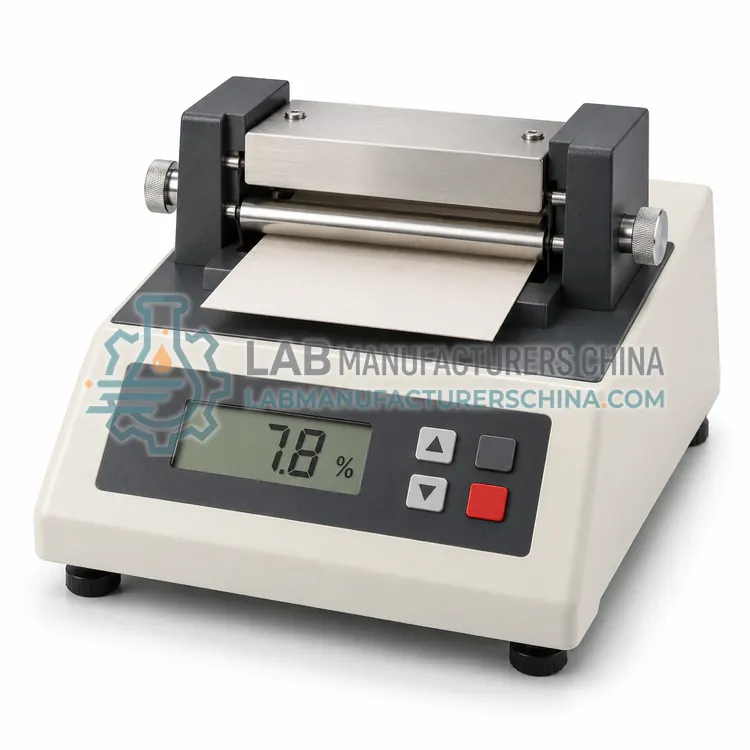
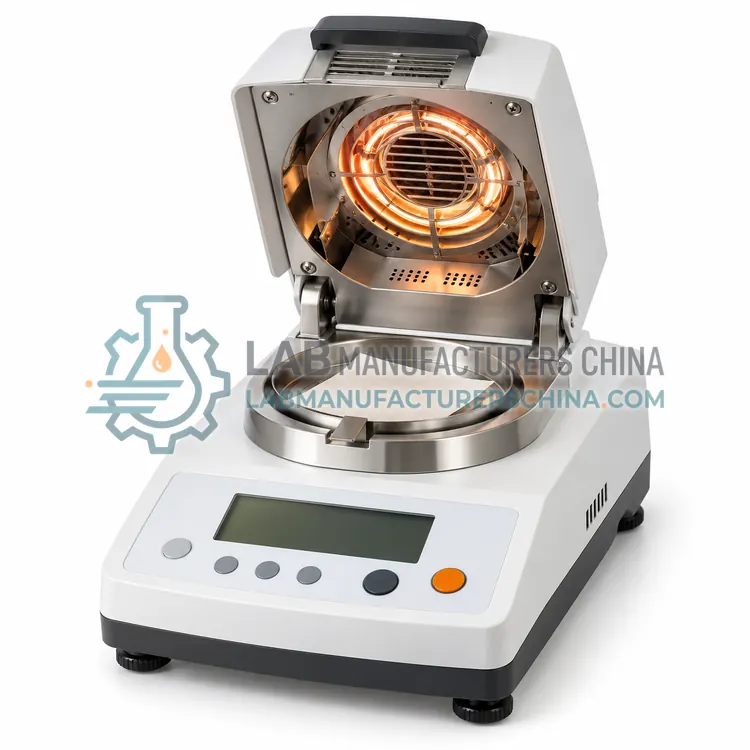
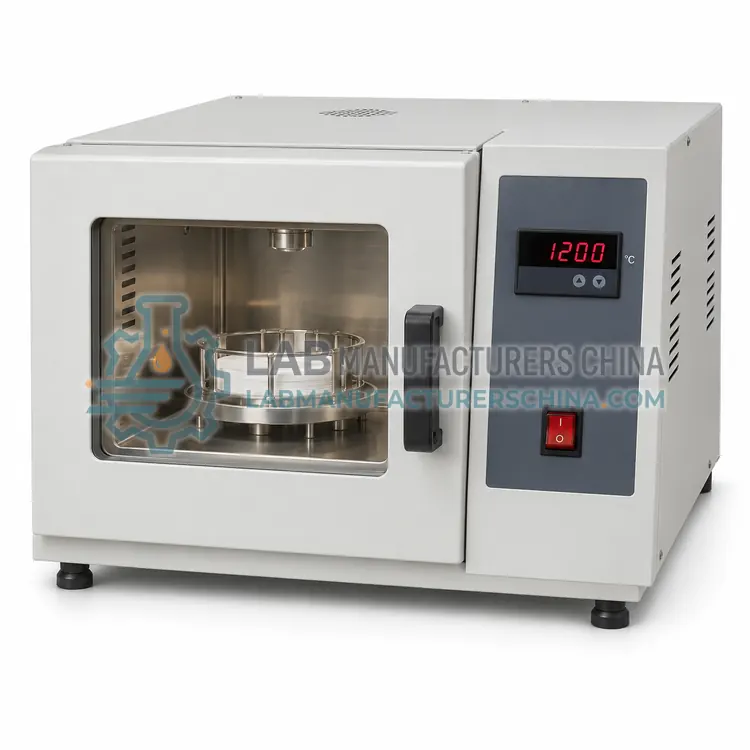
All moisture methods compare the mass of water in the sample with either the wet mass or the dry mass, and the chosen reference must always be reported because moisture content and dry matter content give different numbers. The reference method dries a specimen to constant mass in an oven at a specified temperature and calculates the mass loss. Halogen drying performs the same measurement quickly on a built-in balance, using a halogen radiator for faster and more uniform heating, and requires correlation with the oven method for each paper grade. Karl Fischer titration is a chemical method: iodine reacts quantitatively with water, and the endpoint is detected electrochemically, so it measures water specifically and is unaffected by other volatile substances. Microwave and near-infrared instruments measure indirectly through absorption or dielectric response and need calibration against a reference method.
Which Moisture Testing variants are available?
- Handheld Moisture Meter for Paper — A handheld moisture meter measures the electrical response of a paper stack or bale to a probe or surface electrode and displays an estimated moisture content.
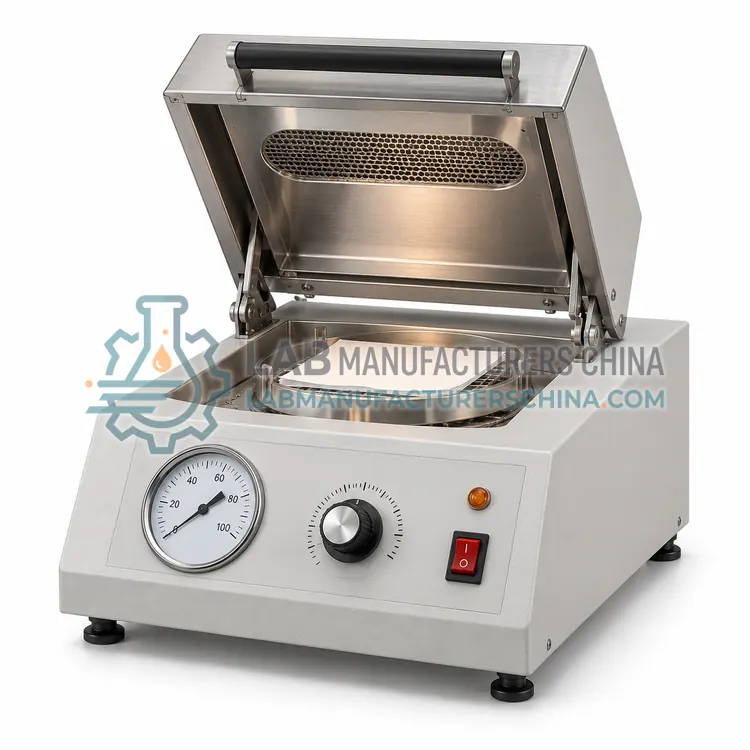
- Halogen Moisture Analyzer for Paper and Board — A halogen moisture analyzer dries a small paper specimen on an integrated balance and reports moisture from the mass loss.
- Karl Fischer Titrator for Paper Moisture Determination — A Karl Fischer titrator measures water in paper specifically by the quantitative reaction of iodine with water, so other volatile substances do not interfere.
- Near-Infrared Online Moisture Measurement System for Paper — A near-infrared online moisture system mounts across the paper machine and measures water content continuously at the water absorption bands.
- Microwave Moisture Analyzer for Paper and Board — A microwave moisture analyzer measures the attenuation of microwaves passing through a paper stack, bale or sheet and converts it into a moisture value.
How do I choose the right variant?
Choose the reference oven method when a specification value is required, since almost all paper moisture standards are written around it. Select a halogen instrument for routine control where speed matters, but establish and document the correlation with the oven method for each grade, including for coated and highly filled papers. Karl Fischer titration suits samples where volatile substances other than water are present, such as papers containing solvents, and can be combined with an oven accessory for solid samples that do not disperse. Microwave and near-infrared instruments are chosen for production use: the near-infrared systems mount on the machine and measure across the full web width continuously, while microwave instruments suit bale and stack checking on the floor.
Where are Moisture Testing used?
Moisture Testing are specified in incoming moisture checks on pulp and recovered paper, machine-direction moisture control during papermaking, finishing and converting moisture verification, bale and stack moisture measurement in warehouses, specification testing of paper and board moisture and moisture determination for paper with volatile additives.
Which standards and certifications apply?
Work with Moisture Testing is commonly governed by ISO 287, ISO 638, ISO 760, TAPPI T412, ASTM D644, ASTM D6869 and IEC 61010-1. Instrument certifications such as CE marking are confirmed per configuration and never assumed.
What are the key considerations before purchase?
Sample handling dominates the uncertainty because paper equilibrates with the surrounding air within minutes. Cut sealed specimens, weigh them quickly in a closed container, and record the temperature and relative humidity of the laboratory, since the standard equilibrium condition defines the moisture of a well-conditioned sheet. Oven temperature, drying time and the use of a desiccator before weighing must follow the method, and the balance should be checked with certified masses. For indirect instruments, recalibrate whenever furnish, coating, grade or basis weight changes, and keep the reference results used to build the calibration. Store paper samples away from heat and direct sunlight before testing.