
Clinical Chemistry Analyzers
临床生化分析仪
CCCA · Clinical & Diagnostic · 4 product types · 20 models
By Lab Manufacturers China Technical TeamLast reviewed
What are Clinical Chemistry Analyzers?
Clinical chemistry analyzers measure metabolites, enzymes, electrolytes and proteins in serum, plasma, urine and other body fluids. They use photometry, ion-selective electrodes and turbidimetry, and serve hospital laboratories, clinics and reference laboratories running biochemical panels and therapeutic drug monitoring.
4 product types in Clinical Chemistry Analyzers
The 4 product types below are grouped by the exact instrument you need.
- SEM5 models
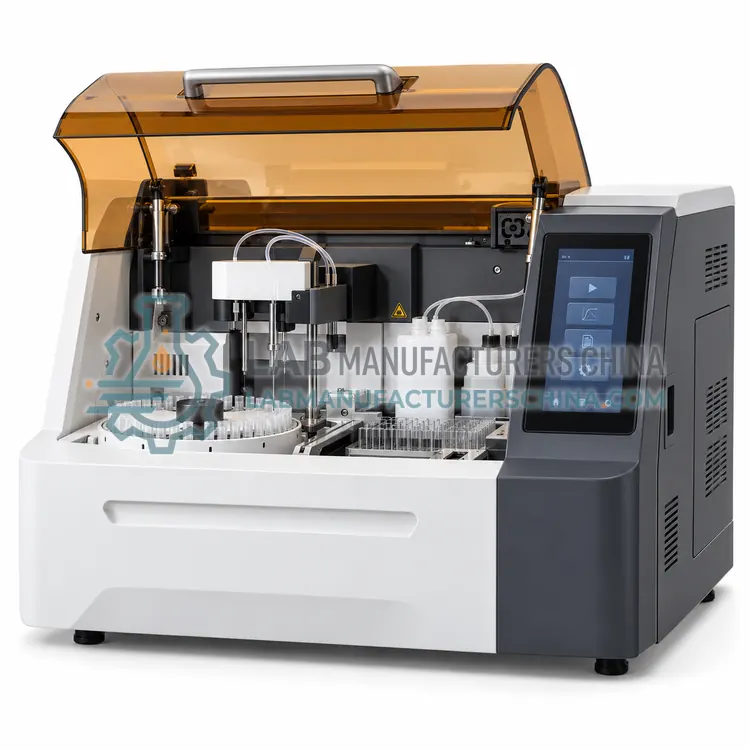
Semi-Automatic Analyzers
半自动生化分析仪
Semi-automatic biochemistry analyzers are photometric instruments in which the operator pipettes sample and reagent, while the instrument incubates, measures absorbance and calculates results. They suit clinics and small laboratories processing fewer than about one hundred tests per day at low capital cost.
- FAA5 models
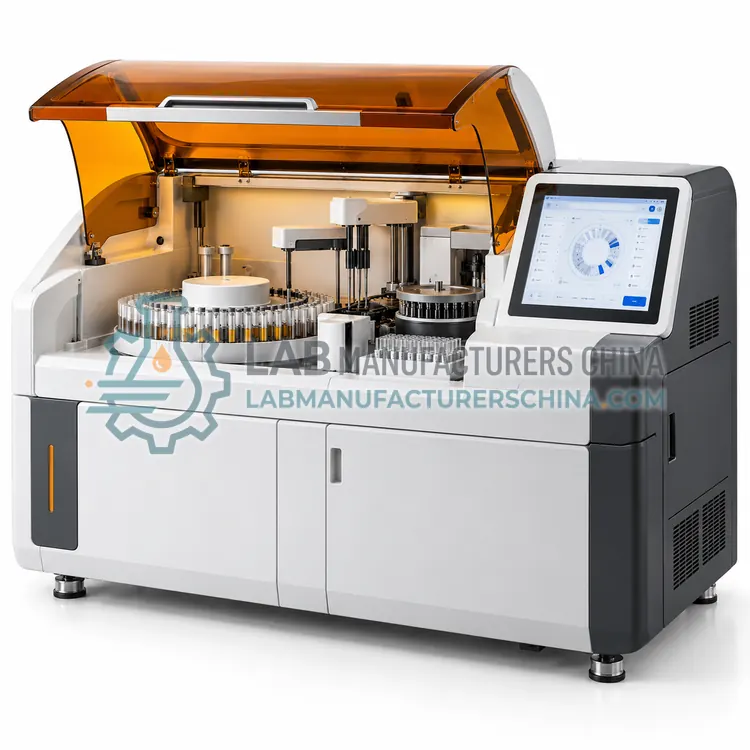
Fully Automatic Analyzers
全自动生化分析仪
Fully automatic chemistry analyzers load samples and reagents, dilute, measure and rerun without operator intervention. They perform random-access biochemical testing at 100 to 2000 tests per hour and serve hospital laboratories, large clinics and reference laboratories that report routine panels every day.
- EAN5 models
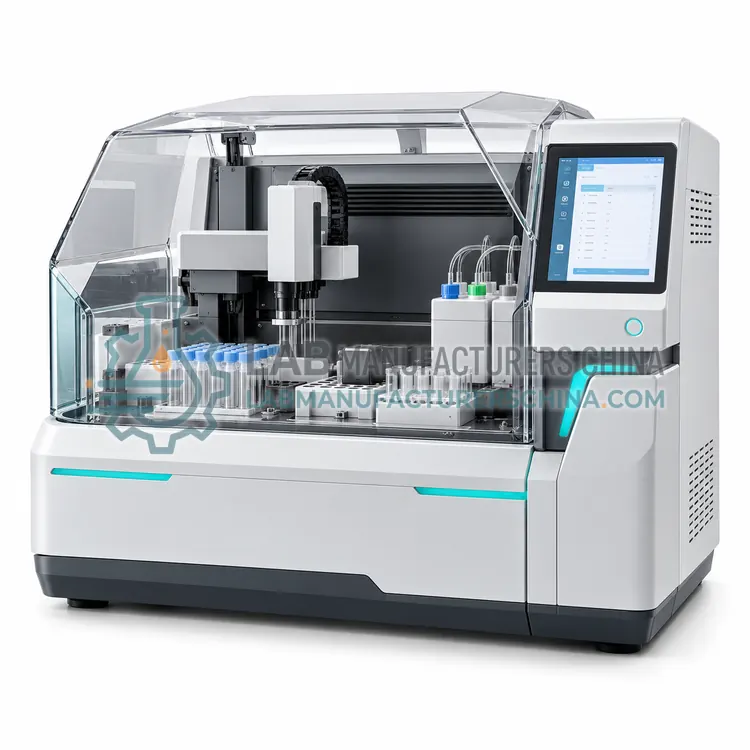
Electrolyte Analyzers
电解质分析仪
Electrolyte analyzers measure sodium, potassium, chloride, calcium and sometimes lithium or magnesium in serum, plasma, whole blood or urine using ion-selective electrodes. They support critical care, dialysis, surgery and routine testing in hospital laboratories and clinics.
- CHW5 models
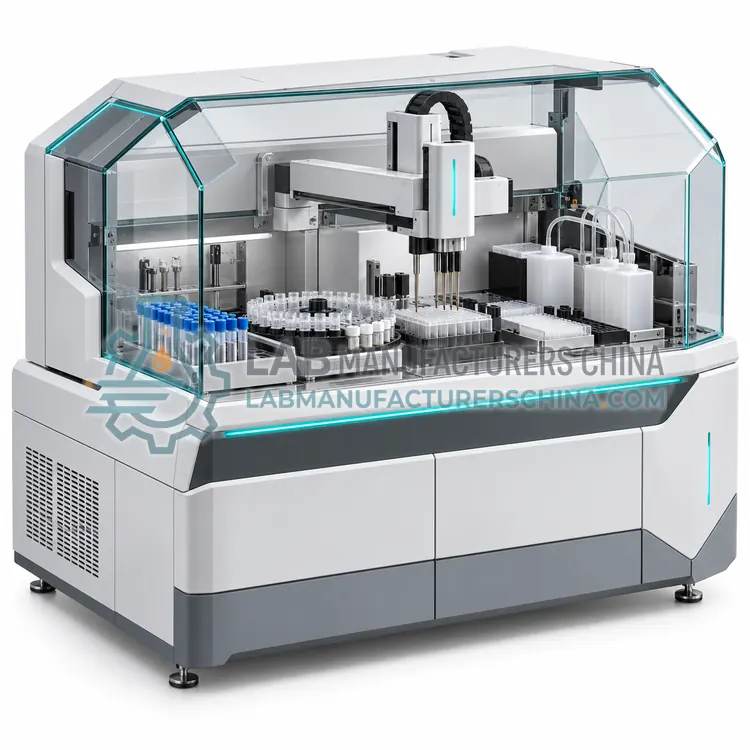
Chemistry Workstations
生化工作站
Chemistry workstations are consolidated platforms that combine two or more detection modules, such as photometry, ion-selective electrodes and immunoturbidimetry, with sample sorting and archiving. They serve large hospital laboratories that report high volumes of biochemical tests from one managed workflow.
What are Clinical Chemistry Analyzers?
Clinical chemistry analyzers, also called biochemistry analyzers, quantify the small molecules and proteins that describe organ function and metabolism. A typical instrument mixes a measured sample volume with reagent, incubates the mixture at a controlled temperature, and reads a photometric or electrochemical signal that is converted into a concentration. Test menus commonly cover glucose, urea, creatinine, uric acid, bilirubin, serum enzymes such as ALT, AST, ALP and GGT, lipids, total protein and albumin, and can include electrolytes and specific proteins. The category ranges from semi-automatic single-cuvette photometers for small clinics through benchtop and floor-standing fully automatic random-access analyzers to electrolyte-only instruments and consolidated workstations that combine several detection modules on one platform. Selection depends on test menu, daily and peak workload, sample volume, reagent openness, and the connectivity and service support required.
How do Clinical Chemistry Analyzers work?
Photometric chemistry relies on the Beer–Lambert relation, in which absorbance is proportional to the concentration of a chromophore produced or consumed by the reaction. The analyzer dispenses microliter volumes of sample and reagent into a cuvette, incubates the mixture at 37 degrees Celsius, and measures absorbance at one or several wavelengths through interference filters or a diffraction grating. Endpoint, kinetic and fixed-time measurement modes are programmed for each analyte, and a calibration curve from calibrators converts signal into concentration. Ion-selective electrodes measure the potential difference across a membrane that is selective for sodium, potassium, chloride or calcium. Turbidimetric and immunoturbidimetric channels quantify proteins from the light scattered by antigen-antibody complexes. Key components include sample and reagent probes with liquid-level detection, precision syringes or peristaltic pumps, a thermostatted reaction rotor or cuvette wheel, the optical bench, and software that performs calibration, quality control and result flagging.
Where are Clinical Chemistry Analyzers used?
Clinical chemistry analyzers support the metabolic panel, liver and kidney function tests, lipid profiles, cardiac risk assessment, diabetes monitoring through glucose and HbA1c, and inflammation markers. Laboratories use them for routine outpatient and inpatient testing, pre-operative assessment, emergency department panels, and monitoring of drug therapy where applicable. Electrolyte analyzers are used in critical care, nephrology and dialysis units. Urine chemistry and 24-hour urine collections are processed on the same platforms with different calibrators. Veterinary, food safety and environmental laboratories also use biochemistry analyzers for animal biochemistry, water and process samples, although their regulatory requirements differ from clinical use. Results are usually transmitted to a laboratory information system through HL7 or ASTM interfaces.
Which standards apply to Clinical Chemistry Analyzers?
Clinical chemistry work in medical laboratories follows ISO 15189 for quality and competence, supported by CLSI documents: EP05 and EP15 for precision and verification, EP06 for linearity, EP07 for interference testing and C24 for statistical quality control. Measured quantities are traceable to reference materials from the Joint Committee for Traceability in Laboratory Medicine where available. Electrical safety is covered by IEC 61010-1 and IEC 61010-2-101 for in vitro diagnostic equipment. Market registration may require CE marking under the IVD Regulation, NMPA registration in China or FDA clearance in the United States. Reagent labelling follows ISO 18113-1, and laboratories also take part in external quality assessment schemes.
How do I select the right clinical chemistry analyzers equipment?
Define the test menu first, then count daily and peak-hour test volume to set the required throughput in tests per hour. Small clinics processing fewer than 100 tests per day can use a semi-automatic analyzer with manual pipetting and single cuvettes. Clinics and small hospitals with several hundred tests per day fit a benchtop fully automatic random-access analyzer, while larger laboratories need floor-standing systems or workstations with onboard refrigeration and larger reagent capacity. Decide whether you need open reagent channels, which reduce cost per test but require local validation, or closed systems that simplify operation. Check sample volume requirements for pediatric, geriatric and veterinary samples, the availability of STAT priority, and whether electrolytes, immunoturbidimetry or HbA1c must run on the same platform. Confirm water quality requirements, waste handling, LIS connectivity, and local service and spare parts support.
Clinical Chemistry Analyzers comparison
| Subcategory | Principle | Typical use | Key spec |
|---|---|---|---|
| Semi-Automatic Analyzers | Photometry with manual pipetting and single or flow-through cuvettes | Low-volume clinics and outreach laboratories | Tests per hour and cuvette type |
| Fully Automatic Analyzers | Random-access photometry with automated sampling, dilution and rerun | Hospital and reference laboratory routine chemistry | Throughput and onboard reagent capacity |
| Electrolyte Analyzers | Ion-selective electrode potentiometry for sodium, potassium, chloride and calcium | Critical care, dialysis and routine electrolyte testing | Measured ions and sample types |
| Chemistry Workstations | Consolidated platform combining photometry, ISE and turbidimetry modules | High-volume consolidated biochemical testing with automation | Module options and connection to track systems |
Frequently asked questions about Clinical Chemistry Analyzers
Typical menus include glucose, urea, creatinine, uric acid, bilirubin, liver enzymes, lipids, total protein, albumin and electrolytes. With the appropriate reagents, many analyzers also run immunoturbidimetric specific proteins such as CRP and HbA1c, and urine chemistry, giving one platform broad coverage of routine biochemical testing.
Choose by workload and staffing. A semi-automatic analyzer needs manual sample and reagent pipetting, suits fewer than about 100 tests per day and has a low purchase price. A fully automatic random-access analyzer loads samples and reagents, dilutes, measures and reruns unattended, which is essential above a few hundred tests per day.
Most analyzers need reagent-grade purified water for diluting reagents, rinsing probes and preparing some working solutions. Typical requirements are Type II water with low conductivity and controlled microbial and organic content, produced by a reverse osmosis and ion-exchange system. Confirm the specification in the instrument manual before installing the water system.
Each analyte has a calibration curve produced from calibrators, valid for a defined period or reagent lot. Laboratories run two levels of control material at least once per day or per shift and apply statistical rules to detect shifts. Recalibration is performed at new reagent lots, after maintenance, and whenever quality control fails.
Serum, plasma, urine, cerebrospinal fluid and other body fluids are commonly supported, with sample volume from about 2 to 20 microliters depending on the analyte and platform. Some assays require a specific tube type or additive, and hemolyzed, lipemic or icteric samples may need a sample blank or interference check.
Related categories
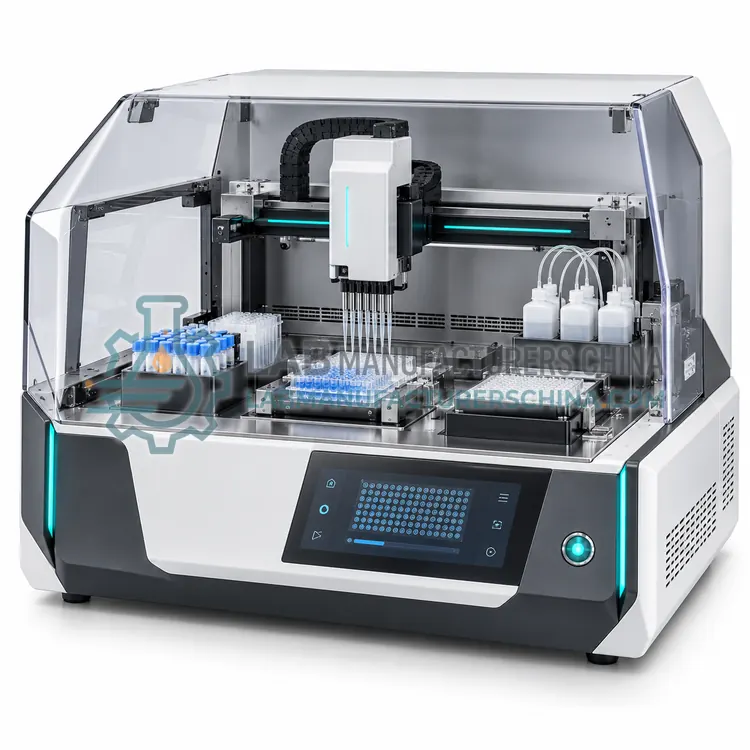 CIMA免疫分析仪Immunoassay analyzers detect antigens, antibodies and haptens in patient samples using specific antibody binding, with labels that produce color, fluorescence, luminescence or scattered light. They serve hospital and reference laboratories for infectious disease, hormone, cardiac, tumour and therapeutic drug testing.
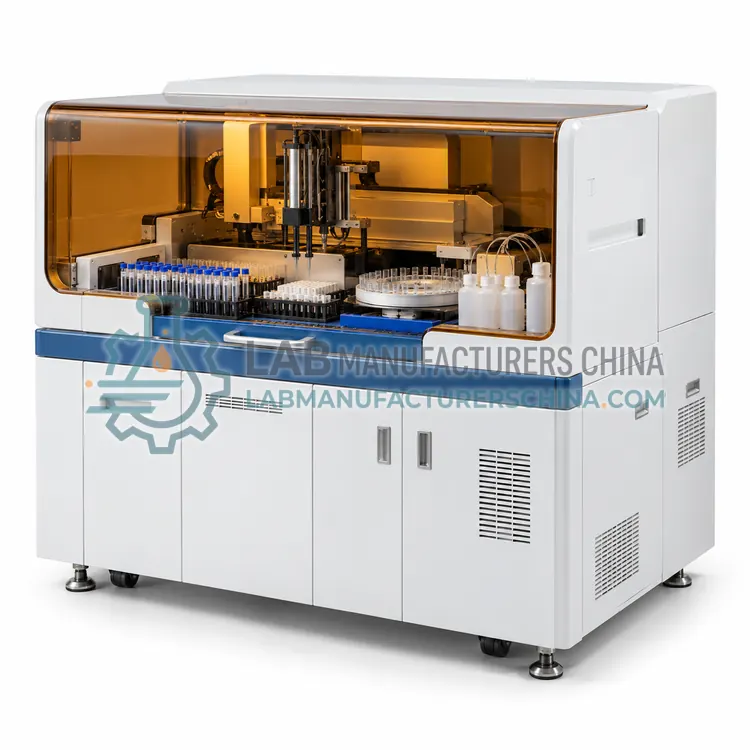 CCOA凝血分析仪Coagulation analyzers measure blood clotting function using clot detection, chromogenic or immunoturbidimetric methods. They report PT, APTT, fibrinogen, D-dimer and antithrombin, and support anticoagulation monitoring, bleeding disorder investigation and pre-surgical assessment in hospital laboratories and clinics.
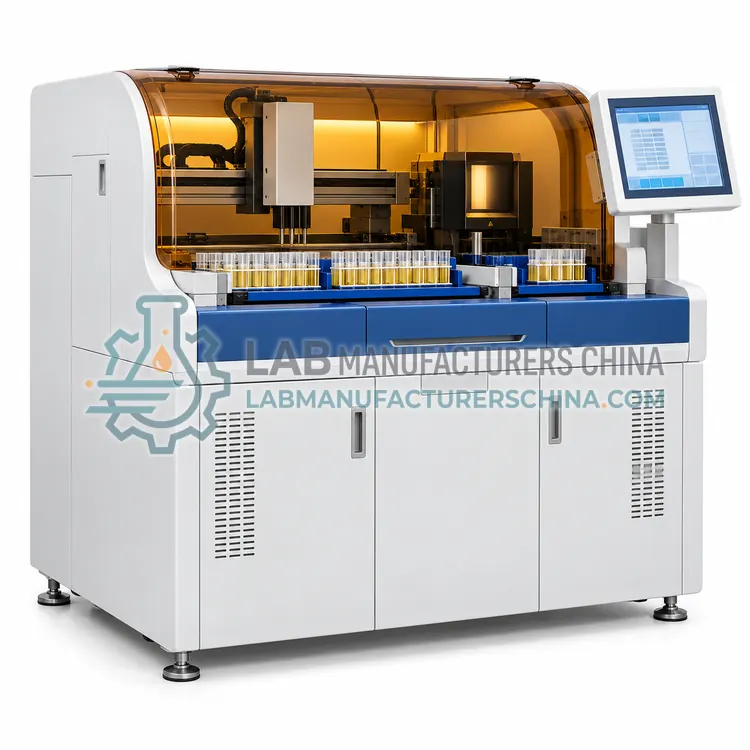 CURA尿液分析仪Urinalysis analyzers measure chemical and microscopic properties of urine to screen for renal, urinary tract and metabolic disease. They read reagent strips photometrically or classify particles by flow cytometry or imaging, and are used in hospital laboratories, clinics and screening programmes.
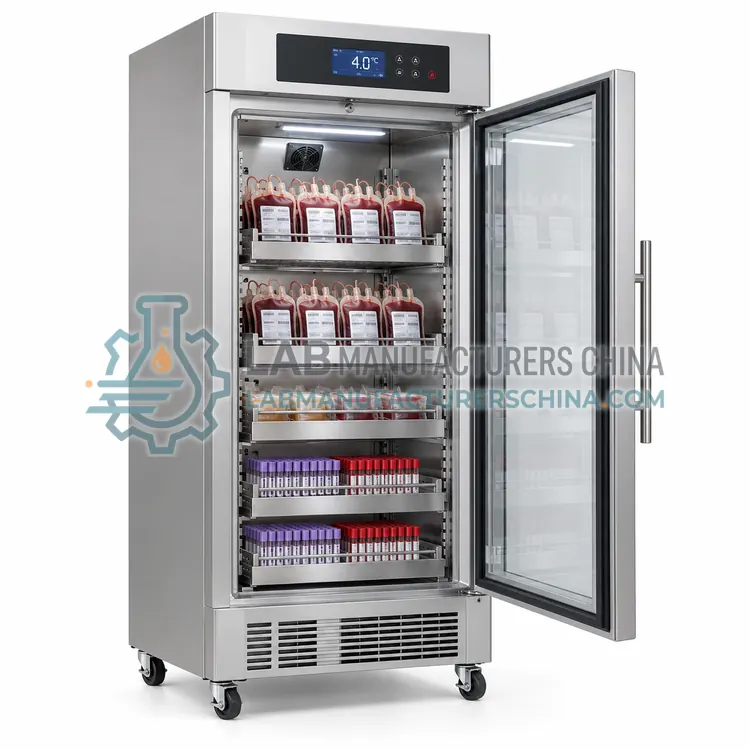 CBBE血库设备Blood bank equipment covers the refrigerators, plasma freezers, collection monitors, tube sealers and plasma thawers used to collect, process, store and issue blood components. It supports blood centers, hospital transfusion services and plasma facilities that must hold defined temperatures and keep traceable records.