
Blood Bank Equipment
血库设备
CBBE · Clinical & Diagnostic · 5 product types · 25 models
By Lab Manufacturers China Technical TeamLast reviewed
What are Blood Bank Equipment?
Blood bank equipment covers the refrigerators, plasma freezers, collection monitors, tube sealers and plasma thawers used to collect, process, store and issue blood components. It supports blood centers, hospital transfusion services and plasma facilities that must hold defined temperatures and keep traceable records.
5 product types in Blood Bank Equipment
The 5 product types below are grouped by the exact instrument you need.
- BLO5 models
Blood Bank Refrigerators
血库冰箱
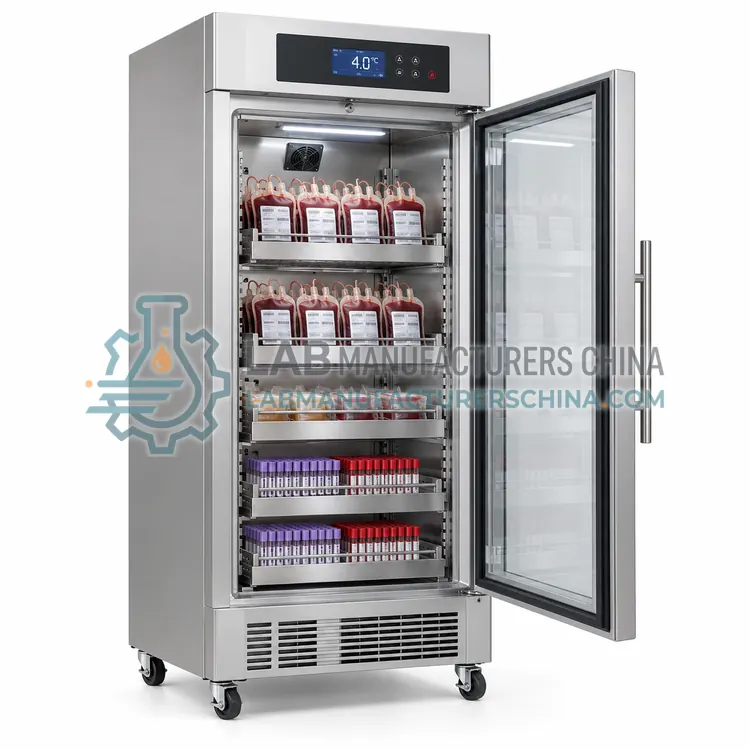
Blood bank refrigerators are temperature-controlled cabinets that hold whole blood and red cell components at 2–6 °C, and platelet incubators that hold platelets at 20–24 °C with agitation. Blood banks, hospital transfusion services and blood collection centers use them to preserve component viability and keep a continuous, auditable temperature record.
- PLF5 models
Plasma Freezers
血浆冷冻柜
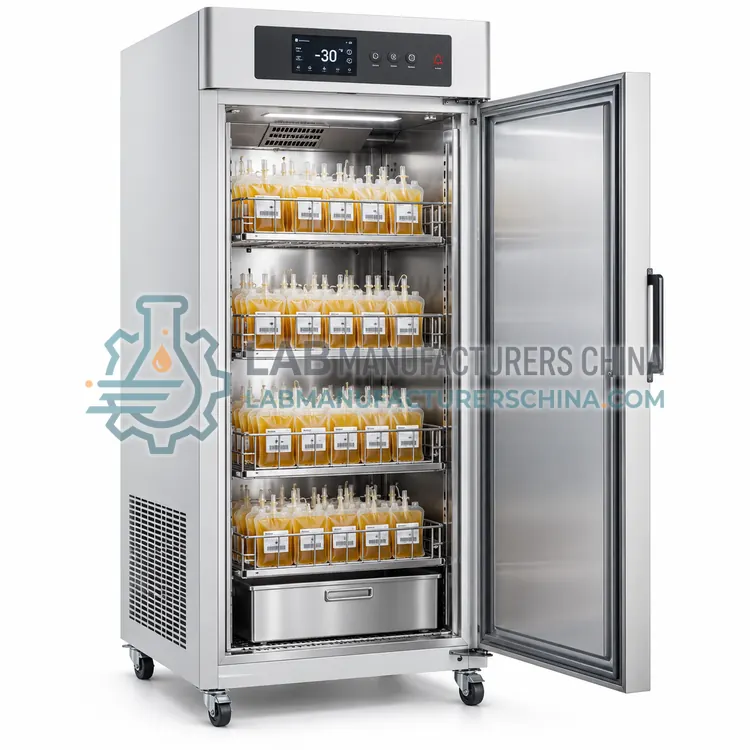
Plasma freezers are low-temperature cabinets that freeze and store fresh frozen plasma and cryoprecipitate, typically at –25 °C to –40 °C, with deep models reaching –86 °C. Blood banks, plasma fractionation centers and hospital transfusion services use them to preserve coagulation factors and keep continuous, alarmed temperature records.
- BCM5 models
Blood Collection Monitors
采血监测仪
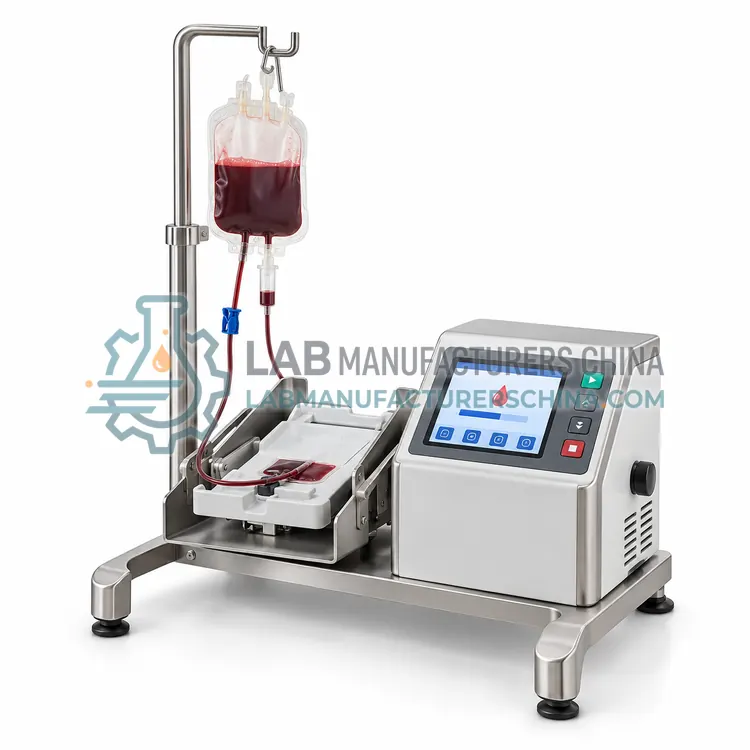
Blood collection monitors are devices that agitate the collection bag and weigh it during donation, calculating collected volume, flow rate and time. They stop or alarm when the target volume is reached or flow is poor. Blood centers and mobile donation teams use them to standardize anticoagulant mixing and donation volume.
- BBS5 models
Blood Bag Sealers
血袋封口机
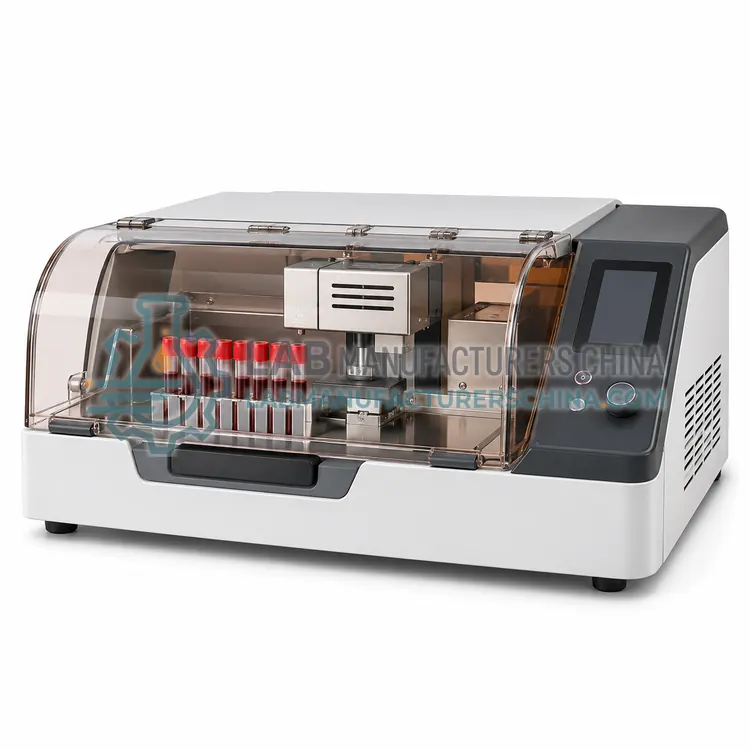
Blood bag sealers are devices that permanently seal and cut the PVC tubing of blood bags, using radio-frequency dielectric heating or heated blade welding. Blood centers and transfusion services use them to form tamper-evident segments, close donation lines and connect sterile tubing without opening the closed blood system.
- PLT5 models
Plasma Thawers
血浆解冻仪
Plasma thawers are controlled heating devices that thaw frozen plasma and cryoprecipitate bags to about 30–37 °C before transfusion. They use circulating water, dry heat or radio-frequency energy. Hospital transfusion services, operating theaters and blood centers use them to thaw quickly without overheating labile clotting factors.
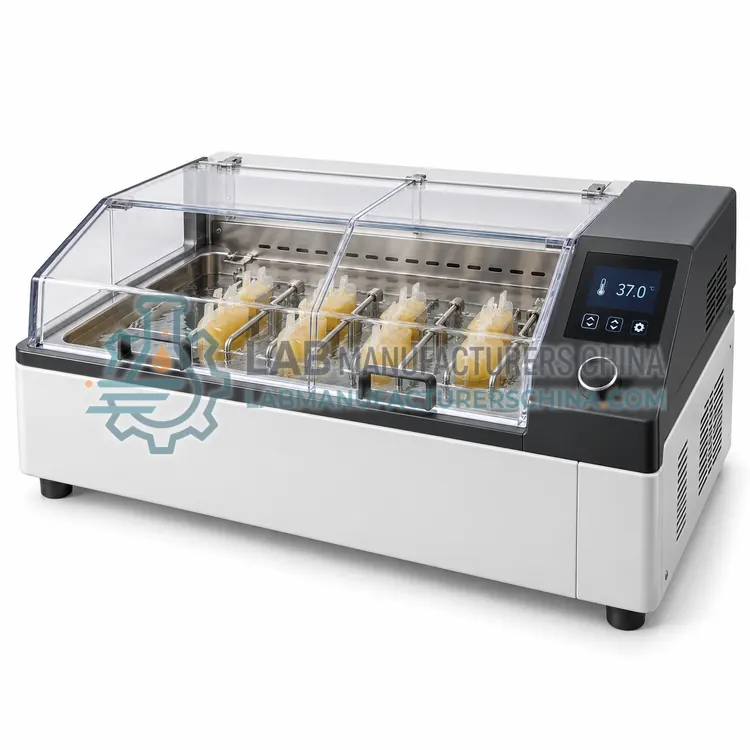
What are Blood Bank Equipment?
Blood bank equipment is the group of instruments that keep blood components safe and traceable from the donor's arm to the patient's bedside. Collection monitors mix and weigh the donation and stop flow at the target volume. Tube sealers make sterile, leak-proof segments for later testing. Refrigerators hold red cells at 2–6 °C, platelet incubators keep platelets at 20–24 °C with agitation, and plasma freezers preserve coagulation factors at –25 °C or colder. Plasma thawers return frozen units to a transfusable state in a controlled way. Each item is tied to a temperature window or a process parameter that regulators and accreditation bodies audit, so calibration, alarms and records are as important as the hardware.
How do Blood Bank Equipment work?
Most blood bank equipment controls temperature or energy precisely. Refrigerators and freezers use vapour-compression circuits with forced-air circulation, an RTD probe in a glycol buffer, independent alarms and chart or electronic recorders. Collection monitors combine a rocker or mixer with a load cell that weighs the bag and closes a clamp at the set volume, often with a timer for flow-time limits. Radio-frequency sealers pass a high-frequency field through the tubing to melt and fuse it without contaminating the lumen, while sterile tubing welders cut and join tubing with a heated wafer. Plasma thawers transfer heat through a circulating water bath, dry heat or radio-frequency energy, with temperature limits that prevent protein damage.
Where are Blood Bank Equipment used?
Blood bank equipment is used in donor centers, mobile collection units, hospital blood banks, transfusion services, plasma fractionation plants and emergency departments. Collection monitors and sealers sit at the front end, where donation volume and tube integrity matter. Refrigerators, platelet incubators and freezers form the storage chain for red cells, platelets, plasma and cryoprecipitate. Thawers serve operating rooms, trauma units and massive transfusion protocols. Smaller point-of-care refrigerators are placed near theaters to shorten issue time. Laboratories also use the same refrigerators for crossmatch samples and serology reagents.
Which standards apply to Blood Bank Equipment?
Requirements come from blood-establishment and transfusion standards as well as general device safety rules. The Council of Europe Guide and AABB Standards define storage temperatures and monitoring expectations, while national rules such as GB 18469 and WS/T regulations apply in China. IEC 61010-1 and IEC 61010-2-011 cover electrical and refrigeration safety, IEC 61326-1 covers EMC, and ISO 13485 governs quality systems for devices. Sealers and thawers may need biocompatibility and performance checks. Every model should be supported by installation, operational and performance qualification documents, and certificates are to be confirmed per product.
How do I select the right blood bank equipment?
Start from the process step: collection, sealing, storage or thawing. For storage, match the temperature class to the component, 2–6 °C for red cells, 20–24 °C for platelets and –25 °C or colder for plasma, then size capacity in bags with a safety margin of 20–30 percent. Check temperature uniformity, recovery after door opening, independent alarm, recorder or data logger, and backup power options. For collection and sealing, compare portability, battery life, traceability features and integration with donor software. Confirm spare parts, calibration service and validation documents before purchase, because accreditation audits will ask for them.
Blood Bank Equipment comparison
| Subcategory | Principle | Typical use | Key spec |
|---|---|---|---|
| Blood Bank Refrigerators | Vapour-compression 2–6 °C forced-air cooling | Red cells, platelets and samples | 2–6 °C; about 2 K uniformity |
| Plasma Freezers | Low-temperature or cascade refrigeration | Fresh frozen plasma and cryoprecipitate | –25 to –86 °C; capacity in bags |
| Blood Collection Monitors | Rocking mix with load-cell weighing and clamp | Whole blood donation | Volume 200–500 mL; accuracy about ±5 mL |
| Blood Bag Sealers | Radio-frequency fusion of PVC tubing | Segment sealing and sterile connection | Seal time 1–3 s; tube OD 4–6 mm |
| Plasma Thawers | Controlled water, dry-heat or RF heating | Thawing plasma before transfusion | 30–37 °C; 15–30 min per unit |
Frequently asked questions about Blood Bank Equipment
A blood bank typically needs blood bank refrigerators, platelet incubators with agitators, plasma freezers, plasma thawers, collection monitors, tube sealers, and temperature monitoring with alarms. The exact list depends on whether it collects, processes, stores or only issues components.
Red blood cells are stored at 2–6 °C, and most blood bank refrigerators are controlled at about 4 °C with an independent alarm. Platelets need 20–24 °C with continuous agitation, and plasma is frozen at –25 °C or colder, depending on the applicable guideline.
Only if it is designed and validated for blood. A blood bank refrigerator offers tight 2–6 °C control, independent alarms, recording and uniformity mapping. A standard laboratory or domestic refrigerator usually lacks these features and is not suitable for transfusion components.
Most sealers use radio-frequency energy to melt and fuse the PVC tubing in a clean, leak-proof seal that can be segmented. Sterile tubing welders instead cut tubing with a heated wafer and join it to another tube without opening the closed system.
Thawing is usually done at 30–37 °C in a controlled bath, dry heat or radio-frequency device, often taking 15–30 minutes per unit. Temperatures above 37 °C risk damaging coagulation factors, so the device should limit and record temperature.
Auditors expect continuous temperature records, alarm test logs, calibration certificates, cleaning and maintenance records, and qualification reports. Electronic recorders with time stamps and audit trails simplify this, and records are typically kept for the period set by national regulations.
Related categories
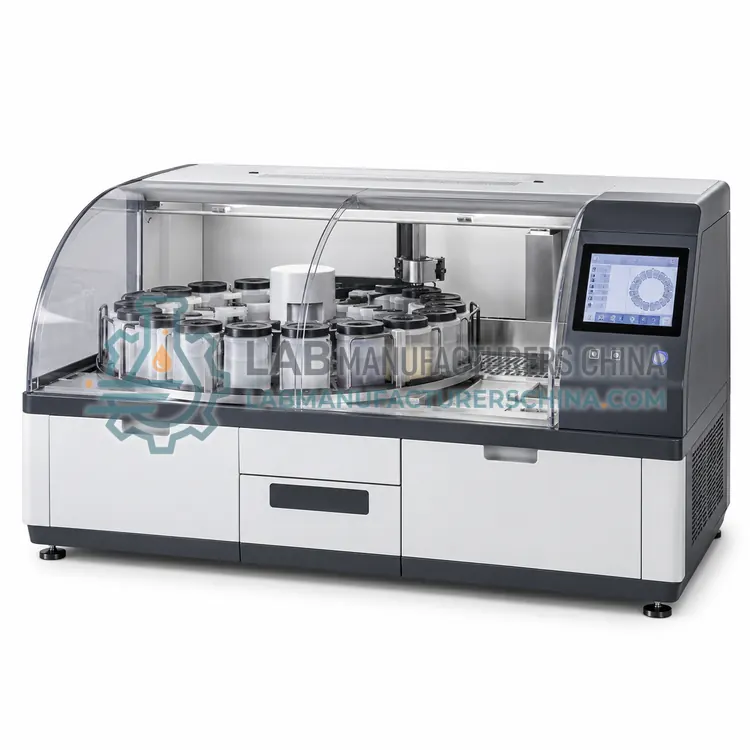 CPEQ病理设备Pathology equipment covers the instruments that turn surgical and biopsy specimens into stained, diagnosable slides. It includes grossing stations, tissue processors, embedding stations, microtomes and slide stainers, used in hospital pathology departments, reference laboratories, veterinary and research histology services.
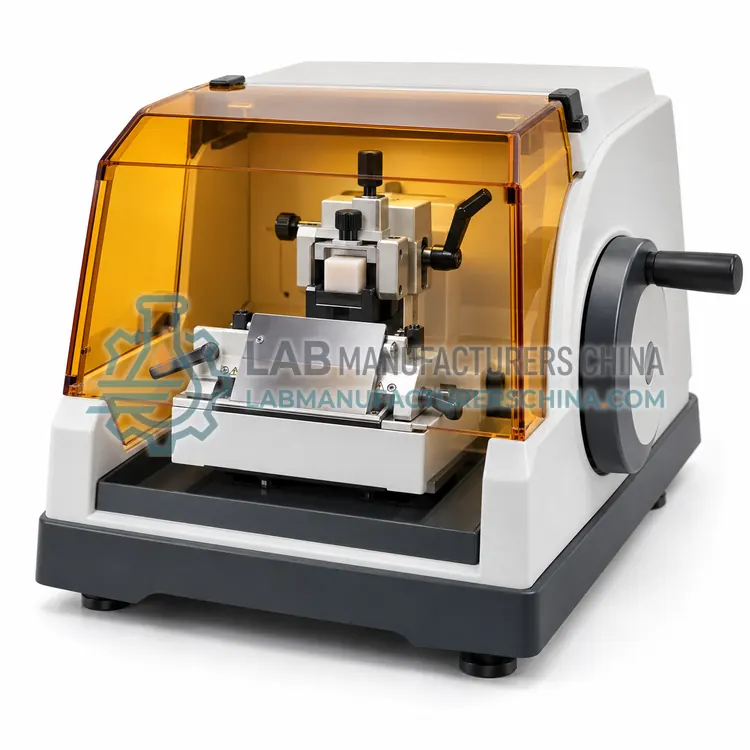 CHIE组织学设备Histology equipment covers the instruments used to embed, section, float, dry and stain tissue samples for microscopic examination. It serves hospital pathology laboratories, research histology facilities and contract research organizations that turn biopsy and necropsy specimens into stained slides for diagnosis and study.
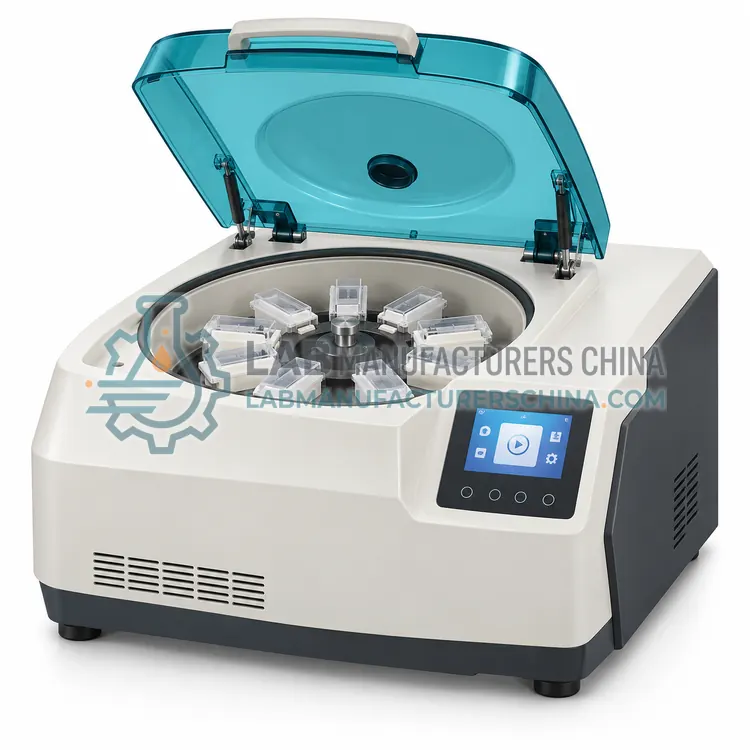 CCYE细胞学设备Cytology equipment covers the instruments that concentrate, prepare and stain individual cells for microscopic examination rather than intact tissue. It serves hospital cytology laboratories, cervical screening programmes and research facilities that examine exfoliated cells, body fluids and fine-needle aspirates.
 CCLE临床实验室设备Clinical laboratory equipment covers the instruments that test patient specimens such as blood, urine and body fluids to support diagnosis and monitoring. It includes clinical analyzers, sample processing devices, centrifuges, microscopes and laboratory automation used in hospital, reference and clinic laboratories.