Lab Manufacturers China

Plasma Freezers

血浆冷冻柜

PLF · Blood Bank Equipment · 5 models

By Lab Manufacturers China Technical TeamLast reviewed Standards: Council of Europe Guide to the Preparation, Use and Quality Assurance of Blood Components, AABB Standards for Blood Banks and Transfusion Services, IEC 61010-2-011

Standards referenced

  • Council of Europe Guide to the Preparation, Use and Quality Assurance of Blood Components
  • AABB Standards for Blood Banks and Transfusion Services
  • IEC 61010-2-011
  • IEC 61010-1
  • IEC 61326-1
  • ISO 13485

What are Plasma Freezers?

Plasma freezers are low-temperature cabinets that freeze and store fresh frozen plasma and cryoprecipitate, typically at –25 °C to –40 °C, with deep models reaching –86 °C. Blood banks, plasma fractionation centers and hospital transfusion services use them to preserve coagulation factors and keep continuous, alarmed temperature records.

5 models of Plasma Freezers

The 5 models below are current configurations; specifications are confirmed on quotation.

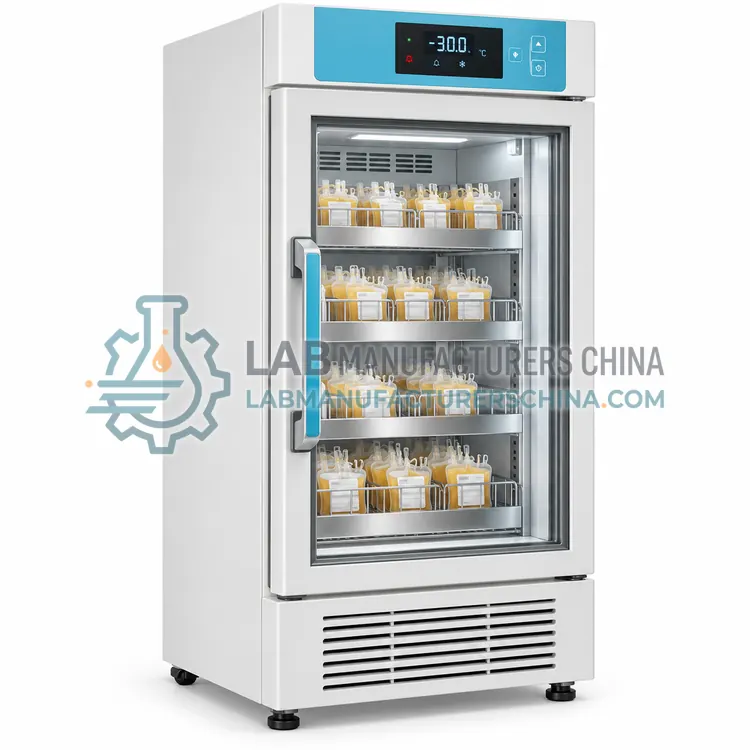
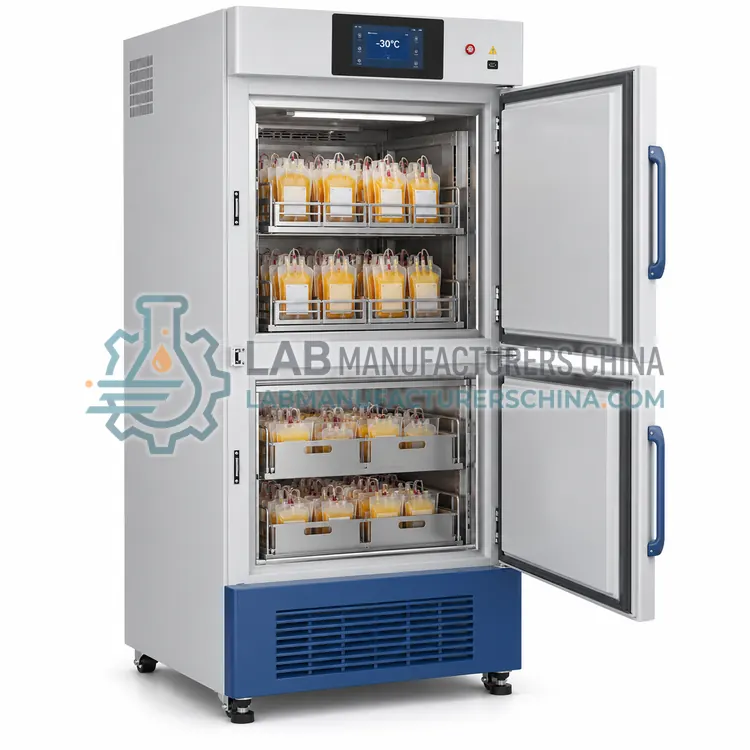
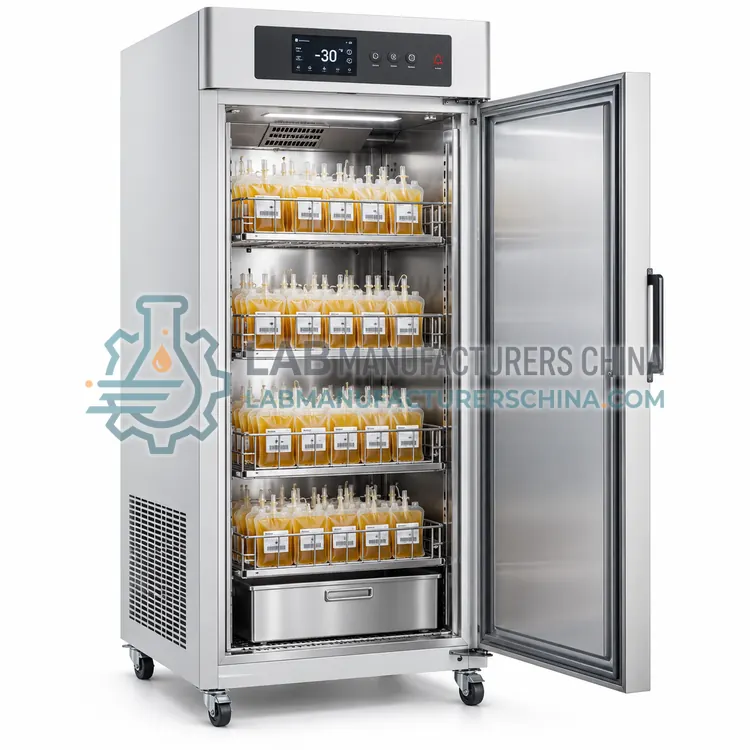
Upright Plasma Storage Freezer

立式血浆保存冷冻柜

  • PLF-0001
  • Plasma Freezers
  • CE (to be confirmed)
  • ISO 13485 (to be confirmed)
  • ISO 9001 manufacturing (to be confirmed)
Temperature range:
–25 °C to –40 °C
Net capacity:
200–700 L
Plasma unit capacity:
approx. 100–350 units (250 mL)
Uniformity:
≤ ±3 °C
Pull-down time:
approx. 4–6 h to –30 °C (empty)
Refrigerant:
R290 or R404A (region dependent)

An upright plasma storage freezer is a floor-standing cabinet that holds frozen plasma at –30 °C to –40 °C on shelves or in drawers. It suits blood banks and hospitals that need accessible storage of fresh frozen plasma with alarms and continuous recording.

Request a quote
View details

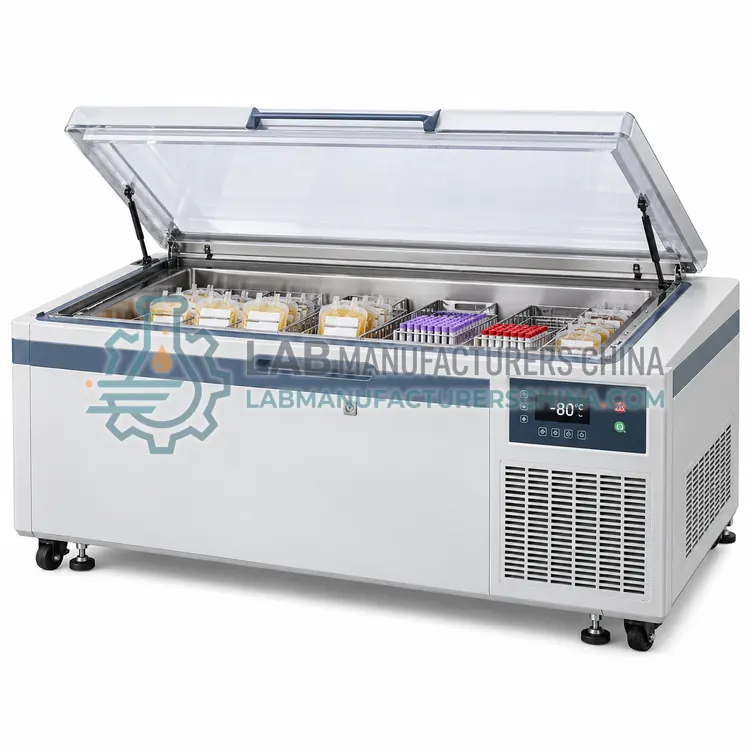
Chest Plasma Storage Freezer

卧式血浆保存冷冻柜

  • PLF-0002
  • Plasma Freezers
  • CE (to be confirmed)
  • ISO 13485 (to be confirmed)
  • ISO 9001 manufacturing (to be confirmed)
Temperature range:
–25 °C to –40 °C
Net capacity:
300–600 L
Plasma unit capacity:
approx. 200–450 units (250 mL)
Uniformity:
≤ ±3 °C
Warm-up time (full, power off):
approx. 24–36 h to –15 °C
Baskets:
3–6, stainless steel or coated

A chest plasma storage freezer is a top-opening cabinet that holds plasma at –25 °C to –40 °C with strong cold retention. It suits blood centers that value low cost per liter, long hold-over during outages and large storage volume.

Request a quote
View details

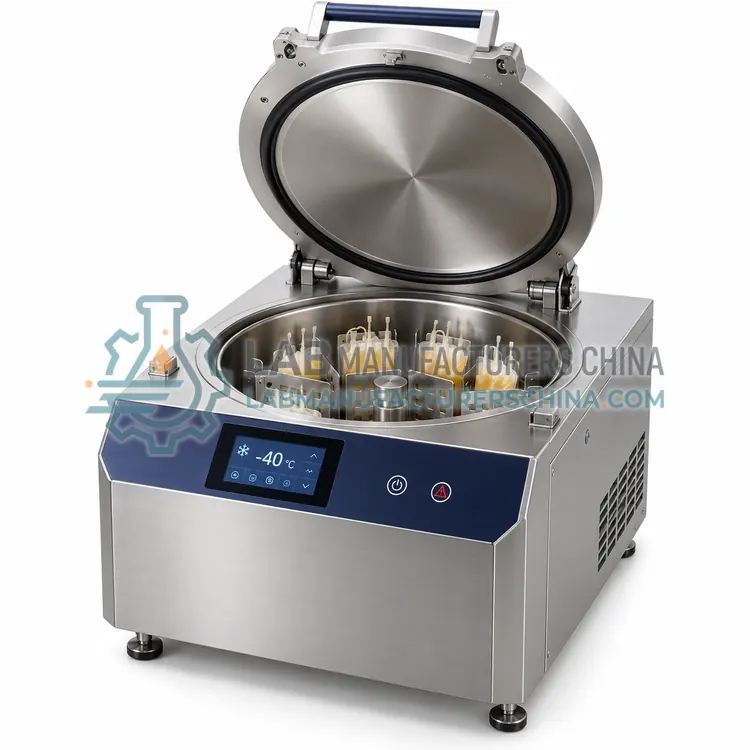
Blast Plasma Freezer

血浆速冻机

  • PLF-0003
  • Plasma Freezers
  • CE (to be confirmed)
  • ISO 13485 (to be confirmed)
  • ISO 9001 manufacturing (to be confirmed)
Air temperature:
–40 °C to –60 °C
Core freezing time:
≤ 60–90 min to –30 °C (validated load)
Capacity per cycle:
12–60 bags (250–300 mL)
Cooling method:
Forced air or contact plate
Core probes:
1–4 Pt100
Net capacity:
150–500 L

A blast plasma freezer rapidly freezes freshly separated plasma by forcing very cold air or contact plates around bags, typically bringing the core to –30 °C within about one hour. Blood centers use it to preserve Factor VIII and other labile proteins before storage.

Request a quote
View details

Ultra-Low Plasma Freezer

超低温血浆冷冻柜

  • PLF-0004
  • Plasma Freezers
  • CE (to be confirmed)
  • ISO 13485 (to be confirmed)
  • ISO 9001 manufacturing (to be confirmed)
Temperature range:
–60 °C to –86 °C
Net capacity:
100–700 L
Refrigeration:
Cascade, two compressors
Uniformity:
≤ ±5 °C
Pull-down time:
approx. 4–6 h to –80 °C (empty)
Warm-up time (full, power off):
approx. 8–14 h to –50 °C

An ultra-low plasma freezer maintains –60 °C to –86 °C for extended storage of plasma, cryoprecipitate and research plasma collections. It is used where regulations permit longer shelf life at –65 °C or below, or where sample integrity must be preserved for years.

Request a quote
View details

Undercounter Plasma Freezer

台下式血浆冷冻柜

  • PLF-0005
  • Plasma Freezers
  • CE (to be confirmed)
  • ISO 13485 (to be confirmed)
  • RoHS (to be confirmed)
Temperature range:
–25 °C to –40 °C
Net capacity:
80–200 L
Plasma unit capacity:
approx. 40–120 units (250 mL)
Dimensions (W×D×H):
600 × 650 × 830 mm
Uniformity:
≤ ±3 °C
Refrigerant:
R290 or R404A (region dependent)

An undercounter plasma freezer is a compact –30 °C to –40 °C unit, typically 80–200 L, that fits below a bench. It suits small hospital blood banks, satellite transfusion points and laboratories holding a small plasma stock with alarms and recording.

Request a quote
View details

Compare Plasma Freezers models

ModelTemperature rangeNet capacityPlasma unit capacityUniformityPull-down time
Upright Plasma Storage FreezerPLF-0001–25 °C to –40 °C200–700 Lapprox. 100–350 units (250 mL)≤ ±3 °Capprox. 4–6 h to –30 °C (empty)
Chest Plasma Storage FreezerPLF-0002–25 °C to –40 °C300–600 Lapprox. 200–450 units (250 mL)≤ ±3 °C—
Blast Plasma FreezerPLF-0003—150–500 L———
Ultra-Low Plasma FreezerPLF-0004–60 °C to –86 °C100–700 L—≤ ±5 °Capprox. 4–6 h to –80 °C (empty)
Undercounter Plasma FreezerPLF-0005–25 °C to –40 °C80–200 Lapprox. 40–120 units (250 mL)≤ ±3 °C—

Indicative values for this product class. Final specifications are confirmed on the quotation and in the calibration documents supplied with the instrument.

How do Plasma Freezers work?

Plasma freezers use a compressor refrigeration circuit, often a single-stage system with low-temperature refrigerant for –40 °C models and a cascade system for –80 °C models. Air circulates past plates or shelves to extract heat, and heavy polyurethane insulation limits gain. Quality depends on how fast plasma passes through its freezing range: coagulation factors such as Factor VIII are better preserved when the core reaches –30 °C within about one hour, so rapid freezers use high airflow or contact plates. A controller reads an RTD probe, often in a glycol buffer, and drives independent alarms and a recorder. Door gaskets with heaters prevent icing, and condenser fans and a backup CO2 or LN2 option can protect stock during power loss.

Which Plasma Freezers variants are available?

  • Upright Plasma Storage Freezer — An upright plasma storage freezer is a floor-standing cabinet that holds frozen plasma at –30 °C to –40 °C on shelves or in drawers.
  • Chest Plasma Storage Freezer — A chest plasma storage freezer is a top-opening cabinet that holds plasma at –25 °C to –40 °C with strong cold retention.
  • Blast Plasma Freezer — A blast plasma freezer rapidly freezes freshly separated plasma by forcing very cold air or contact plates around bags, typically bringing the core to –30 °C within about one hour.
  • Ultra-Low Plasma Freezer — An ultra-low plasma freezer maintains –60 °C to –86 °C for extended storage of plasma, cryoprecipitate and research plasma collections.
  • Undercounter Plasma Freezer — An undercounter plasma freezer is a compact –30 °C to –40 °C unit, typically 80–200 L, that fits below a bench.

How do I choose the right variant?

Decide first whether you need freezing, storage or both. Blast models freeze plasma quickly and are usually followed by storage units. For storage, choose the temperature by the shelf life your regulator allows: storage at –25 °C or colder is commonly accepted for up to 36 months in European guidance, while –65 °C or colder extends shelf life under some standards. Then pick upright or chest format by floor space and access frequency, capacity in bags or liters, and monitoring needs. Check the recovery time after door opening, noise, ambient class and whether a CO2 or LN2 backup port is offered. Plan for electrical supply and heat load in the room.

Where are Plasma Freezers used?

Plasma Freezers are specified in fresh frozen plasma storage, cryoprecipitate storage, plasma for fractionation, hospital transfusion services and regional blood centers.

Which standards and certifications apply?

Work with Plasma Freezers is commonly governed by Council of Europe Guide to the Preparation, Use and Quality Assurance of Blood Components, AABB Standards for Blood Banks and Transfusion Services, IEC 61010-2-011, IEC 61010-1, IEC 61326-1 and ISO 13485. Instrument certifications such as CE marking are confirmed per configuration and never assumed.

What are the key considerations before purchase?

Install the freezer on a level floor with clear ventilation and a dedicated circuit. Run it empty until stable and map temperature before loading. Handle frozen plasma carefully to avoid bag cracks, and store in overwrap or cartons. Calibrate probes at least annually, test alarms regularly, and defrost or clean according to the maker's schedule to control frost. Keep records for the regulatory period and maintain a contingency plan that names a validated alternate freezer or dry-ice supply. Do not load large warm volumes at once, since this raises the chamber temperature and stresses the compressor.

Frequently asked questions about Plasma Freezers

Fresh frozen plasma is commonly stored at –25 °C or colder, with many sites using –30 °C to –40 °C. Some standards allow –18 °C to –25 °C for shorter periods, and –65 °C or colder for extended shelf life. Always follow your regulator and verify the product shelf life table.

Need help specifying Plasma Freezers?

Request a quote