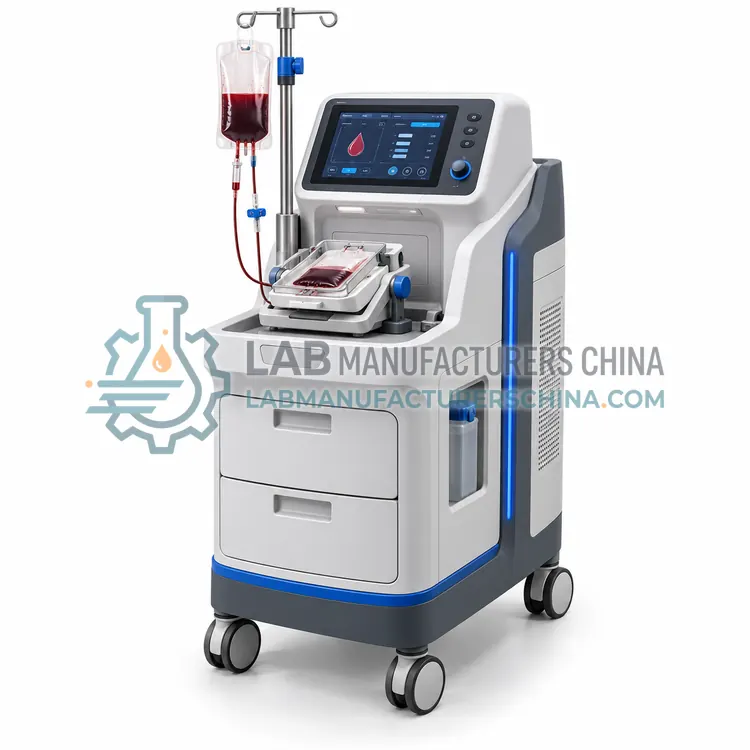
How do Blood Collection Monitors work?
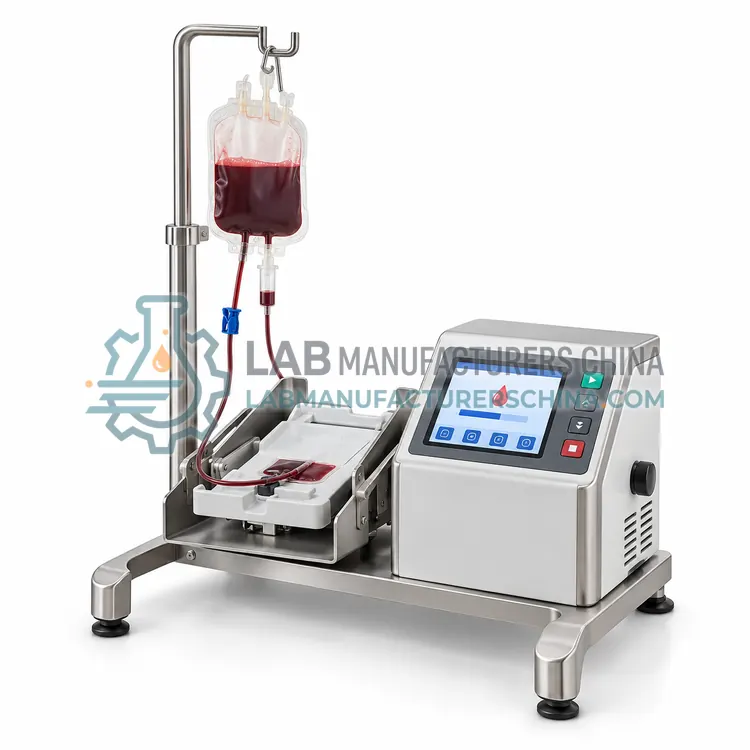
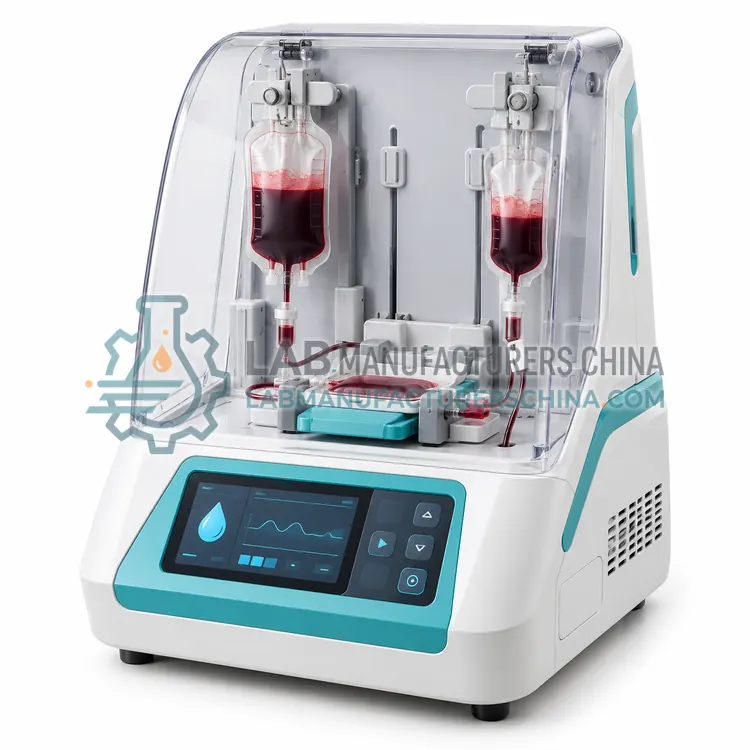
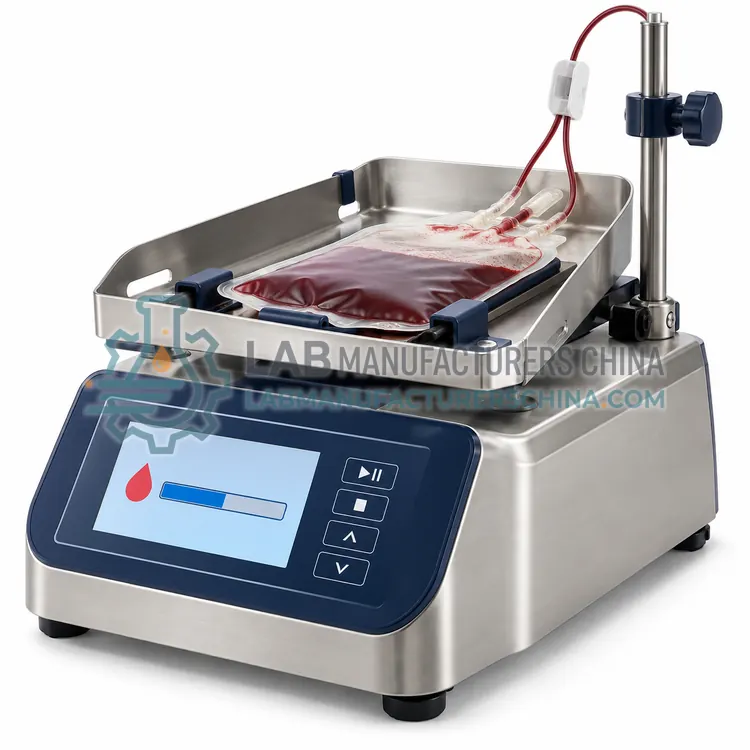
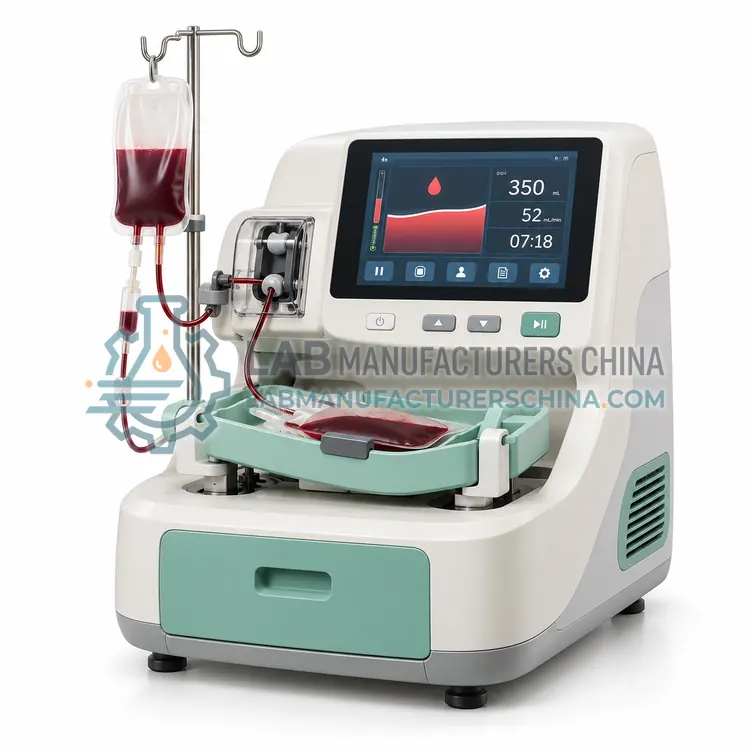
A blood collection monitor combines a tilting or rocking platform, a load cell and a microcontroller. The donor's blood flows by gravity and venous pressure into the bag, which rests on the platform. The rocker mixes blood with citrate anticoagulant, for example CPD or CPDA-1, to prevent clotting. The load cell measures mass, and the controller converts it to volume using blood density, about 1.053 g/mL, and compares it with a target such as 450 mL ±10%. Flow rate and elapsed time are displayed, and the system alarms on low flow, over-time collection or incomplete mixing. Many models drive a pinch clamp or tubing clamp to stop flow automatically at the target, and record each donation for traceability.
Which Blood Collection Monitors variants are available?
- Single-Bag Blood Collection Monitor — A single-bag blood collection monitor mixes and weighs one whole blood collection bag at a time, showing volume, flow rate and elapsed time.
- Dual-Bag Blood Collection Monitor — A dual-bag blood collection monitor has two independent rocking and weighing stations in one housing, letting one operator run two donors or two bags at the same time.
- Portable Battery-Powered Blood Collection Monitor — A portable battery-powered blood collection monitor is a lightweight mixer and scale that runs on a rechargeable battery for mobile donation drives.
- Networked Blood Collection Monitor with Donor Traceability — A networked blood collection monitor with donor traceability links each donation to a donor ID and bag lot through barcode scanning, and transmits volume, time and alarm data to the blood establishment system.
- Bed-Mounted Blood Collection Monitor — A bed-mounted blood collection monitor clamps to a donor chair or bed rail and holds the bag at the donor's side, mixing and weighing during donation.
How do I choose the right variant?
Choose by collection setting. Fixed donor rooms can use mains-powered benchtop units, while mobile drives need battery-powered portable monitors. Check weight range and resolution, the accuracy of the volume calculation and whether mixing speed and angle are adjustable for your bag type. Automatic clamp, flow alarms and target presets reduce operator load. For traceability, consider barcode scanning, donor ID entry, bag lot recording and network output to the blood establishment information system. Confirm cleaning, tubing compatibility and operating hours per charge. Also check electrical safety class and how the device handles power interruption without losing donation data.
Where are Blood Collection Monitors used?
Blood Collection Monitors are specified in whole blood donation collection, mobile donation drives, hospital autologous donation, blood center quality control and research blood sampling.
Which standards and certifications apply?
Work with Blood Collection Monitors is commonly governed by ISO 13485, IEC 60601-1, IEC 60601-1-2, IEC 62304, ISO 3826-1 and AABB Standards for Blood Banks and Transfusion Services. Instrument certifications such as CE marking are confirmed per configuration and never assumed.
What are the key considerations before purchase?
Calibrate the load cell with certified weights at installation and on a regular schedule, commonly every six to twelve months, and verify mixing motion daily. Keep the platform level and free of vibration. Clean surfaces with approved disinfectants after each donor and inspect clamps for wear. Batteries on portable units need periodic replacement and charge logging. Software that stores donor data must follow data protection rules, and the device should be covered by the blood establishment's quality system. Keep service records and confirm electrical safety testing according to local rules.