Networked Blood Collection Monitor with Donor Traceability
带献血者追溯的联网采血监测仪
- SKU BCM-0004
- Blood Collection Monitors
- CE (to be confirmed)
- ISO 13485 (to be confirmed)
- IEC 62304 software lifecycle (to be confirmed)
Price on request — FOB / CIF quoted per order
Prices depend on configuration, quantity and destination port.
Key specifications
| Weighing range | 0–1000 g |
|---|---|
| Resolution | 1 g |
| Volume accuracy | ±5 mL at 450 mL |
| Identification | 1D/2D barcode scanner or RFID |
| Connectivity | Ethernet, Wi-Fi |
| Data protocol | HL7 or vendor API |
Request a quote Download brochure · to be provided
By Lab Manufacturers China Technical TeamLast reviewed Standards: ISO 13485, IEC 60601-1, IEC 60601-1-2
What is the Networked Blood Collection Monitor with Donor Traceability?
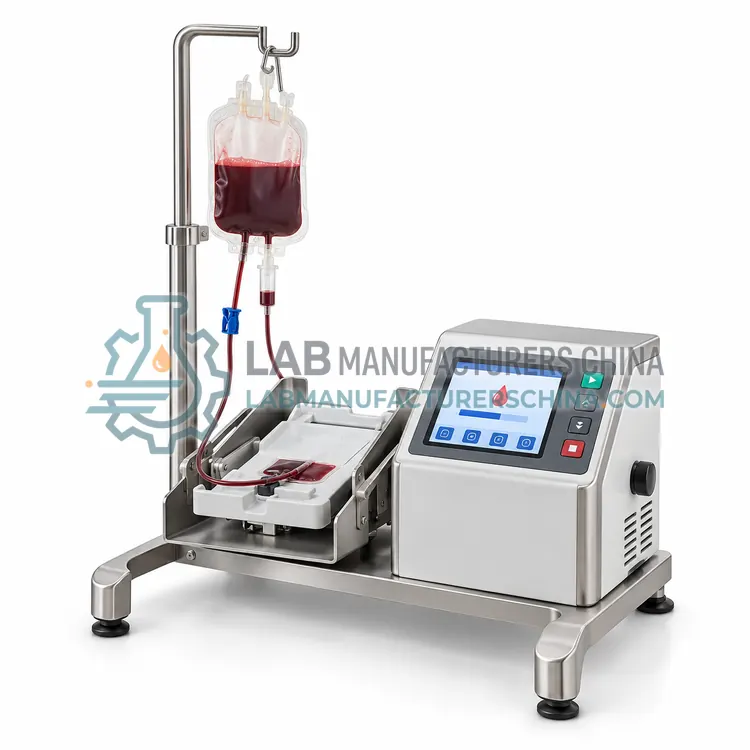
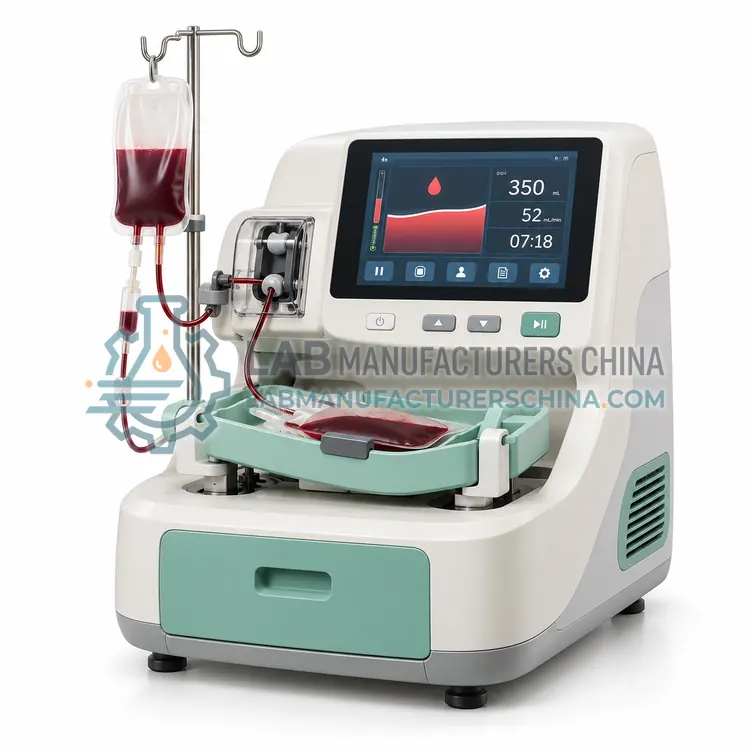
A networked blood collection monitor with donor traceability links each donation to a donor ID and bag lot through barcode scanning, and transmits volume, time and alarm data to the blood establishment system. It suits centers with electronic donor records and audit requirements.
What is the Networked Blood Collection Monitor with Donor Traceability?
A networked blood collection monitor with donor traceability links each donation to a donor ID and bag lot through barcode scanning, and transmits volume, time and alarm data to the blood establishment system. It suits centers with electronic donor records and audit requirements.
Overview
This variant adds a barcode scanner or RFID reader, a touchscreen and an Ethernet or Wi-Fi interface to the mixer and scale. Before collection, the operator scans the donor ID, donation number and bag lot, and the monitor checks these against the session. During donation the device logs volume, flow rate, start and end time, alarms and operator ID. Data are sent in real time to the blood establishment computer system over a standard protocol such as HL7 or a vendor API. Audit trails record parameter changes, and user levels restrict setup. The monitor can block collection if the bag lot is expired or data do not match. This supports traceability from donor to component and helps meet regulatory expectations for record keeping.
How does it work?
A blood collection monitor combines a tilting or rocking platform, a load cell and a microcontroller. The donor's blood flows by gravity and venous pressure into the bag, which rests on the platform. The rocker mixes blood with citrate anticoagulant, for example CPD or CPDA-1, to prevent clotting. The load cell measures mass, and the controller converts it to volume using blood density, about 1.053 g/mL, and compares it with a target such as 450 mL ±10%. Flow rate and elapsed time are displayed, and the system alarms on low flow, over-time collection or incomplete mixing. Many models drive a pinch clamp or tubing clamp to stop flow automatically at the target, and record each donation for traceability.
What are the key features?
- Barcode or RFID scanning of donor ID, donation number and bag lot
- Real-time data transfer to blood establishment software
- Audit trail for parameter changes and operator actions
- Collection lock if bag lot or donor data mismatch
- Touchscreen with user access levels
- Ethernet and Wi-Fi interfaces with secure communication
What are the technical specifications?
A typical networked blood collection monitor with donor traceability configuration offers weighing range of 0–1000 g, resolution of 1 g, volume accuracy of ±5 mL at 450 mL, identification of 1D/2D barcode scanner or RFID, connectivity of Ethernet, Wi-Fi and data protocol of HL7 or vendor API. Values are indicative of the product class; the exact figures for each configuration are confirmed on the quotation and the calibration documents supplied with the instrument.
Which applications is it used for?
The Networked Blood Collection Monitor with Donor Traceability is used in blood centers with electronic donor records, regulated donation traceability, multi-site blood services and quality audits of collection. Across the wider Blood Collection Monitors class, laboratories also deploy it for whole blood donation collection, mobile donation drives and hospital autologous donation.
Which standards and certifications apply?
Relevant standards and methods include ISO 13485, IEC 60601-1, IEC 60601-1-2, IEC 62304, ISO 3826-1 and AABB Standards for Blood Banks and Transfusion Services. Certification candidates for this model are CE, ISO 13485 and IEC 62304 software lifecycle; each is to be confirmed for the specific configuration before shipment, and certificates are supplied only where they have been issued.
Calibrate the load cell with certified weights at installation and on a regular schedule, commonly every six to twelve months, and verify mixing motion daily. Keep the platform level and free of vibration. Clean surfaces with approved disinfectants after each donor and inspect clamps for wear. Batteries on portable units need periodic replacement and charge logging. Software that stores donor data must follow data protection rules, and the device should be covered by the blood establishment's quality system. Keep service records and confirm electrical safety testing according to local rules.
How do I select the right Networked Blood Collection Monitor with Donor Traceability?
Choose the networked model if your donor management system expects electronic records and you must demonstrate traceability. Specify scanner type, protocol, cybersecurity features, user roles and storage. Confirm integration testing with your software vendor before purchase, and ask how records are buffered if the network is down.
How does it compare with other Blood Collection Monitors variants?
Choose by collection setting. Fixed donor rooms can use mains-powered benchtop units, while mobile drives need battery-powered portable monitors. Check weight range and resolution, the accuracy of the volume calculation and whether mixing speed and angle are adjustable for your bag type. Automatic clamp, flow alarms and target presets reduce operator load. For traceability, consider barcode scanning, donor ID entry, bag lot recording and network output to the blood establishment information system. Confirm cleaning, tubing compatibility and operating hours per charge. Also check electrical safety class and how the device handles power interruption without losing donation data.
Full specifications
| Weighing range | 0–1000 g |
|---|---|
| Resolution | 1 g |
| Volume accuracy | ±5 mL at 450 mL |
| Identification | 1D/2D barcode scanner or RFID |
| Connectivity | Ethernet, Wi-Fi |
| Data protocol | HL7 or vendor API |
| Display | 7–10 inch touchscreen |
| User levels | Operator, supervisor, administrator |
| Storage | ≥ 10,000 donation records |
| Power supply | 100–240 V AC, 50/60 Hz |
Indicative values for this product class. Final specifications are confirmed on the quotation and in the calibration documents supplied with the instrument.
Applications
- Blood centers with electronic donor records
- Regulated donation traceability
- Multi-site blood services
- Quality audits of collection
Key features
- Barcode or RFID scanning of donor ID, donation number and bag lot
- Real-time data transfer to blood establishment software
- Audit trail for parameter changes and operator actions
- Collection lock if bag lot or donor data mismatch
- Touchscreen with user access levels
- Ethernet and Wi-Fi interfaces with secure communication
Frequently asked questions about Networked Blood Collection Monitor with Donor Traceability
Commonly HL7 messages, TCP/IP sockets or vendor APIs over Ethernet or Wi-Fi. Blood establishment systems differ, so confirm the required interface specification early and test data mapping for fields such as donor ID, volume, time and alarms.
Security depends on design and configuration: encrypted communication, user authentication, audit logs and limited local storage. Ask for cybersecurity documentation, and follow local privacy law for donor data, including access and retention rules.
Yes, if configured. It can prevent starting when a bag lot is expired, the donor ID does not match the session or required fields are missing. Blocking rules should be defined with your quality team and tested.
It rocks the bag to mix blood with anticoagulant and weighs the bag to calculate collected volume and flow rate. The controller alarms or clamps the tubing when the target volume is reached or donation takes too long, helping produce consistent units and donor safety.
Accuracy depends on load cell resolution and the density constant, usually 1.053 g/mL for whole blood. Good units resolve 1 g or better and meet collection targets within a few milliliters, but donation volume tolerance in guidelines is typically ±10% of the target.
Anticoagulant in the bag must contact blood continuously or clots can form, which would make the unit unusable. Gentle rocking at a set rate distributes citrate through the flow, and alarms warn if the mixer stops during collection.
Related models
Automatic Blood Tube Sealer with Integrated Cutter and Segment Counter
带切割和血段计数的自动血管封口机
- CE (to be confirmed)
- +2