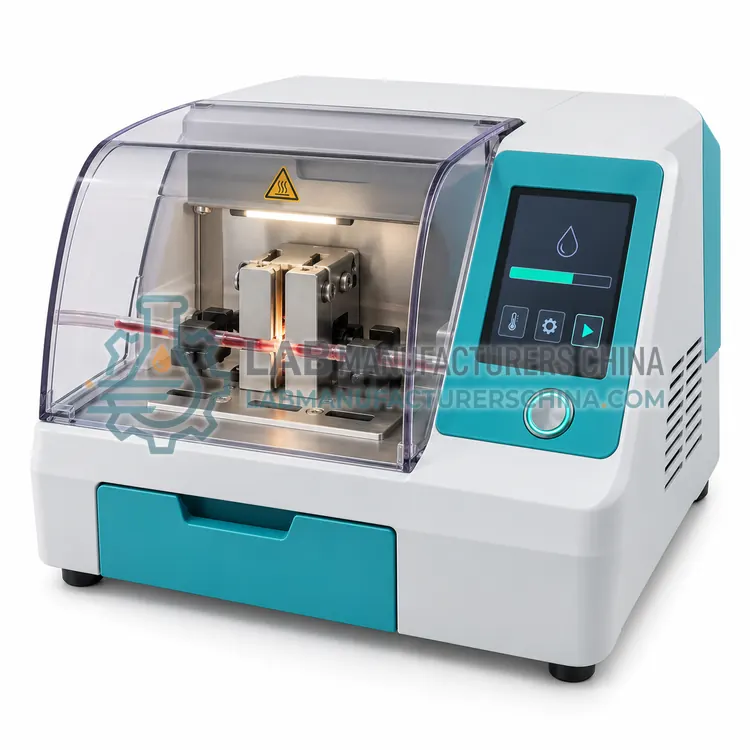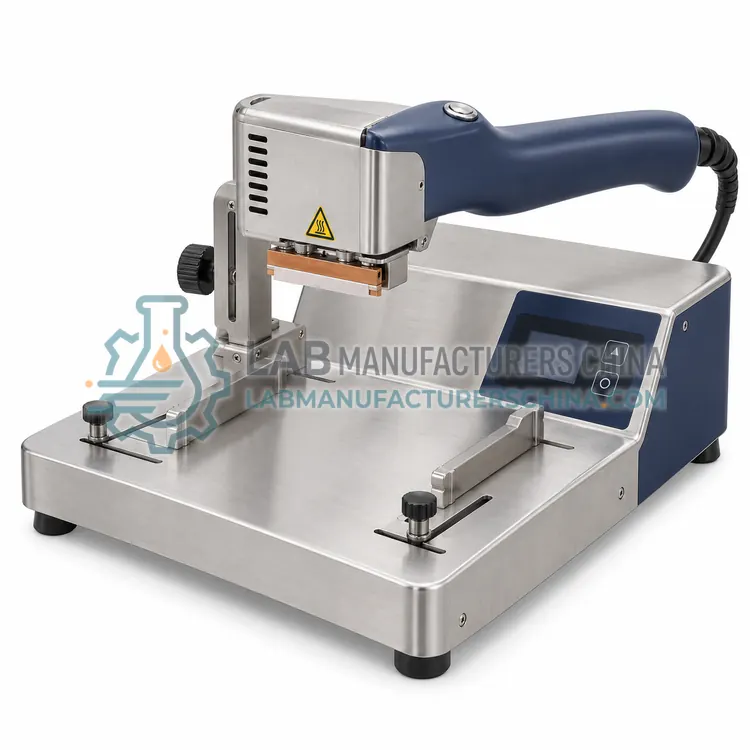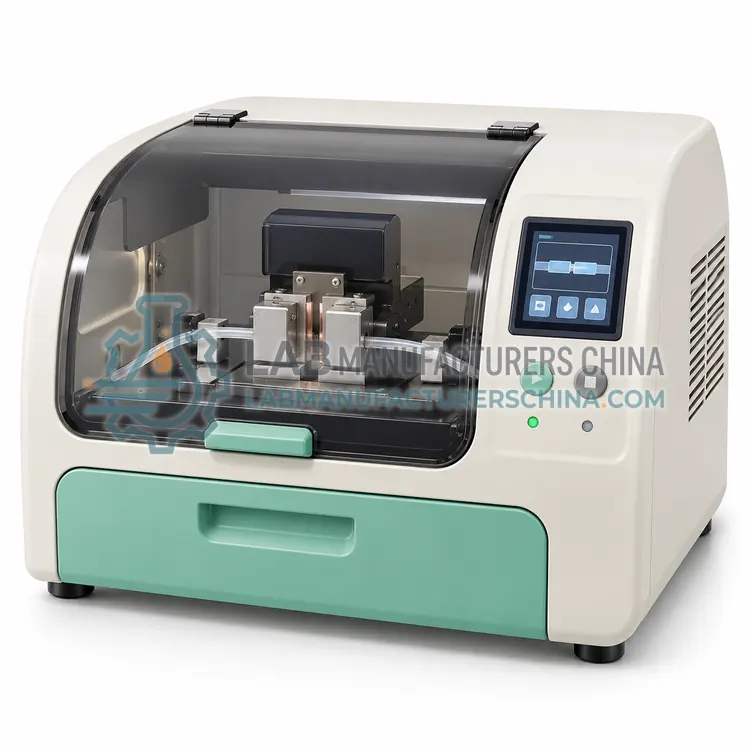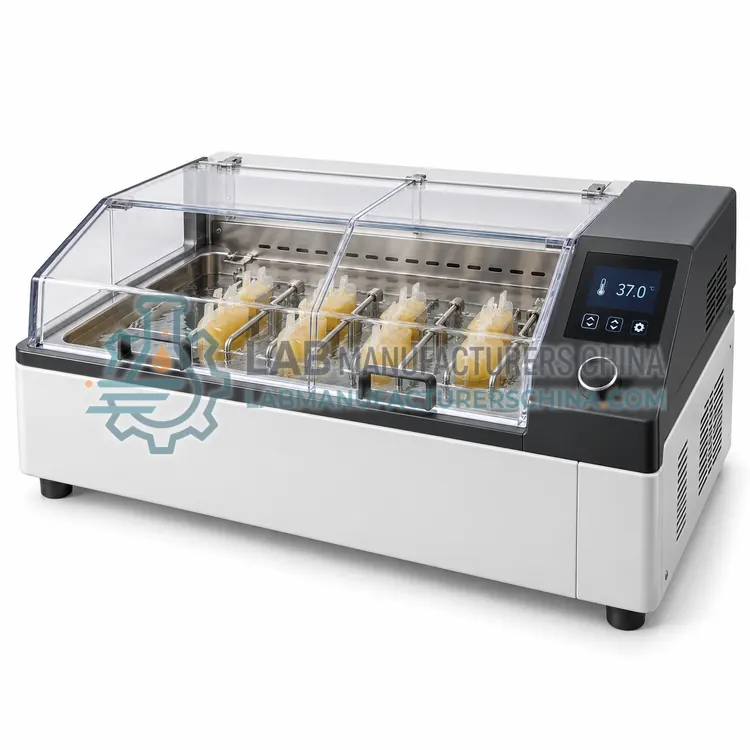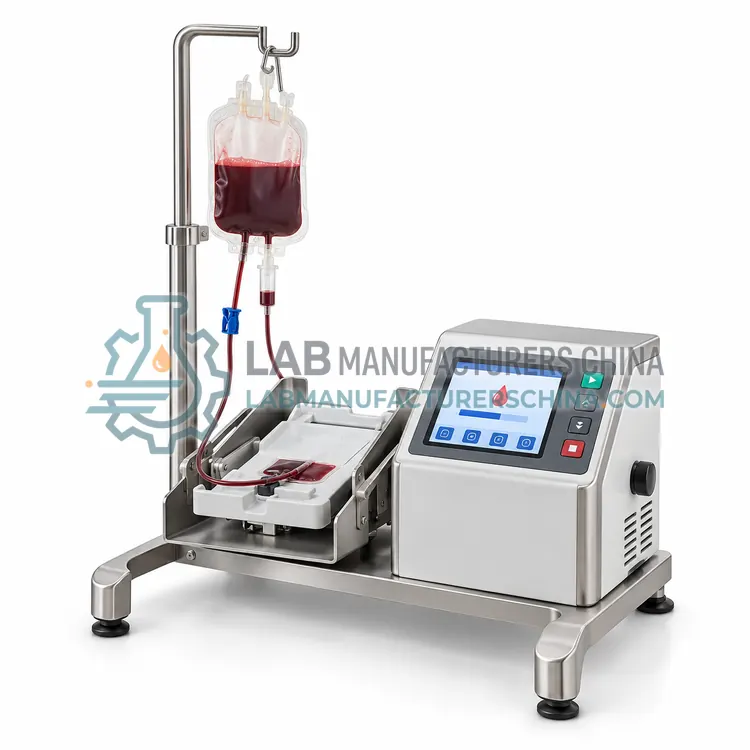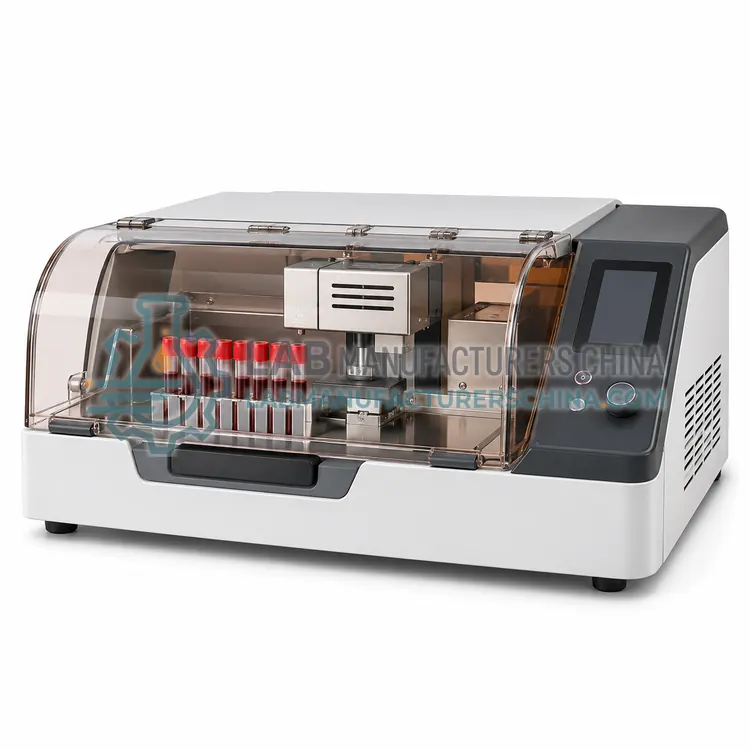
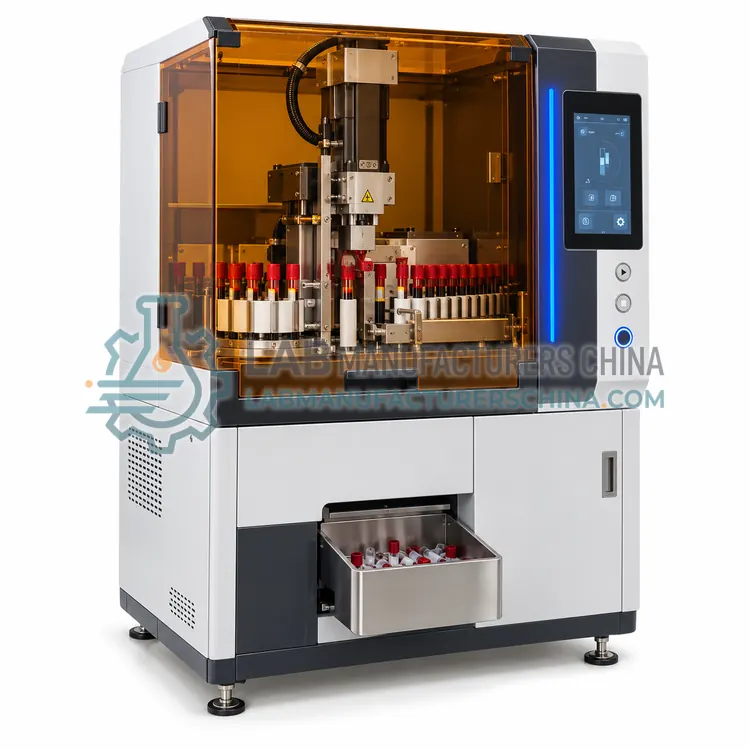
Automatic Blood Tube Sealer with Integrated Cutter and Segment Counter
带切割和血段计数的自动血管封口机
- SKU BBS-0005
- Blood Bag Sealers
- CE (to be confirmed)
- ISO 13485 (to be confirmed)
- IEC 60601-1 test report (to be confirmed)
Price on request — FOB / CIF quoted per order
Prices depend on configuration, quantity and destination port.
Key specifications
| RF frequency | 27.12 MHz |
|---|---|
| Seal time | approx. 2 s per seal |
| Trigger | Optical tube sensor |
| Cutter | Integrated mechanical cutter |
| Segment length | Adjustable, approx. 10–50 mm |
| Tube outer diameter | 3–9 mm |
Request a quote Download brochure · to be provided
By Lab Manufacturers China Technical TeamLast reviewed Standards: ISO 3826-1, IEC 60601-1, IEC 60601-1-2
What is the Automatic Blood Tube Sealer with Integrated Cutter and Segment Counter?
An automatic blood tube sealer with integrated cutter seals and severs tubing in a single sensor-triggered cycle and counts the segments made for each donation. It suits processing laboratories that prepare segments for crossmatching and want consistent, documented seals.
What is the Automatic Blood Tube Sealer with Integrated Cutter and Segment Counter?
An automatic blood tube sealer with integrated cutter seals and severs tubing in a single sensor-triggered cycle and counts the segments made for each donation. It suits processing laboratories that prepare segments for crossmatching and want consistent, documented seals.
Overview
This variant adds a sensor that detects tubing placement and starts the cycle automatically, followed by a seal and a mechanical cutter that severs the tube at the seal center. Sealing uses 27.12 MHz RF, completing in about 2 seconds, and the cutter produces clean segment ends. Operators run the tube through the unit in a line, making multiple segments of a set length, typically 5 to 10 per donation for compatibility testing. A counter records segments and can be reset per donation or integrated with a barcode label printer. Operator load falls because the hands remain free and seal quality does not depend on pressing time. The design generally offers a slightly larger footprint and higher cost than a manual sealer, but increases consistency and throughput for segment-heavy workflows.
How does it work?
Most blood tubing sealers use dielectric heating. A radio-frequency field, commonly 27.12 MHz, is applied across a PVC tube held between two electrodes. PVC molecules have a dipole moment, so the field heats the material from within, softens the walls and forms a weld under electrode pressure. Cooling under pressure produces a hermetic seal in one to three seconds, and the tube is then cut or separated. The process does not add a clip, so seals are smooth and leak-tight. Sterile tubing welders work differently: a heated blade at roughly 260–300 °C cuts two tubes and the ends are joined while molten, preserving sterility. Controllers monitor power, pressure and time to give consistent seals and flag failed cycles.
What are the key features?
- Sensor-triggered seal and cut in one automatic cycle
- Integrated mechanical cutter for clean segment ends
- Segment counter resettable per donation
- Optional label printer or barcode output
- Hands-free operation reduces operator variation
- 27.12 MHz RF seal in about 2 seconds
What are the technical specifications?
A typical automatic blood tube sealer with integrated cutter and segment counter configuration offers RF frequency of 27.12 MHz, seal time of approx. 2 s per seal, trigger of Optical tube sensor, cutter of Integrated mechanical cutter, segment length of Adjustable, approx. 10–50 mm and tube outer diameter of 3–9 mm. Values are indicative of the product class; the exact figures for each configuration are confirmed on the quotation and the calibration documents supplied with the instrument.
Which applications is it used for?
The Automatic Blood Tube Sealer with Integrated Cutter and Segment Counter is used in crossmatch segment preparation, component labeling workflows, high-volume processing laboratories and blood center quality records. Across the wider Blood Bag Sealers class, laboratories also deploy it for donation line sealing and segment creation, sterile connection of blood bags and component processing and pooling.
Which standards and certifications apply?
Relevant standards and methods include ISO 3826-1, IEC 60601-1, IEC 60601-1-2, IEC 61010-1, ISO 13485 and AABB Standards for Blood Banks and Transfusion Services. Certification candidates for this model are CE, ISO 13485 and IEC 60601-1 test report; each is to be confirmed for the specific configuration before shipment, and certificates are supplied only where they have been issued.
Place the sealer on a stable surface with clear airflow and keep electrodes clean and free of residue, since contamination causes weak seals. Verify seal quality on a routine schedule, for example by pulling, squeezing and immersion tests on test tubing, and record results. Electrodes and blades are wear parts and need replacement per maker intervals. RF equipment must meet electromagnetic safety and emission rules, and users should avoid contact with live electrodes. Sterile welders require correct wafer handling and storage. Service by authorized technicians and inclusion in the quality system are recommended.
How do I select the right Automatic Blood Tube Sealer with Integrated Cutter and Segment Counter?
Choose the automatic sealer when segments are prepared in large numbers and consistency matters more than purchase cost. Specify segment length, tube diameter, counter and label interface, and cutter maintenance. Ask for seal validation on your bag sets. Manual or handheld units remain adequate for low-volume line closure at the donor chair.
How does it compare with other Blood Bag Sealers variants?
Choose based on seal type and workflow. RF sealers suit routine tube segmenting and line closure, with options for benchtop, handheld or battery use. A sterile welder is needed when you must join tubing in a closed system, for example pooling or adding bags. Check the tube outer diameter range, seal time, seal integrity verification and whether the unit supports your tube material. Consider throughput, noise, operator ergonomics and whether foot pedal or sensor triggering is useful. Verify that the sealer has been tested on your bag brand and that seals meet leak and pull tests. For mobile collection, battery runtime and robustness matter more than speed.
Full specifications
| RF frequency | 27.12 MHz |
|---|---|
| Seal time | approx. 2 s per seal |
| Trigger | Optical tube sensor |
| Cutter | Integrated mechanical cutter |
| Segment length | Adjustable, approx. 10–50 mm |
| Tube outer diameter | 3–9 mm |
| Counter | Segments per donation, resettable |
| Throughput | approx. 600–900 segments/h |
| Interface | USB or RS-232, optional |
| Power supply | 100–240 V AC, 50/60 Hz |
Indicative values for this product class. Final specifications are confirmed on the quotation and in the calibration documents supplied with the instrument.
Applications
- Crossmatch segment preparation
- Component labeling workflows
- High-volume processing laboratories
- Blood center quality records
Key features
- Sensor-triggered seal and cut in one automatic cycle
- Integrated mechanical cutter for clean segment ends
- Segment counter resettable per donation
- Optional label printer or barcode output
- Hands-free operation reduces operator variation
- 27.12 MHz RF seal in about 2 seconds
Frequently asked questions about Automatic Blood Tube Sealer with Integrated Cutter and Segment Counter
Practice varies, but many centers prepare several segments, often five to ten, for crossmatching and confirmatory tests. The count and length are set by local protocol, so configure the counter to match your process.
Mechanical cutters wear and need periodic inspection and replacement per manufacturer interval. Dull blades produce ragged ends that can compromise seals, so inspect segments visually and keep spare blades on site.
Yes, with a label printer or data interface. The counter passes segment numbers to a label system so each segment can be identified to the donation, which supports traceability and reduces manual labeling errors.
It applies a 27.12 MHz electric field across PVC tubing between two electrodes. The polymer heats from within, softens and welds under pressure, then cools to form a leak-tight seal in one to three seconds. No clip is added, leaving a smooth, flat seal.
A tube sealer closes one tube, forming segments or sealing a line. A sterile welder cuts two tubes with a hot blade and joins them while molten, creating a new sterile connection. Sealers close systems; welders connect them without breaking sterility.
Pull each seal by hand, squeeze the segment and look for leaks, and run periodic immersion or pressure tests on test tubing. Record results and replace electrodes per maker intervals. Any weak seal should be re-sealed and the cause investigated.
Related models