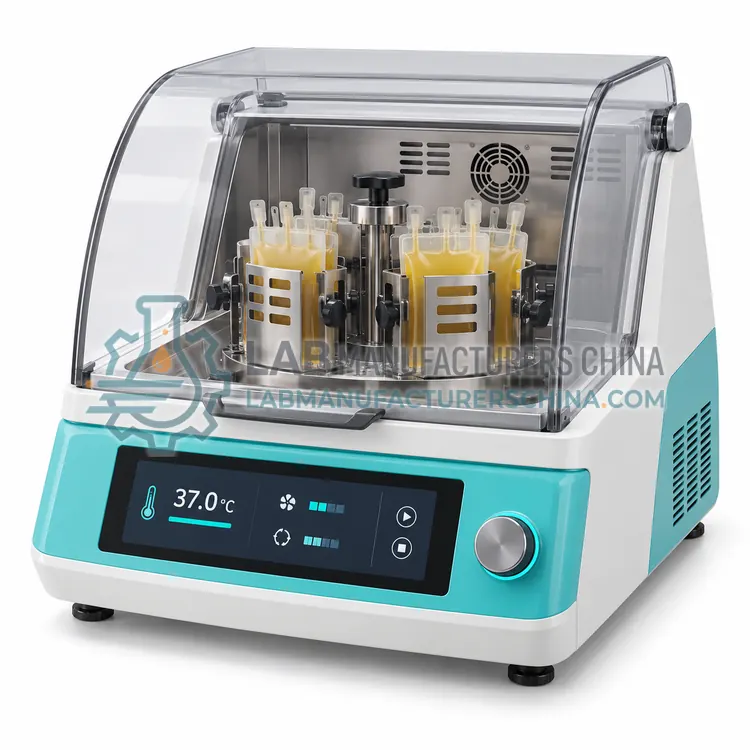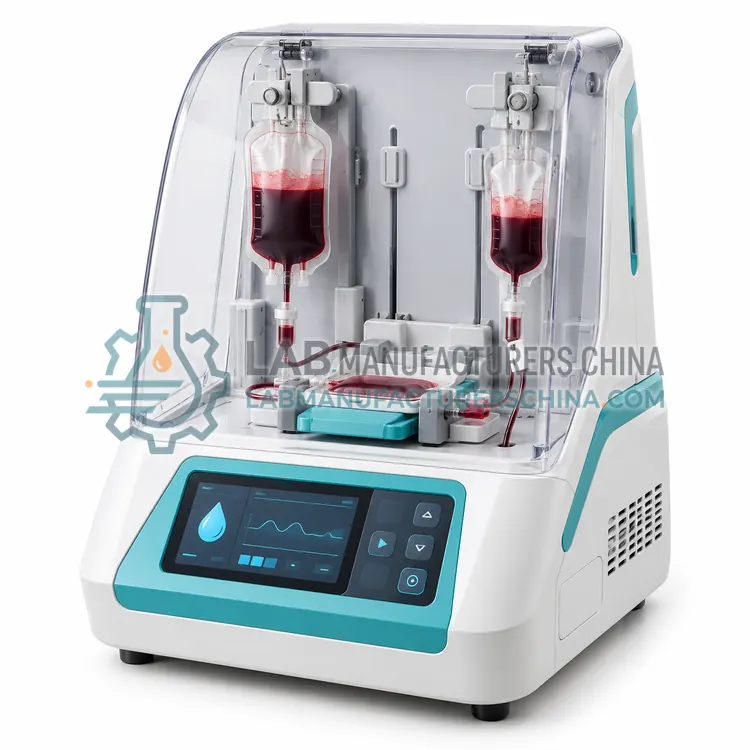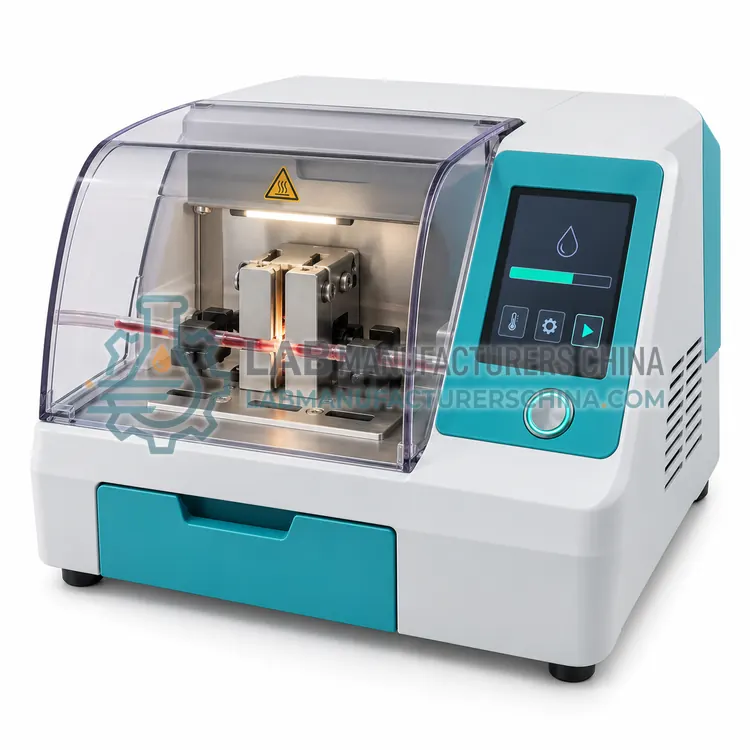
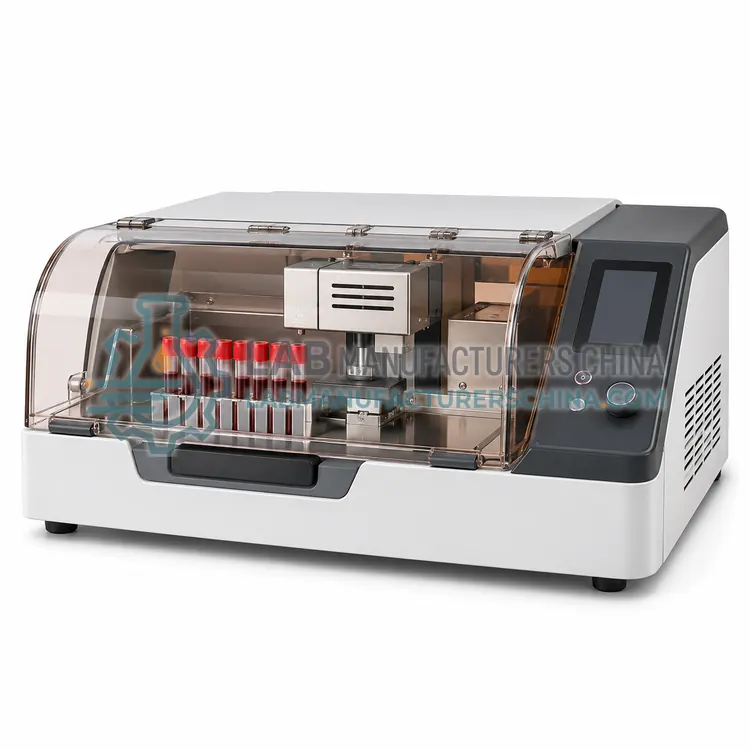
Benchtop Radio-Frequency Blood Tube Sealer
台式射频血液管路封口机
- SKU BBS-0001
- Blood Bag Sealers
- CE (to be confirmed)
- ISO 13485 (to be confirmed)
- IEC 60601-1 test report (to be confirmed)
Price on request — FOB / CIF quoted per order
Prices depend on configuration, quantity and destination port.
Key specifications
| RF frequency | 27.12 MHz |
|---|---|
| Output power | approx. 50–100 W |
| Seal time | 1–3 s per seal |
| Tube outer diameter | 3–9 mm |
| Throughput | up to approx. 300–600 seals/h |
| Trigger | Lever, foot pedal or sensor |
Request a quote Download brochure · to be provided
By Lab Manufacturers China Technical TeamLast reviewed Standards: ISO 3826-1, IEC 60601-1, IEC 60601-1-2
What is the Benchtop Radio-Frequency Blood Tube Sealer?
A benchtop radio-frequency blood tube sealer is a mains-powered unit that seals PVC donation and processing tubing in one to three seconds using dielectric heating. It suits blood centers and component laboratories that seal many segments every shift.
What is the Benchtop Radio-Frequency Blood Tube Sealer?
A benchtop radio-frequency blood tube sealer is a mains-powered unit that seals PVC donation and processing tubing in one to three seconds using dielectric heating. It suits blood centers and component laboratories that seal many segments every shift.
Overview
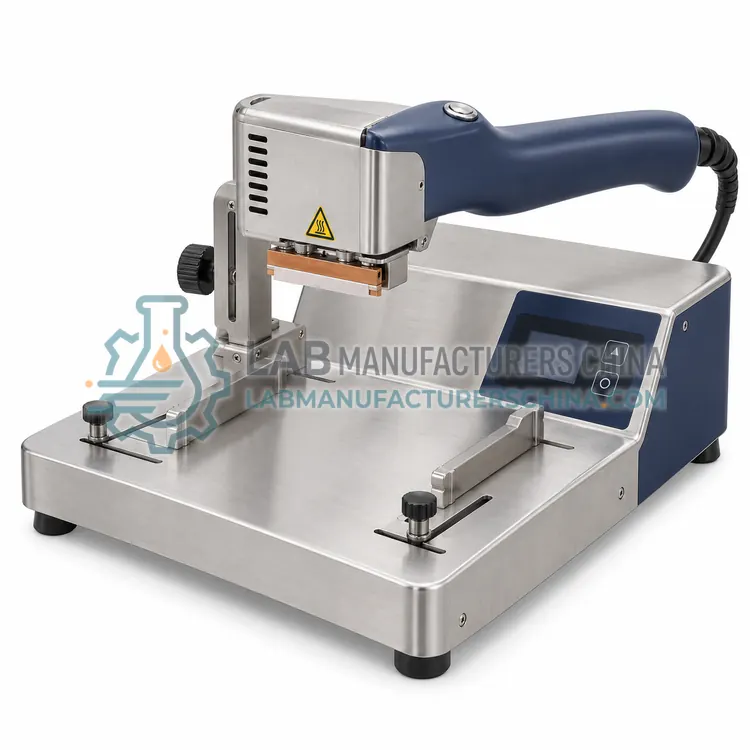
The benchtop sealer has a fixed electrode head, a clamping mechanism and a controller with preset power and time. Operators place tubing into the jaws, close the lever or press a foot pedal, and the RF generator delivers energy at 27.12 MHz for a controlled duration. A cooling phase under pressure forms the weld. Typical seal cycles take 1 to 3 seconds and sealing capacity reaches several hundred seals per hour. The design accommodates tube outer diameters of about 3 to 9 mm. Indicators show cycle state and errors such as arcing or no tube detected. Because it is mains-powered and rugged, it is suited to processing rooms where a stable station performs repeated sealing, and it can be paired with a foot pedal for hands-free operation.
How does it work?
Most blood tubing sealers use dielectric heating. A radio-frequency field, commonly 27.12 MHz, is applied across a PVC tube held between two electrodes. PVC molecules have a dipole moment, so the field heats the material from within, softens the walls and forms a weld under electrode pressure. Cooling under pressure produces a hermetic seal in one to three seconds, and the tube is then cut or separated. The process does not add a clip, so seals are smooth and leak-tight. Sterile tubing welders work differently: a heated blade at roughly 260–300 °C cuts two tubes and the ends are joined while molten, preserving sterility. Controllers monitor power, pressure and time to give consistent seals and flag failed cycles.
What are the key features?
- 27.12 MHz dielectric sealing in 1–3 seconds
- Adjustable power and sealing time presets
- Foot pedal option for hands-free operation
- Error indicators for arcing and missing tube
- Replaceable electrodes for wear maintenance
- Fixed station design for high daily seal counts
What are the technical specifications?
A typical benchtop radio-frequency blood tube sealer configuration offers RF frequency of 27.12 MHz, output power of approx. 50–100 W, seal time of 1–3 s per seal, tube outer diameter of 3–9 mm, throughput of up to approx. 300–600 seals/h and trigger of Lever, foot pedal or sensor. Values are indicative of the product class; the exact figures for each configuration are confirmed on the quotation and the calibration documents supplied with the instrument.
Which applications is it used for?
The Benchtop Radio-Frequency Blood Tube Sealer is used in component processing rooms, donor room line sealing, blood center segment preparation and hospital blood banks. Across the wider Blood Bag Sealers class, laboratories also deploy it for donation line sealing and segment creation, sterile connection of blood bags and component processing and pooling.
Which standards and certifications apply?
Relevant standards and methods include ISO 3826-1, IEC 60601-1, IEC 60601-1-2, IEC 61010-1, ISO 13485 and AABB Standards for Blood Banks and Transfusion Services. Certification candidates for this model are CE, ISO 13485 and IEC 60601-1 test report; each is to be confirmed for the specific configuration before shipment, and certificates are supplied only where they have been issued.
Place the sealer on a stable surface with clear airflow and keep electrodes clean and free of residue, since contamination causes weak seals. Verify seal quality on a routine schedule, for example by pulling, squeezing and immersion tests on test tubing, and record results. Electrodes and blades are wear parts and need replacement per maker intervals. RF equipment must meet electromagnetic safety and emission rules, and users should avoid contact with live electrodes. Sterile welders require correct wafer handling and storage. Service by authorized technicians and inclusion in the quality system are recommended.
How do I select the right Benchtop Radio-Frequency Blood Tube Sealer?
Select the benchtop model for a fixed station with daily high sealing volumes. Specify tube diameter range, trigger type, cycle time, power supply and need for a foot pedal. Ask how seal quality is validated and what the electrode replacement interval is. For mobile use, choose a battery model, and ensure a spare set of electrodes is held on site.
How does it compare with other Blood Bag Sealers variants?
Choose based on seal type and workflow. RF sealers suit routine tube segmenting and line closure, with options for benchtop, handheld or battery use. A sterile welder is needed when you must join tubing in a closed system, for example pooling or adding bags. Check the tube outer diameter range, seal time, seal integrity verification and whether the unit supports your tube material. Consider throughput, noise, operator ergonomics and whether foot pedal or sensor triggering is useful. Verify that the sealer has been tested on your bag brand and that seals meet leak and pull tests. For mobile collection, battery runtime and robustness matter more than speed.
Full specifications
| RF frequency | 27.12 MHz |
|---|---|
| Output power | approx. 50–100 W |
| Seal time | 1–3 s per seal |
| Tube outer diameter | 3–9 mm |
| Throughput | up to approx. 300–600 seals/h |
| Trigger | Lever, foot pedal or sensor |
| Display | LED or LCD status indicators |
| Electrode | Replaceable stainless steel |
| Power supply | 100–240 V AC, 50/60 Hz |
| Dimensions (W×D×H) | approx. 250 × 260 × 150 mm |
Indicative values for this product class. Final specifications are confirmed on the quotation and in the calibration documents supplied with the instrument.
Applications
- Component processing rooms
- Donor room line sealing
- Blood center segment preparation
- Hospital blood banks
Key features
- 27.12 MHz dielectric sealing in 1–3 seconds
- Adjustable power and sealing time presets
- Foot pedal option for hands-free operation
- Error indicators for arcing and missing tube
- Replaceable electrodes for wear maintenance
- Fixed station design for high daily seal counts
Frequently asked questions about Benchtop Radio-Frequency Blood Tube Sealer
Cycle time of 1–3 seconds allows a few hundred seals per hour with a trained operator, though handling and labeling usually limit real throughput. Electrode cooling and duty-cycle limits in the manual should be respected.
Only if the tube outer diameter and wall thickness fall inside the specified range. Apheresis sets often use larger or different tubing, so supply samples to the vendor for testing before purchase.
Keep electrodes clean, inspect for pitting or residue, replace them per interval, and check cables and housings. Verify seal quality regularly and record cycles. Service by authorized engineers is advisable for generator or safety-related repairs.
It applies a 27.12 MHz electric field across PVC tubing between two electrodes. The polymer heats from within, softens and welds under pressure, then cools to form a leak-tight seal in one to three seconds. No clip is added, leaving a smooth, flat seal.
A tube sealer closes one tube, forming segments or sealing a line. A sterile welder cuts two tubes with a hot blade and joins them while molten, creating a new sterile connection. Sealers close systems; welders connect them without breaking sterility.
Pull each seal by hand, squeeze the segment and look for leaks, and run periodic immersion or pressure tests on test tubing. Record results and replace electrodes per maker intervals. Any weak seal should be re-sealed and the cause investigated.
Related models
Automatic Blood Tube Sealer with Integrated Cutter and Segment Counter
带切割和血段计数的自动血管封口机
- CE (to be confirmed)
- +2