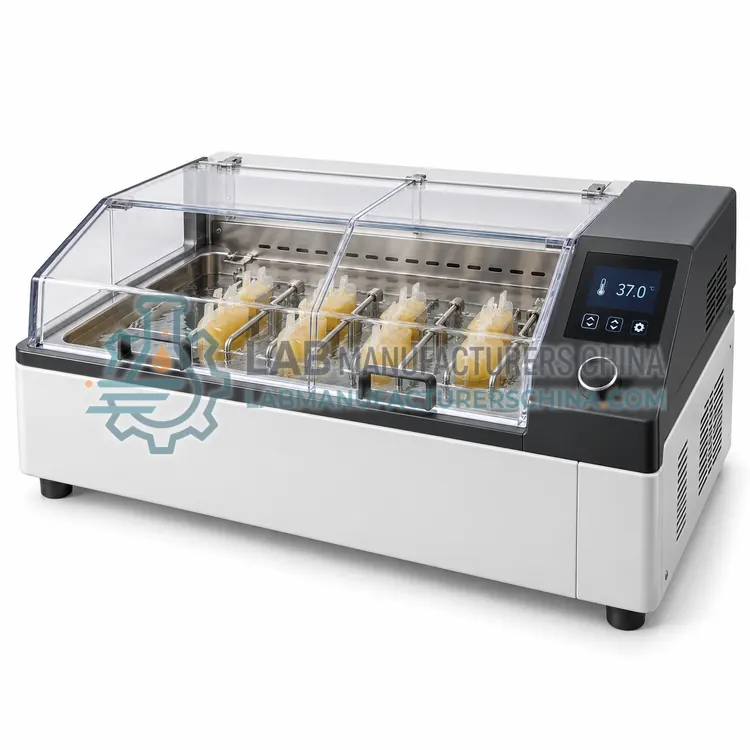
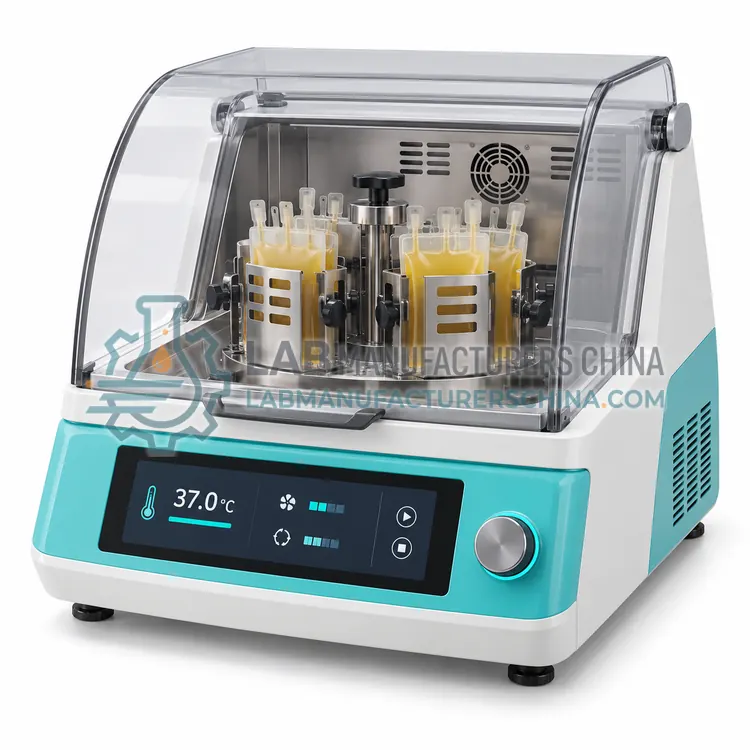
Dry-Heat Plasma Thawer with Agitation
带振荡干式血浆解冻仪
- SKU PLT-0002
- Plasma Thawers
- CE (to be confirmed)
- ISO 13485 (to be confirmed)
- IEC 61010-2-010 test report (to be confirmed)
Price on request — FOB / CIF quoted per order
Prices depend on configuration, quantity and destination port.
Key specifications
| Thaw temperature | ≤ 37 °C |
|---|---|
| Thaw time (250 mL FFP) | approx. 15–30 min |
| Capacity | 1–6 bags |
| Heating method | Heated plates or dry chamber |
| Agitation | Motorized rocking, 20–60 cycles/min |
| Temperature accuracy | ±1 °C |
Request a quote Download brochure · to be provided
By Lab Manufacturers China Technical TeamLast reviewed Standards: Council of Europe Guide to the Preparation, Use and Quality Assurance of Blood Components, AABB Standards for Blood Banks and Transfusion Services, IEC 61010-2-010
What is the Dry-Heat Plasma Thawer with Agitation?
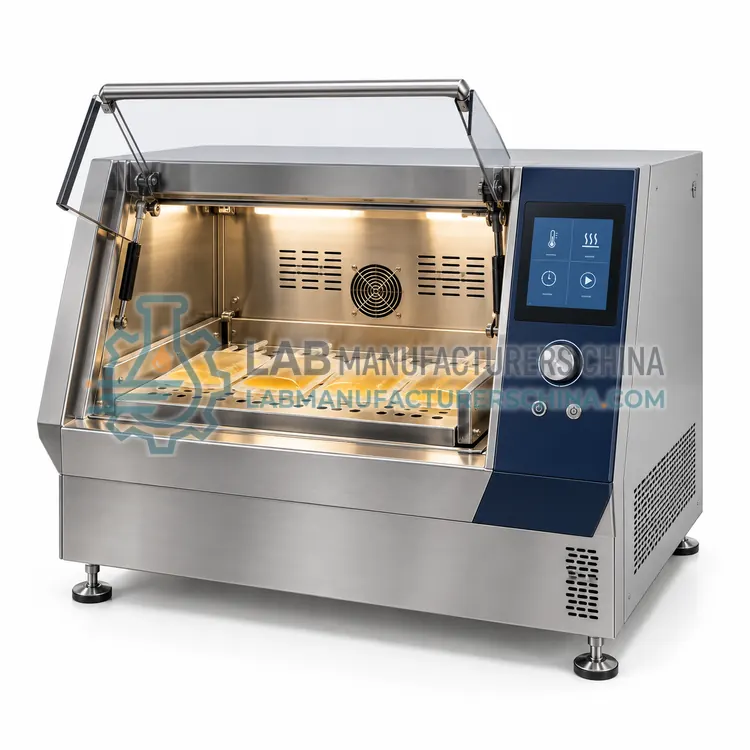
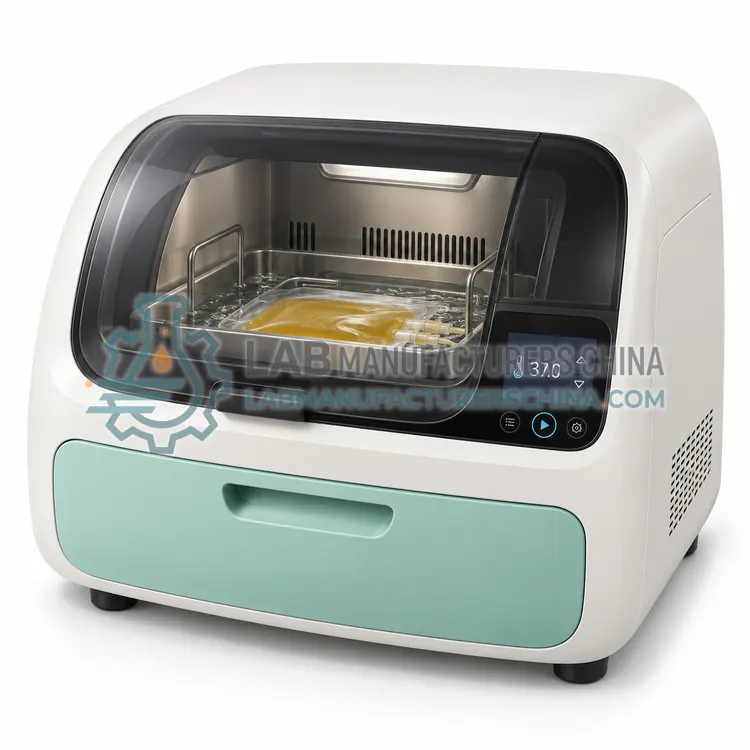
A dry-heat plasma thawer with agitation warms frozen plasma bags between heated plates or in a dry chamber while rocking them, without immersing in water. It suits blood banks that want to avoid water contamination and overwraps while keeping thaw time near 15–30 minutes.
What is the Dry-Heat Plasma Thawer with Agitation?
A dry-heat plasma thawer with agitation warms frozen plasma bags between heated plates or in a dry chamber while rocking them, without immersing in water. It suits blood banks that want to avoid water contamination and overwraps while keeping thaw time near 15–30 minutes.
Overview
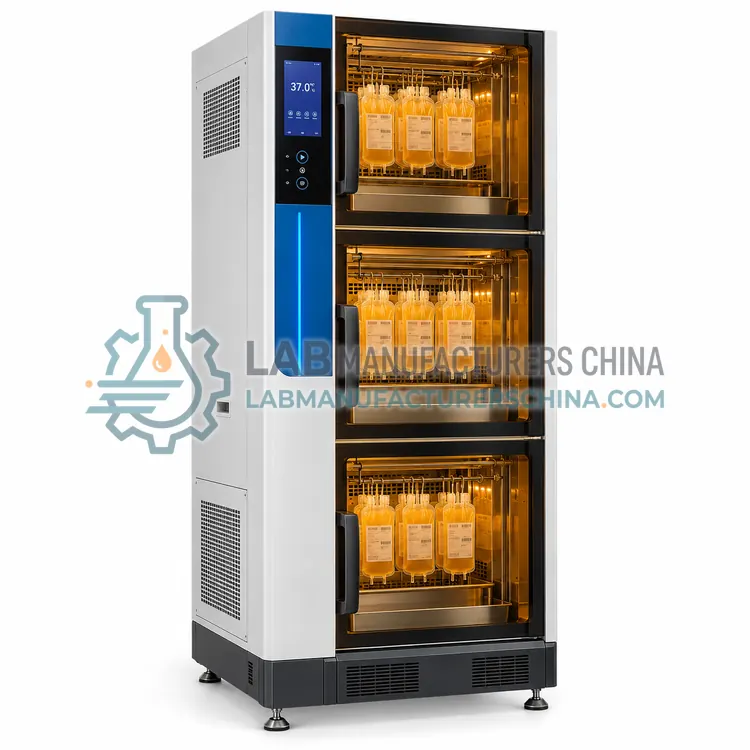
Instead of water, the dry thawer uses heated metal plates, air or a conductive medium, and a motorized rocker or shaker to move the bags. Agitation breaks up temperature gradients and moves liquid plasma past still-frozen regions, improving heat transfer. Temperature sensors in the chamber or a reference bag keep the plasma below about 37 °C, and cycles end with an audible alert when the target is reached. Capacity ranges from one to six bags per chamber. Because bags stay dry, ports are protected and overwraps are not needed, though some sites still use them. Cleaning involves wiping plates and chamber surfaces. The approach avoids water management, reduces bacterial risk and is often quieter than baths, at somewhat higher cost.
How does it work?
Thawing transfers heat into a frozen bag while keeping plasma below about 37 °C, because higher temperatures denature coagulation factors. Water-bath thawers circulate water at 35–37 °C around the bag, using a heater, pump and thermostat, and typically take 20 to 30 minutes. Dry thawers heat plates or chambers with shaking or rocking so the bag exchanges heat without contact with water. Radio-frequency thawers apply electromagnetic energy to heat the plasma directly, cutting time to a few minutes. Temperature sensors, often in the bath or in a reference bag, feed a controller that limits overshoot and raises alarms. Agitation improves heat transfer and helps dissolve cryoprecipitate. Overwrap bags protect ports from contamination in water baths.
What are the key features?
- Waterless heating avoids bath contamination risk
- Motorized rocking speeds and equalizes thawing
- Temperature control below about 37 °C with alarms
- End-of-cycle audible alert
- Wipe-clean plates and chamber surfaces
- 1–6 bag capacity with programmable cycles
What are the technical specifications?
A typical dry-heat plasma thawer with agitation configuration offers thaw temperature of ≤ 37 °C, thaw time (250 mL FFP) of approx. 15–30 min, capacity of 1–6 bags, heating method of Heated plates or dry chamber, agitation of Motorized rocking, 20–60 cycles/min and temperature accuracy of ±1 °C. Values are indicative of the product class; the exact figures for each configuration are confirmed on the quotation and the calibration documents supplied with the instrument.
Which applications is it used for?
The Dry-Heat Plasma Thawer with Agitation is used in transfusion laboratories avoiding water baths, operating theater plasma supply, blood center plasma issue and cryoprecipitate preparation. Across the wider Plasma Thawers class, laboratories also deploy it for fresh frozen plasma thawing before transfusion, cryoprecipitate thawing and massive transfusion protocols.
Which standards and certifications apply?
Relevant standards and methods include Council of Europe Guide to the Preparation, Use and Quality Assurance of Blood Components, AABB Standards for Blood Banks and Transfusion Services, IEC 61010-2-010, IEC 61010-1, IEC 61326-1 and ISO 13485. Certification candidates for this model are CE, ISO 13485 and IEC 61010-2-010 test report; each is to be confirmed for the specific configuration before shipment, and certificates are supplied only where they have been issued.
Validate each thawer with the bag types used, recording thaw time and final temperature. Calibrate temperature sensors at least annually and test alarms routinely. Water baths need regular draining, disinfection and water quality control to avoid bacterial growth, and overwraps should be used. Dry thawers need plates and chambers cleaned after leaks. Do not thaw above the limit, and use thawed plasma within the time defined by local policy. Keep records of each thaw for traceability. Follow electrical safety tests and, for RF units, electromagnetic safety rules.
How do I select the right Dry-Heat Plasma Thawer with Agitation?
Choose dry heat when you want to remove water management and reduce contamination risk. Specify capacity, programs for plasma and cryoprecipitate, temperature accuracy and alarm set. Ask for thaw time data for your bag volumes, since dry methods vary by design.
How does it compare with other Plasma Thawers variants?
Choose by speed, capacity and contamination control. Water baths are economical and familiar but require water management and overwraps. Dry thawers avoid water, simplifying hygiene and port protection. RF thawers are fastest, useful where urgent plasma is frequent, but cost more. Match capacity to peak demand, for example one to four bags at the bedside or eight to sixteen in a blood bank. Check temperature accuracy, overshoot protection, bag size compatibility including cryoprecipitate and pooled bags, and the alarm and record features needed for audits. Noise, cleaning and footprint matter for operating-theater use.
Full specifications
| Thaw temperature | ≤ 37 °C |
|---|---|
| Thaw time (250 mL FFP) | approx. 15–30 min |
| Capacity | 1–6 bags |
| Heating method | Heated plates or dry chamber |
| Agitation | Motorized rocking, 20–60 cycles/min |
| Temperature accuracy | ±1 °C |
| Programs | FFP, cryoprecipitate, custom |
| Alarms | Over-temperature, sensor fault, cycle end |
| Power supply | 220 V, 50 Hz |
| Dimensions (W×D×H) | approx. 450 × 400 × 250 mm |
Indicative values for this product class. Final specifications are confirmed on the quotation and in the calibration documents supplied with the instrument.
Applications
- Transfusion laboratories avoiding water baths
- Operating theater plasma supply
- Blood center plasma issue
- Cryoprecipitate preparation
Key features
- Waterless heating avoids bath contamination risk
- Motorized rocking speeds and equalizes thawing
- Temperature control below about 37 °C with alarms
- End-of-cycle audible alert
- Wipe-clean plates and chamber surfaces
- 1–6 bag capacity with programmable cycles
Frequently asked questions about Dry-Heat Plasma Thawer with Agitation
Not always. Some dry thawers take 15–30 minutes, similar to or slightly faster than water baths, while radio-frequency models are much faster. Rocking and plate contact improve heat transfer, so check thaw-time data for the bag sizes used.
Usually not, since bags do not contact water, but policy varies. Some transfusion services still use overwraps to contain leaks or keep labels clean. Follow local infection control rules.
Wipe plates and chamber with approved disinfectant after each shift or after a leaking bag, avoiding liquid entry into heaters and sensors. No draining or water treatment is needed, which simplifies routine maintenance.
A water-bath thawer usually needs 20–30 minutes for a 250 mL unit, dry thawers take 15–30 minutes depending on design, and radio-frequency thawers can do it in roughly 3–10 minutes. Times depend on bag size, frozen temperature and agitation.
Typically 30–37 °C, with 37 °C as the usual upper limit. Higher temperatures denature coagulation factors, so thawers include sensors and alarms to prevent overheating and a controlled warm-up profile.
It can be if water quality is controlled, bags are overwrapped and the bath is disinfected and drained on schedule. Contaminated water is a recognized risk, so many centers prefer dry or overwrapped methods to protect bag ports.
Related models