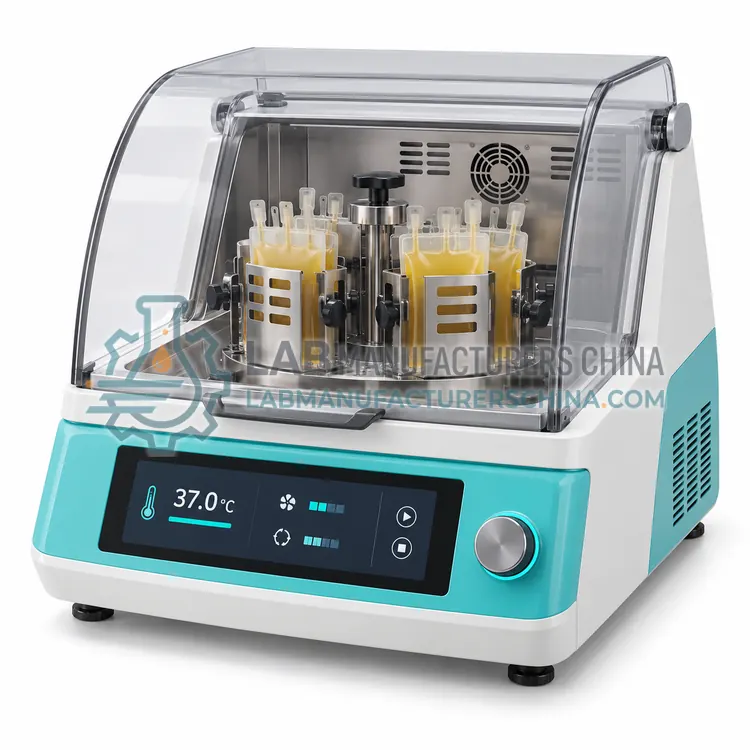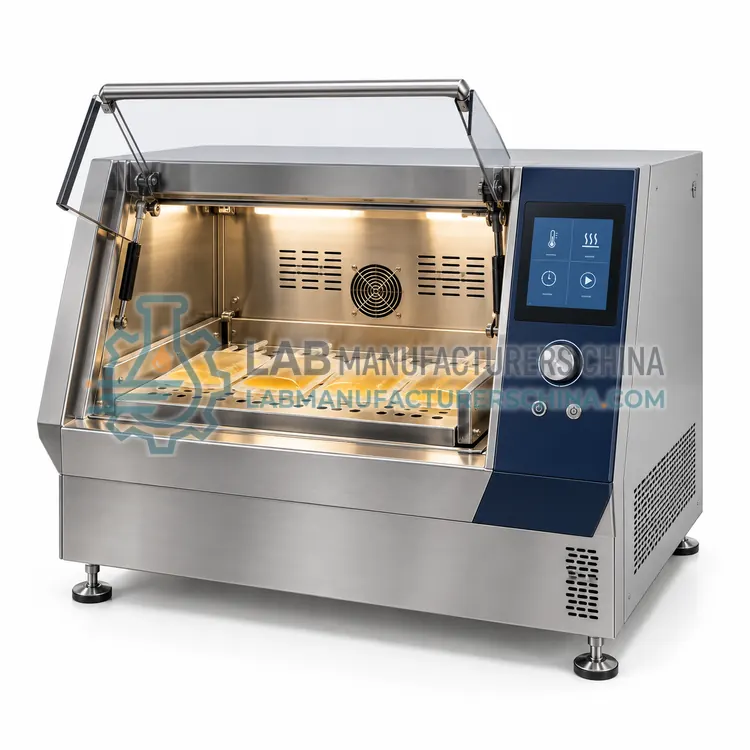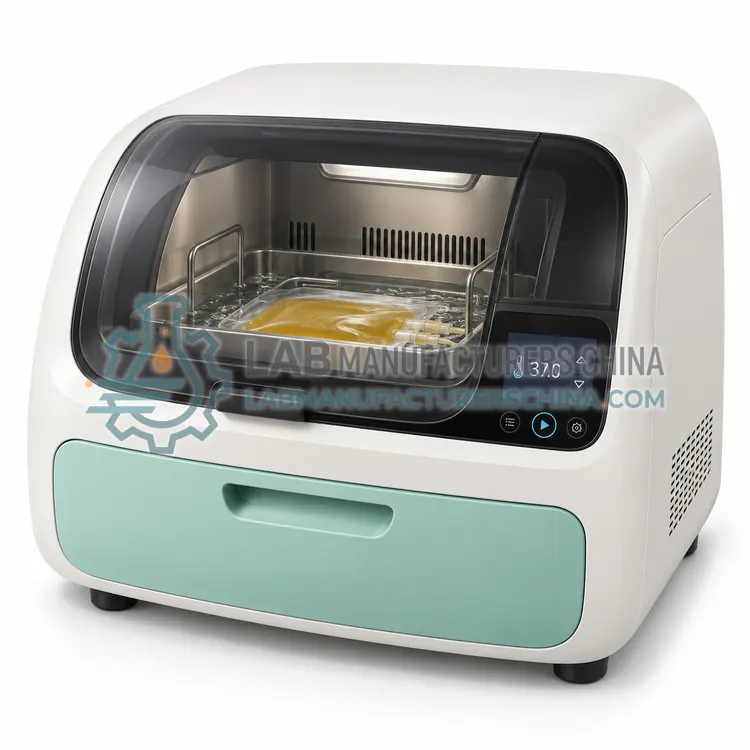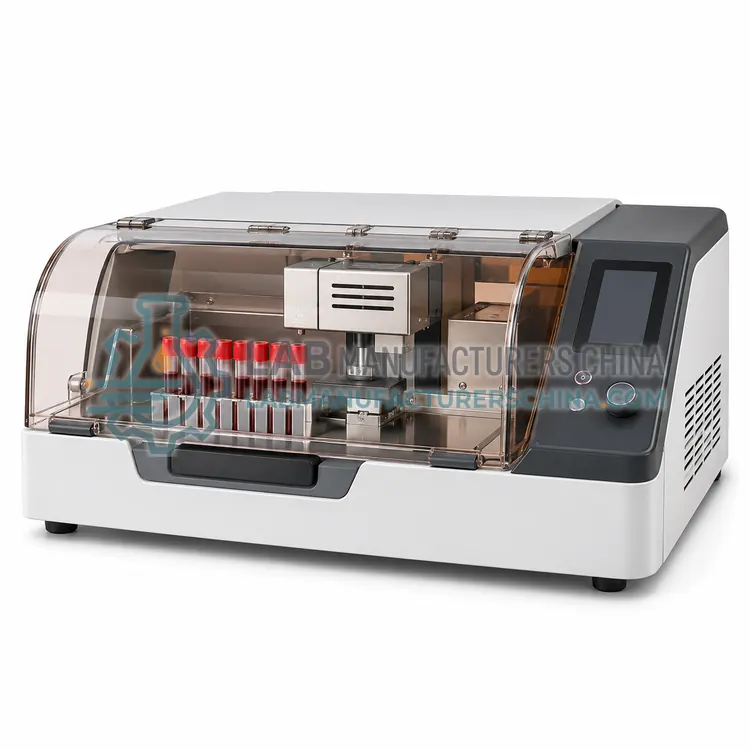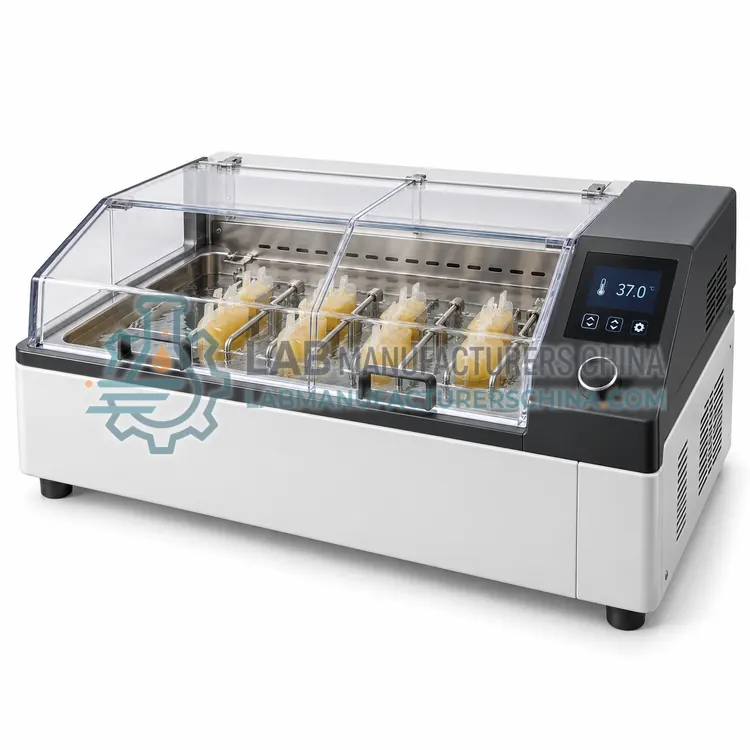
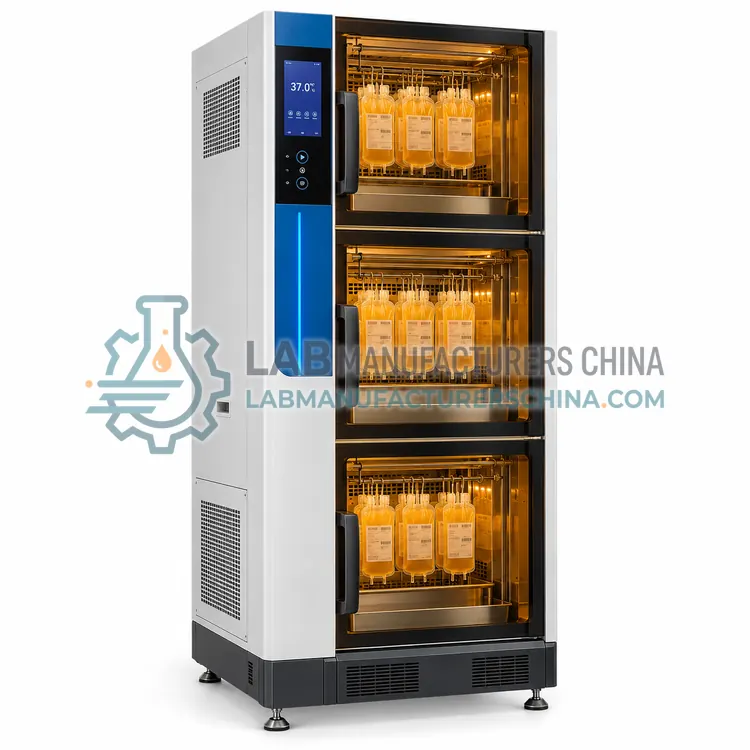
Multi-Bag Plasma Thawing Cabinet
多袋血浆解冻柜
- SKU PLT-0005
- Plasma Thawers
- CE (to be confirmed)
- ISO 13485 (to be confirmed)
- IEC 61010-2-010 test report (to be confirmed)
Price on request — FOB / CIF quoted per order
Prices depend on configuration, quantity and destination port.
Key specifications
| Capacity | 8–16 bags (250 mL) |
|---|---|
| Thaw temperature | 35–37 °C |
| Thaw time (250 mL FFP) | approx. 20–30 min per batch |
| Temperature accuracy | ±0.5 °C |
| Chamber volume | 30–80 L |
| Agitation | Circulation pump or rocking |
Request a quote Download brochure · to be provided
By Lab Manufacturers China Technical TeamLast reviewed Standards: Council of Europe Guide to the Preparation, Use and Quality Assurance of Blood Components, AABB Standards for Blood Banks and Transfusion Services, IEC 61010-2-010
What is the Multi-Bag Plasma Thawing Cabinet?
A multi-bag plasma thawing cabinet thaws eight to sixteen plasma units in one batch using heated circulating air or water in a single chamber. It suits central blood banks and large hospitals that prepare plasma for scheduled surgical and trauma demand.
What is the Multi-Bag Plasma Thawing Cabinet?
A multi-bag plasma thawing cabinet thaws eight to sixteen plasma units in one batch using heated circulating air or water in a single chamber. It suits central blood banks and large hospitals that prepare plasma for scheduled surgical and trauma demand.
Overview
The cabinet format holds stackable racks or trays of plasma bags in a larger chamber, heated to 35–37 °C with circulating fluid or air and gentle agitation. A controller manages multiple zones or a single temperature with probes in reference bags, and reports time to completion. Capacity is commonly eight to sixteen 250 mL units, or fewer larger bags, allowing one operator to prepare a batch for a surgical list. Because throughput is higher, cycle documentation is important: start time, end temperature and alarm events are logged for each batch. Sizes are larger, typically 600 mm wide or more, with drain valves, door locks and independent over-temperature protection. Batch thawing suits planned demand, but less-used units should be rotated to avoid waste.
How does it work?
Thawing transfers heat into a frozen bag while keeping plasma below about 37 °C, because higher temperatures denature coagulation factors. Water-bath thawers circulate water at 35–37 °C around the bag, using a heater, pump and thermostat, and typically take 20 to 30 minutes. Dry thawers heat plates or chambers with shaking or rocking so the bag exchanges heat without contact with water. Radio-frequency thawers apply electromagnetic energy to heat the plasma directly, cutting time to a few minutes. Temperature sensors, often in the bath or in a reference bag, feed a controller that limits overshoot and raises alarms. Agitation improves heat transfer and helps dissolve cryoprecipitate. Overwrap bags protect ports from contamination in water baths.
What are the key features?
- Batch capacity of 8–16 plasma units
- Stackable racks or trays with gentle agitation
- Reference-bag probe and cycle end-point alarm
- Batch logging of start time and final temperature
- Independent over-temperature protection and door lock
- Drain valve and stainless steel chamber
What are the technical specifications?
A typical multi-bag plasma thawing cabinet configuration offers capacity of 8–16 bags (250 mL), thaw temperature of 35–37 °C, thaw time (250 mL FFP) of approx. 20–30 min per batch, temperature accuracy of ±0.5 °C, chamber volume of 30–80 L and agitation of Circulation pump or rocking. Values are indicative of the product class; the exact figures for each configuration are confirmed on the quotation and the calibration documents supplied with the instrument.
Which applications is it used for?
The Multi-Bag Plasma Thawing Cabinet is used in central blood banks, large hospitals with surgical lists, plasma batch preparation and transfusion service training. Across the wider Plasma Thawers class, laboratories also deploy it for fresh frozen plasma thawing before transfusion, cryoprecipitate thawing and massive transfusion protocols.
Which standards and certifications apply?
Relevant standards and methods include Council of Europe Guide to the Preparation, Use and Quality Assurance of Blood Components, AABB Standards for Blood Banks and Transfusion Services, IEC 61010-2-010, IEC 61010-1, IEC 61326-1 and ISO 13485. Certification candidates for this model are CE, ISO 13485 and IEC 61010-2-010 test report; each is to be confirmed for the specific configuration before shipment, and certificates are supplied only where they have been issued.
Validate each thawer with the bag types used, recording thaw time and final temperature. Calibrate temperature sensors at least annually and test alarms routinely. Water baths need regular draining, disinfection and water quality control to avoid bacterial growth, and overwraps should be used. Dry thawers need plates and chambers cleaned after leaks. Do not thaw above the limit, and use thawed plasma within the time defined by local policy. Keep records of each thaw for traceability. Follow electrical safety tests and, for RF units, electromagnetic safety rules.
How do I select the right Multi-Bag Plasma Thawing Cabinet?
Choose a batch cabinet when plasma is prepared in numbers for scheduled demand. Specify bag count, bag sizes, data logging, alarm outputs and cabinet footprint. For on-demand single units, a bedside or RF thawer avoids wasted thawed plasma.
How does it compare with other Plasma Thawers variants?
Choose by speed, capacity and contamination control. Water baths are economical and familiar but require water management and overwraps. Dry thawers avoid water, simplifying hygiene and port protection. RF thawers are fastest, useful where urgent plasma is frequent, but cost more. Match capacity to peak demand, for example one to four bags at the bedside or eight to sixteen in a blood bank. Check temperature accuracy, overshoot protection, bag size compatibility including cryoprecipitate and pooled bags, and the alarm and record features needed for audits. Noise, cleaning and footprint matter for operating-theater use.
Full specifications
| Capacity | 8–16 bags (250 mL) |
|---|---|
| Thaw temperature | 35–37 °C |
| Thaw time (250 mL FFP) | approx. 20–30 min per batch |
| Temperature accuracy | ±0.5 °C |
| Chamber volume | 30–80 L |
| Agitation | Circulation pump or rocking |
| Data logging | Batch log, USB or network output |
| Alarms | Over-temperature, low water, cycle end |
| Dimensions (W×D×H) | approx. 650 × 500 × 450 mm |
| Power supply | 220 V, 50 Hz |
Indicative values for this product class. Final specifications are confirmed on the quotation and in the calibration documents supplied with the instrument.
Applications
- Central blood banks
- Large hospitals with surgical lists
- Plasma batch preparation
- Transfusion service training
Key features
- Batch capacity of 8–16 plasma units
- Stackable racks or trays with gentle agitation
- Reference-bag probe and cycle end-point alarm
- Batch logging of start time and final temperature
- Independent over-temperature protection and door lock
- Drain valve and stainless steel chamber
Frequently asked questions about Multi-Bag Plasma Thawing Cabinet
Typically eight to sixteen 250 mL units per batch, depending on rack design. Keep bags single layer or as specified so heat reaches each unit, and avoid overloading, which extends thaw time.
Plan batches against scheduled lists, rotate thawed units to urgent use first and store at 2–6 °C within the allowed time. Some sites thaw in smaller batches or use faster units for unexpected demand.
Good models log batch start time, end temperature, alarms and operator ID, with USB or network export. These records support audits and traceability, so ask which fields are captured and whether they can be exported.
A water-bath thawer usually needs 20–30 minutes for a 250 mL unit, dry thawers take 15–30 minutes depending on design, and radio-frequency thawers can do it in roughly 3–10 minutes. Times depend on bag size, frozen temperature and agitation.
Typically 30–37 °C, with 37 °C as the usual upper limit. Higher temperatures denature coagulation factors, so thawers include sensors and alarms to prevent overheating and a controlled warm-up profile.
It can be if water quality is controlled, bags are overwrapped and the bath is disinfected and drained on schedule. Contaminated water is a recognized risk, so many centers prefer dry or overwrapped methods to protect bag ports.
Related models